


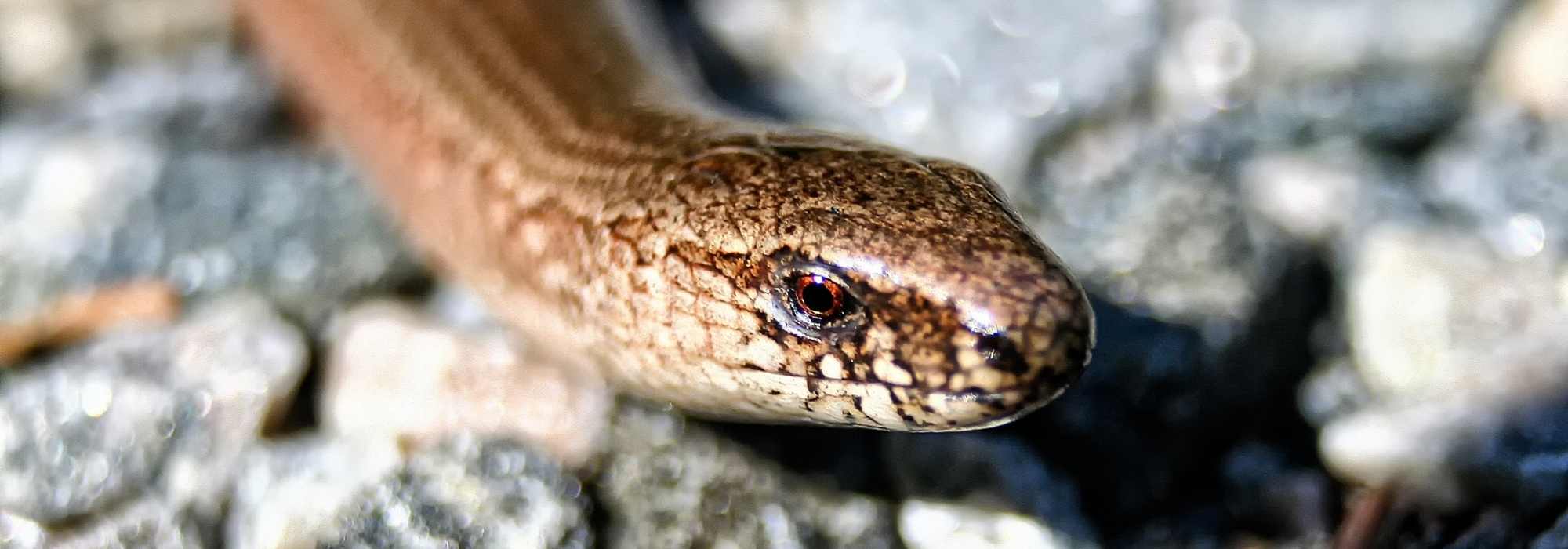
The common slowworm or fragile slowworm
The famous "legless lizard
Contents
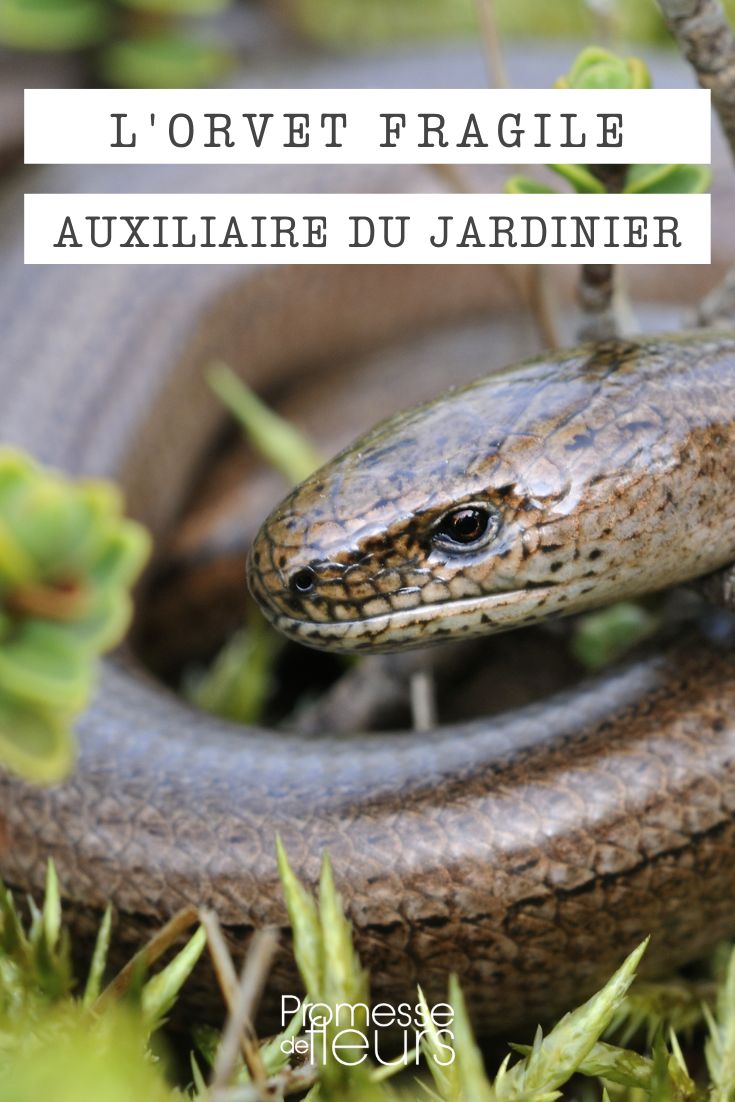
The slow worm or common slow worm (Anguis fragilis) is not a snake, but a legless lizard. It is also a fantastic ally in the garden as a predator of slugs, snails, larvae, worms, and even insects. A discreet creature, the slow worm can live in the garden for a long time before you suspect its presence. To welcome it into your garden, you should provide calm, natural areas with a bit of wild vegetation. In decline everywhere, creating a true haven of peace for this species (protected in France and Belgium) will be a good way to preserve it.
→ Here is a fact sheet to learn more about this charming creature.
What is a slowworm?
There are 6 species of slow-worms distributed around the world. Slow-worms belong to the family Anguidae. They are reptiles and… legless lizards. Therefore, slow-worms are ABSOLUTELY not snakes.
The Common Slow-worm or Fragile Slow-worm (Anguis fragilis) is the most widespread species in Europe and the one you are likely to encounter in our gardens.
How to recognise a Common Slow-worm?
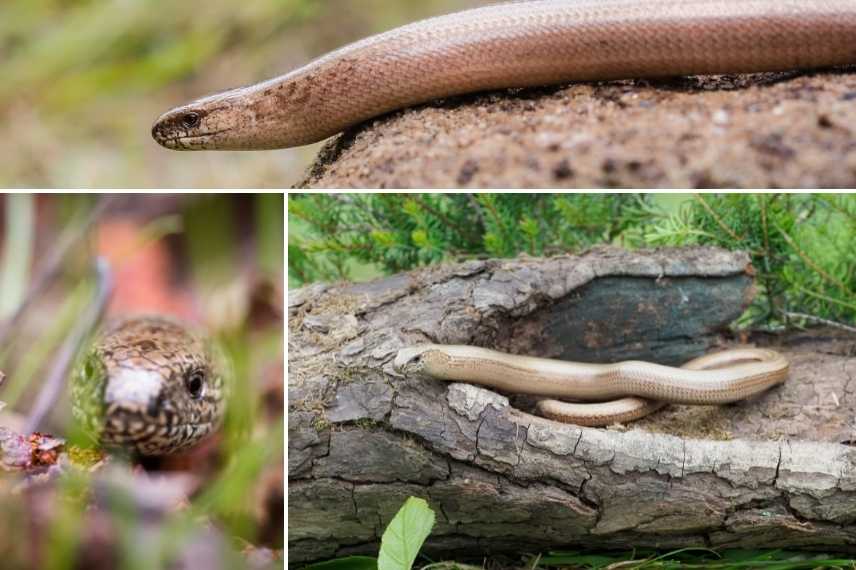
The head is small and the snout is rounded. The slow-worm is a serpentiform lizard (“snake-shaped”) measuring about 30 to 40 cm in length. The body has a smooth appearance due to the presence of osteoderms, thin bony plates located beneath the skin.
The skin coloration is variable (age, geographical distribution…): generally a brownish hue leaning towards grey for the dorsal side and a darker, almost black hue for the ventral side. The male’s colour is relatively uniform, but the female is easily distinguished by a broad light stripe on her back. The young, on the other hand, are golden with a fine black line along the back.
The slow-worm moves like a snake, but the rudimentary limbs are visible through X-ray: it is indeed a lizard! Moreover, the slow-worm is capable of autotomy: it leaves a part of its tail to a potential predator. The tail regrows afterwards, but remains shorter.
Even though it is not one, the slow-worm does resemble a snake from a distance. However, there are some notable differences:
- the slow-worm can blink its eyes: snakes, on the other hand, have fixed transparent eyelids;
- the slow-worm has several rows of ventral scales: snakes have only one;
- the movements of a slow-worm seem clumsy compared to those of snakes;
- the slow-worm has to open its mouth to stick out its tongue.
Read also
The Swiss Grass SnakeThe Life of the Slow Worm
The slow worm spends a large part of its time underground, in tunnels it has dug or borrowed from rodents. It hibernates in winter either in a heap of manure or in these tunnels. It is a carnivorous predator that primarily feeds on slugs, larvae, and worms.
Reproduction occurs in spring (May-June). The slow worm is ovoviviparous: this means that the eggs (5 to 20 eggs) develop inside the mother’s body. They will hatch within her, and then the mother will give birth to her young between June and August. The young are very vulnerable during their first year. Sexual maturity occurs at 3 years for males and 4 years for females.
The slow worm can live a long time: the record is 54 years, but the average is around thirty years.
An endangered animal!: the fragile slow worm is a protected species in France and Belgium. However, this charming legless lizard is exposed to numerous dangers: use of pesticides, sensitivity to pollutants, habitat destruction, being crushed on roads, rampant urbanisation, reduction of hedgerows, predation by domestic cats, chickens, and even… outright assassination by unscrupulous humans. In short, the life of a slow worm is not an easy one!
The fragile slow worm has a status of “least concern” in France and “not threatened” in Wallonia. But populations are declining almost everywhere.
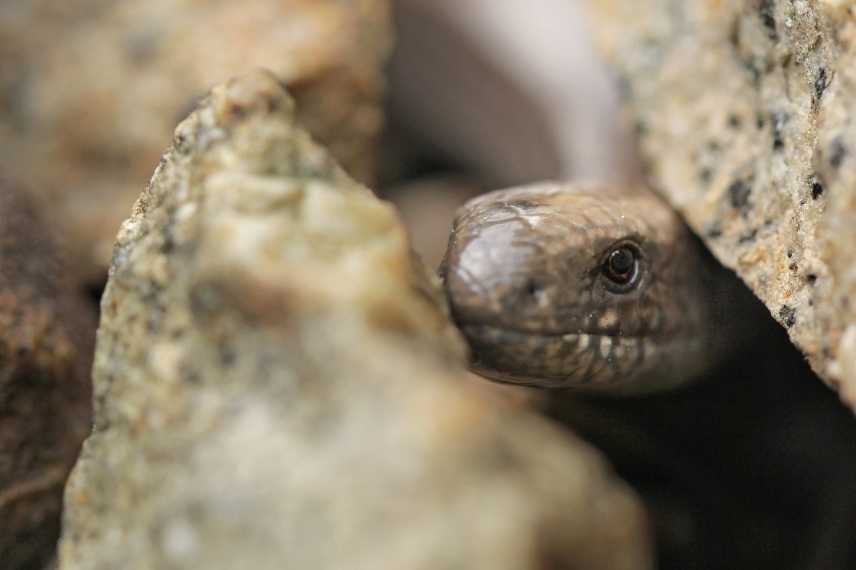 Not always easy to spot the fragile slow worm…
How and why to welcome it into your garden?
The slow-worm is an essential element of biodiversity
The slow-worm is a discreet yet effective predator. It feeds on less mobile prey such as molluscs (slugs and snails), larvae, or worms, as well as some spiders and insects. It can be said that it is a beneficial creature in the garden.
The slow-worm is also a prey animal. Its natural predators include certain birds (corvids, raptors, pheasants…), the smooth snake (Coronella austriaca), and even wild boar.
The slow-worm can visit our gardens
The fragile slow-worm prefers semi-shaded areas with well-developed vegetation in quarries, calcicolous lawns, hedges, along paths, as well as in parks and gardens. It can sometimes be found under plastic sheets, old cardboard… and even within rodent burrows.
The slow-worm hibernates in small burrows, either taken over from a rodent or dug by itself. However, the slow-worm can also spend the winter in a warm manure pile. It sometimes hibernates in groups, which can be quite substantial: up to a hundred individuals.
To welcome it into your garden, it is advisable to leave some wild areas where vegetation can grow freely, to completely eliminate all forms of pesticides (even so-called organic or natural ones), and to leave large quiet spaces in your garden.
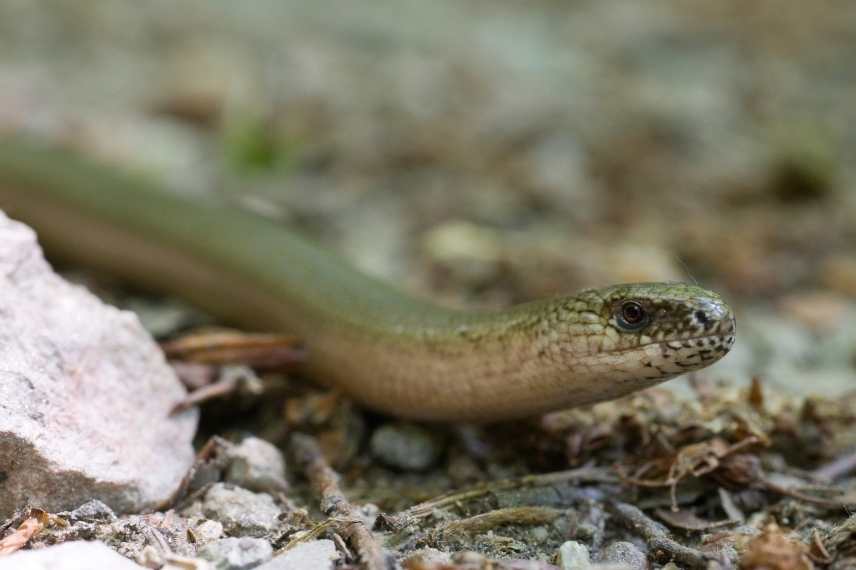
The common slow-worm is a unique garden ally!
- Subscribe!
- Contents
Comments