





























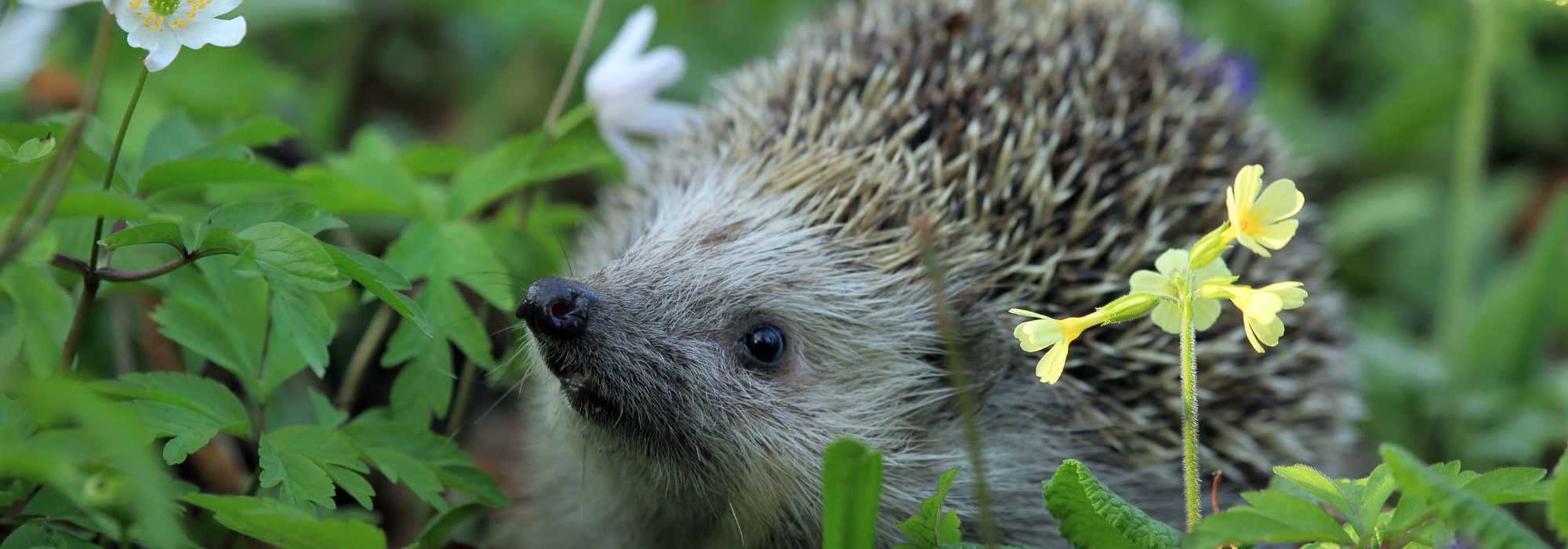
A hedgehog in the garden: a valuable ally for biodiversity
Biology, behaviour and benefits of the hedgehog for your garden
Contents
The hedgehog, a small nocturnal and charming mammal, is a valuable ally for any gardener keen to preserve biodiversity. Moreover, by welcoming a hedgehog into your garden, you benefit from a true natural ally that feeds on slugs, snails, insects and other small pests that threaten your plants. This discreet visitor contributes not only to maintaining ecological balance but also to enriching the life of your garden.
To provide an ideal refugium for hedgehogs, a few good habits and simple arrangements are enough.
Want to learn more about the hedgehog and the best ways to welcome it into your garden? Discover all our practical tips in our advice sheet.

Hedgehog biology
Physical description
The European hedgehog (Erinaceus europaeus) is a small mammal that is normally insectivorous (but not only, as we will see later!) and easily recognisable by its back covered in spines. These spines are in fact modified hairs, measuring about 2 to 3 cm long and coloured dark brown with white tips. They provide effective protection against predators.
The body of the hedgehog is compact and stocky, measuring between 20 and 30 cm in length with a weight ranging from 400 to 1200 grams. Male hedgehogs are generally larger than females. The belly, neck and face are covered with soft brownish hair. The hedgehog has a small head with a pointed and mobile snout, dark and bright eyes, and small round ears.
The hedgehog has short, but sturdy legs, each equipped with five toes bearing claws. These claws allow it to dig to find food or to create shelter.
Life cycle
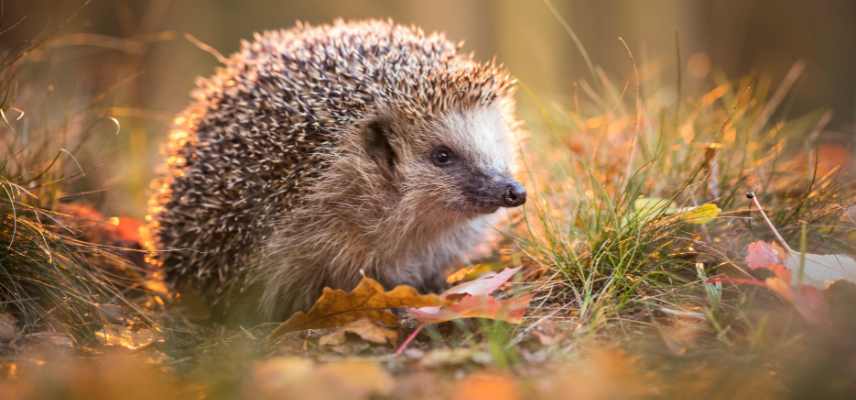
The reproductive period takes place mainly from May to September. After a gestation of 4 to 6 weeks, the female gives birth to a litter of 4 to 7 young. At birth, the young are blind and devoid of spines, but these begin to appear as small white spines within a few hours of birth.
Young hedgehogs open their eyes after around two weeks and begin to leave the nest to explore their environment from three to four weeks. They are weaned and independent by six to eight weeks. During this period, they learn to find their own food under the supervision of their mother.
Hedgehogs reach sexual maturity at the age of 10 to 12 months. In the wild, their lifespan varies from 3 to 7 years, although some individuals may live up to 10 years in favourable conditions.
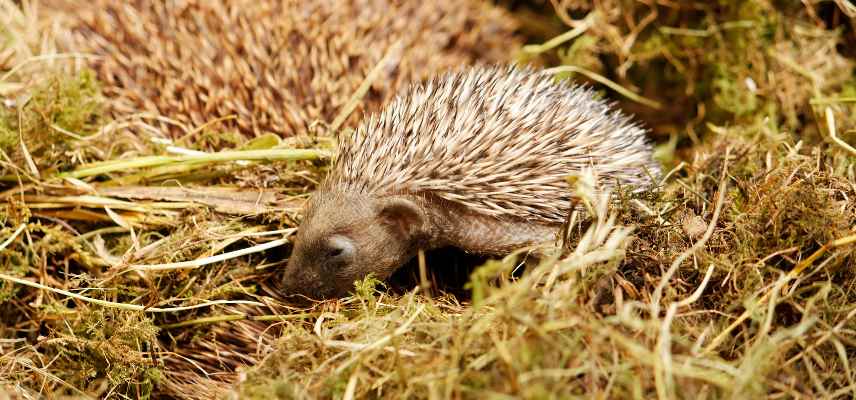
In autumn, as temperatures fall and food sources become scarce, the hedgehog enters hibernation, after having built up fat reserves from eating a lot. It looks for a sheltered place and builds a cosy nest with leaves and grass. During hibernation, which generally lasts from October to April, the hedgehog reduces its metabolism and body temperature to conserve energy. It may wake briefly during the winter, but does not feed during this period. This period of inactivity lasts from October to April, but may vary depending on local climatic conditions.
Habitats and behaviour of the hedgehog
Habitats
The European hedgehog is an animal that can live in a variety of habitats: in gardens, parks, hedges, woods, meadows and field margins. It prefers areas where it can find both food and shelter, such as dense hedges, piles of leaves, logs and a compost heap.
Of course, hedgehogs are particularly attracted to areas rich in insects and other small prey.
Behaviour
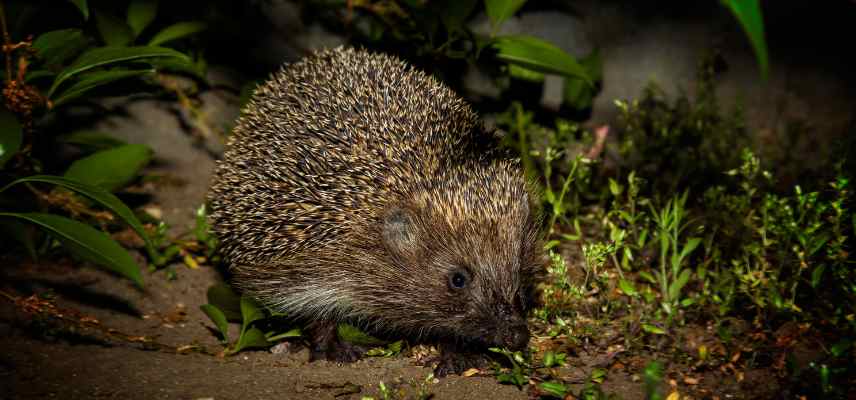
The hedgehog is mainly nocturnal, meaning it is active at night. It spends most of the day sleeping, resting in nests it builds from leaves, grasses and mosses. These nests are often located under hedges, piles of wood or natural shelters such as tree stumps. The hedgehog is particularly active in the early evening and at dawn, periods during which it goes in search of food.
I have seen a hedgehog out in broad daylight; is it necessarily in distress? A hedgehog walking about in broad daylight is not necessarily in distress, especially if it is a female looking for food for her young or a young hedgehog learning to feed itself. However, to recognise a hedgehog in distress, sick or injured, one must observe certain warning signs: lethargy, difficulty walking, visible injuries, presence of maggots or worms on the body, and abnormally confident or disorientated behaviour. If a hedgehog shows these signs, it is important to contact a wildlife rescue centre or a veterinary specialist for help.
Hedgehogs are solitary, except during the breeding season. Interactions between adult hedgehogs are therefore rare and limited to incidental encounters and territorial disputes. Males can travel long distances in search of mates during the breeding period.
Territory
Hedgehogs are known for their ability to move over long distances in search of food and mates. A hedgehog can cover several kilometres in a single night. Each hedgehog has a territory that it regularly traverses. The size of this territory varies according to resource availability and local population density. Hedgehogs mark their territory by leaving droppings and by rubbing against objects to deposit their scent.
Please note : to know if a hedgehog is present in your garden, look for signs such as black cylindrical droppings, measuring about 1.5 to 2 cm long, and small holes in the soil, signs of their foraging for food. You may also hear rustling in the leaves at night, as hedgehogs are active and noisy when they move and feed.
A hedgehog is a gardener's ally
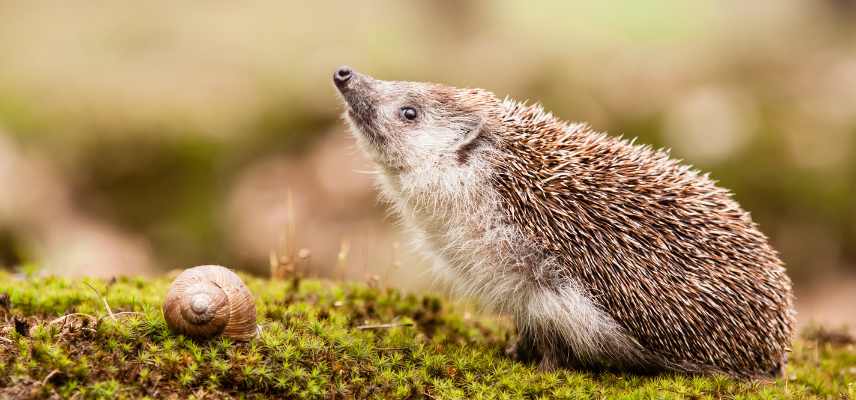
Although its diet is mainly composed of insects, the hedgehog is rather considered an opportunistic omnivore. It feeds on earthworms, snails, slugs, beetles, caterpillars and other invertebrates. It also consumes fruit, berries, mushrooms and occasionally small mammals or bird eggs.
The hedgehog’s dietary diversity varies with the seasons: in spring and summer, it consumes more insects and larvae, while in autumn it turns more to fruit and berries to build up fat reserves before hibernation. When hunting, the hedgehog uses its keen sense of smell to locate its food. It then rummages through the soil, fallen leaves and low vegetation to locate prey.
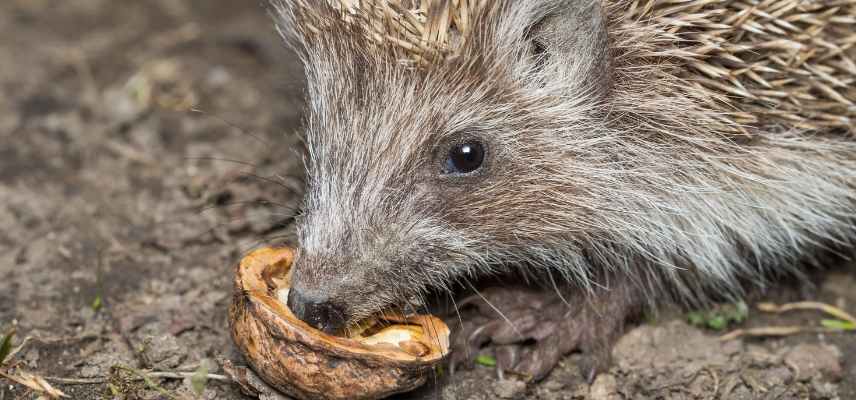
The hedgehog thus plays a crucial role as a predator in the garden, contributing to the balance of the ecosystem and helping to control pest populations. By feeding on slugs, snails and insects that can damage plants, the hedgehog helps protect gardeners’ crops and flowers. These small animals are particularly effective at reducing the number of slugs, which are often responsible for significant damage in vegetable plots and flower beds.
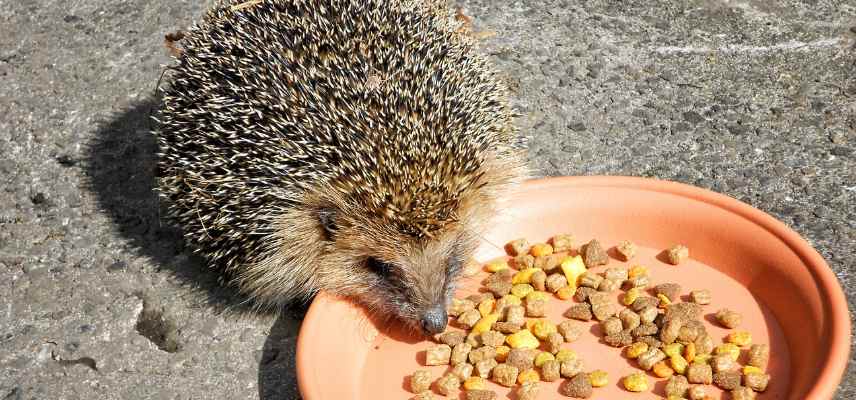
Good to know : Can hedgehogs be fed? Hedgehogs usually manage on their own. There is therefore no need to feed them. However, you can offer them some cat biscuits, very small amounts of mealworms, and untreated fruit such as apples. Do not give them milk, bread, or salty or sugary products which can cause serious digestive problems.
Read also
Welcoming a hedgehog in your gardenHedgehogs are in danger!
Natural predators
Hedgehogs have relatively few natural predators due to their quills, which provide an effective defence against many animals. However, some predators have developed techniques to circumvent this natural protection. Badgers are among the few animals capable of killing and eating a hedgehog. With their strength and skill, they can flip hedgehogs over to access their venter.
Foxes may also pose a threat to hedgehogs. Large birds of prey, such as owls and buzzards, can sometimes attack young hedgehogs or weakened adults.
Please note: its main defence strategy is to roll into a ball, bristling its quills to deter predators from attacking it. This protective posture exposes the sharp quills while hiding the vulnerable parts of its body. This strategy is, alas, not very effective against the wheels of a car…
Dangers arising from human activity
But human activity poses the greatest dangers to hedgehogs, far more than natural predators.
- Automatic lawnmowers : robotic lawnmowers, increasingly popular in gardens, can cause serious injuries to hedgehogs. Active at night, hedgehogs can become trapped and seriously injured by these devices. To avoid this, it is recommended to programme the robot mowers to operate during the day, when hedgehogs are asleep.
- Roads : roads and motor traffic are major dangers to hedgehogs. They are often killed while trying to cross roads at night, drawn by the heat of the asphalt or in search of food. To reduce risks, wildlife crossings can be installed to allow hedgehogs and other animals to cross safely.
- Poison : the use of poisons and pesticides in gardens poses a deadly risk to hedgehogs. By feeding on poisoned insects or slugs, hedgehogs can become severely poisoned. To protect hedgehogs, it is advisable to use more natural and environmentally friendly pest control methods, such as non-toxic slug traps or organic solutions.
- Dogs : finally, domestic dogs can pose a threat to hedgehogs, especially if they are left free in the garden at night. Curious dogs can injure hedgehogs by trying to catch them. To protect hedgehogs, it is important to supervise dogs and keep them indoors at night.
Hedgehogs are valuable allies in the garden: let's welcome them!
As we’ve seen, hedgehogs, as natural predators, play a key role in pest regulation. They feed mainly on slugs, snails, insects and their larvae, which can cause significant damage to crops and plants.
To attract and protect hedgehogs, start by creating suitable habitats. Leave piles of leaves, wood and dense vegetation where hedgehogs can shelter, build their nests and find food. Install hedgehog-specific shelters, which can be bought or made yourself from natural materials. Ensure that your garden offers accessible water sources that are not dangerous for small animals.
Follow François’s tips for attracting hedgehogs in your garden.
Hedgehog-specific plantings
Plant dense hedges made up of local varieties such as the hazel, the hawthorn, the blackthorn and the elder. These hedges provide not only shelter, but also food sources in autumn. Shrubs such as raspberry bushes and redcurrant bushes also provide fruits enjoyed by hedgehogs. Berry-bearing plants such as holly, firethorn and cotoneaster provide fruit during autumn and winter, offering a valuable food resource before hibernation. Finally, dense groundcovers such as ivy or periwinkle create shaded and protected areas where hedgehogs can hide and search for food.
Oli’s little note: a garden welcoming hedgehogs is rich in insects, earthworms and other invertebrates, which creates a favourable habitat for other animals such as insectivorous birds, amphibians and small mammals. These species, in turn, help regulate pest populations and pollinate plants. In short, by creating an environment conducive to hedgehogs, you foster a virtuous circle of biodiversity and ecological health that benefits your entire garden.
- Subscribe!
- Contents
Comments