





























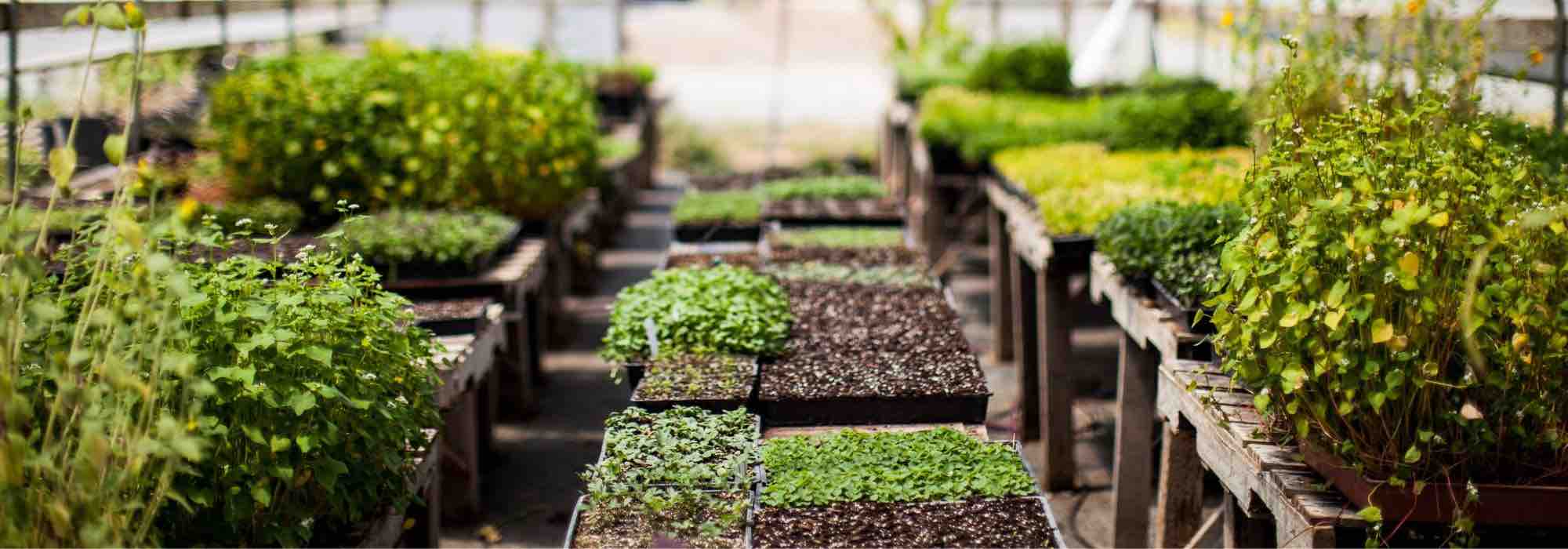
The Walipini Greenhouse: for growing vegetables all year round
A bioclimatic semi-buried shelter for your crops
Contents
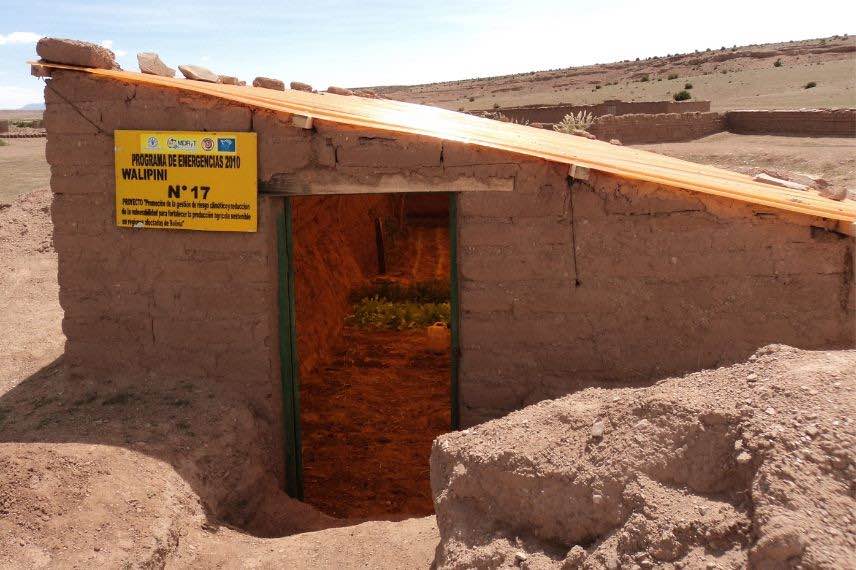
Originating from Bolivia, the Walipini greenhouse was developed in the 1990s by local farmers to address the climatic and environmental challenges they faced in areas where harsh weather conditions made open-field cultivation nearly impossible.
A revolutionary innovation in sustainable agriculture, this semi-buried greenhouse allows gardeners and farmers to produce fresh vegetables and fruits year-round, even in environments that are not conducive to crops. In this article, we will explore the benefits of the Walipini greenhouse and see how it can be installed by any gardener.

What is a Walipini greenhouse?
The Walipini greenhouse takes its name from the Aymara language, spoken by the indigenous peoples of the Bolivian Andes. “Walipini” literally means “warm place” or “place where warm things are placed.” Local farmers have used their knowledge of the environment and local building techniques to design it.
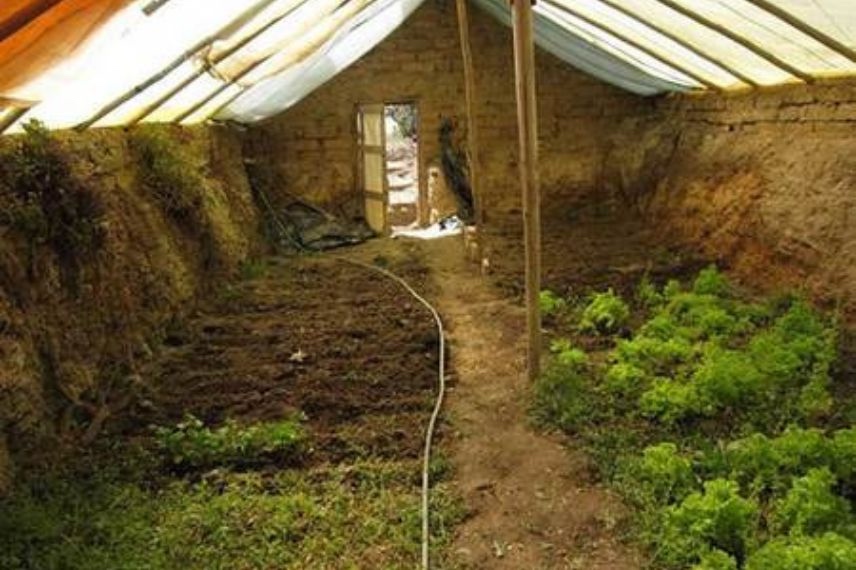
The concept of the Walipini greenhouse involves constructing a semi-buried greenhouse by digging a hole in the ground. The thermal inertia of the soil helps regulate the temperature inside the structure throughout the year. In the high plateaus where it was designed, sunlight is abundant even in winter, allowing for heat storage, sheltered from the cold and wind. This heat is released at night, maintaining a nearly constant temperature between 10 and 15°C, over 24 hours and throughout the year.
How is a Walipini greenhouse constructed?
It can be built at the base using a natural slope of the land, by backing it against an existing bank or wall, which helps to reduce construction costs and improve thermal efficiency.
- The nature of the soil must be considered beforehand, which should be above the water table and not rocky. The choice of location is also crucial: the slope of the land should prevent rain from flooding the buried part, and it should be clear and not shaded, ideally facing south.
- Start by digging a hole, as to be fully effective, the walipini greenhouse must be located below ground level, at a minimum of 1.5m, knowing that a minimum of 2m is more comfortable for standing. The cultivated areas can be dug less deeply than the pathways, to simplify earthworks and have raised beds.
- Drainage must be provided to remove excess watering and runoff, as well as effective ventilation.
- Depending on the configuration, the walls can be built, doubled, or raised using reclaimed insulating materials such as plastic bottles filled with water, which absorb heat from the sun during the day and release it slowly at night to maintain a constant temperature inside the greenhouse. Some gardeners use stones, tyres, straw bales, or any other natural material that can absorb heat. If not necessary, the walls can simply be made of earth.
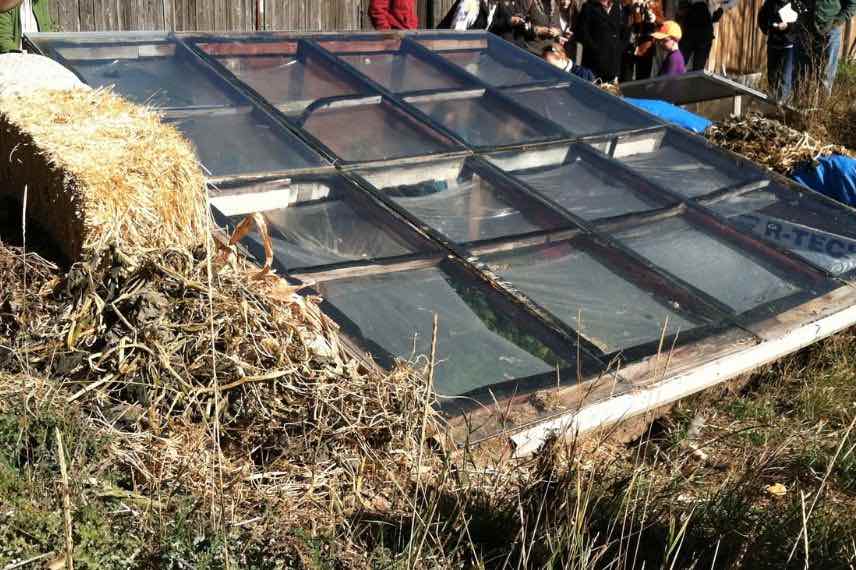
- The roof is made of transparent materials, to allow maximum light and heat in, such as glass or plastic. In terms of alternative self-construction, gardeners often use what they have available, such as reclaimed windows, plastic sheeting, PVC sheets like plexiglass, honeycomb polycarbonate sheets, etc. This roof must be waterproof and oriented south to fully benefit from sunlight.
- A staircase or sloped access ramp must be provided to enter the greenhouse below.
- Crops can be placed directly on the ground or in raised beds. Care should be taken to add good topsoil as support for the crops.
- A rainwater collection point to provide nearby watering water should also be planned.
What is grown in this type of greenhouse?
The principle is that it never freezes in a Walipini greenhouse and that the temperature difference between day and night remains low, unlike a normal outdoor greenhouse.
The Walipini greenhouse can therefore be used to grow a wide variety of plants, including vegetables, fruits, herbs, and flowers. You can have crops all year round: radishes, salads, broad beans, peas, cabbages, herbs…
→ Also check out our article “What are the best fruits and vegetables to grow in a greenhouse according to the seasons?“.
What does the law say about greenhouses of this type?
You must make a declaration at the town hall for the construction of a walipini greenhouse if:
- its ground area exceeds 5m²
or
- if its height exceeds 1.8m.
If either of these two conditions is met, you must declare it, even if your taxable area is ultimately less than 5m² and you will not pay any taxes.

- Subscribe!
- Contents
Comments