





























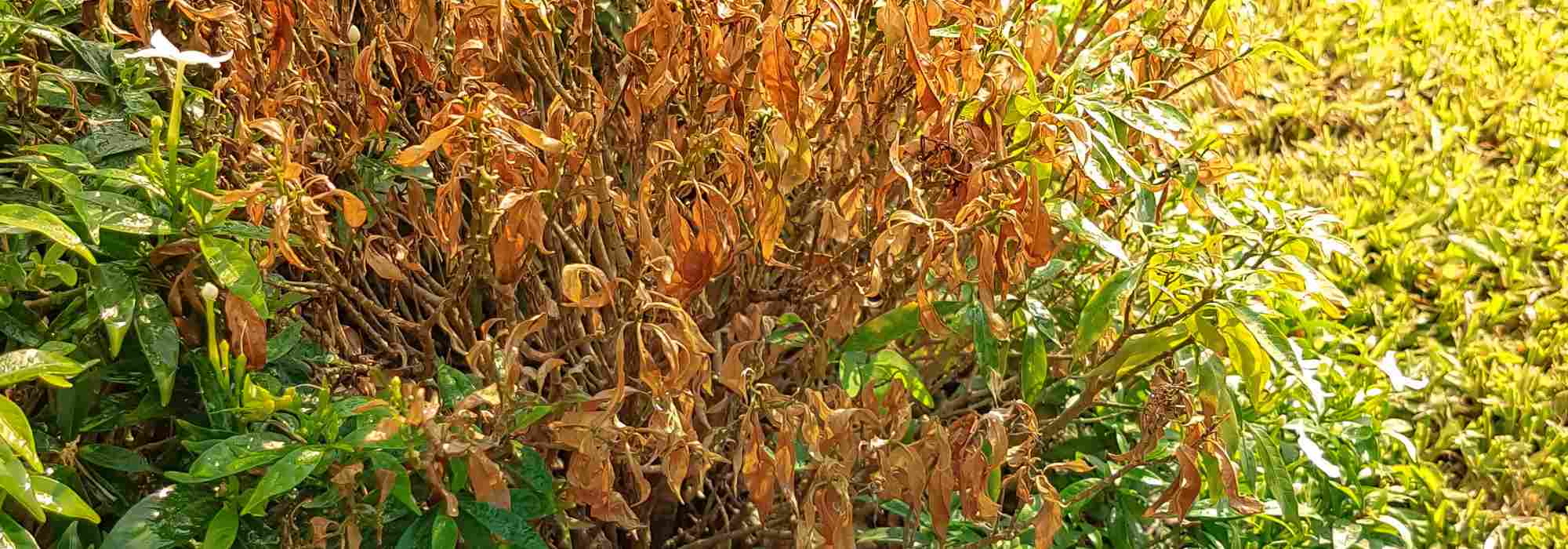
Nothing grows in my garden. Why?
Garden setbacks analysed under the magnifying glass
Contents
Gardening is a school of patience and humility. But when nothing grows in a garden, there’s always a reason. The aim is to find out which one, which means that plants, whatever they may be, cannot thrive there. As there is no inevitability in the wonderful world of gardening, we’ll run through the various reasons that see you going from one failure to the next in the garden and we give you the keys to make things grow well… finally… trees, shrubs, perennials and other bulbs!

My soil isn't fertile enough, poorly drained, or I don't take its pH into account
The soil is the foundation of gardening, and it is often the place to start. The fertile soil lives up to its name: in the vegetable patch, it allows our vegetables and fruits to grow, but in the ornamental garden it also serves as the reservoir of nourishment for plants, where they find nutrients and minerals, as well as freshness and moisture. Just as a child cannot grow without a good diet, a garden cannot develop and thrive without a quality soil, at least suited to the plantings we intend to make.
A soil that is too compacted by construction traffic or a soil packed with rubble on housing development sites, for example, will pose a problem for plant establishment. In the first case, they will struggle to develop their root system; in the other, they will severely lack nutrients.
In the majority of gardens, we find very different soil textures that allow a distinct flora to establish itself. All that remains is to recognise them. Clay, sandy or silty soils each have advantages and disadvantages with which we will work or may seek to correct depending on the plants we want to see grow there. In the case of a clay soil retaining too much moisture, we will generally drain it at least a little so that it is less suffocating. Conversely, if the soil is too dry, it will be harder to make it less permeable and we will really tailor the plants to this specific soil, choosing drought-tolerant plants for dry ground. But in all cases, it’s better to adapt the plant to its soil… than the other way round! You save time and money…
A soil too poor in fertility can always be improved: we try to mimic what happens in nature, by forming a nutritive litter layer that will decompose gradually and enrich the soil (with mulches made from lawn clippings, wood chippings, fallen leaves, etc.). This litter layer can even progressively modify the texture of a soil. Organic amendments such as horn meal or dried blood are also a valuable aid for enriching the soil.
Finally, the soil acidity level, the well-known potential hydrogen (pH), is often the source of setbacks. If one stubbornly tries to plant ericaceous plants like azalea in alkaline soil, it’s a guaranteed flop.
→ Read Olivier’s useful tips in How to recognise polluted soil in your garden?, Gardening in acidic soil and François’s in The role of humus in soil fertility. Alexandra explains how to Garden in calcareous soil.
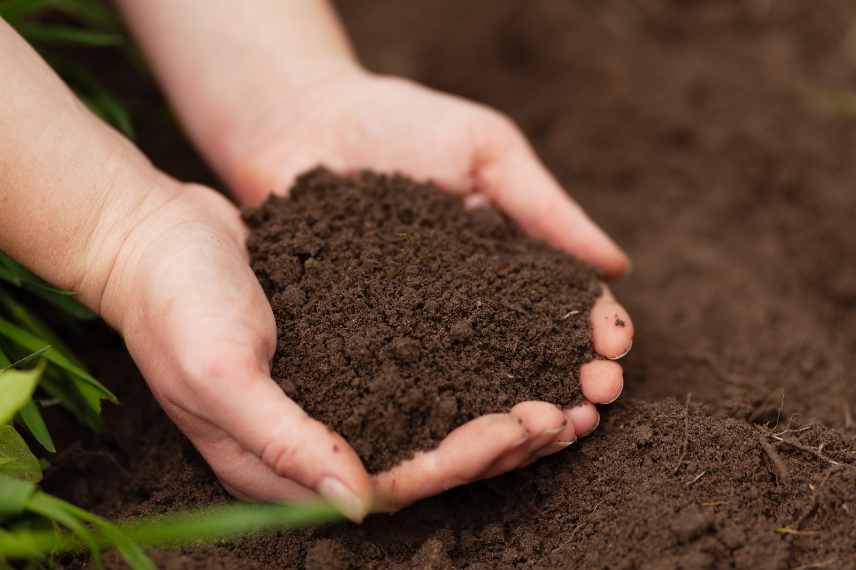
A fertile soil, rich in humus, is a dark brown colour
I'm not getting the right sun exposure for planting
After the soil that nourishes plants, exposure, i.e., the amount of light and sunshine a plant receives, is the second major influence on a plant’s development.
Trying to grow a full-sun plant in a shaded flower bed is a lost cause and doomed to failure, as it may grow, perhaps timidly, but will hardly flower. Conversely, a shade-loving plant exposed to the sun’s rays and heat will have its foliage scorched quickly, and usually the whole plant dies soon after.
We always recommend this to beginners, but also to more experienced gardeners: you must accept the exposure conditions of a garden, a courtyard or a balcony, because these cannot be changed (you can always bring a little more light by pruning, but that’s about it). By accepting a shaded situation, or, conversely, a very sunny one in a garden, you steer toward a palette of plants suited to that exposure… and there is such a range of plants for all situations that it would be a pity to miss out! When you search for a plant online, always filter by exposure type. In garden centres and nurseries, plants are usually grouped by exposure type.
→ For a better understanding of these concepts, consult my article Light in the garden: exposure, sunlight, shading and brightness. And discover our articles that address plants by exposure type: Shade plants, and plants adapted to drought and heat.

Taking a plant’s sunlight needs into account is essential to ensure its future flowering
I choose plants that are unsuited to their environment
Urban gardens subjected to ambient pollution, coastal gardens facing winds and salt spray, gardens subjected to intense or repeated winter frosts, or, conversely, a southern garden with mild temperatures all year round… Geography, and the wider environment, are strong constraints that require vigilance in our planting choices.
Climate conditions are one of the first major constraints to consider. They mean that we cannot grow well, for example, southern-climate plants in a region where winter temperatures are too low, or hydrangeas without high humidity and regular rainfall. Heat and its extremes in some regions and cold in others, but also wind, greatly affect plants. It is therefore always advisable to refer to climate zones (there are five major ones in France) in order to identify plants that are compatible with your region.
Finally, urban gardens are subject to a significant pollution impact. In this case it is wise to always check a plant’s tolerance to air that is more or less polluted and to a more confined environment.
To withstand cold winters, mulching and winter covers are essential in many regions and for many young plants newly planted. Follow our tips How to lay mulch properly and How to install garden fleece.
Read also: What is a mild climate? ; Climate zones and USDA zones in France.
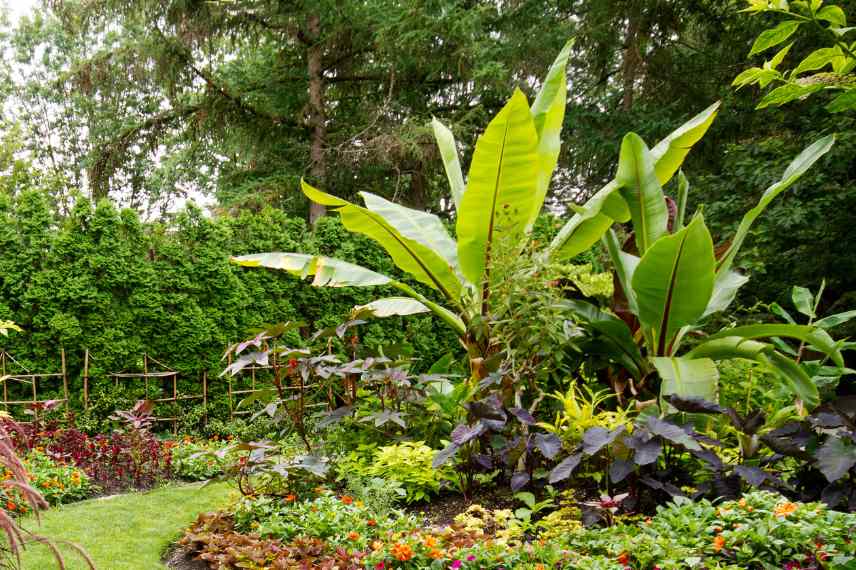
Creating an exotic garden isn’t possible everywhere, unless you select some very specific plants.
I plant too late or not in the right season
One may have paid attention to all the previous points, and yet the plants fail to establish. Why? Simply because, sometimes, we persist in wanting to plant when it suits us, but not when it benefits the plant.
Whether it’s a tree, a shrub, a grass, a perennial or bulbs, each has a specific growth pattern, and their dormancy (the moment they go into “hibernation” — this can be in summer!), is crucial to know the right time to plant. So, avoid, among other things, indulging yourself by snapping up a shrub or a tree in summer — it’s really not the right season, and forget planting when it’s freezing outside.
Planting times are, moreover, always indicated either on the labels, or detailed on websites and all gardening books. It’s not mere vanity, but something to be respected.
→ Also read: Best times to plant, Choosing the right season to plant perennials, When should you plant summer bulbs?
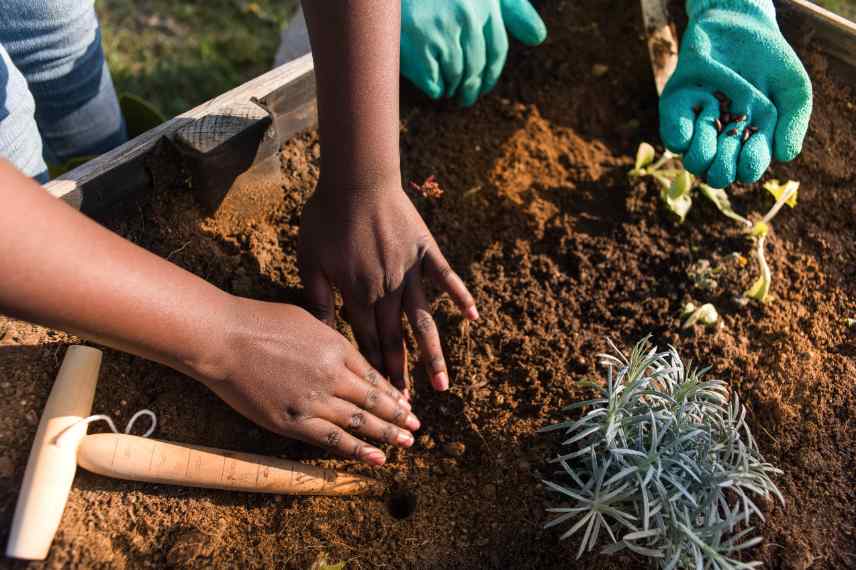
Plant in the right season
I prune badly or at the wrong time
Many beginner gardeners struggle to determine the right time to prune their shrubs. A pruning done at the wrong time can have adverse effects on plant health and growth. For example, pruning a spring-flowering shrub in autumn will often deprive the plant of its flower buds, reducing its flowering the following year. Similarly, overly severe pruning can weaken the shrub, making it more vulnerable to diseases and pests.
It is crucial to understand the growth cycle of each shrub species to avoid these mistakes. Generally, spring-flowering shrubs should be pruned just after flowering, while those that flower in summer can be pruned at the end of winter or in early spring. But you also need to know which shrubs flower on last year’s wood. In short, a real puzzle for beginners.
To avoid these pitfalls, it is therefore recommended to learn about the specific needs of each shrub and follow appropriate pruning techniques.
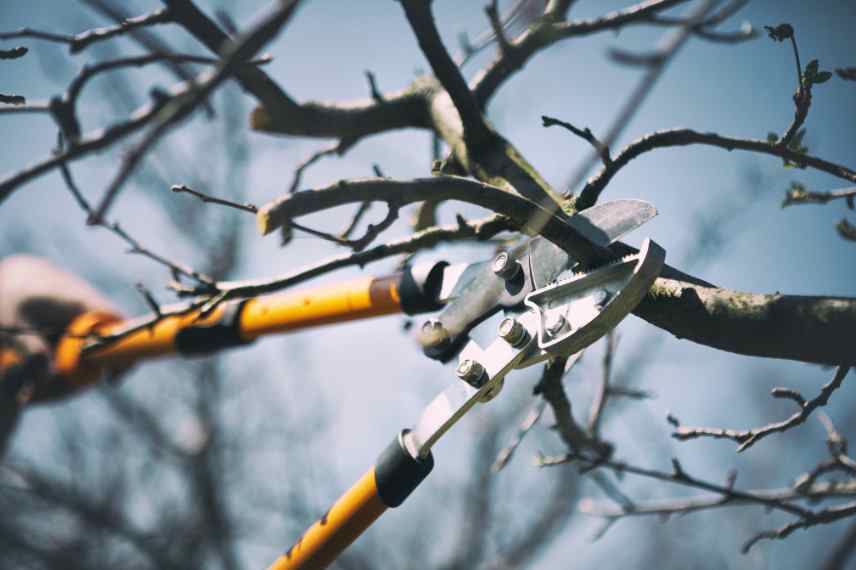
Many woody plants are pruned in winter
I water too much or too little
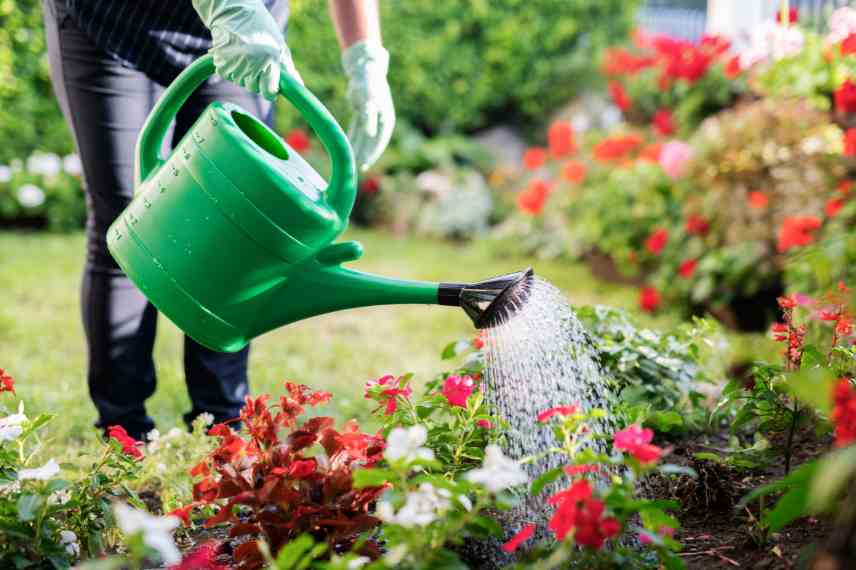
One of the most common pitfalls among gardeners is the watering dosage. And again, this criterion will be decisive for a plant, because even when well established in accordance with best practice, with all the factors to consider mentioned above, if you don’t water… or water too much, the plant survives in the short term, then declines and finally dies again even though it had everything to delight you. With watering, it’s all about balance and observing the plants.
Refer to the needs of each plant and group in the garden or on the patio those that need a lot of water (often with broad foliage and hollow stems such as arum lilies, for example) with those that require less or only a little water (those with small leaves or with silver-grey foliage). When it comes to watering, it’s difficult to generalise, but we always advise: it is better to water a plant a little less than too much. Plants signal their lack of watering with soft leaves or a droopy appearance, or even foliage that begins to yellow.
Also read: Watering the garden: how to do it? and Watering the vegetable garden: our tips
Further reading
At Promesse de fleurs, we help you with our tool Plantfit to plant the right young plant in the right place!
And on our blog, we share sound advice, with a touch of humour, to avoid botching your garden in How to Fail….
- Subscribe!
- Contents
Comments