





























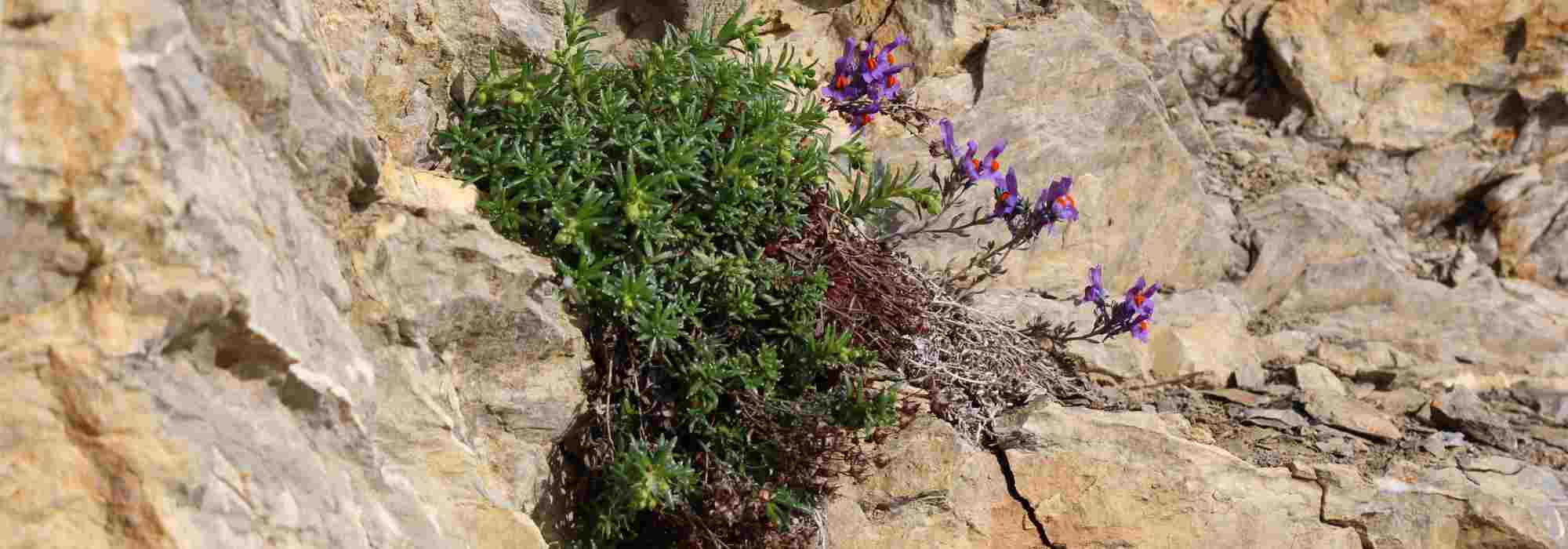
They grow on rocks: Discover lithophyte plants
Life and survival on the rock
Contents
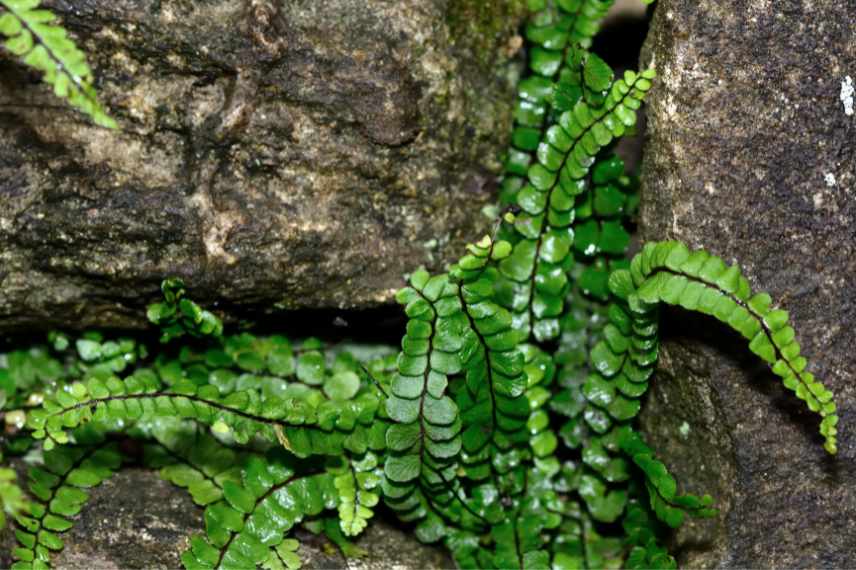

A brief definition...
The term “lithophyte” derives from the Greek words “lithos”, meaning stone, and “phyton”, meaning plant. This designation reveals the very essence of these organisms: plants capable of thriving by clinging to rock, often in environments where few others could survive.
Unlike terrestrial plants that draw their nutrients from the soil, lithophytes settle on bare rocks, rock outcrops, or even in crevices where the accumulation of organic matter is minimal. The survival of lithophytes in such habitats is, indeed, made possible by a range of adaptive strategies. Their roots, for example, are designed to anchor firmly in rock crevices, which not only stabilise the plant in a potentially precarious environment, but also absorb moisture and nutrients available, often derived from the decomposition of organic matter accumulated in these interstices. In addition, some lithophytes possess fleshy leaves or specialised structures for storing water, enabling them to withstand long periods of drought.
Did you know?
Rupicolous, epilithic, rupicolous… Around the term “lithophyte”, several other words orbit, sometimes used as synonyms, but each with its own nuance.
- Epilithic designates any organism, be it plant, animal or fungus, that has taken up residence on rock. This term thus encompasses a wide variety of life forms finding refuge on rock surfaces.
- Rupicolous and saxicolous are terms used to describe living beings, usually plants, that thrive on rock outcrops or stony surfaces.
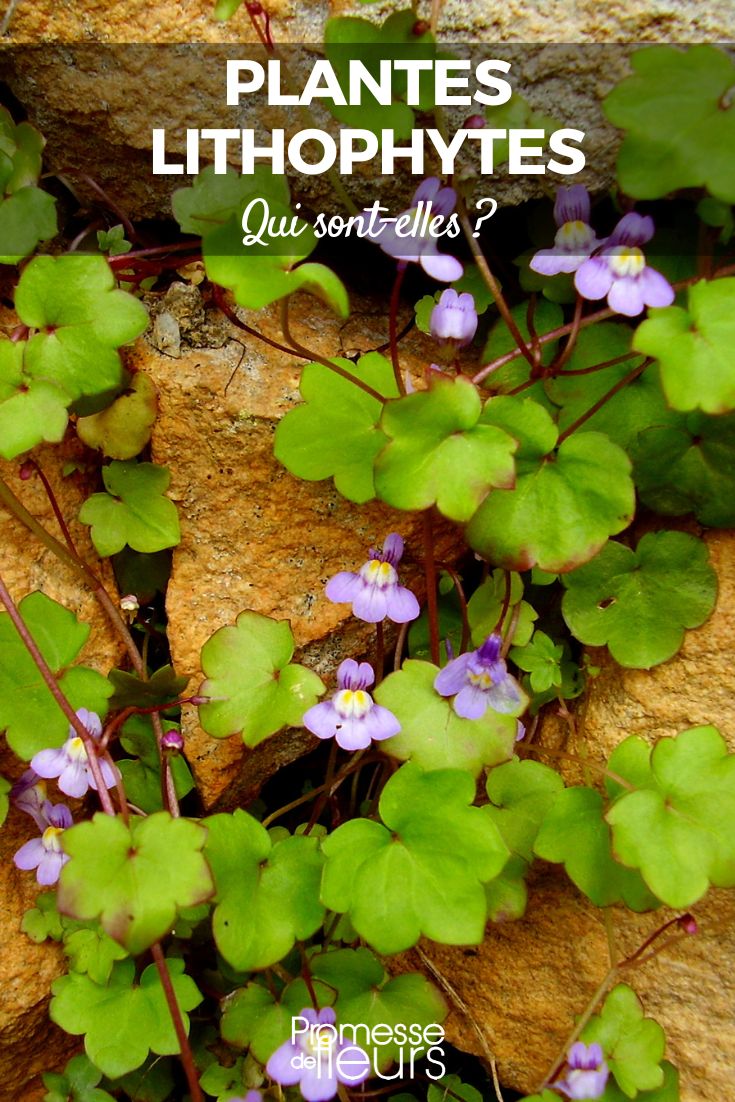
- Muricole characterises organisms that live on or against a wall, exploiting the interstices and the protection offered by these artificial or natural structures. This is the case of the charming Rome’s Ruin (Cymbalaria muralis) or the Ceterach officinal (Asplenium ceterach).
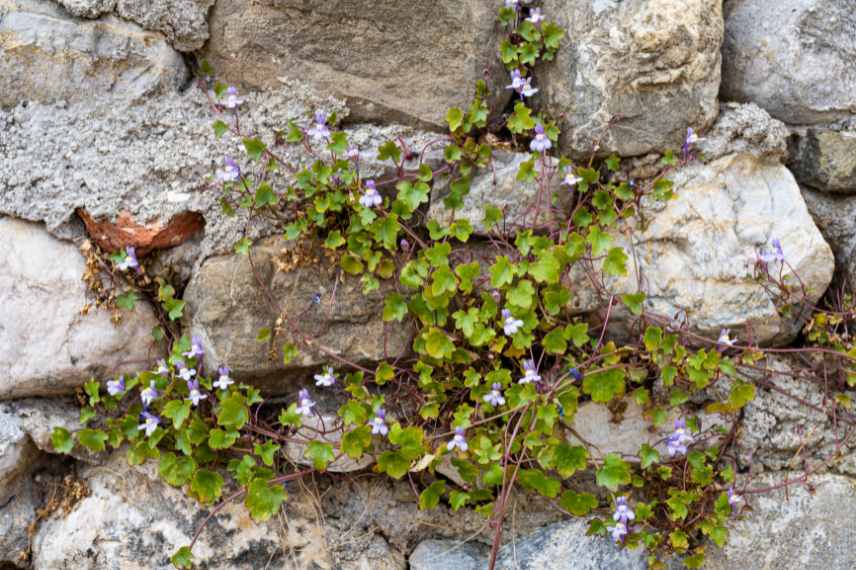
Cymbalaria muralis
Read also
10 plants to create a shady rockeryCharacteristics of lithophytic young plants
As you will have gathered, lithophytes possess unique characteristics and adaptations that set them apart in the plant world. These adaptations not only enable them to survive but also to thrive in conditions often regarded as inhospitable for most other plants.
Physiological adaptations to the rocky environment
First, their root systems are especially well suited to anchoring in rock crevices where little soil is present. These roots can also absorb moisture directly from rocks, a vital capability in environments where water is scarce. Moreover, some lithophytes develop thick, fleshy leaves, or specialised storage organs, which retain water and nutrients, allowing the plant to survive during prolonged droughts.
Another notable adaptation is the ability of certain lithophytes to carry out photosynthesis under low light conditions. This trait is particularly useful for plants living in deep crevices or beneath rocky overhangs, where direct sunlight is limited. This enhanced photosynthetic efficiency enables lithophytes to maximise the use of available light for their growth and development.
Types of rocks preferred by lithophytes
A bit of geology never hurts… It should be noted that lithophytic plants are not indifferent to the type of rock on which they settle. Some prefer calcareous rocks, rich in calcium, which can provide essential nutrients to the plant. Others find refuge on volcanic rocks, such as basalt, whose pores and cavities offer an ideal habitat. Siliceous rocks, with their rough texture, also provide good anchorage for lithophyte roots. Thus, each rock type influences the distribution of lithophytes, with some species adapted to chemical or physical conditions specific to these substrates.
Nutrition and growth processes
The nutrition process of these plants differs significantly from that of terrestrial plants. In the absence of soil rich in organic matter, lithophytes depend mainly on nutrients supplied by the decomposition of organic matter accumulated in rock crevices, as well as minerals dissolved in rainwater or dew. This ability to extract nutrients from seemingly unlikely sources is complemented by their capacity to store these resources effectively for growth periods.
The growth cycle of lithophytes can also be influenced by their rocky environment. In many cases, growth is slower due to environmental constraints, such as lack of water and nutrients, as well as temperature fluctuations caused by exposure to direct sun or frost. However, this moderate growth is offset by a longevity often greater and by the ability to survive in conditions where other plants could not.
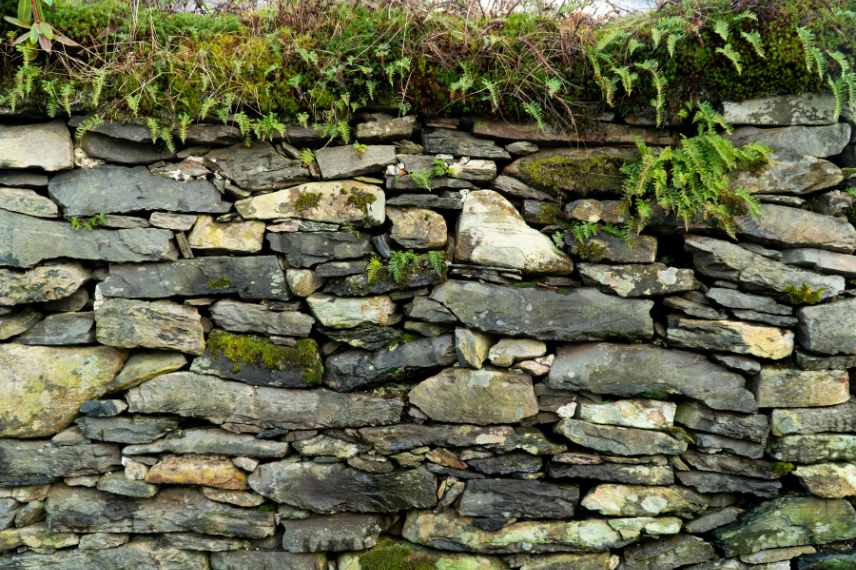
Stone walls provide refuge for certain plants, including some ferns
The diversity of lithophyte plants
An overview of common botanical families among lithophytes and some emblematic examples of these extraordinary plants.
Common botanical families
- Orchidaceae (orchids): Perhaps one of the best-known families among lithophytes, orchids comprise numerous species (in the genera Epidendrum, Dendrobium or Paphiopedilium) able to thrive on rocky surfaces.
- Bromeliaceae (bromeliads): This tropical family also includes lithophytic species, known for their ability to store water in rosettes of leaves, which allows them to survive in arid rocky environments. Tillandsias are an example.
- Cactaceae (cacti): Cacti are famed for their drought tolerance and ability to store water. Some species, such as the Rhipsalis baccifera, grow as lithophytes, using their roots to anchor themselves in rock crevices.
- Aspleniaceae (ferns): Some ferns, such as Platyceriums, a few Aspleniums or Cheilanthes (Cheilanthe lanosa), are also suited to life on rocks, developing roots that infiltrate crevices to absorb moisture and nutrients.
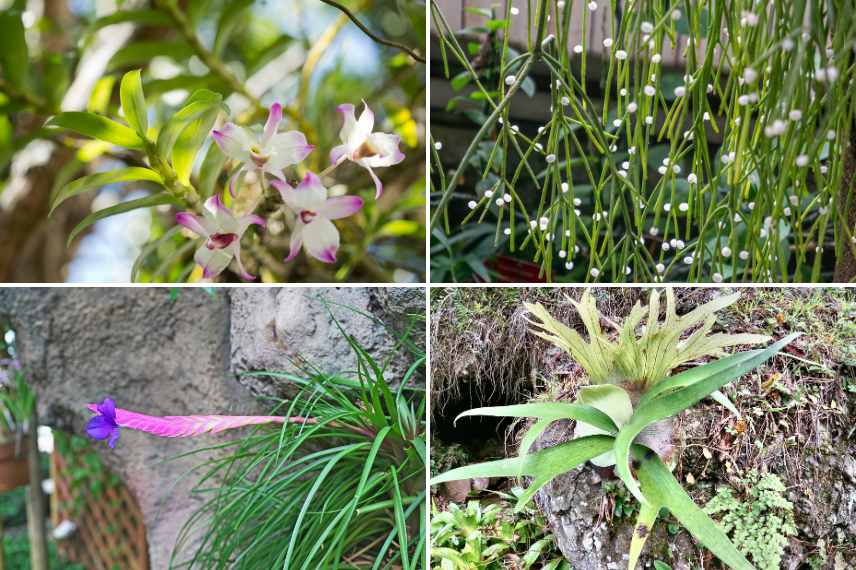
Dendrobium, Rhipsalis baccifera, Tsillandia cyanea and Platycerium
Read also
15 plants for a sunny rockeryEcological role and importance for biodiversity
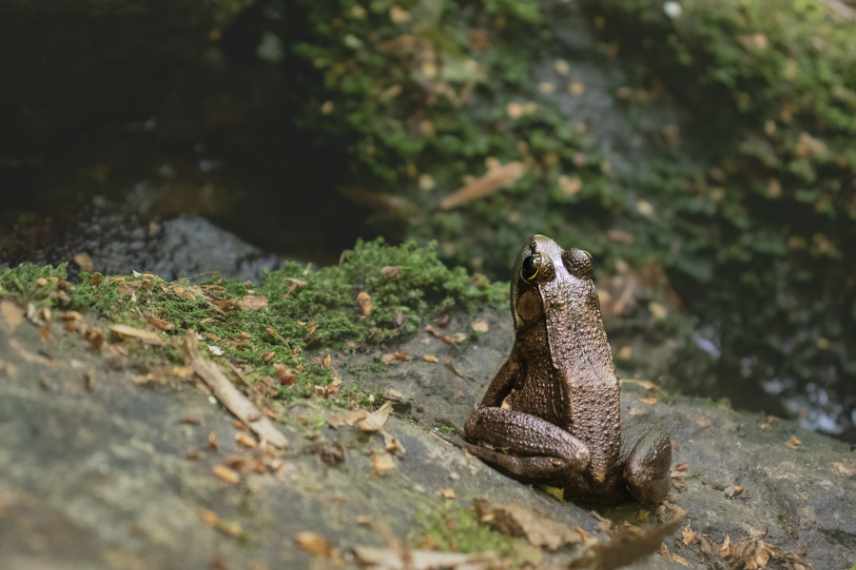
Conservation challenges for rocky habitats
Here, rocky habitats range from Brittany’s granite cliffs to the expansive limestone expanses of the Alps and the Pyrenees, offering environmental conditions that have allowed the evolution of lithophyte plants. However, these ecosystems are vulnerable to a range of threats, including urbanisation, unregulated tourism, mining and rock extraction, as well as changes in farming practices. These activities can lead to the destruction or fragmentation of these habitats, endangering the species that depend on them.
Moreover, Furthermore, climate change poses an additional threat, altering weather conditions and precipitation patterns on which lithophytes depend for their survival. Temperature fluctuations and extreme weather events can affect the viability of these ecosystems, forcing species to adapt quickly or migrate to milder altitudes, where possible.
Conservation initiatives for threatened lithophyte species
In response to these challenges, several conservation initiatives are under way in France to protect rocky habitats and the lithophyte species they host. These efforts include:
- The creation of nature reserves and protected areas: Specific zones are dedicated to protecting natural habitats and their biodiversity. These spaces, such as Écrins National Park and Massane National Nature Reserve, provide a refuge where lithophyte species and their ecosystems can be preserved and studied.
- Research and monitoring programmes: Studies are conducted to better understand the ecological needs of lithophytes, the threats they face and the best conservation management methods. This research helps guide preservation efforts and to develop strategies tailored to each habitat.
- Restoration of degraded habitats: Projects aimed at restoring rocky habitats damaged by human activity are being implemented, often by reintroducing native lithophyte species and stabilising the rocky substrates to prevent erosion.
- Awareness and education: Public awareness of the ecological values of rocky habitats and the need to protect them is crucial. Educational programmes and awareness initiatives aim to involve local communities and visitors in the conservation of these unique ecosystems.
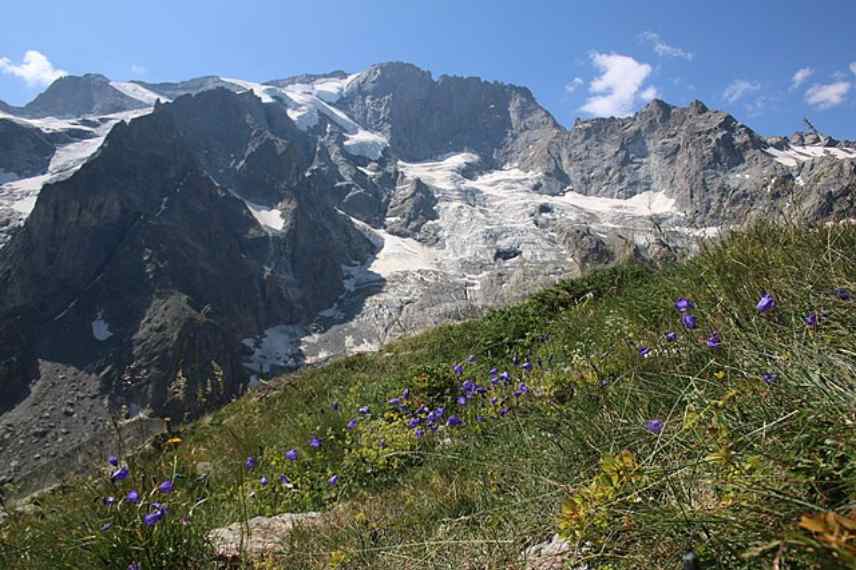
Écrins National Park, protected space (© Wikimedia Commons)
Welcoming these plants into your garden.
It is perfectly possible to welcome hardy lithophyte plants into your garden, such as some ferns or saxifrages, for example. But to successfully cultivate them, it is essential to simulate an environment that imitates their rocky natural habitats, to choose species compatible with the local climate and to provide appropriate care.
Tips for creating a rocky environment that suits lithophytes
- Creating a rockery: Build a rockery or an Alpine rock garden using stones and rocks of varying sizes to mimic lithophytes’ natural rocky landscape. Ensure the arrangement provides good drainage, as standing water can be detrimental to these plants.
- Appropriate substrate: Use a well-draining substrate that mimics the poor, gravelly soil of rocky habitats. A mix of sand, gravel and light potting compost can provide a good base for lithophyte growth.
- Light exposure: Most lithophytes (not all) require a good amount of light to thrive. Place them in a spot in your garden that receives several hours of direct sun each day, taking into account the specific needs of each species.
- Look for local species if possible: Choose lithophytes native to your region or species known to adapt well to your climate. This not only ensures their survival but also helps preserve local biodiversity.
→ Find Alexandra’s tips on creating a rockery in the garden.
→ Which plants should you choose? And shall we embark on creating an Alpine rockery? Jean-Christophe offers you a fine selection of plants.
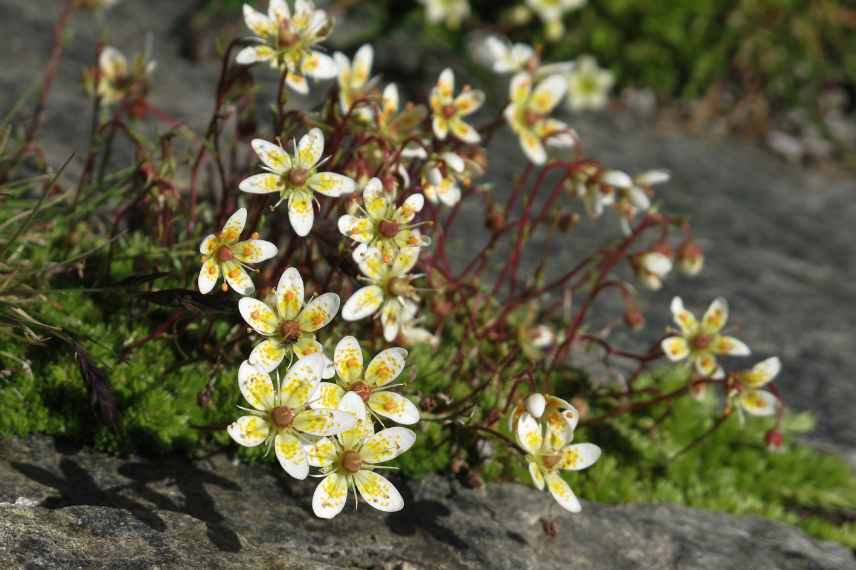
Saxifrages
- Subscribe!
- Contents
Comments