





























Thornless holly: our varieties for an elegant and accessible garden
Discover soft holly with many uses
Contents
Thornless hollies, unlike traditional hollies, have soft, non-prickly leaves that make them perfect for spaces where children and pets coexist. Rich in varieties, these shrubs offer a range of foliage colours, from deep greens to golden hues, and decorative berries that brighten winter.
With an evergreen habit for year-round presence or deciduous for a seasonal display, thornless hollies integrate harmoniously into natural, formal or contemporary gardens. With a range of habits, from majestic shrubs to compact varieties ideal for small spaces, they suit every need.
In this article, explore the best thornless hollies for your garden or terrace, whether you are looking to structure a space, replace boxwood, or simply add a unique decorative touch.

Thornless holly varieties for attractive fruiting
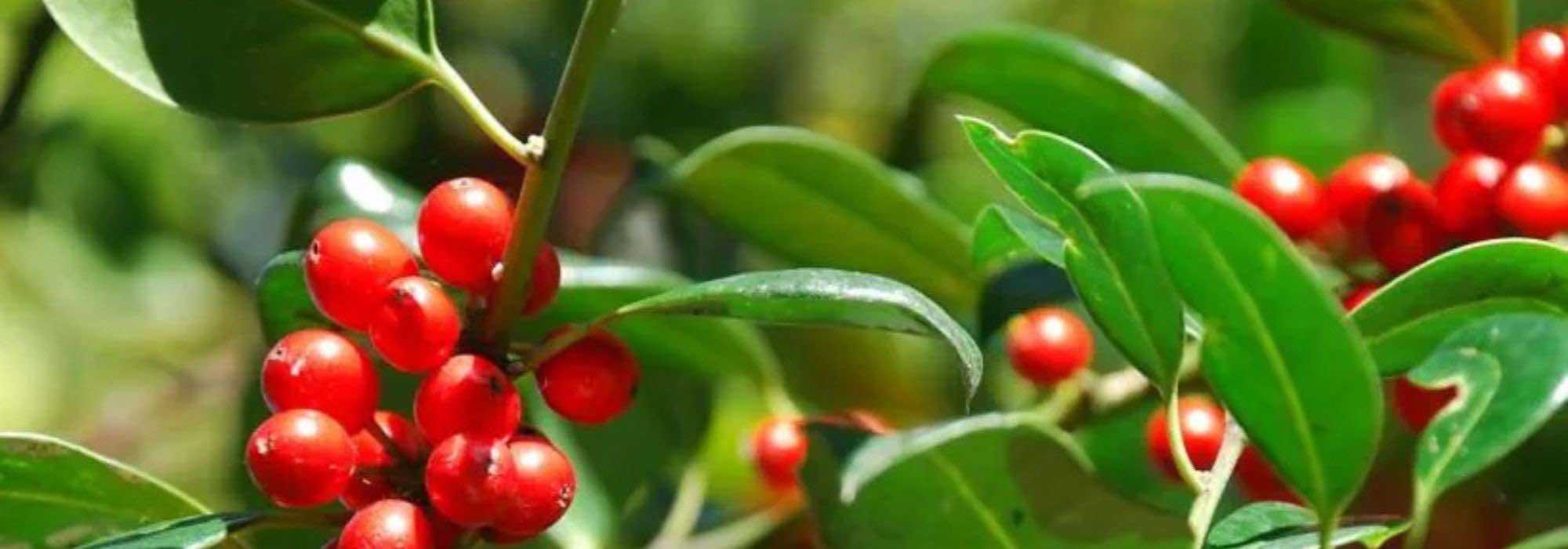
Thornless hollies, especially cultivars derived from Ilex verticillata and Ilex rotunda, stand out for their spectacular fruiting. Their coloured berries, which often persist until the end of winter, provide a splash of colour throughout autumn and by December they evoke festive cheer and Christmas. These deciduous or evergreen shrubs become true ornamental gems, especially when their bare branches or dense foliage set off their bright berries and provide a feast for birds in winter.
Among Ilex verticillata, female varieties such as ‘Magical Daydream’, ‘Oosterwijk’, and ‘Magical Berry Winterberry’ stand out for their ability to produce an abundance of berries. These fruits, in shades ranging from bright red to vibrant orange, remain on the bare branches throughout winter, creating a striking display. These shrubs are particularly prized in naturalistic gardens or informal hedges, where their ornamental appeal lights up winter landscapes. To ensure abundant fruiting, they should be paired with a male plant such as ‘Southern Gentleman’, a variety renowned for its late flowering, perfectly synchronised with these female cultivars.
The Ilex rotunda ‘Red Dot’ holly, with its evergreen foliage and red, glossy fruits, offers another spectacular option. This holly of East Asian origin stands out for its rapid growth and its ability to produce abundant fruiting in autumn and winter. Ideal for milder climates, it adds a festive and distinctive touch to borders or open spaces.
These fruiting hollies naturally find their place in winter displays evoking Christmas. Their berry-bearing branches can be cut to decorate wreaths or floral arrangements, prolonging their magic into our interiors. They are also ideal for attracting local wildlife, particularly birds, which find in their fruits a valuable source of winter sustenance.
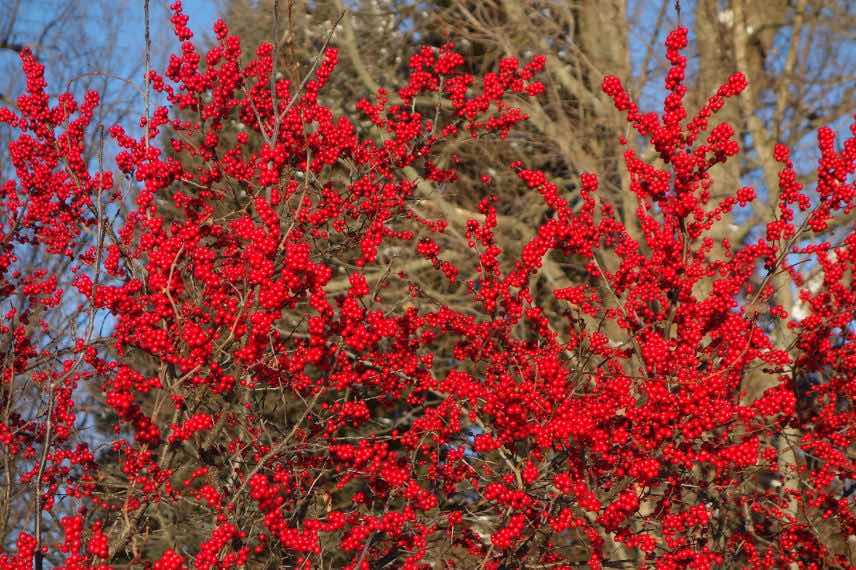
The superb bright berries of whorled holly during the winter season
Read also
Holly: planting, pruning and careThornless holly as an alternative to boxwood
Ilex crenata varieties stand out as an excellent alternative to boxwood, which is increasingly affected by diseases and pests such as the box tree moth or dieback. These shrubs offer dense, evergreen foliage that is not prickly, closely resembling that of boxwood, while being more resilient and easy to grow.
The Ilex crenata ‘Dark Green’ is one of the best candidates for replacing boxwood. This variety with an elegant habit, reaching up to 3 metres in height, features small dark-green, glossy leaves and excellent disease resistance. It lends itself to all pruning, whether for classic borders or more complex topiary shapes, such as Niwaki (cloud pruning), typical of Japanese gardens. Its rapid growth compared with boxwood allows faster garden structuring while maintaining a tidy aesthetic.
For those seeking more original forms, Ilex crenata ‘Fastigiata’ is an excellent option. This crenate holly with a narrow, columnar habit is ideal for container planting, vertical borders, or for creating hedges that require a slender and graphic silhouette. Its ability to bear black berries on female plants also adds an additional ornamental dimension.
These Ilex crenata are versatile shrubs that blend harmoniously into formal or modern gardens. Their natural resilience, evergreen foliage and ability to withstand regular pruning make them ideal choices for gardeners seeking a reliable and aesthetically pleasing alternative to boxwood.
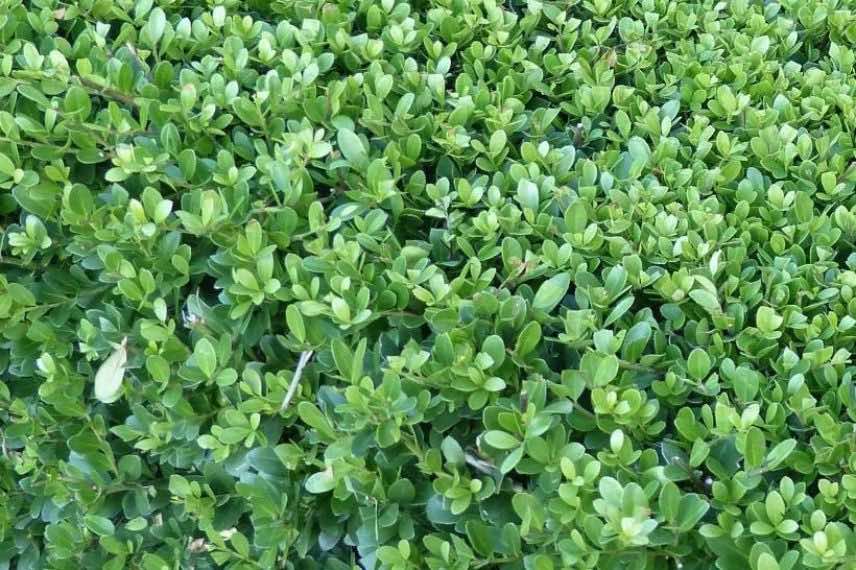
The foliage of crenate holly (here ‘Dark Green’)
Thornless hollies with evergreen or deciduous foliage
Spineless varieties come in cultivars with evergreen or deciduous foliage, offering options suited to different needs and aesthetics in the garden. This choice influences not only the appearance of the garden across the seasons, but also how these shrubs can be used.
Evergreens: a year-round presence
Hollies with evergreen foliage, such as Ilex crenata and Ilex glabra, guarantee continuous visual structure, even in the depths of winter. Their dense, glossy leaves bring timeless elegance, while providing an excellent backdrop to showcase seasonal flowering or fruiting.
Deciduous hollies: a seasonal metamorphosis
Conversely, deciduous hollies, such as the Ilex verticillata, bring unique seasonal interest. In autumn, their foliage changes colour, transitioning through warm and vibrant hues before shedding, revealing their bare branches laden with bright berries.
The Ilex verticillata ‘Magical Daydream’, for example, offers an impressive display with its bright orange berries that persist on its bare branches until the end of winter. The Ilex verticillata ‘Oosterwijk’ is notable for its bright red fruits that light up winter landscapes while attracting birds.
Two styles, one complementary choice
Choosing evergreen foliage versus deciduous foliage depends on the role you want these hollies to play in the garden. Evergreens provide stability and continuity, while deciduous ones create visual dynamism and strong seasonal interest. These two types of holly can also be combined to capitalise on their respective qualities: evergreens provide structure to spaces, while deciduous add colour and originality.
Different foliage colours for holly without thorns
Many holly varieties feature dark-green, glossy, dense foliage, simple and elegant. For example, the Ilex crenata ‘Green Hedge’ and ‘Kinme’ possess small dark-green, glossy leaves, ideal for structuring a bed or creating immaculate borders. These varieties, hardy and robust, make an excellent choice for formal or Japanese gardens, where the dark-green colour highlights the lines and sculpted forms.
To brighten the garden, certain varieties of Ilex crenata stand out for their golden or variegated foliage. ‘Convexed Gold’ is a remarkable variety with its small domed leaves in a bright golden-yellow, which remain decorative year-round. Its unique texture and density make it an excellent option to replace boxwood while introducing a warm note of colour in borders or low hedges.
On its side, the Ilex crenata ‘Lingold’ adds a dimension that is even more refined with its variegated golden-yellow foliage. This variety forms a compact, luminous ball, perfect for lighting up shaded areas of the garden or for container plantings. In Japanese gardens, its vibrant colour contrasts with the darker or mineral elements.
Finally, remember that winterberry hollies (Ilex verticillata) bring plenty of colour to autumn with fiery hues, and their berries are an important splash of colour in winter.
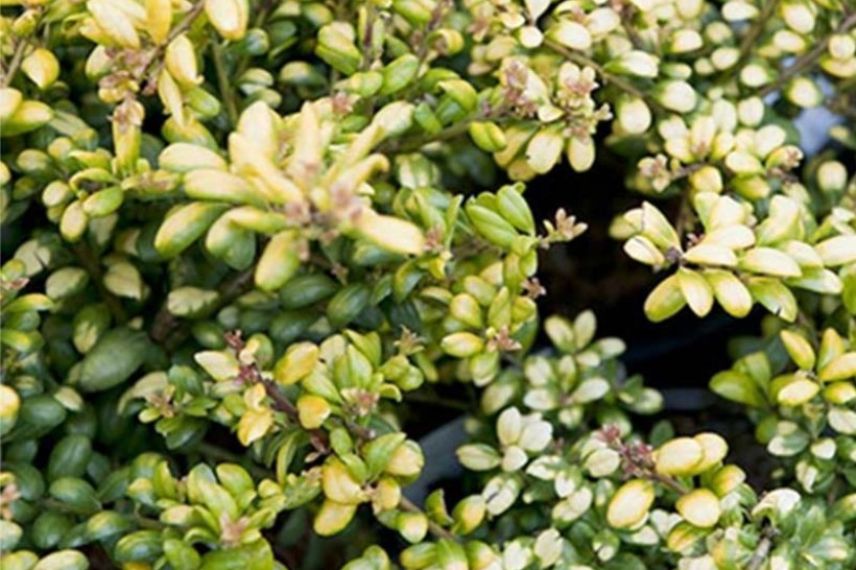
Ilex crenata ‘Convexed Gold’
Large shrubs and dwarf cultivars: spineless hollies for every space
Thornless hollies offer a wide diversity of sizes and growth habits, enabling them to meet a range of needs.
Shrubs or small trees
Tall varieties, such as the Ilex crenata ‘Dark Green’, form slender shrubs reaching often 2.5 to 3 m in height by 1 to 1.25 m in spread.
The Ilex rotunda ‘Red Dot‘ is an evergreen holly of East Asian origin that can reach 3 m in ten years, with a broad and rounded habit. It is particularly valued for its rapid growth and its abundant red fruiting in autumn and winter. This variety is well suited to spacious gardens where it adds an original and exotic touch. Its mature height can reach 5 m, or even 8 m in open spaces.
The hollies with fastigiate habit: vertical elegance
As seen in the first chapter, the Ilex crenata ‘Fastigiata’ stands out for its columnar, slender habit. This crenate holly, reaching 2.5 to 3 m in height with a spread of only 80 cm, resembles dwarf yews and is ideal for planting in a row or in pots. Its slender appearance is ideal for structuring a space without weighing it down, offering a graphic and refined silhouette.
The dwarf hollies: compactness and versatility
For small spaces, borders or container plantings, dwarf hollies such as the Ilex crenata ‘Convexed Gold’ or ‘Lingold‘ are perfect choices, with mature sizes around 80 cm tall by 50 cm wide. The Ilex glabra ‘Gem Box’ forms a small rounded shrub about 1 metre across.
The Ilex verticillata ‘Magical Berry Winterberry‘, with its erect habit and vibrant red fruiting, measures only about 1.5 metres in height, making it perfect for small gardens or low hedges.
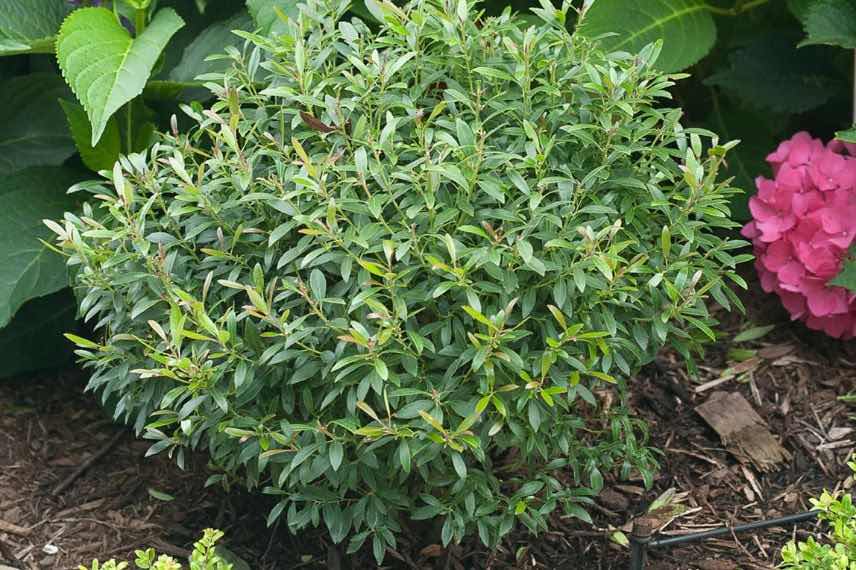
The dwarf holly Ilex glabra ‘Gem Box’
- Subscribe!
- Contents
Comments