





























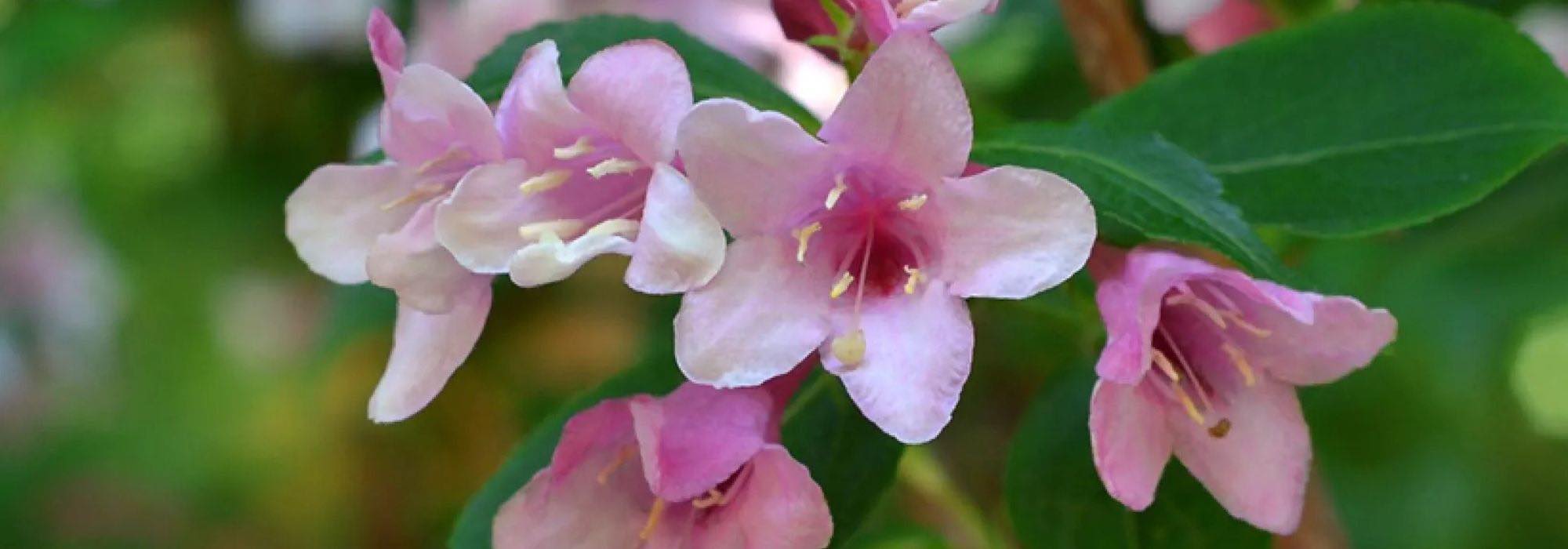
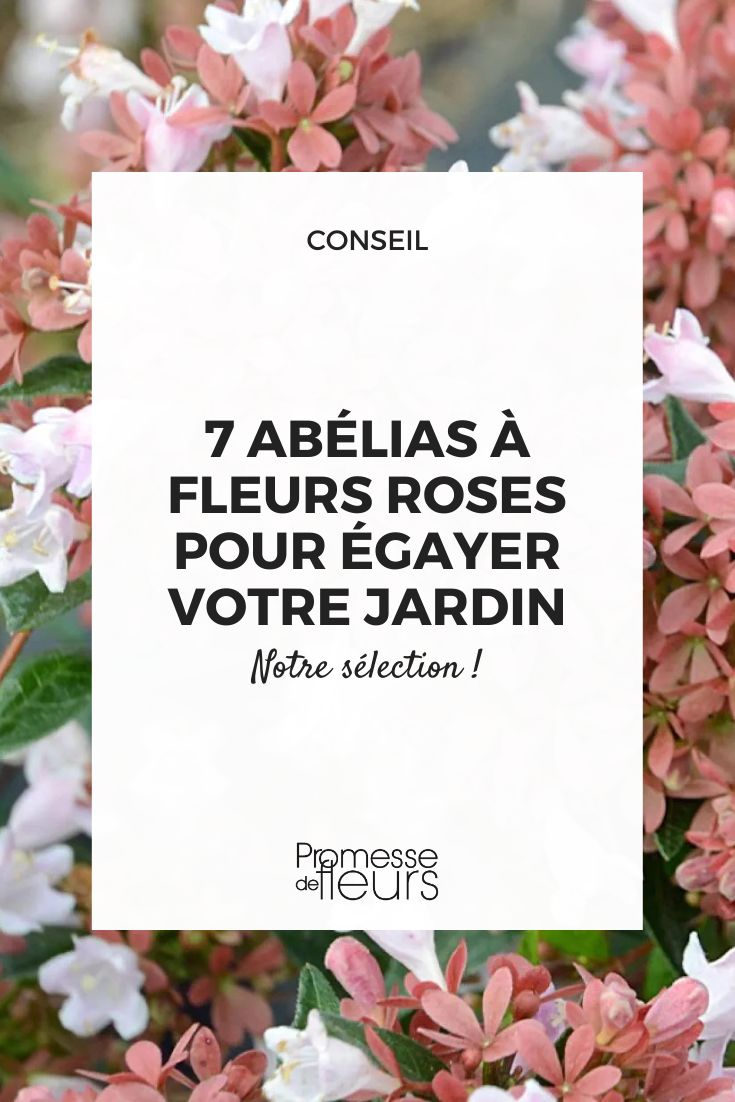
Top 7 pink-flowering Abelias to brighten up your garden
For long-lasting, colourful flowering
Contents
Pink-flowered Abelias are must-have bushes for adding a touch of softness and colour to the garden, and are easy to grow. Their long flowering period, from spring through autumn, gives off a delicate fragrance that attracts pollinators. These versatile bushes fit perfectly in hedges, beds and borders, or containers, adapting to small gardens as well as large terraces. In this article, discover 7 varieties of pink-flowered Abelias, from lavender-pink to pink-violet, with all our tips to integrate them harmoniously into your garden.

Abelia grandiflora 'Pastel Charm'
Abelia ‘Pastel Charm’® MINDUO2 is a charming new addition, designed by Minier Nurseries. Perfect for small spaces and terrace ornamentation, this compact shrub stands out for its rounded, bushy habit, as well as its long summer flowering. From July to October, it covers itself with small two-tone bells, soft pink with pale yellow markings on the inside, emitting a light fragrance that attracts pollinators. In autumn, its semi-evergreen foliage, initially light green, takes on rich bronze tones, while its rust-coloured calyxes, arising from the spent blooms, persist for a long time on the graceful branches.
Introduced in 2010, this French Abelia reaches 1 m in height and width and is hardy to around -12°C. Low-maintenance, it thrives in most soils, whether in the ground or in a pot, and tolerates drought well once established. Ideal for forming small free-standing hedges or enhancing the centre of the beds, it pairs beautifully with shrubs such as landscape roses with single flowers or crape myrtles like ‘Shell Pink’.
Abelia 'Edward Goucher'
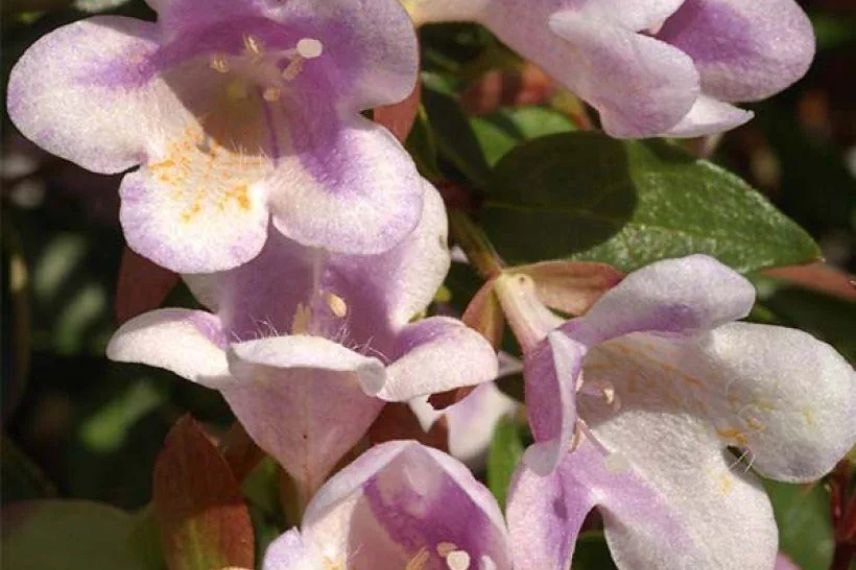
Abelia ‘Edward Goucher’ is a renowned hybrid variety, more compact and hardy than the Abelia grandiflora, ideal for climates north of the Loire. Created in 1911, this horticultural cultivar delights with its long-lasting, fragrant flowering, which begins in late summer and lasts until the first frosts. Its small lilac-pink flowers, arranged in panicles, contrast prettily with its rust-coloured persistent calyces, bringing charm and sweetness to the garden. The arching, slender and elegant shoots are clad with glossy, semi-evergreen foliage that takes bronze-copper to purplish hues in the cold, prolonging the ornamental interest of the shrub.
Originating from the cross-breeding between the Abelia x grandiflora and the Abelia schumannii (syn. longituba), this bushy, rounded shrub reaches 1.80 m in height by 1.50 m in width. Its growth is fairly rapid and its drought tolerance in summer makes it a perfect choice for many gardens. Abelia ‘Edward Goucher’ also integrates well in an informal hedge or in a border, where it brings lightness and structure. Pair it, for example, with tree mallows such as ‘Candy Floss’ or with Buddleja ‘Miss Ruby’.
Abelia 'Pinky Bells'
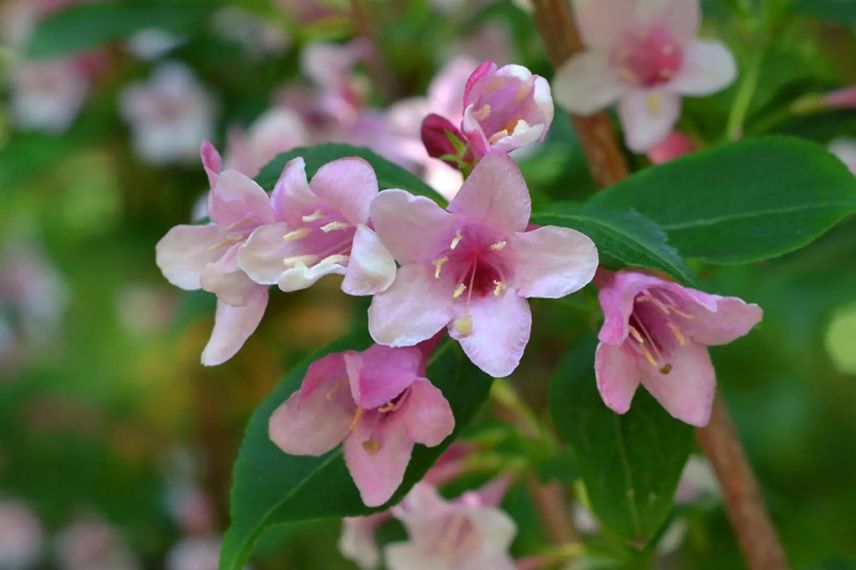
Abelia ‘Pinky Bells’® is an American cultivar that stands out for its compact, ramified and rounded habit, and for its large pink flowers, almost twice the size of those of the variety ‘Edward Goucher’. Flowering from July to October is abundant and lightly fragrant. The flowers, funnel-shaped and about 3 cm across, open to a deep pink and gradually lighten, creating a subtle gradient on semi-evergreen foliage.
In spring, the young foliage is ornamental, tinged purplish-copper, then becomes dark green at maturity. In autumn, it takes on bronze to purplish tones, while the pink bracts of the faded flowers add a decorative touch that persists late into the season. With a height of 1 m and a spread of 1.5 m, ‘Pinky Bells’ is perfect for small spaces, as a free-standing hedge or as a clipped hedge, or even as a standalone specimen in a large pot.
Low-maintenance and easy to grow, this Abelia thrives in sun or partial shade, in well-drained soil. It is drought-tolerant once well established. For a flowering hedge or an attractive border, pair it with shrubs such as Berberis thumbergii ‘Atropurpurea Nana’ or Ceanothus repens.
Read also
Abelia: 5 varieties to grow in potsAbelia 'Raspberry Profusion'
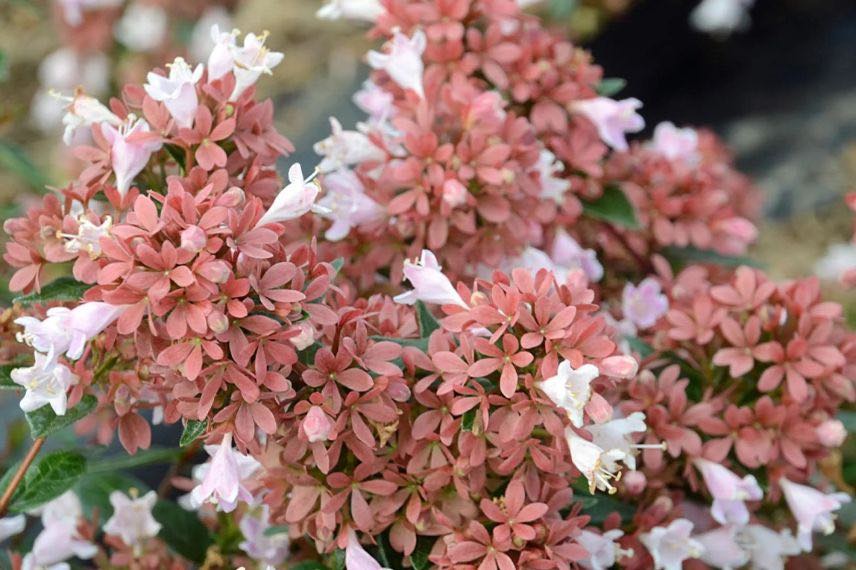
Abelia ‘Raspberry Profusion’ Brightens the garden with vibrant shades of pink-mauve and raspberry, adding a splash of colour that lasts more than six months. This shrub forms a dense, spreading dome, blossoming from mid-May with large, fragrant flowers, twice the size of those of standard varieties. Its bells, in bright pink-mauve, are accompanied by vivid raspberry-pink sepals, which persist long after flowering, gradually softening to an old-rose shade in autumn. This changing colour palette creates a living display that enlivens beds and borders.
Derived from the cross-breeding of Abelia ‘Edward Goucher’ for its compact habit and vibrant flowers, and Abelia chinensis for its enchanting fragrance, ‘Raspberry Profusion’ reaches 80–90 cm in height and 1.2 m in width. Its slow growth and continuous flowering from May to October, when few shrubs are in bloom, make it an ideal choice to bring colour and fragrance to the garden. The arching branches bear dark green, glossy foliage, which takes on rosy hues as the first cool spells arrive.
Perfect in a border or as a low hedge, this drought-tolerant Abelia pairs beautifully with ground-cover roses or with Genista lydia. It also thrives in a pot, ideal for adorning a terrace or balcony, and can be overwintered in regions with harsher climates, tolerating temperatures down to -15°C in well-drained soil.
Abelia 'Pink Pong'
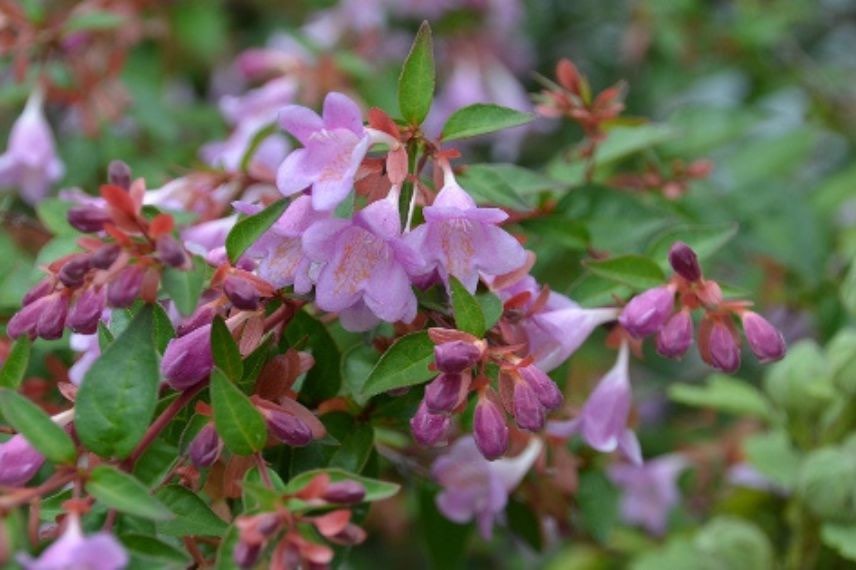
Abelia ‘Pink Pong’® ABENOV41 is a superb new introduction with large violet-pink flowers that bloom in the garden from May to October. Its early, long-lasting flowering gives off a light fragrance, and its funnel-shaped corollas, dusted with yellow-orange at the throat, form small elegant terminal clusters. In autumn, the light-green foliage of this abelia takes on bronze tones, and the rust-coloured calyces of the faded flowers add a lasting decorative dimension.
Bred in 2014 by INRA/SAPHINOV, this French variety offers a bushy, dense and compact habit, reaching 1.60 m in height and 1.35 m in width. With its semi-evergreen foliage that remains through winter, except in severe cold, Abelia Pink Pong is hardy to -15°C, provided the soil is well-drained. Hardy and easy-going, it is perfectly suited to flowering hedges, whether clipped or natural, as well as to borders, and even adapts to small gardens.
Pair it with caryopteris and shrubby salvias, or with the Euonymus fortunei ‘Emerald Gaiety’.
Abelia 'Petite Garden'
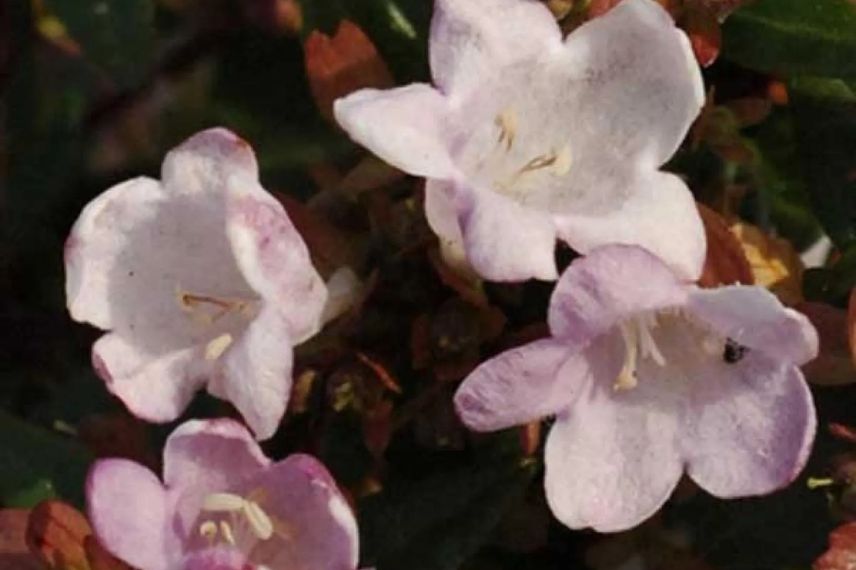
The Abelia ‘Petite Garden’® Minedward is a compact, dense variety with foliage that changes colour. From July to October, this shrub is covered with small, light lavender-pink flowers, slightly scented, which illuminate its dark green foliage. In autumn, the leaves take on beautiful bronze tones and persist partly through winter, depending on how severe the temperatures are.
bred by Minier Nurseries in 2009, this Abelia grandiflora selection is a vigorous hybrid derived from the species Abelia chinensis and Abelia uniflora, known for their hardiness and beauty. ‘Petite Garden’, hardy to -14°C, does not exceed 1 m in height or width, forming a dense, spreading cushion, suitable for small spaces. Its funnel-shaped flowers, grouped in terminal panicles, provide a soft contrast with the rust-coloured calyxes that persist on the autumn foliage.
In a bed of heather soil, it makes a successful pairing with rhododendrons and Pieris.
Abelia parviflora 'Bumble Bee'
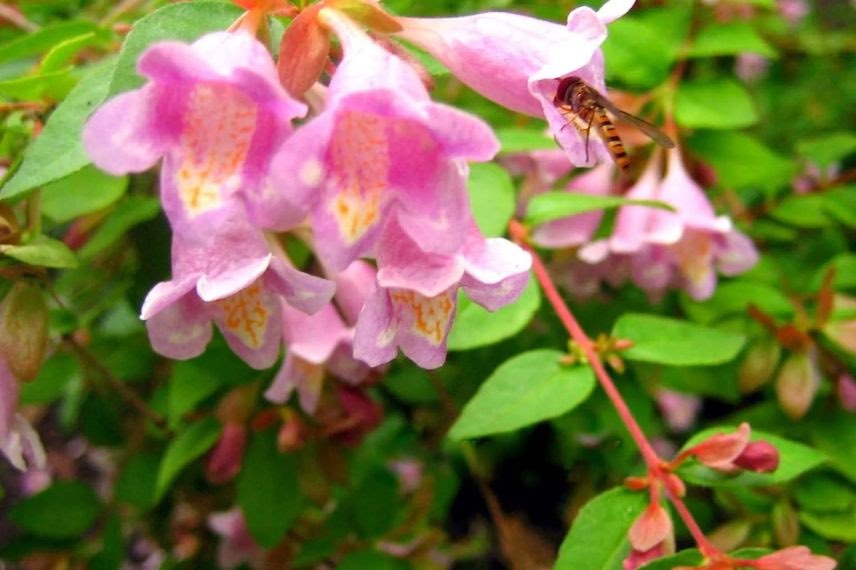
Abelia ‘Bumble Bee’ is a floriferous and elegant variety, originating from the Chinese species Abelia parviflora recognised for its long flowering and ornamental qualities. Awarded by the Royal Horticultural Society, this abelia captivates with its lilac-pink bell-shaped flowers that bloom throughout the summer, from July to September, exuding a subtle fragrance and attracting pollinators. The reddish calyces of the flowers remain decorative long after flowering, brightening the shrub until autumn. Its semi-evergreen, glossy leaves turn red-orange with the first frosts, adding a splash of colour late in the season.
With its bushy, slightly spreading habit, and its soft, reddish shoots, Abelia ‘Bumble Bee’ reaches about 1.5 m tall and wide after several years of growth. Its small pointed leaves, arranged in pairs, persist until early winter in regions where frosts are not too severe. Easy to grow, this shrub prefers humus-bearing, well-drained soils, staying moist, and tolerates temperatures down to -12 to -15°C once well established.
It enriches autumn borders with asters, Japanese anemones and tricyrtis.
- Subscribe!
- Contents
Comments