





























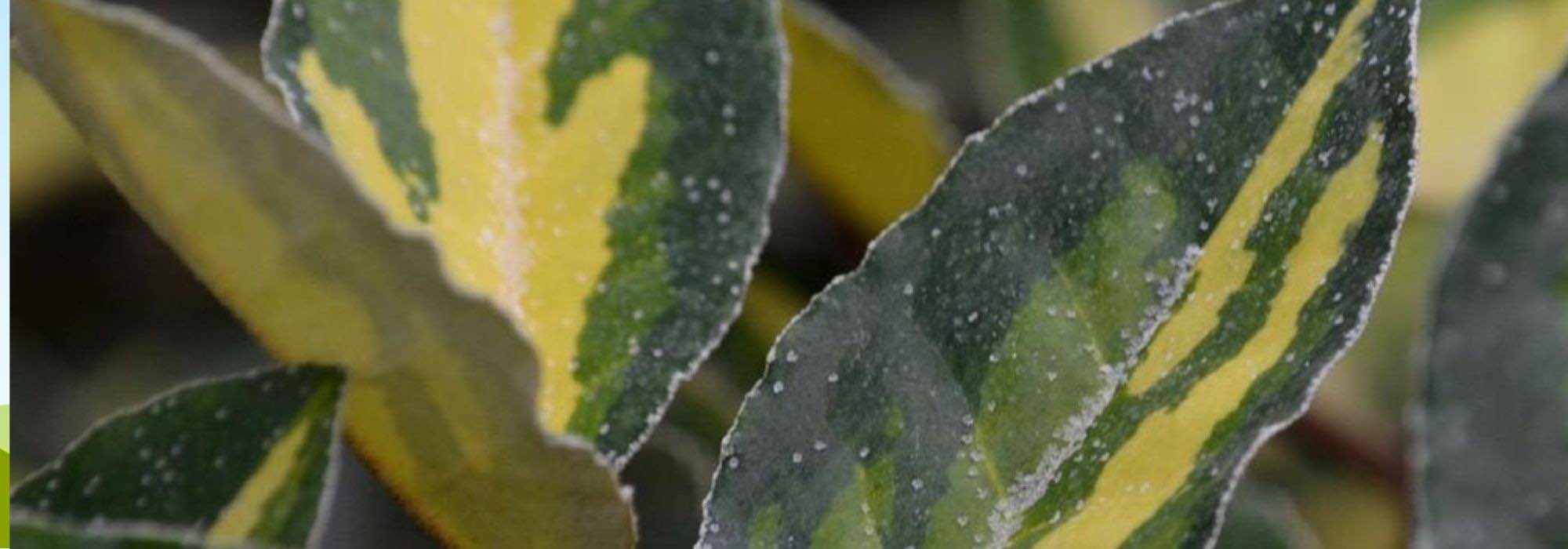
Variegated Elaeagnus: the most beautiful varieties
to illuminate your garden
Contents
Also called Oleasters, Elaeagnus are shrubs commonly seen in hedges. Easily identifiable by their lanceolate, leathery leaves and their discreet white flowering, they display a dense silhouette and are easily pruned into both a hedge and topiary. Very easy to grow, Eléagnus resists pollution, drought, strong winds and sea spray along the coast. Hardy to -15 to -20°C, it will grow in sun or partial shade and adapt to any soil, provided it is well drained. The foliage may be evergreen or deciduous and takes colours ranging from green to silvery and variegated, which makes it very decorative. Discover our selection of the finest Eléagnus varieties with variegated foliage to brighten your garden.

Elaeagnus ebbingei 'Limelight'
With its evergreen leaves variegated with yellow, the Elaeagnus ebbingei ‘Limelight’ adds brightness, even a touch of whimsy, to a hedge or border planting. From September to November, the lanceolate, leathery and glossy leaves are accompanied by small cream-coloured, bell-shaped flowers. Very fragrant, they emit a delicate fragrance reminiscent of jasmine and attract pollinators. After flowering, small decorative fruits, olive-like in colour and coppery-silvery, appear. They are edible for humans and also eaten by birds.
Elaeagnus ebbingei ‘Limelight’ grows very quickly and reaches a height of 3 metres and a width of 2.5 metres. It even thrives in less favourable conditions, and its root system enriches the soil. Plant it in a hedge in a shady corner of the garden to brighten it. It can be paired with Photinia Red Robin and with Abelia ‘Edward Goucher’ to form a decorative hedge, where birds can find shelter.
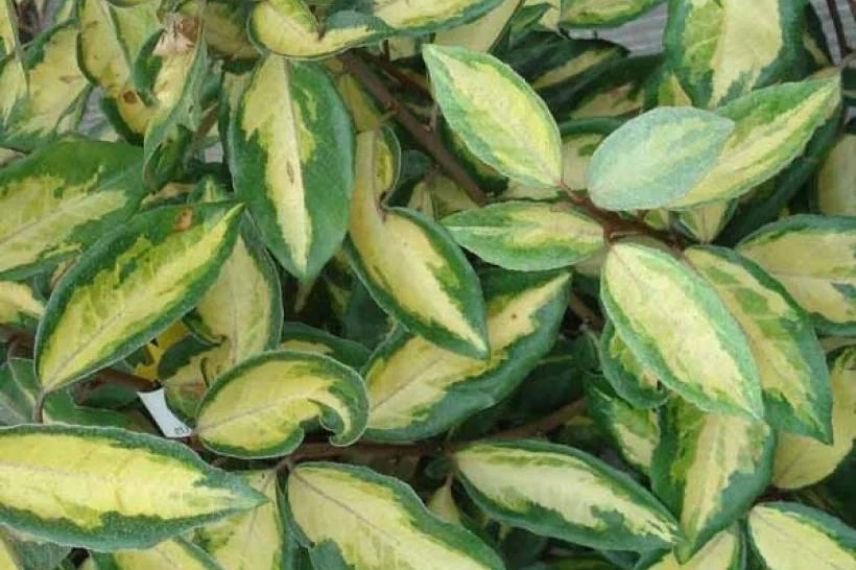
Elaeagnus ebbingei 'Maryline' (abrela) - Variegated Oleaster
Elaeagnus ebbingei ‘Maryline’ (‘Abrela’) stands out for its very bright evergreen foliage, strongly margined with pale yellow and edged with dark green. It forms a compact, dense shrub with a harmonious, bushy silhouette, reaching 2 metres high and 2 metres wide at maturity. The intensity of its foliage varies with the seasons. New shoots appear in spring and take on a rust-coloured hue with a silvery sheen. From September to October, small cream-coloured, fragrant flowers adorn the foliage. They release scents of honey and almond. This cultivar, created recently, shows medium hardiness and tolerates down to -11°C.
Elaeagnus ebbingei ‘Maryline’ (‘Abrela’) is a relatively new cultivar that tolerates down to -11°C and is best suited to mild-climate regions. It can be planted in a hedge or in a large container, in well-drained, dry soil in summer. Pair it with an Abelia grandiflora or a Buddleja alternifolia, which will attract butterflies and bees.
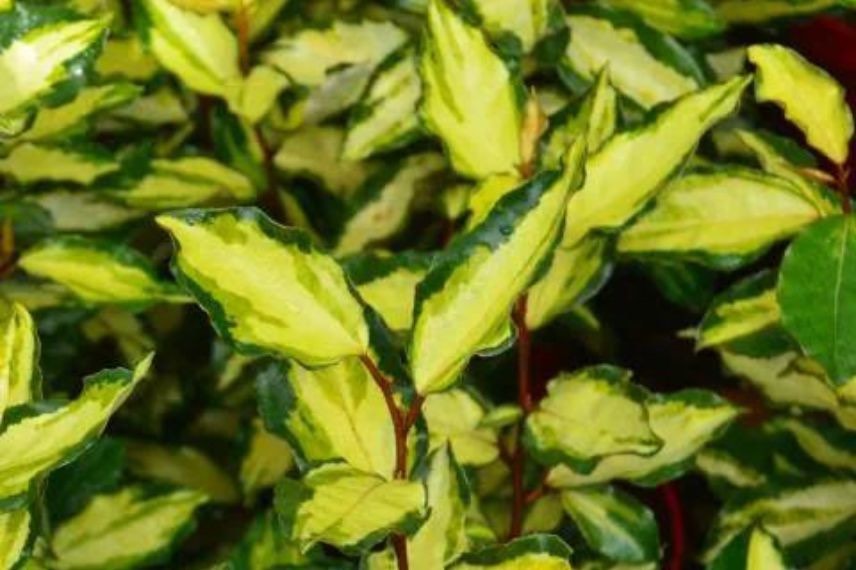
Elaeagnus pungens 'Maculata' - variegated Oleaster
Ideal for hedging and as a windbreak, the Elaeagnus pungens ‘Maculata’ bears, on arching shoots, evergreen foliage mottled with dark yellow at the centre. This shrub native to Japan and China offers a globose, well-branched habit. It reaches a height of 3.5 metres with a spread of 3 metres. Its leaves have undulate margins and its young orange-brown shoots bear scattered spines. From September to December, the shrub produces small silvery-white pendulous flowers that are melliferous. They are then followed by small brown fruits, which turn red.
Hardy to -18°C, the Elaeagnus pungens ‘Maculata’ grows easily. It adapts to all well-drained soil types, sandy, poor or dry, but not calcareous. It can be planted in full sun or partial shade. In a bed or hedge, play on colour contrasts and pair it with the Escallonia ‘C.F. Ball’ or with the Tamarix gallica – French tamarisk.
Read also
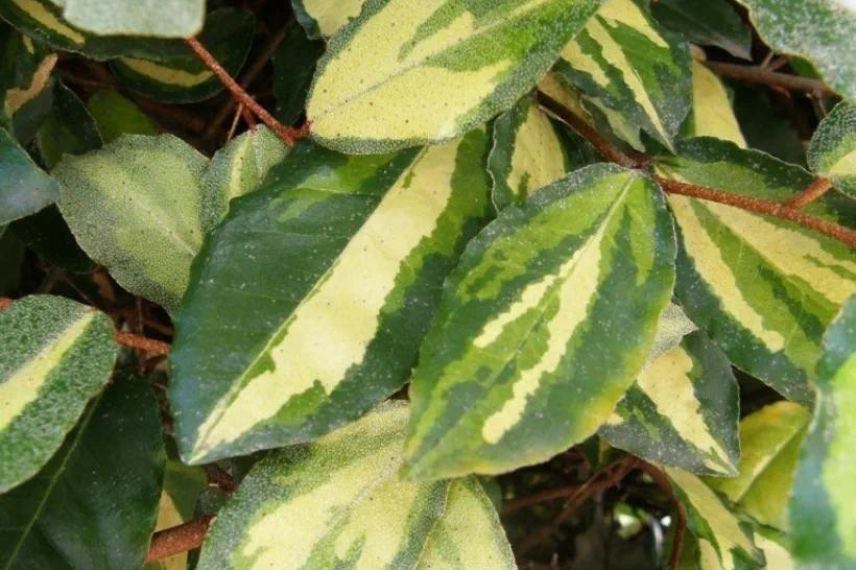
Elaeagnus: when and how to prune?Elaeagnus pungens 'Hosuba Fukurin' - variegated Oleaster
The Elaeagnus pungens ‘Hosuba Fukurin’ offers evergreen foliage marginated with cream-white, very bright. It has a globose habit and well ramified. The young shoots are coloured orange-brown and bear thorns here and there. The shrub flowers from September to December and produces small pendulous, white-silvery flowers. Slightly scented, they attract melliferous insects. Flowering is followed by the appearance of edible dark-red, oval fruits with a cherry-like flavour. The shrub does not exceed 2.5 metres in height and can be used as a hedge, in a bed or in a pot.
Easily grown, the Elaeagnus pungens ‘Hosuba Fukurin’ has the particularity of being very hardy down to -23°C. Plant it in full sun or partial shade in well-drained lime-free soil. In a hedge or bed, you can pair it with other shrubs with handsome evergreen foliage such as the Olearia (x) haastii – Tree daisy or the Griselinia littoralis ‘Green Horizon’.
Elaeagnus x ebbingei 'Viveleg' – Oleaster
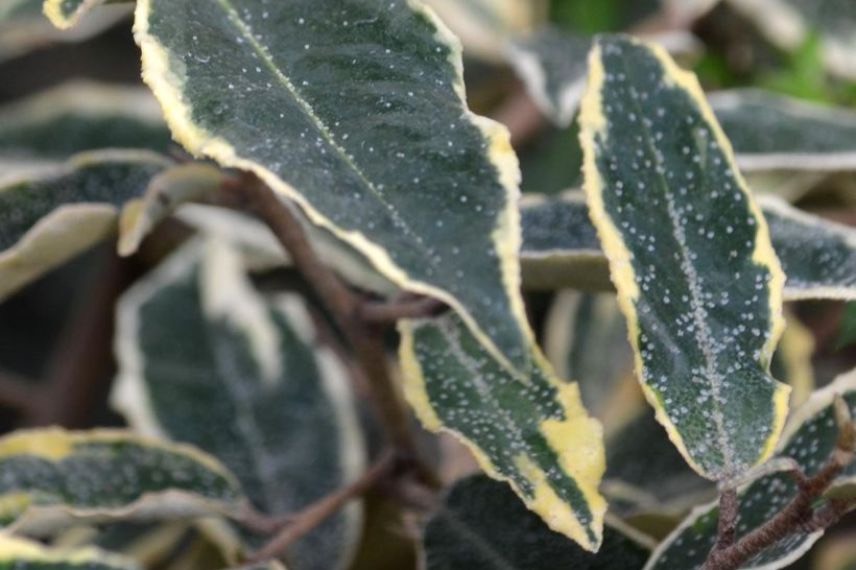
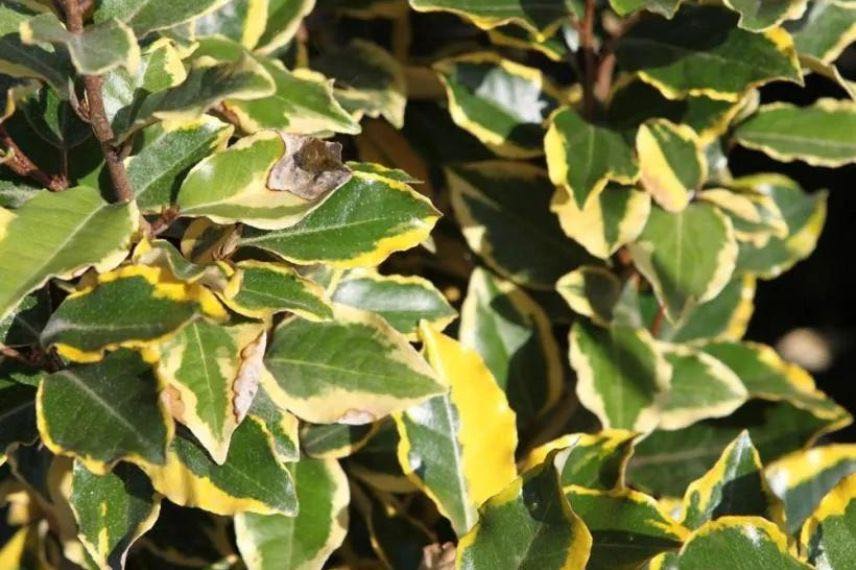
The Elaeagnus x ebbingei ‘Viveleg’ is notable for its dark green foliage delicately marginate with golden yellow or cream yellow. It is an improved form of the variety ‘Gilt Edge’, and the variegated colours of its leaves are among the most stable of the species. It bears small, creamy-white flowers with a pleasant fragrance, from September to November. They are followed by small oval fruits copper-coloured and enjoyed by birds and people. It reaches a height of 2.5 metres and a width of 1.5 metres.
Vigorous and hardy down to -15°C, the shrub also resists drought and sea spray at the coast. It is readily grown as a hedge, notably alongside other evergreen-leaved shrubs such as Rhamnus alaternus ‘Argenteovariegata’ and Arbutus unedo or strawberry-tree.
- Subscribe!
- Contents
Comments