





























Watering a tree fern properly
Our tips to water it correctly, in the ground or in a pot
Contents
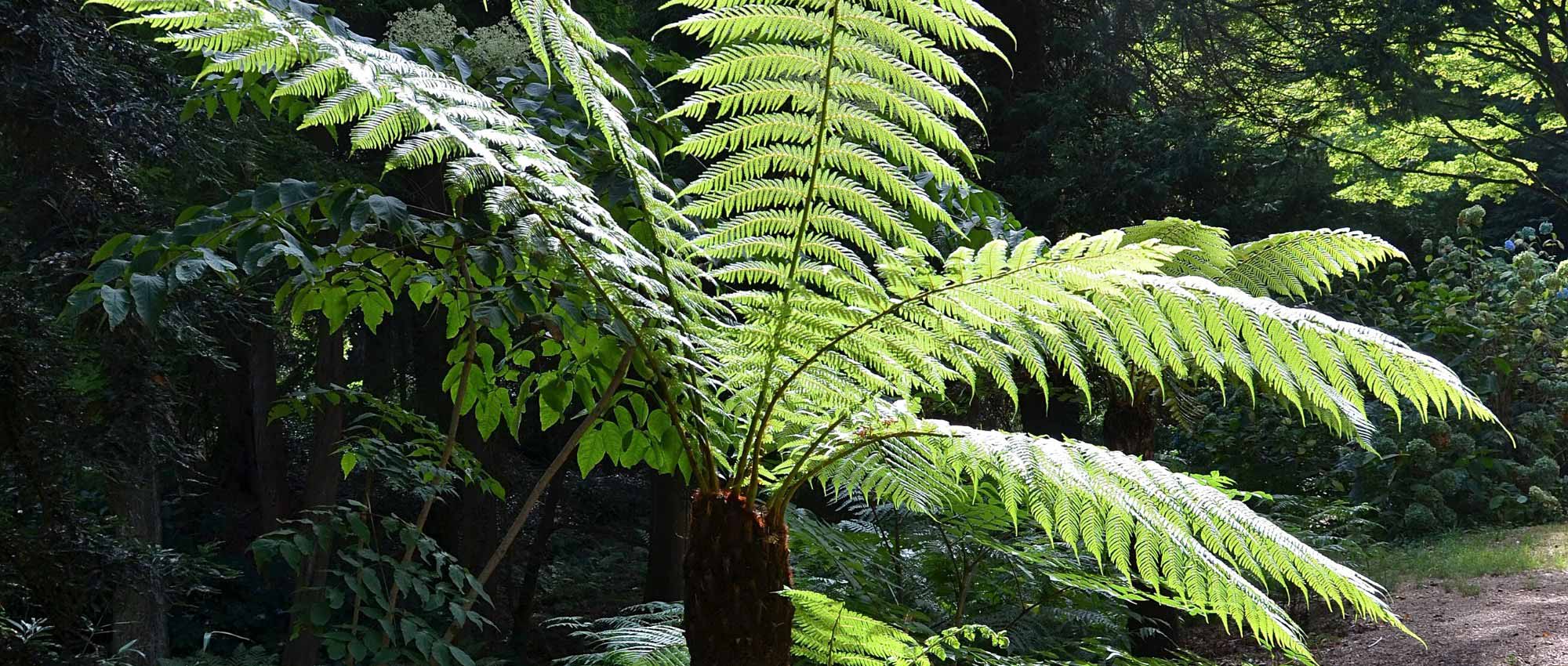
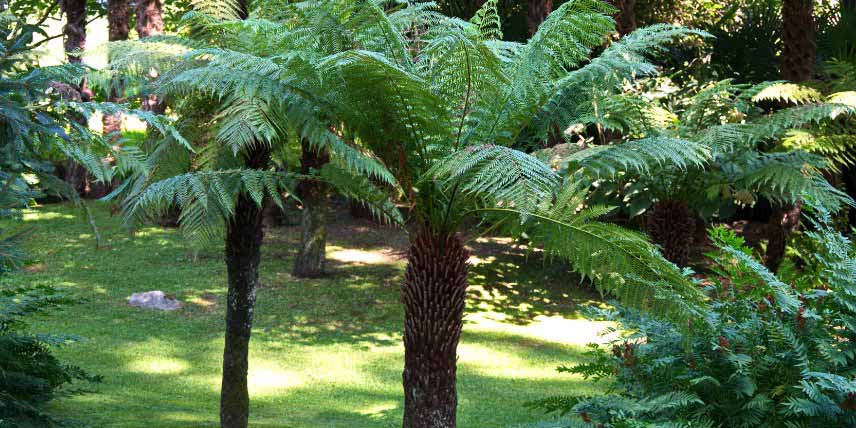
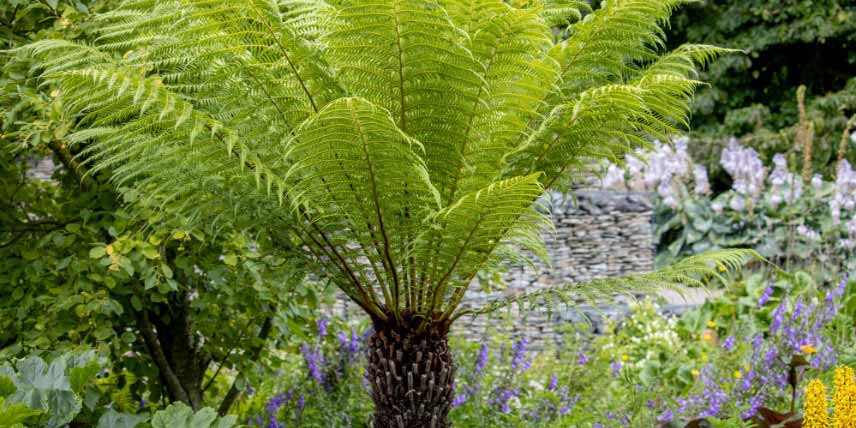
Tree ferns are impressive with their exotic silhouette and lush foliage! They form an upright, fibrous stipe, at the top of which unfolds a crown of gigantic, finely divided fronds. They easily become the centrepiece of an exotic garden. Sensitive to drought, they thrive in humid environments and must not lack water. Discover all our tips for properly watering tree ferns, whether grown in the ground or in pots.
And to learn everything about their cultivation, feel free to consult our complete guide: “Tree fern: planting, cultivation, care”

What are the water requirements of the tree fern?
Tree ferns, like many ferns, have significant water requirements and are naturally adapted to cool, moist environments. They are primarily native to Australia and New Zealand, where they grow in rainforests, along waterways, and in shaded, damp valleys.
The stipe of tree ferns is an aerial rootstock: it allows them to feed and capture water. It must remain constantly moist, so it is important to provide water at the top of the stipe, allowing it to trickle down. Thus, tree ferns absorb water both through the stipe and their roots in the soil, which is why it is essential to water both the soil and the stipe. However, it is crucial that the substrate is well-draining: if water stagnates around the roots, they risk being suffocated.
How to tell if a tree fern needs water or is overwatered?
If your tree fern is thirsty, its fronds will gradually wilt and dry out. Similarly, the new croziers may dry out and stop their growth, and the developing fronds may be smaller. There is a greater risk that the tree fern will lack water rather than being overwatered, however, if that is the case, the fronds may turn yellow, wilt, and droop. Likewise, if the soil is not well-draining and remains waterlogged, the tree fern may be affected by Rhizoctonia, which causes its roots to rot. If your tree fern is in a pot, be sure not to let water stagnate in the bottom of the pot. Check that the top of the stipe (the apex) is firm: if it is soft and blackened, it is a sign of rot, indicating excess moisture. In any case, before watering, check the moisture of the substrate in the top few centimetres, as well as that of the stipe: if they are still quite moist, wait a bit before watering again.
What water to use?
We recommend using rainwater, as tap water may be too hard for them. It is also possible to neutralise the hardness by diluting a tablespoon of white vinegar per litre of water, then allowing it to settle for a few hours before use.
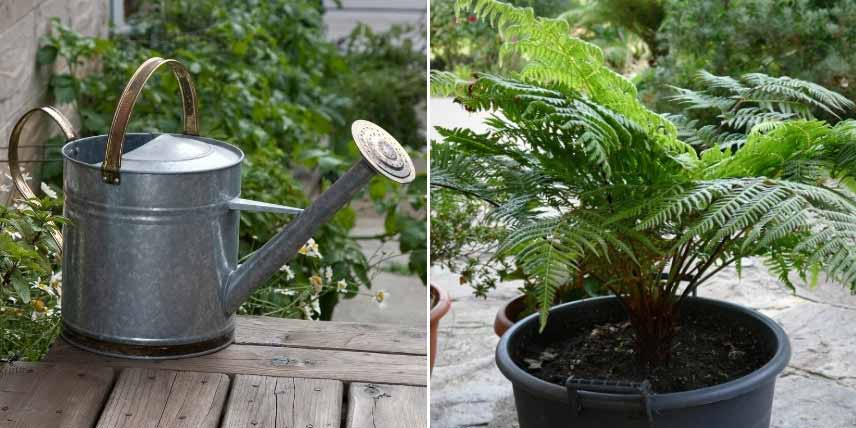
A young Cyathea australis grown in a pot (photo: sanxiaodevea)
Read also
Planting arborescent fernsHow to water a tree fern?
Watering the top of the stipe and the substrate
Water your tree fern by applying water to the top of the stipe, at the centre of the crown of fronds, then move down along the stipe and water the substrate as well. We recommend watering in the evening or early morning.
The frequency of watering depends on several factors: weather conditions, the size of the fern, its type of cultivation (in a pot or in the ground), and the composition of the substrate. Generally, in spring and summer, we advise watering your tree fern at least two to three times a week, or even daily during hot weather, especially if it is grown in a pot (the substrate dries out faster than in the ground). Reduce the frequency of watering in autumn and winter.
Be sure to adjust watering by checking the moisture of the substrate and the stipe: they should always be slightly moist, but not waterlogged. If your tree fern is in a pot, ensure that no water is left standing in the bottom of the pot. Excess moisture could suffocate the roots.
Feel free to add a little liquid fertiliser, diluted in the watering water, at a rate of one application per month from spring to autumn. Dilute it in twice as much water as the product recommendations, and pour the solution onto the top of the stipe.
We also recommend placing a layer of organic mulch at the base of the fern, on the substrate, to help keep it cool for longer.
Drip irrigation
A drip irrigation system is an excellent solution: emitters placed at the top of the stipe will provide water directly and regularly, in a targeted manner. This will reduce the risk of this vital part of the fern drying out. Additionally, excess water can run down the stipe and be absorbed by the rootstocks.
Humidity
Tree ferns thrive in humid environments; they require high humidity, otherwise the foliage may dry out. Therefore, unless you have placed it near a pond or stream (in a medium with good atmospheric humidity), we recommend installing a misting system, which will disperse fine droplets into the air. Alternatively, you can regularly spray a little non-limestone water on the fronds and the stipe.
Don’t hesitate to use a timer to make watering easier and avoid forgetting!
- Subscribe!
- Contents
Comments