





























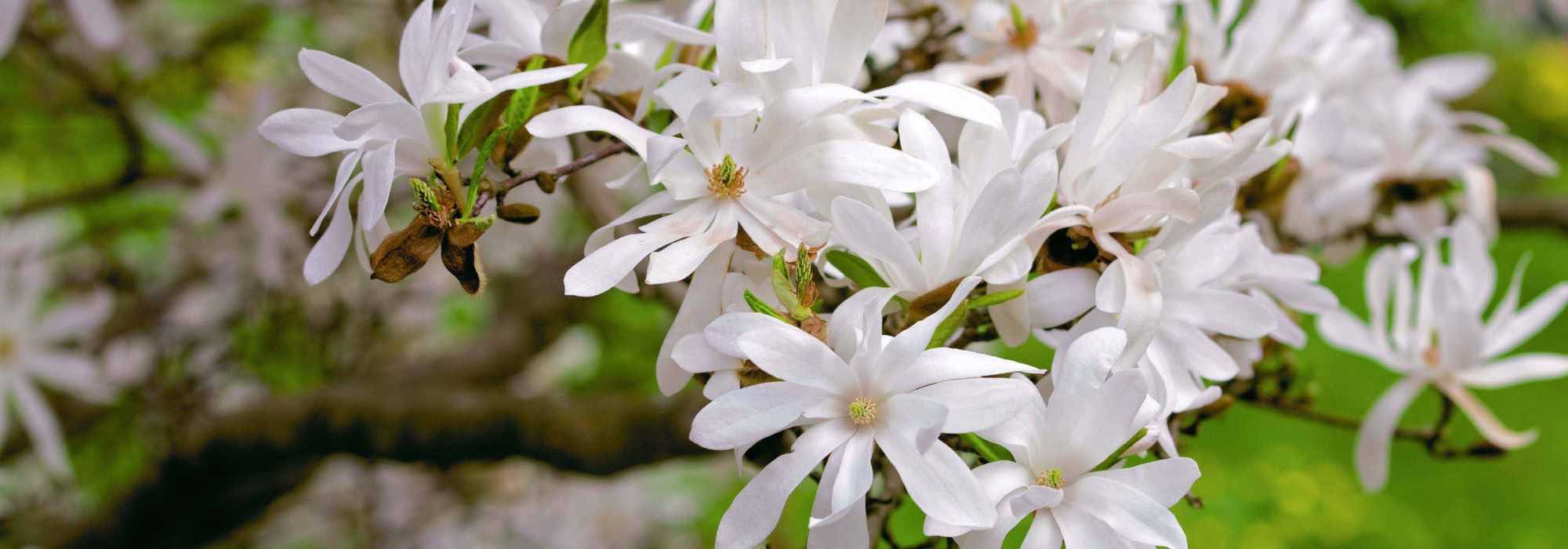
What is the best place for a magnolia?
Ideal soil types and exposure for beautiful Magnolias
Contents
Magnolia are majestic trees or shrubs grown for their spectacular flowering. Native to Asia and the Americas, magnolias vary in their characteristics, adapting to different climates and growing conditions. To successfully plant and cultivate a magnolia, it is essential to know its specific needs in terms of variety, sun exposure, soil, planting method and method of cultivation. This comprehensive guide provides you with all the information you need to choose the best location for your magnolia and ensure its optimum growth.
→ Read our magnolias family sheet

The different types of magnolias
Magnolias are distinguished by a variety of characteristics, such as the flowering period, evergreen or deciduous foliage, mature size, fragrance, flower colour and shape, and differences in hardiness.
Flowering period
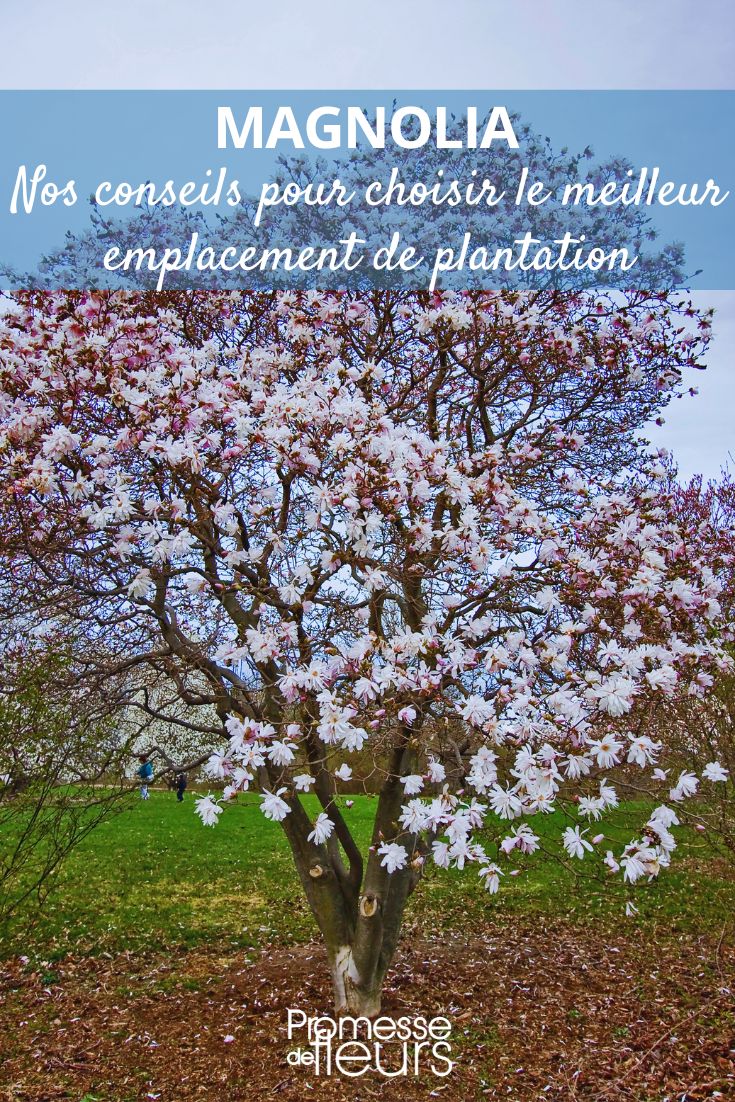
Spring magnolias, such as the cultivars of Magnolia stellata or the Magnolia soulangeana, offer a bloom explosion from March on bare wood. By contrast, other species, including varieties derived from Magnolia grandiflora and Michelias, bloom in summer, producing large, fragrant white flowers from June to September, against exotic foliage.
Evergreen or deciduous foliage
Deciduous magnolias are spring magnolias. They shed their leaves in autumn. Summer magnolias are evergreen and keep their glossy, dark green leaves all year round. Michelias, now classified as Magnolias, are cousin shrubs with evergreen foliage.
Dimensions
Adult size of magnolias varies considerably. Magnolia grandiflora, for example, can reach up to 20 metres in height, making it a majestic tree. By contrast, Magnolia stellata remains smaller, reaching about 2 to 3 metres in height, ideal for small gardens or container growing.
Fragrance
The fragrance of magnolia flowers is another criterion of choice. Magnolia grandiflora is well known for its intense and heady fragrance, wafting from its large white flowers. Michelias offer a fruity fragrance during flowering.
Colour and shape of the flowers
Some examples: the flowers of Magnolia soulangeana cultivars range from white to pink, with shades of purple, and are tulip-shaped. Magnolia stellata and its varieties are distinguished by white or pink star-shaped flowers. Summer magnolias have large, cup-shaped white flowers, such as Magnolia grandiflora Magnolia grandiflora ‘Goliath’, whose blooms are unusually large, up to 30 cm in diameter.
Hardiness
Most magnolias tolerate harsh winters, with hardiness from −15°C to −20°C, or even −25°C, depending on the species. There are some species that are slightly less hardy.
Deciduous magnolias that flower in early spring, from March to April, can suffer frosts that damage flower buds. In cold regions, opt for late-flowering varieties, which bloom from May, such as Magnolia hypoleuca or the Magnolia sieboldii.
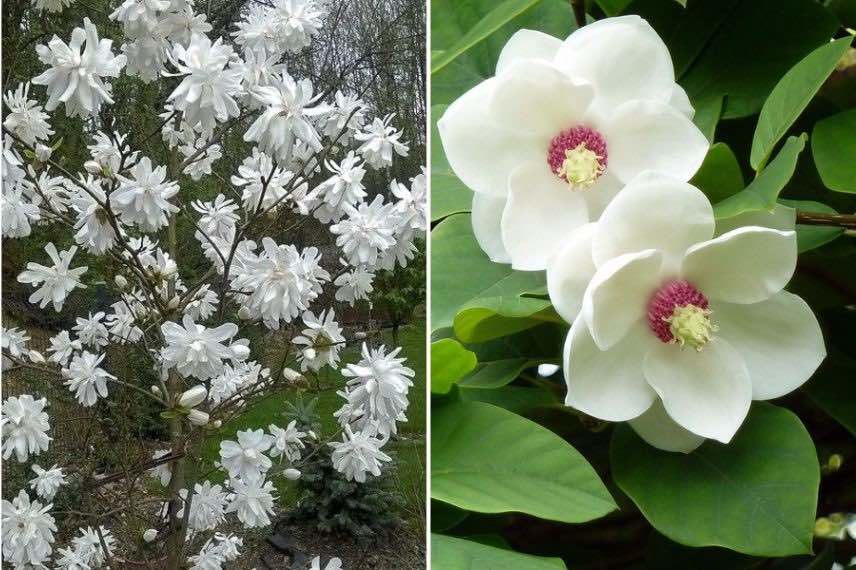
On the left, Magnolia stellata flowering in spring on bare wood, and on the right Magnolia sieboldii flowering in summer amid lush evergreen foliage
What sun exposure does Magnolia need?
Most magnolias prefer sunny exposure. They need several hours of direct light per day to promote abundant flowering and healthy growth. Magnolia grandiflora, for example, particularly enjoys sunny locations. This exposure allows its large white flowers to develop fully and its evergreen foliage to remain dense and lush.
Tolerant, they also tolerate partial shade equally well, but not more. In windy regions or regions with long winters, it is important to provide them with a very sheltered site.
Cold winds and late frosts can damage flower buds and leaves of spring-flowering magnolias, especially among young plants, which are more fragile. A hedge, a wall or other plants can serve as an effective windbreak.
Moreover, planting your magnolia near a south-facing wall can provide extra warmth and protection from cold winds.
As Magnolia family is large, there are exceptions. Citons le Magnolia macrophylla subsp. ashei which appreciates partial shade, with morning sun.
Michelias are tolerant of exposure. Simply, their growth is affected. In shaded conditions, they have a looser habit and less abundant flowering.
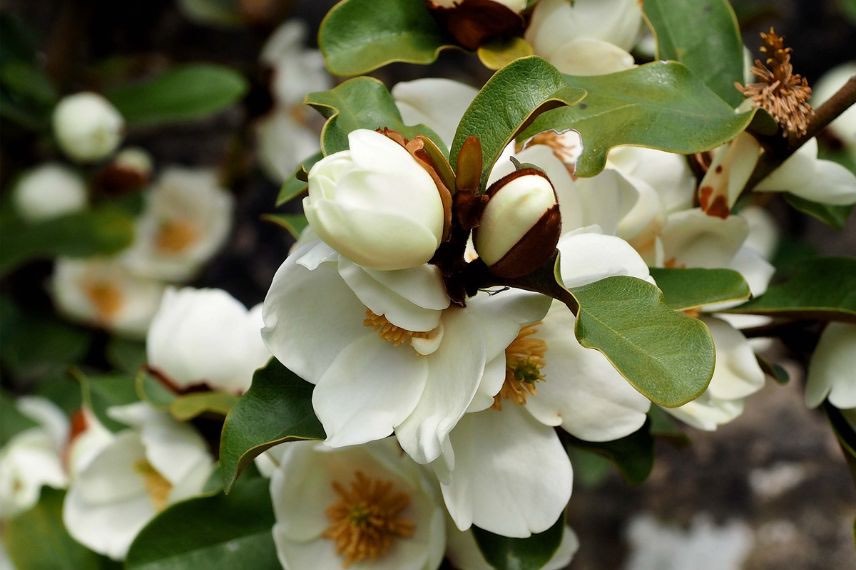
Michelias, related to Magnolias, are tolerant of exposure
In what soil should you plant your magnolias?
Soil type is an important factor in the growth and health of magnolias, and they have some specific needs to thrive fully.
Rich soil
Magnolias prefer soils rich in organic matter. Fertile soil will provide the nutrients needed for their growth and flowering. It is recommended to enrich the soil with compost or well-rotted manure before planting.
Well-drained soil
Good drainage is essential for magnolias. Make sure the soil drains properly and add sand, pozzolana or gravel if necessary, especially if you have clay soil.
Moist and deep soil
Magnolias also prefer moist and deep soils. A deep soil allows the roots to spread freely, which is crucial for the tree’s stability and health. Moist soils are soils that retain a certain level of moisture.
Neutral or slightly acidic soil
Magnolias thrive in slightly acidic to neutral soils. A pH between 5.5 and 7.0 is ideal.
A few exceptions
- Some magnolias tolerate limestone. The Magnolia kobus (or Kobé Magnolia) tolerates limestone. The Magnolia x loebneri ‘Leonard Messei’ tolerates slightly alkaline soils. The Magnolia acuminata ‘Blue Baby’ and the Magnolia hypoleuca tolerate slightly calcareous soil.
- The Magnolia grandiflora tolerates calcareous soils and, somewhat unusually among magnolias, prefers them a little dry.
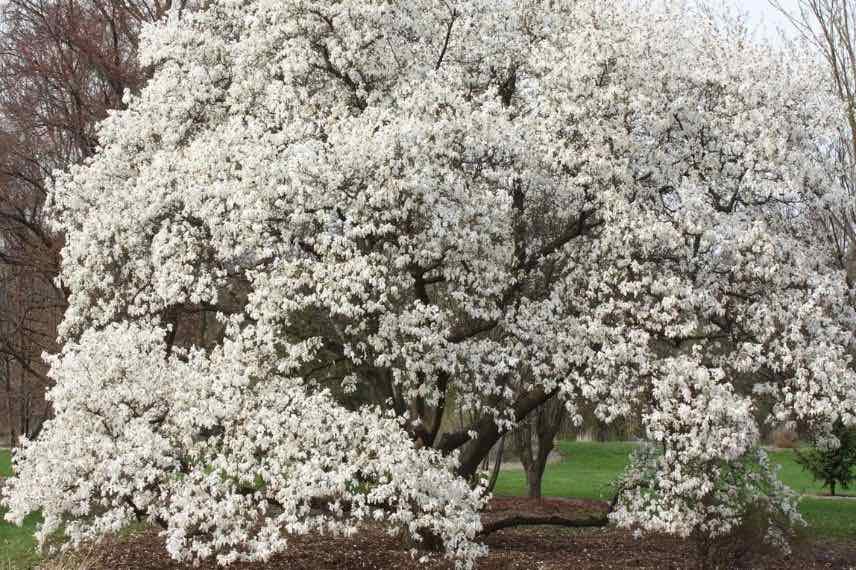
The Magnolia kobus tolerates calcareous soils
Read also
Growing a Magnolia in a potWhat depth and width should magnolias be planted?
The magnolias’ roots are fairly shallow and spread horizontally, so it is important to prepare an adequately sized planting hole to encourage their establishment.
To plant a magnolia, the planting hole must be wide and deep enough to accommodate the root system without constraint, but given the magnolia’s root system, it is the width that should be the greater dimension. Create a very large planting hole at least 80 cm wide by 60 cm deep.
Plant them at collar level without burying the root ball too deeply.
Plan to apply a layer of mulch around the base of the magnolia. Mulch helps to retain soil moisture, regulate soil temperature and reduce weed growth. Use organic materials such as wood chips, fallen leaves or straw.
In the ground or in a pot?
Choosing between planting a magnolia in the ground or in a pot depends on several factors, including the space available, the type of magnolia, and the conditions of your garden. Both options offer distinct advantages and specific requirements.
Planting a magnolia in the ground
Planting a magnolia in the ground is often the best option for varieties that reach a large size or that require a lot of space to develop their root system.
Magnolias planted in the ground have more space to flourish, which fosters vigorous growth and abundant flowering.
Once well established, a magnolia in the ground generally requires less care than a magnolia in a pot. It is less susceptible to temperature variations and to droughts.
Make sure your garden has enough space for the tree’s growth.
Planting a magnolia in a pot
Planting a magnolia in a pot is a good solution for those with limited space, such as a balcony or a small patio, and for smaller varieties that adapt well to container culture.
Use a sufficiently large pot with drainage holes. The pot should allow the roots to spread, typically at least 50 cm in diameter to begin with. Use a potting mix rich in organic matter and well-drained. Magnolia stellata adapts particularly well to pot culture with a good substrate. Potted magnolias require more frequent watering and regular fertilisation. Avoid letting the soil dry out completely or become waterlogged.
- Subscribe!
- Contents
Comments