





























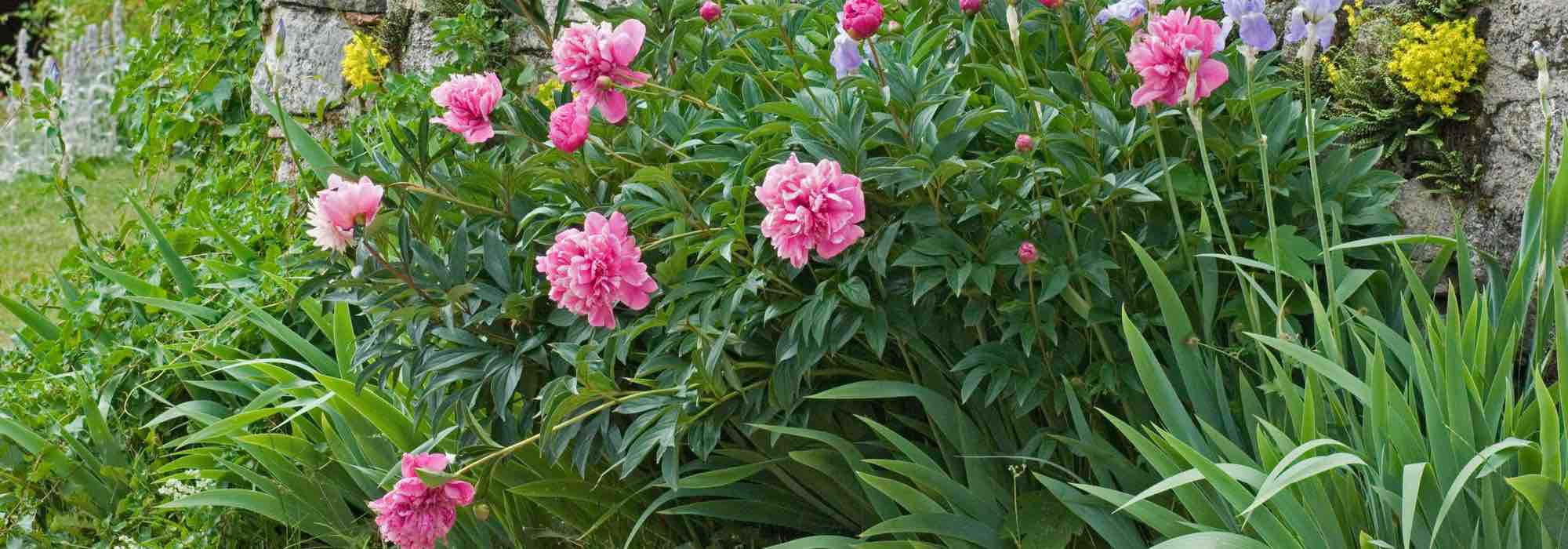
Where is the best place to plant a peony?
Ideal soil types and exposure for beautiful peonies
Contents
Their generous flowering delights us in May, and from April to June as well. peonies are perennial plants with fresh, pastel or vivid colours, producing flowers rich in petals, pink, red, yellow, white, or even orange. They also have the advantage of often being scented and take on a romantic, ruffled appearance. Appreciated in the display of spring and summer cut flower arrangements, peonies are also plants known for being demanding and capricious. To successfully plant peonies and benefit from their ravishing flowering, it is important to provide them with the cultural conditions they prefer and, above all, to place them in the best possible position to foster their flowering. Whether you opt for a herbaceous peony or a shrub peony, discover where to plant peonies: which exposure to place them in, what soil type to plant them in and how much space to give them to achieve superb flowering.

Different types of peonies
There are two main types of peonies. Herbaceous peonies, on the one hand, reach up to about 1 metre in height, lose their leaves in winter and regrow from the crown in the spring. And shrub peonies, on the other hand, with woody stems, produce much larger flowers and reach greater heights.
- The herbaceous peonies are plants reaching just over 1 metre in height, with deciduous foliage and flowers that can be single or double. The best-known species is Paeonia lactiflora. Herbaceous peonies with single flowers are called Japanese peonies, and those with double flowers are Chinese peonies. Cup-shaped flowers can reach a diameter of 15 to 20 cm. Packed with petals, they sometimes have a denser tuft at the centre or a heart of yellow stamens.
- The tree peonies have the silhouette of large shrubs, or even bushes, as wide as they are tall, with stems that become woody. They range from 1 metre to 3 metres in height. The growth habit can be vase-shaped or spreading. The best-known species is Paeonia suffruticosa, which produces giant flowers, 10 to 25 cm in diameter. They are adorned with abundant, finely cut foliage. Shrub peonies are even more demanding than herbaceous peonies and require protection from winds. They develop slowly and require patience, as they do not come into full bloom until 3 to 5 years of cultivation.
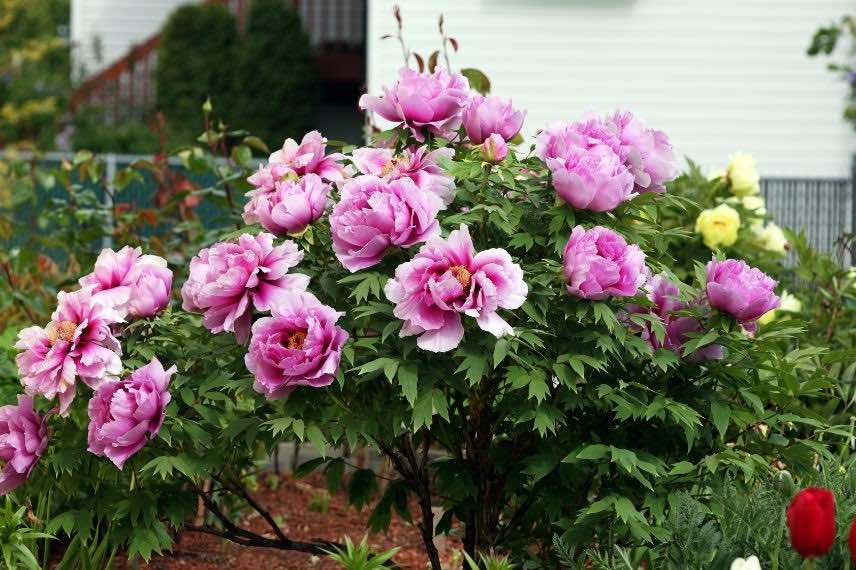
The first distinction to make regarding peonies: herbaceous or shrub? Here, a shrub peony
What light conditions does a peony prefer?
To bloom, peonies prefer full sun, with a west-facing aspect preferred for shrub peonies. Peonies can tolerate light shade. Shrub peonies need to be sheltered from the wind and do not tolerate scorching sun very well.
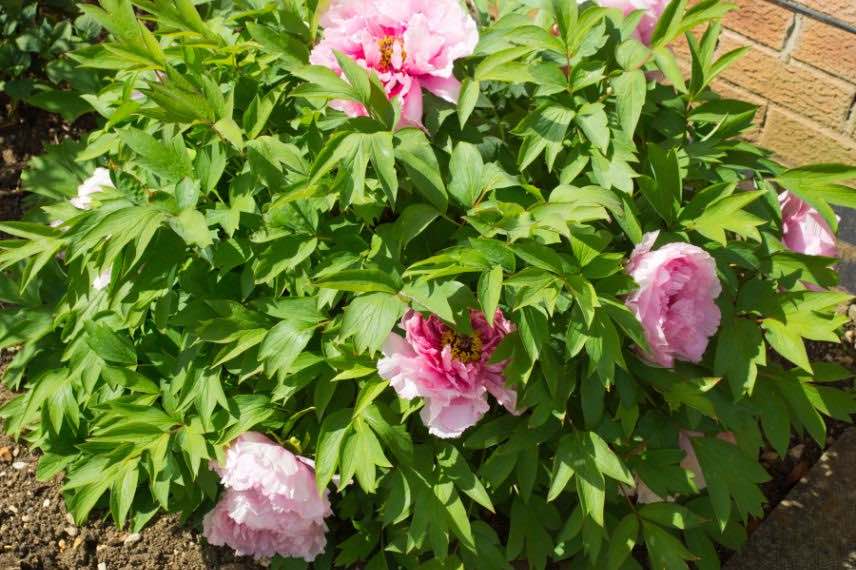 To bloom well, peonies need a good dose of sun[/caption]
What soil should you plant your peonies in?
Peonies are heavy feeders but fear excess moisture. They prefer good garden soil with clay soil that is rich, humus-bearing and cool, yet well-aerated, permeable and well-drained.
Note for shrub peonies: they do not tolerate planting in calcareous soil or in very heavy soil.
Before planting a peony, loosen the soil to aerate it.
To ensure it drains well, you can mix a little sand into the garden soil.
To enrich the soil, add to garden soil compost or manure.
Finally, mulching the peony’s base helps keep it cool, especially during dry spells.
Read also
5 pink-flowered peoniesWhat depth and width?
Peonies need space to grow well as well in width as in depth and do not tolerate competition from other plants.
The soil in which you plant them should be deep and permeable. Provide a hole 40 to 50 cm wide and deep to allow the roots to settle in properly.
Bury the peony stump 3 cm beneath the soil for herbaceous peonies and 5 to 6 cm deep for tree peonies, so that the collar is not below soil level.
The planting distance from other plants should also be substantial. Peonies take on impressive spread when they bloom, reaching up to 3 metres in width with certain tree peonies such as the Yellow tree peony – Paeonia lutea. Therefore, you should space your peonies at least 50 to 60 cm apart, some even requiring a distance of 1 metre to thrive.
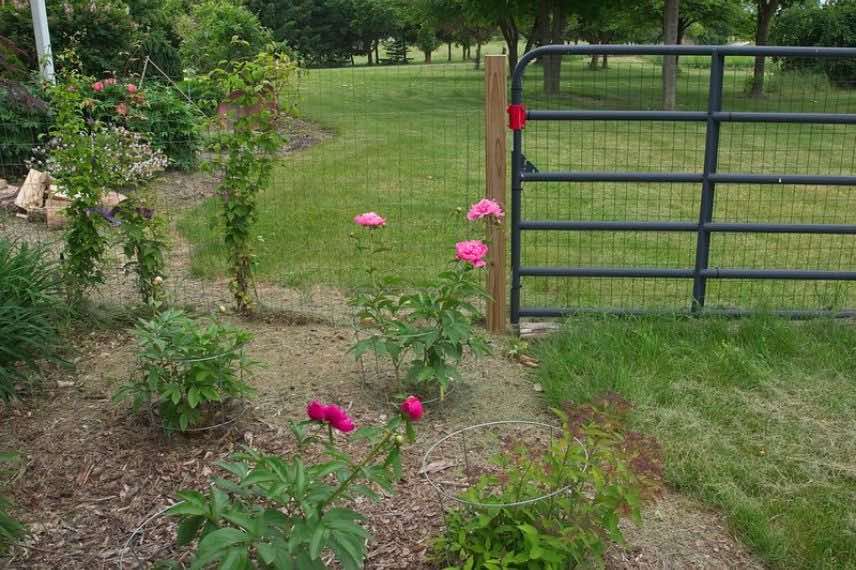
Provide for a good planting distance between different young peony plants (© FD Richards)
In the ground or in a pot?
Peonies, with their deep root system, are best grown in the ground because they have more depth than in a pot or even a large container.
It is advisable to avoid planting peonies in pots even though this is possible for young plants during their first years. The drawback is that you will then need to plant them in a larger, deeper space, which can be problematic as peonies do not like being transplanted. In a pot, they are also more likely to dry out.
For further reading, see our articles:
- Peonies: planting, where, when and how?
- Peonies: planting, pruning and care
- Planting a peony with bare roots.
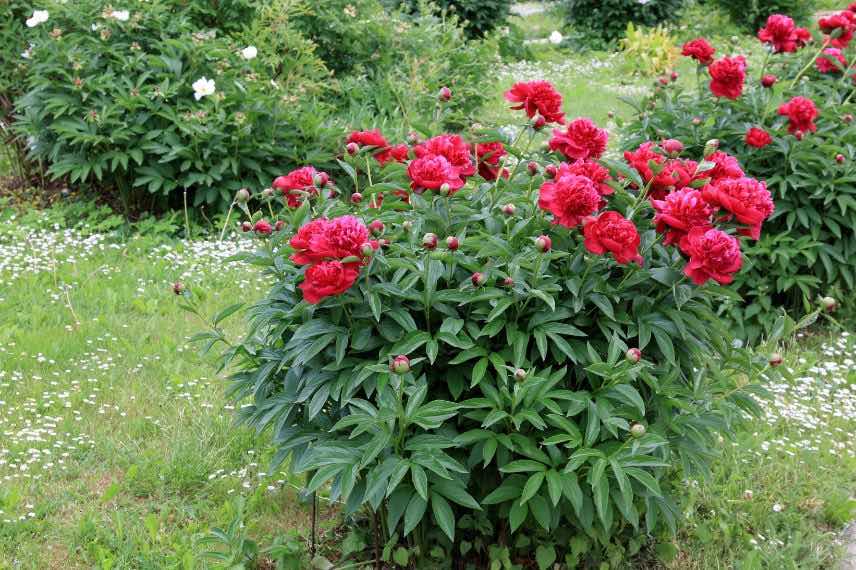
Peonies are planted only in the ground
- Subscribe!
- Contents
Comments