





























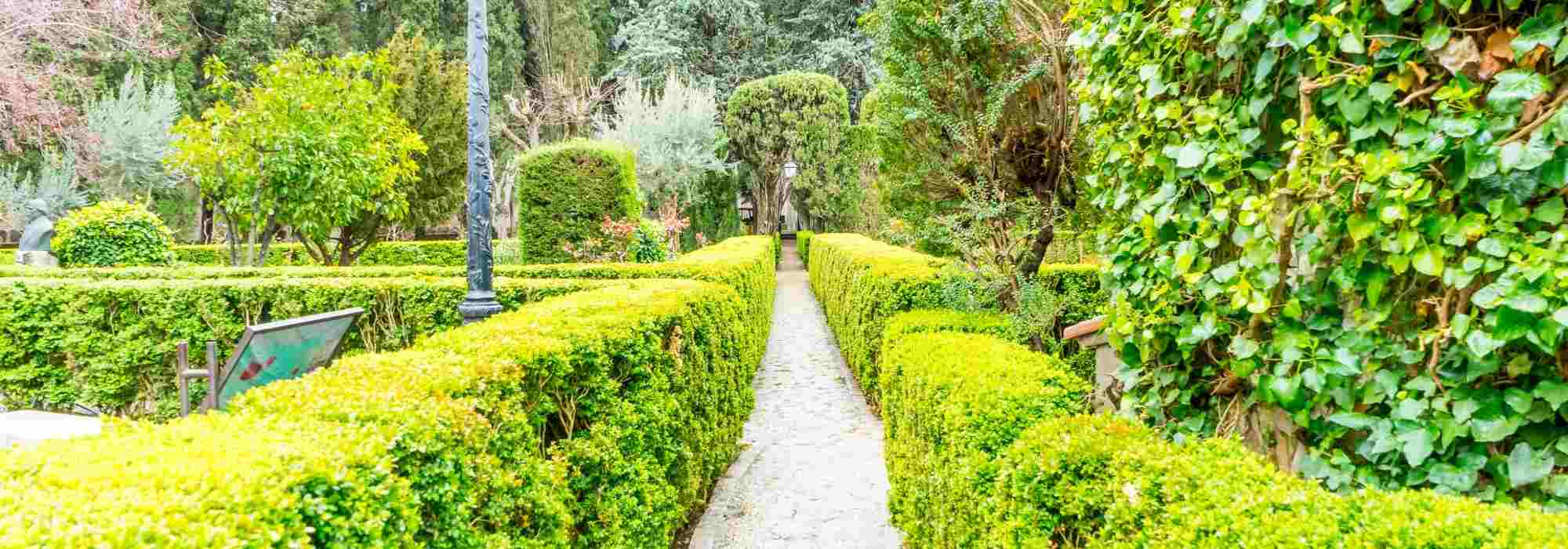
Which fertilisers for trees and shrubs?
Essential fertilisers for ornamental trees, bushes and hedges
Contents
Trees and bushes are essential in a garden, bringing it to life with their changing foliage through the seasons or providing a privacy screen. We select them, plant them and care for them for many years. Nevertheless, these trees and bushes often face climate-related stresses, recurring pruning, diseases and pest attacks, and soil depletion… This is why, occasionally, fertilisation can be considered to help support their growth and to provide dense, verdant foliage.
Discover all our tips for choosing the fertilisers best suited to the specific needs of trees and shrubs, from deciduous trees to conifers, including box and bamboo.

What are the specific needs of trees and shrubs in the garden?
Whether planted in isolation, in a hedge or in a bed, or in pots, trees and shrubs are present in the garden for many years. From planting or transplanting to their death, they face a life sometimes turbulent, made up of multiple hazards linked to the soil, to the climate, and to their maintenance… Thus, after planting, a tree or shrub must expend considerable energy to adapt to its environment, develop its root system to anchor well in the soil, and provide dense, healthy foliage. Sometimes, in soil poor in organic matter, its growth can be slowed, inadequate or uneven.
Throughout its life, a tree or shrub must also face multiple difficulties: succession of drought periods or severe cold, with hard frosts, natural disasters such as storms or floods, which can damage its branches, attacks by pests or any disease… Not forgetting repeated pruning which can, in the long run, exhaust it.
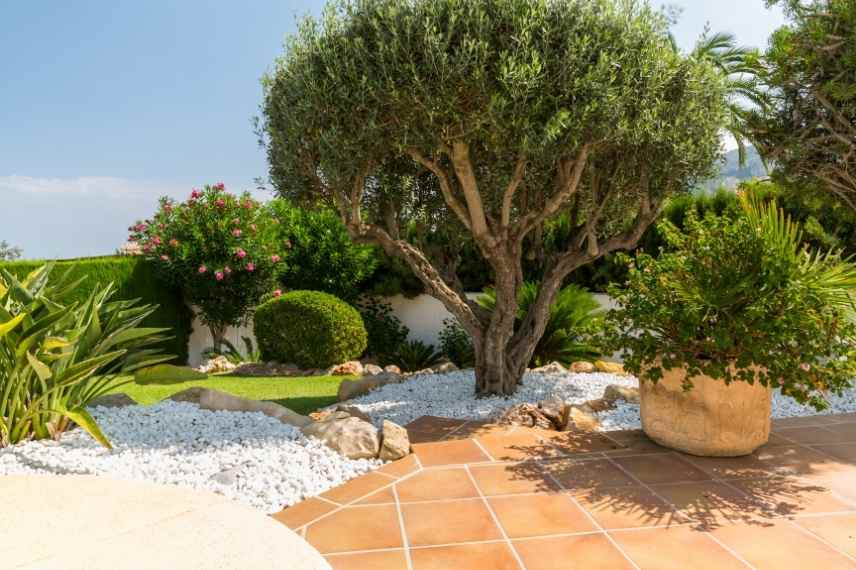
In pots, or planted in isolation, in groups, in beds or in a hedge, trees and shrubs have specific needs
And, at the same time, we expect these trees and shrubs to give us their best, namely dense and healthy green foliage, possibly flowering and generous fruiting, and above all continuous growth to ensure their function as shade, a windbreak or simply to beautify the garden.
In short, all these trees and shrubs have needs different from ericaceous plants or fruit trees. That is why they need dedicated fertilisers that meet their needs and to compensate for their deficiency.
Nevertheless, a well-established tree or shrub, and which benefits from soil regularly enriched with compost or well-decomposed manure, will not necessarily or systematically need a fertiliser.
Read also
Garden fertiliser: how to choose it?What is the best fertiliser for trees and shrubs?
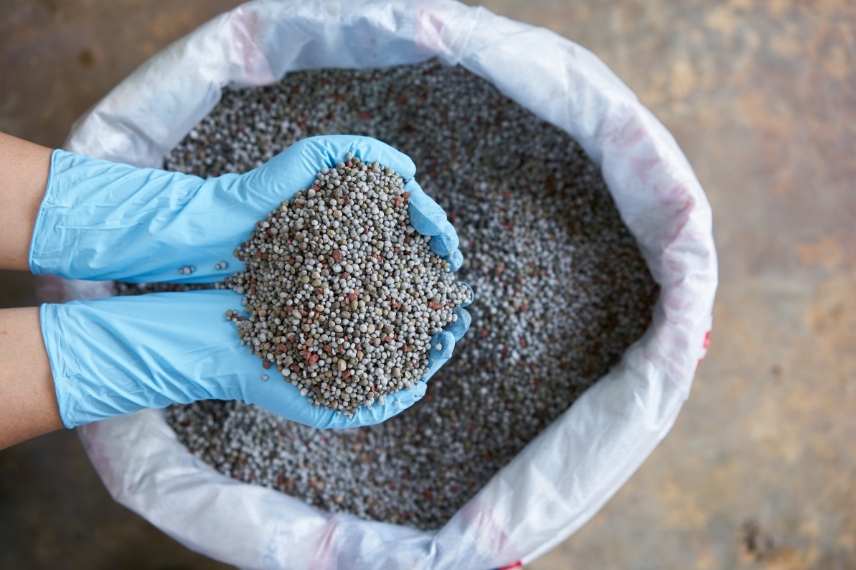
First of all, perhaps it’s worth recalling what a fertiliser actually is. Whether organic, mineral or organo-mineral in origin, a fertiliser is a substance that provides plants with the essential nutrients required for their growth, namely nitrogen (N), phosphorus (P) and potassium (K), but also secondary elements (calcium, magnesium, sulphur) or trace elements (iron, zinc, manganese…)
What exactly is a fertiliser?
Each of these elements plays a particular role for plants. Thus, nitrogen affects the upper part of the plant, i.e. the foliage and the stems, but also its growth, phosphorus promotes rooting and the re-establishment of plants while strengthening their resistance, among other things against diseases. Finally, potassium is very useful for flowering and fruiting. It also enhances their resistance to diseases and pests. Fertilisers generally indicate their nitrogen, phosphorus and potassium contents on the label, accompanied by figures showing the percentages of each element. An NPK ratio of 4-4-2 means the fertiliser contains 4 per cent nitrogen, 4 per cent phosphorus and 2 per cent potassium. Magnesium is often added to fertilisers, which plays a role in the green colour of the foliage.
It is important to make a distinction between the fertiliser that nourishes the plant and the amendment (compost, manure…) that nourishes and structures the soil. Alexandra explains everything in her article: Fertiliser or soil amendment: what’s the difference?
Which fertiliser for trees and shrubs?
Cultivated in isolation or in groups, in a border or hedge, a tree or a shrub does not automatically require fertiliser. If the soil is regularly amended with compost or well-rotted manure, it will have all the nutrients it needs to develop. Similarly, trees that prefer poorer soils do not necessarily need fertiliser. However, a shrub or tree grown in a pot or in a large tub will need fertiliser because the growing medium is exhausted more quickly than in open ground.
Nevertheless, in certain circumstances, applying fertiliser can be very beneficial. For example, during transplantation, after a major pruning or a pest attack, or when growth is insufficient.
Trees and shrubs therefore need fertilisers that enable them to achieve optimal growth for many years. That is why it is preferable to choose fertilisers with slow-release, gentle and gradual action. Thus, fast-acting fertilisers that give plants a quick boost are not suitable for trees and shrubs.
Similarly, fertilisers for trees and shrubs should stimulate rooting and the development of the root system as deeply as possible. Finally, we always want our trees to have healthy, dense and lush foliage, and above all a vibrant green colour, while boosting their vigour to combat diseases and pests effectively. That is why well-balanced fertilisers containing nitrogen, phosphorus and potassium, such as NPK 3-2-4 or NPK 6-4-5, are best suited. If the fertiliser includes magnesium, it is ideal for enhancing the green colour of the foliage, including that of conifers or box. For box hedges, fertilisers are often enriched with trace elements such as boron, iron, manganese, zinc or copper, as they are heavily called upon during pruning. Finally, if you have many flowering shrubs, grown in hedges or beds, opt for a fertiliser rich in potassium, such as NPK 5-3-7. Their flowering will be stimulated and more beautiful year after year.
Our selection of a few fertilisers particularly suited to trees and shrubs:
UAB Promesse de Fleurs fertiliser for conifers, laurels and hedge plants, 500g box
Promesse de Fleurs Fertiliser for Palm Trees and Mediterranean Plants, 500g box
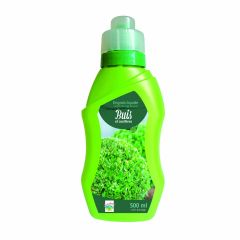
Liquid Boxwood Fertiliser NPK 6-4-5 with Trace Elements, 0.5L
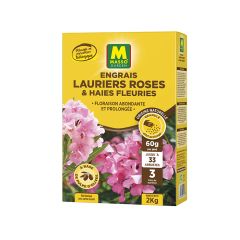
Oleander and flowering hedge granular fertiliser from Masso Garden
Discover other Organic cultivation-certified fertilisers
View all →
Available in 1 sizes
Available in 2 sizes
Available in 1 sizes
Available in 1 sizes
Available in 1 sizes
Available in 1 sizes
Available in 2 sizes
Available in 1 sizes
Available in 1 sizes
Available in 1 sizes
When should you fertilise the base of a tree or a shrub?
Basal fertilisers, relatively universal and slow-release, are spread during the growing season for trees and shrubs, i.e., roughly from March to October. Following the instructions on the packaging, a single application or several applications at regular intervals are possible. SIf only one application is required, it’s best to apply it in spring, at the start of the growing season.
These fertilisers can also be used at planting, by placing them at the bottom of the planting hole.
Read also
Rose fertiliserHow do you apply fertiliser at the base of trees and shrubs?
Before discussing the method for fertilising trees and shrubs, it is essential to follow the dosages indicated on the labels. Doubling fertiliser doses in the hope of achieving better growth or lush green foliage is a serious mistake. Indeed, an overdose can be fatal. It promotes the proliferation of diseases and parasites, and can even cause leaf burn. Likewise, over‑fertilising a tree or shrub that is tired, diseased, in a state of vegetative rest, or with no particular need will not respond well to fertiliser. By contrast, spreading compost or well‑decomposed manure is less risky.
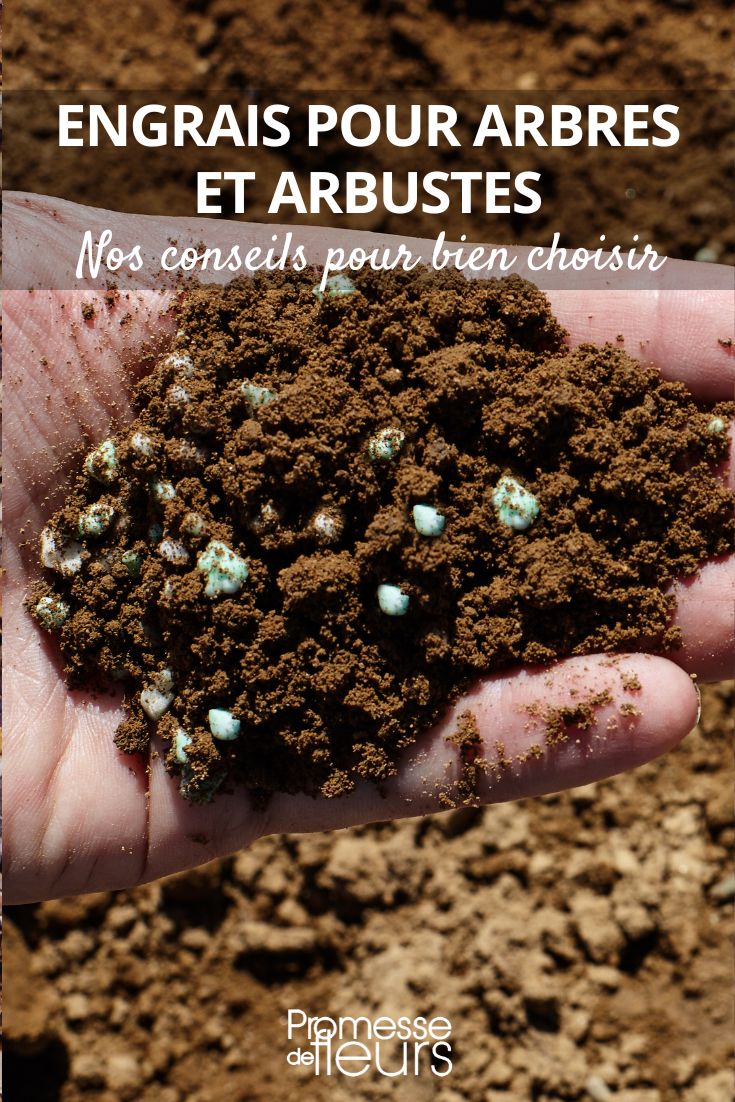
Applying fertiliser stimulates growth and rooting while providing lush green foliage
To feed trees and shrubs with fertiliser, you need to:
- Dig holes directly beneath the tips of the branches of trees and bulb planter
- Set aside the soil removed
- Pour the fertiliser into the holes
- Backfill with the excavated soil (the “carrot”)
- Water with a fine spray.
For smaller shrubs, you can simply spread the fertiliser and then run a hoe over it to incorporate it into the soil. As for liquid fertilisers, they dissolve in the water used for watering.
- Subscribe!
- Contents
Comments