


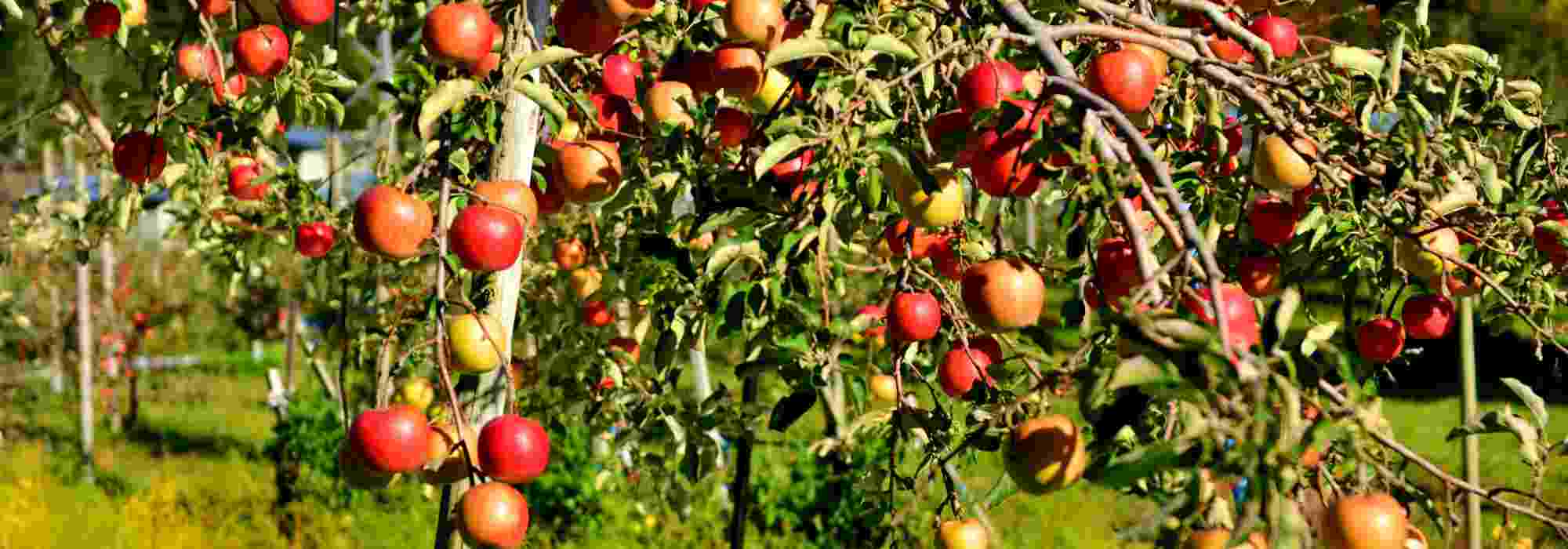
Which fertilisers to choose for fruit trees?
A comprehensive guide to choosing the ideal fertiliser for your fruit trees or berries
Contents
When you planted a fruit tree or small fruit bushes in your garden or orchard, you were dreaming of harvests of juicy, sweet, tasty and healthy fruits. However, planting alone is not enough to obtain generous harvests. You need to improve soil quality by applying appropriate amendments (compost, manure, mulch…), prune and water, monitor for the presence of unwanted pests, but also provide fertilisers to fruit trees, not only at planting but throughout growth, fruit set and fruiting. That’s where fertilisers come into play, designed to feed the fruit trees directly according to their specific needs. However, not all fertilisers are equal for fruit trees. Moreover, depending on the development stage of a fruit tree and the season, fertilisers will vary.
Through this article, discover all our tips for choosing the fertilisers best suited to your fruit trees or fruiting bushes.

What exactly is a fertiliser?
Before discussing the best fertilisers for fruit trees, it may be useful to define precisely what a fertiliser is and, above all, the distinctions in terms of composition, form and uses.
The composition of a fertiliser
First, remember that a fertiliser provides the nutrients essential for plant growth. Among these nutrients, the essential trio is nitrogen (N), phosphorus (P) and potassium (K). Complete fertilisers incorporate these three elements (the famous NPK!), each playing a specific role. Thus, nitrogen is essential for the growth of leaves, stems and buds, as it participates in photosynthesis. Phosphorus is particularly useful for the development of the root system, but also for flowering and fruit production. It also helps strengthen plants’ resistance to diseases. As for potassium, it also plays a non-negligible role in the formation of flowers and fruits. The complete fertilisers therefore bear the NPK designation accompanied by three numbers indicating the contents of nitrogen, phosphorus and potassium, always in that order. Thus, an NPK fertiliser 14-8-12 contains 14% nitrogen, 8% phosphorus and 12% potassium.
Beyond these three elements, a fertiliser contains secondary nutrients such as calcium, magnesium… or trace elements such as iron, boron or copper. According to the formulation, some fertilisers are therefore more suitable for fruit trees than others, simply because their needs differ from those of vegetable crops or roses.
There are also simple fertilisers, composed of a single substance such as the liquid potash.
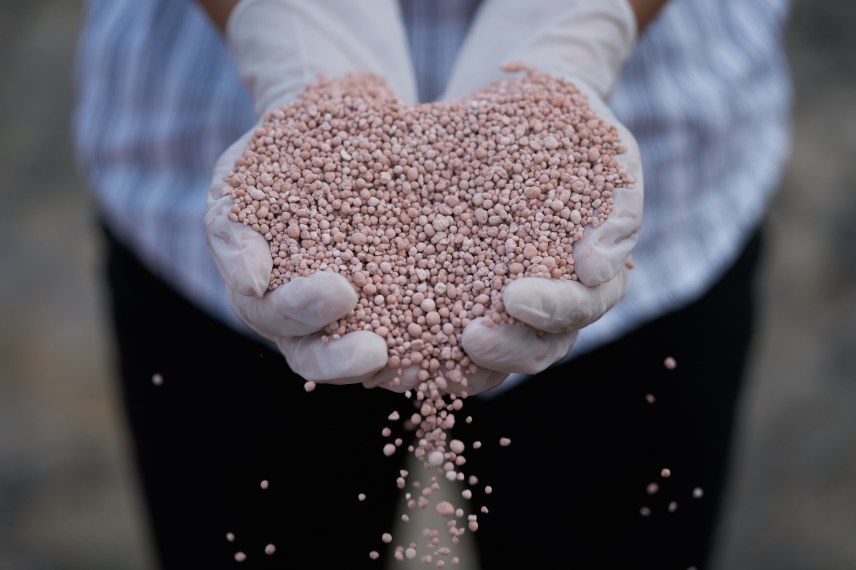
Fertilisers can be organic, mineral, organo-mineral or chemical
Further reading :
What is the best fertiliser for your fruit tree?
Naturally present in soil, nitrogen, phosphorus and potassium can become depleted. This is why applying fertilisers helps compensate for this shortfall to feed the fruit tree properly and prevent it from suffering a deficiency and from fruiting… For instance, in soil that is properly amended, receiving regular additions of compost, manure or good mulch (for example RCW), fertiliser application is not obligatory. The fruit tree will find in this balanced soil what enables it to meet its needs.
Likewise, it is mainly young fruit trees that require fertiliser applications. A well-established tree rarely needs it. Perhaps only if it suffers from manifest deficiencies or if you want to improve its fruiting.
To provide the best fertilisers for your fruit trees, you must differentiate between different fruit trees. Indeed, citrus trees will not have the same needs as strawberry plants or apple trees! In fact, commercial fertilisers already establish a difference that you can rely on without hesitation. You can find, for example, special fertilisers for strawberry plants and small fruits (raspberries, blackcurrants, blueberries, currants…) with a formulation rich in potassium. Others organic fertilisers are dedicated to citrus. Or to olive trees and fig trees, or to exotic fruit trees, available in liquid or granular forms.
Thus, each fruit tree has its own fertiliser:
Promesse de Fleurs Fertiliser for Strawberry and Small Fruit Plants 500g box
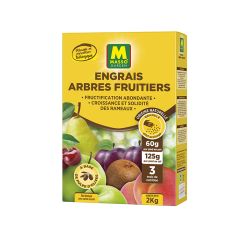
Granular Fertilizer for Fruit Trees by UAB Masso Garden
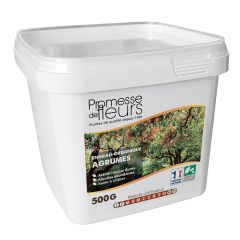
UAB Promesse de Fleurs Fertiliser for citrus trees 500g box
Globally, for a fruit tree, we aim to encourage flowering and fruiting. That is why the fertilisers mentioned above are often richer in potassium than in nitrogen or phosphorus. Their richness in K is evident in formulas such as NPK 4-4-8, NPK 3-6-12 or NPK 12-7-18. Indeed, potassium plays a crucial role in the formation of the root system, as well as in flowering and fruit development. Moreover, among the secondary nutrients, magnesium is essential, as it facilitates the assimilation of nitrogen, phosphorus and sulphur while enhancing the flavour of the fruits. This is why magnesium-enriched fertilisers are perfect for fruit trees.
These potassium-rich fertilisers are typically used during the growth phase. At planting, it is mainly nitrogen-rich fertilisers that will be favoured. You can thus add dried blood or ground horn to the planting hole. This natural fertiliser will feed the fruit tree in the long term.
To learn more: Fertiliser or soil amendment: what’s the difference?
When should you fertilise fruit trees?
There are several stages in the life of a fruit tree. Planting is the first stage and it must be done carefully. Thus, The soil in which a fruit tree is planted must first be fertilised with organic amendments such as compost, the manure, the potting compost… Organic mulches laid around the base of the fruit tree will play a crucial role in fertilisation. If you do not have enough compost or manure, a basal application of organic fertiliser is a good alternative. Rich in nitrogen and phosphorus, fertilisers such as the crushed horn, the dried blood or the guano can be added at planting. It is worth noting, however, that guano is now criticised, as its extraction irreparably destroys nesting sites.
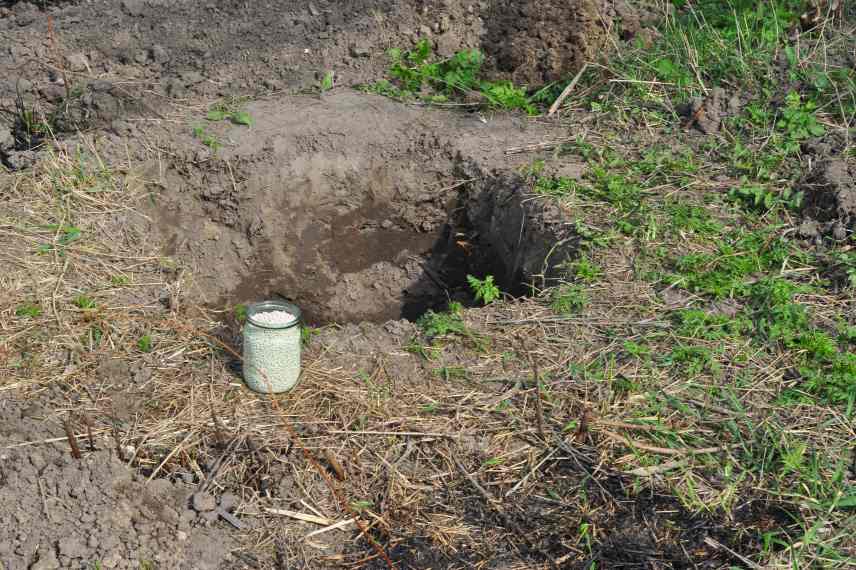
Application of ammonium sulphate, a nitrogen-rich fertiliser, when planting a fruit tree
In spring, the fruit tree awakens. It begins fruit set, that is, the formation of the fruits which entails a large consumption of nutrients. That is why, in April, it is advised to undertake at least one application of a special fruit tree fertiliser rich in potassium. This application can potentially be renewed one to two times up to October for very hungry fruit trees such as citrus trees, or even fruit trees grown in pots.
In cases of evident deficiency, autumn is when action should be taken. Focus on fertilisers rich in potash, magnesium and phosphorus.
Read also
Garden fertiliser: how to choose it?How to intervene?
When it comes to fertilisers, it is essential to read the labels carefully. Indeed, on packaging, the composition of fertilisers and their dosages of nitrogen, phosphorus and potassium are indicated, but also of sulphur, magnesium and trace elements… There you will also find guidance on usage and dosage per m². But remember, it’s always better to apply less than too much! A fertiliser, even organic, dosed too strongly can be detrimental. Likewise, fertilisers should be applied at the right time. Thus, fast-acting fertilisers (dried blood, poultry droppings, green seaweed…) are used for planting or applied in spring, whereas slow-release fertilisers (ground horn, bone meal…), are usually applied in autumn.
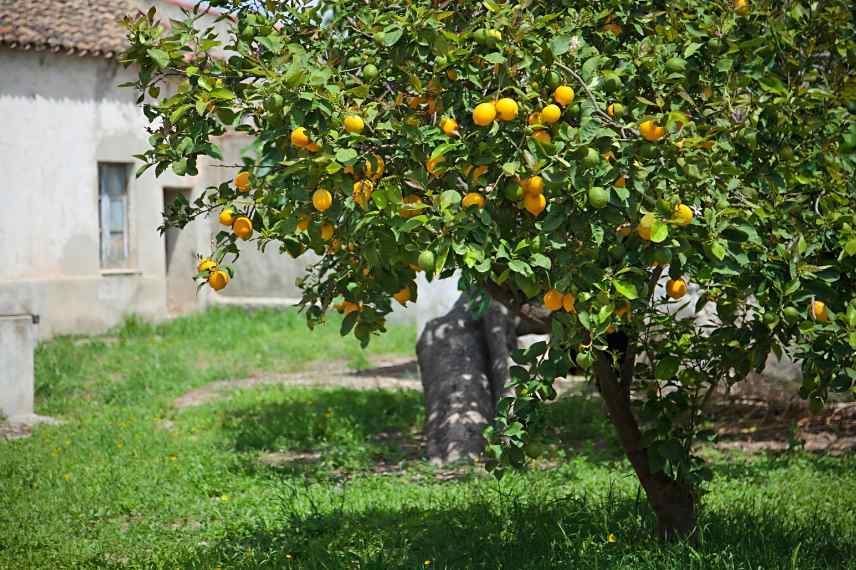
Citrus trees particularly need fertilisers rich in potassium
To apply fertilisers most effectively, moisten the soil or growing medium, then lightly rake over a few centimetres to incorporate them. Do not scratch too deeply to avoid damaging the root system.
Fertilisers should be stored in a dark, dry and cool place. Packaging should be closed securely and kept out of reach of children and pets.
- Subscribe!
- Contents
Comments