


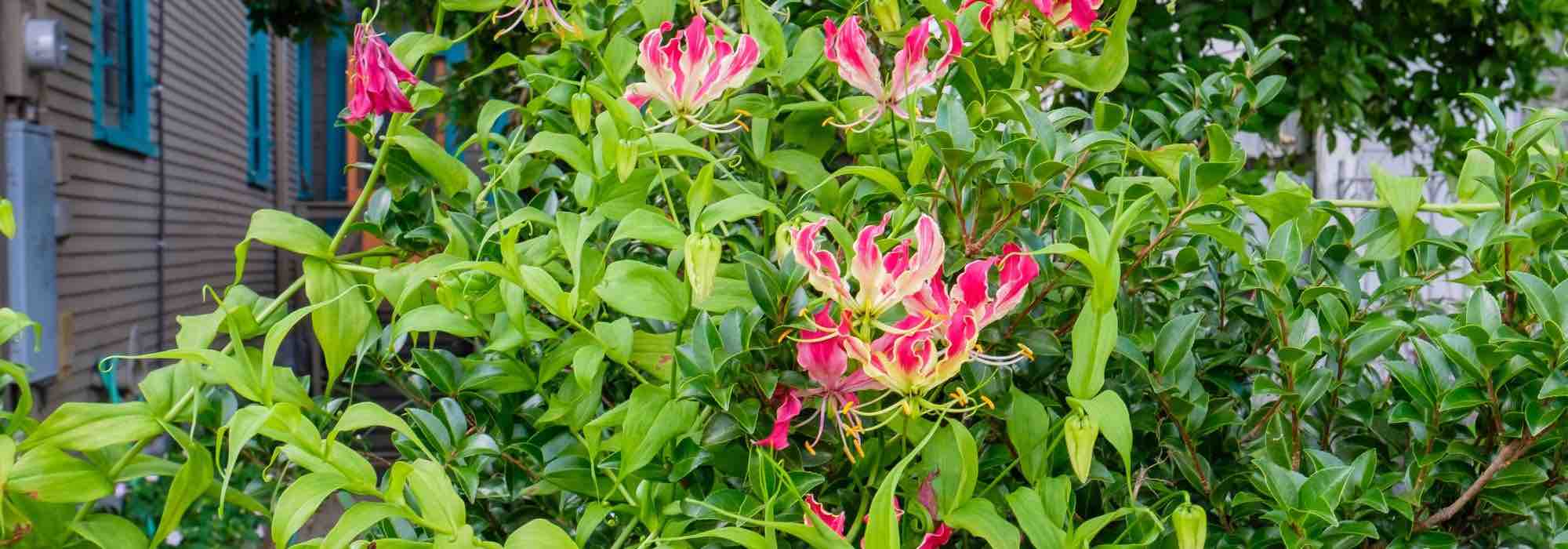
Why isn't my Gloriosa flowering?
Our tips to help this wonderful climbing plant bloom
Contents
Exotic plants have a knack for catching the eye and adding a touch of mystery to our outdoor spaces. Gloriosa, with its exotic and graceful flowers, is a truly exceptional climbing plant. However, it can be disappointing to find that your Gloriosa is not flowering as expected. If Gloriosa is not a delicate plant, but rather a vigorous species, it still thrives in fairly specific conditions that are important to know in order to encourage this exotic beauty to bloom fully. In this article, we explore Gloriosa’s cultivation specifics, the common reasons for its lack of flowering, and some valuable tips to help it bloom.
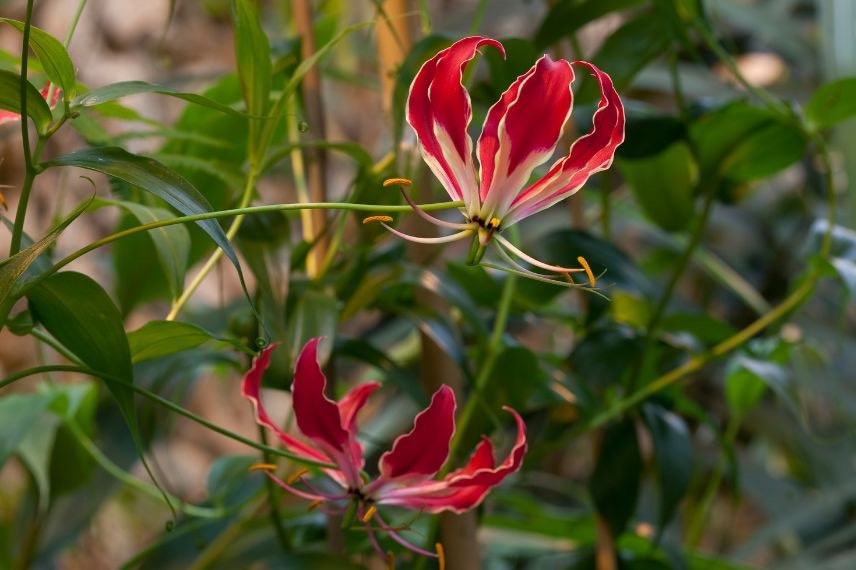
How to get Gloriosa to bloom its magnificent flowers?

Gloriosa cultivation specifics
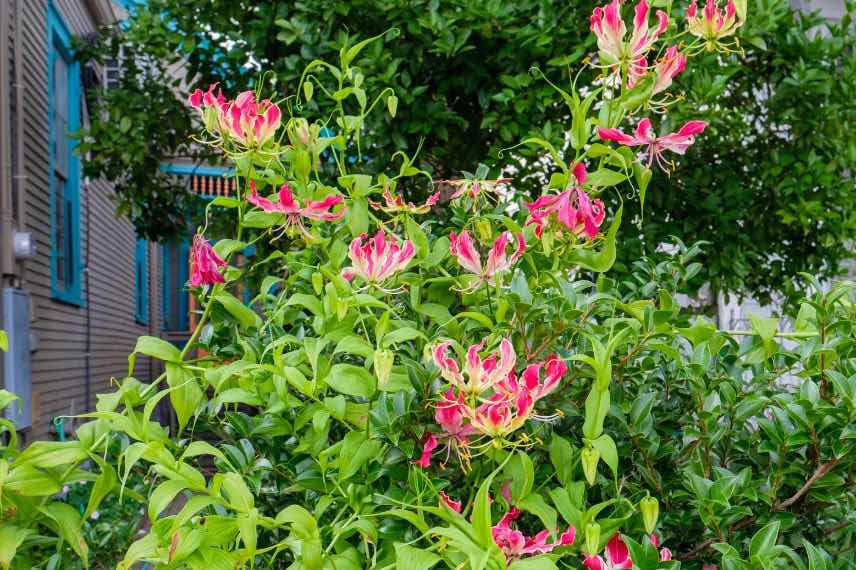
Gloriosa superba, or the Malabar Lily, is a climbing plant native to the tropical regions of Africa and Asia. Its most characteristic feature lies in its stunning flowers that resemble exotic flames. These flowers, summer-flowering in our climate, feature slender and incurved petals, creating a dazzling cascading effect as the plant climbs up a support. Because of its elegant habit and climbing nature, Gloriosa is often chosen to adorn trellises, pergolas and terraces.
Gloriosa warrants particular attention to ensure abundant flowering and healthy growth. Here are the points that require vigilance:
Soil or substrate type
Gloriosa prefers humus-rich, well-drained soils, without excess moisture. Incorporate compost to enrich the soil and coarse sand, gravel or pozzolana for drainage. In pots, choose a mix of rich, organic matter, well-aerated and well-drained potting compost, with about 20% sand. Ensure pots have drainage holes to prevent water accumulation that can cause root rot.
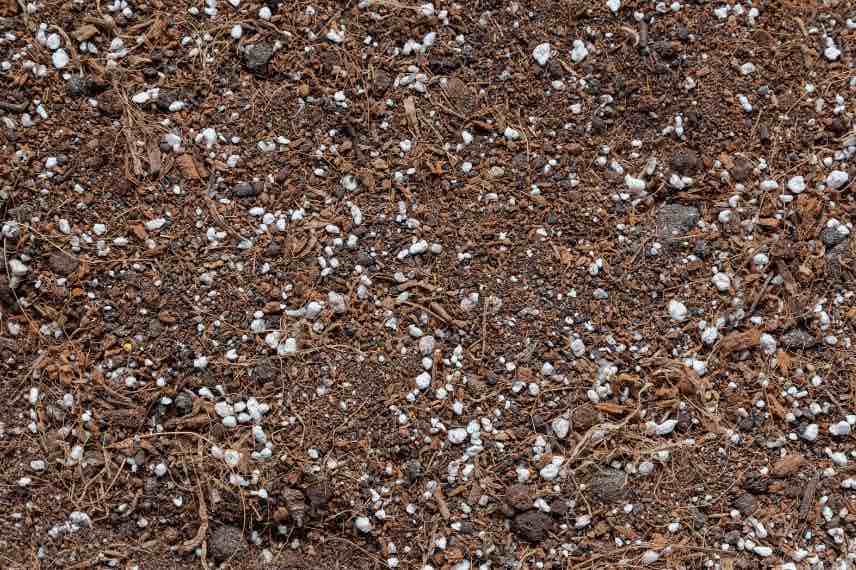
The Gloriosa needs a well-drained substrate
Light exposure
Gloriosa is a light-loving plant. Place it in a location where it will receive direct sunlight for at least 6 hours per day. Sunlight is essential to trigger photosynthesis, which contributes to the formation of flower buds and flowering. You can also place it in a conservatory or a cold greenhouse, but not indoors.
Temperatures
Gloriosa thrives in warm, tropical climates. Warm to hot temperatures are ideal for stimulating growth and flowering. Gloriosa flowers from around 25°C. It is frost-sensitive below -4°C.
If you live in a cool climate, you can consider growing Gloriosa like a dahlia, lifting the tubers in autumn or growing it in a pot so you can move it indoors during the cold months.
Planting
Tubers are usually planted in spring, in May, after the last frosts have passed. You can also plant Gloriosa earlier in a pot, leaving it in a conservatory, then move it onto the terrace as soon as it is warm enough. Another advantage of pot planting is that it avoids damaging the tubers, which are quite delicate. You avoid the risk of breaking them when digging them up. Bury the tuber flat, at a depth of about 5 to 10 cm.
Care
Remove spent flowers to encourage new flowering.
Watering and fertilising
Water Gloriosa regularly, especially if grown in a pot, about once or twice a week. Allow the substrate to dry briefly between waterings. Avoid overwatering, as stagnant moisture can cause root rot. Do not leave standing water in the saucer if you have one under the pot. Fertilise the plant with a balanced fertiliser during the growing period, approximately every fortnight, to provide nutrients for abundant flowering.
Read also
Gloriosa: Planting, Growing and CareCommon reasons why Gloriosa does not flower.
There are several reasons why Gloriosa may not flower:
Placement issue
The location plays a crucial role in Gloriosa flowering. If the plant is situated in a shaded area or not sunny enough, it may not receive enough light to stimulate flowering.
Inadequate temperatures in spring and summer
Gloriosa is sensitive to temperatures, especially during the spring growth period. If temperatures are too low, this can delay the plant’s growth and flowering. It requires temperatures around 25°C to flower in summer. It therefore needs a wind-sheltered location.
Late development
If the plant is planted in the ground or planted too late in spring, or if daytime temperatures are too cool, it may not have enough time to develop flower buds and come into bloom.
Insufficient day–night temperature differences
Gloriosas thrive when subjected to significant day–night temperature differences. Cooler nighttime temperatures during growth can stimulate flowering.
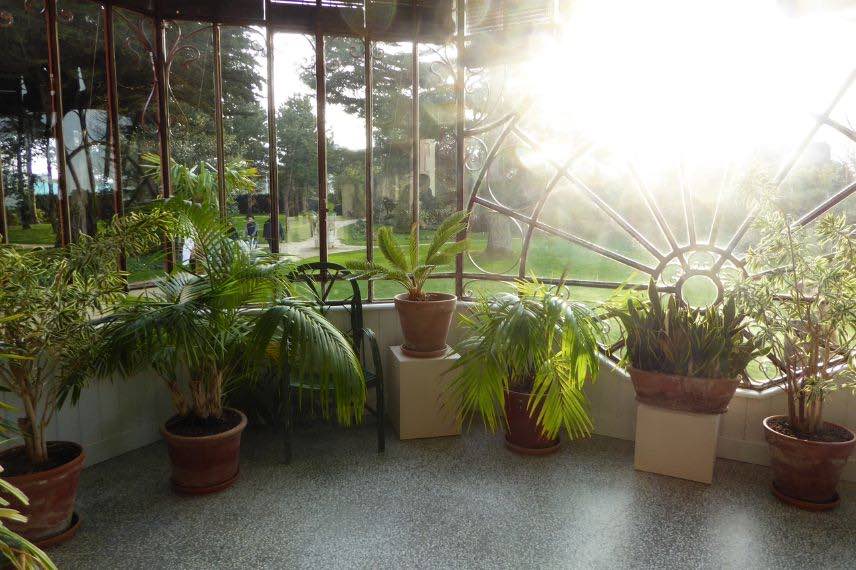
Gloriosa is an ideal plant for a cold greenhouse or conservatory, providing warm daytime temperatures and day/night temperature differences (photo by Gwenaëlle David-Authier)
Excess moisture in the soil
Gloriosa prefers well-drained soil. Excess moisture can lead to root rot.
Moving
Gloriosa does not like to be moved. If you plant it in a pot, ensure you do not move it again afterwards, and especially not during flowering.
Tips for encouraging flowering
Thus, to give yourself best chance of seeing Gloriosa’s splendid flowering unfold:
- Choose the right location and don’t move the plant for the season : Place your Gloriosa in a sunny spot where it will receive at least six hours of direct light per day. Also ensure it is in a wind-sheltered location.
- Monitor the temperatures : Ensure the plant is exposed to appropriate temperatures, especially during the spring growth period.
- Early planting : Plant your Gloriosa as soon as spring temperatures start to rise to give the plant enough time to develop flower buds.
- Moisture management : Ensure the soil is well-drained to avoid excess moisture. Use pots with drainage holes if growing your Gloriosa in a pot.
- Expose it to temperature fluctuations : If possible, subject your Gloriosa to day/night temperature variations to stimulate flowering.
- Fertilisation and amendments: Feed your plant with regular fertiliser applications and add compost at planting and each spring.
- Subscribe!
- Contents

Comments