


Why isn't my loquat tree bearing fruit?
Discover the reasons why a common loquat tree doesn't bear loquats
Contents
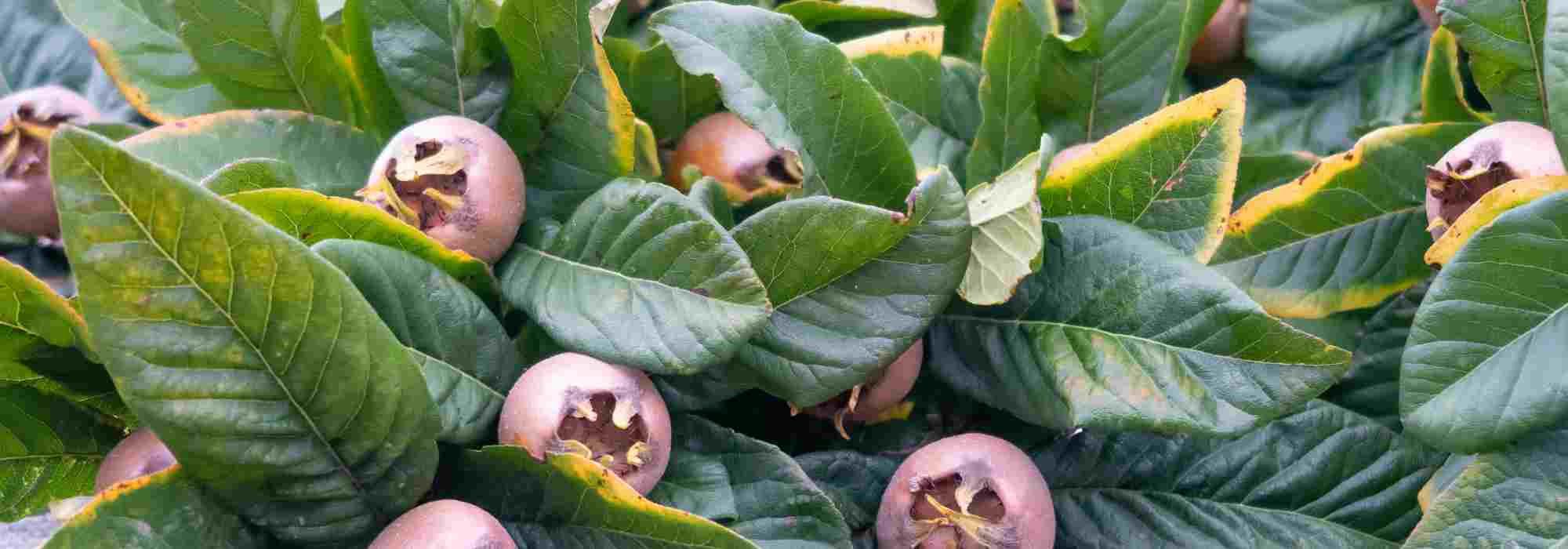
The common medlar (Mespilus germanica) is a relatively uncommon fruit tree today, but was once widely grown in the countryside. Nevertheless, there are many advantages to planting this Rosaceae fruit tree in your garden. Indeed, the common medlar bears fruit in autumn, between October and December, producing medlars — fruits with a distinctive flavour and a slightly creamy texture that are eaten when bletted. This means they should undergo the first frosts before being eaten.
But the common medlar is also an interesting fruit tree to grow for its ease of care and decorative value, thanks to its white-pink flowering and its spreading, open habit.
Nevertheless, despite all its qualities, the common medlar may fail to bear fruit. Let us try to understand why and, most importantly, discover our solutions to encourage fruiting of this common medlar.
For further reading: Common medlar: planting, caring for and harvesting the fruits.

Because you've misidentified the species!
Admittedly, this first reason for the lack of fruiting of your common medlar may seem a little far-fetched, but it remains plausible if you show genuine carelessness.
If your common medlar does not fruit as it should, perhaps you planted a Japanese medlar (Eriobotrya japonica)! Indeed, this other fruit tree is suited to the Mediterranean region. Flowers and fruits will freeze at -5°C. The Japanese medlar is distinguished from the common medlar by its exotically tropical appearance, mainly due to its evergreen and leathery foliage. The leaves are large, they are lanceolate and strongly veined with dentate margins. As for the flowering, it is beige in colour and occurs from October to November and emits a pleasant almond fragrance.
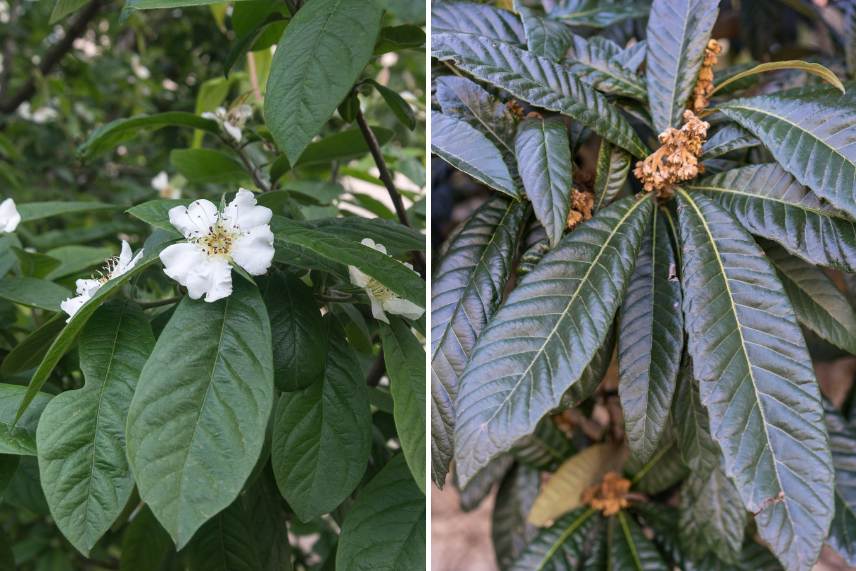
On the left, the common medlar; on the right, the Japanese medlar
However, the common medlar has spiny shoots, deciduous, lanceolate foliage, slightly tomentose and with somewhat undulate margins. As for the flowering, it is white-pink in colour and occurs from early May to late June.
Note that fruiting of the common medlar begins after three years, or even five years. So you’ll need to be a little patient if you’ve just planted it. It generally takes around ten to twelve years to reach ripeness.
Read also
Diseases and pests of medlar treesBecause the planting conditions were not met
The common medlar is not a particularly fussy tree to plant. It can tolerate ordinary soil, but it must be well-drained. Thus, overly damp or waterlogged soil can adversely affect fruiting. This is why adding a little sand to the planting hole of the common medlar helps drainage, especially if your soil is very heavy.
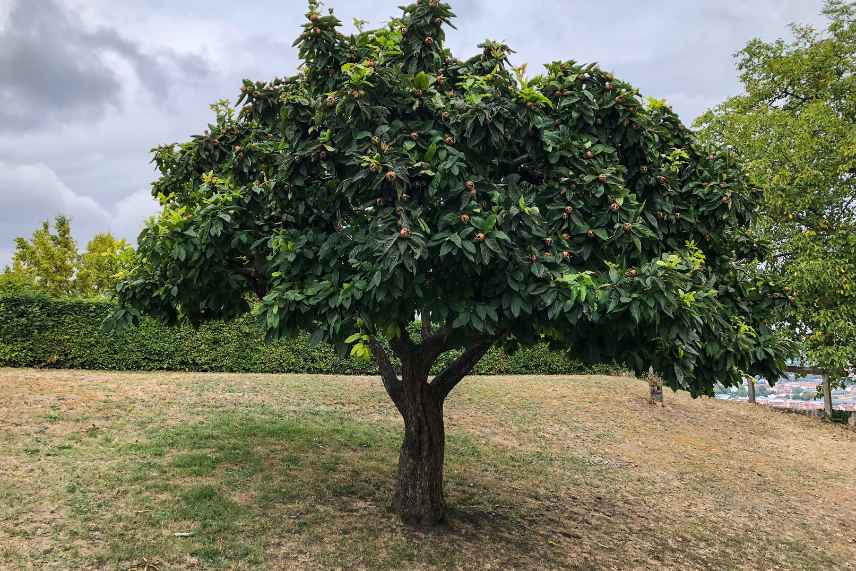
Common medlar needs enough space to spread its branches
Common medlars can also tolerate poorer soil, possibly calcareous, but they will grow noticeably less well. And fruiting will suffer. So, in poor soil, don’t hesitate to add a little potting compost or mature compost.
When it comes to exposure, it should be sunny or even partly shaded. But full sun (at least six hours per day) is always preferable for better fruit production. Similarly, the common medlar should be protected from strong winds.
Because climatic conditions are hardly favourable
Originating from Asia Minor and south-eastern Europe, the common medlar is a relatively hardy fruit tree. It has, moreover, naturalised quite readily in the countryside across all regions of France, including the far north. It can still be found growing wild in bocage hedgerows. The medlar can, moreover, grow and fruit up to 2,000 m above sea level. It is hardy to -20°C. So it acclimatises everywhere.
As for its flowering, it occurs very late, between May and June. That said, the flowers cannot be damaged by late-spring frosts. The fruits appear fairly quickly after flowering. But they need warmth to reach full ripeness. So a cold and wet summer may potentially compromise fruiting.
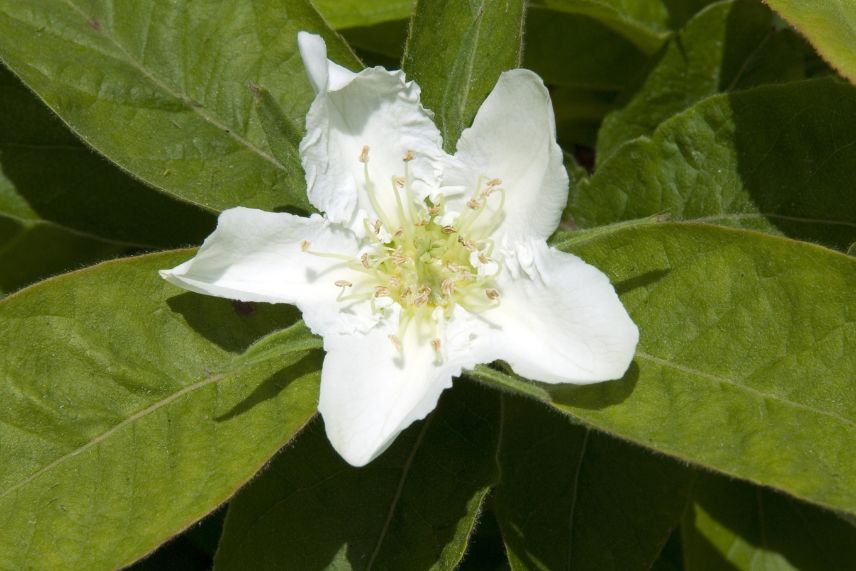
The flowers of the common medlar are late, therefore less sensitive to late spring frosts
Similarly, to be eaten, these fruits must undergo a frost. Indeed, the cold helps to break down the flesh which becomes edible. If you live in a region where winter frosts are non-existent, there is no point hoping to eat bletted medlars at their best. Without frosts, medlars remain astringent and inedible.
Those living in regions where frosts are rare may plant the variety ‘Giant of Evreinoff’ whose fruits can be eaten from mid-October, even without frosts. It is a variety that also has early flowering in April, hence recommended for regions with a mild climate.
Read also
How to prune medlar trees?Because it did not receive proper maintenance
Common medlar is an easy-care fruit tree that requires little maintenance. However, to promote fruiting, it needs some small care. Starting with regular watering, especially during the summer, which helps keep soil fairly cool. Indeed, medlars dislike drought, extreme heat and soils that are too dry.
Likewise, common medlar requires fertilisation not only at planting but also in spring. Indeed, every spring, an application of decomposed manure or special fruit fertiliser must be made. It is sufficient to place it at the base of the tree and then rake the soil.
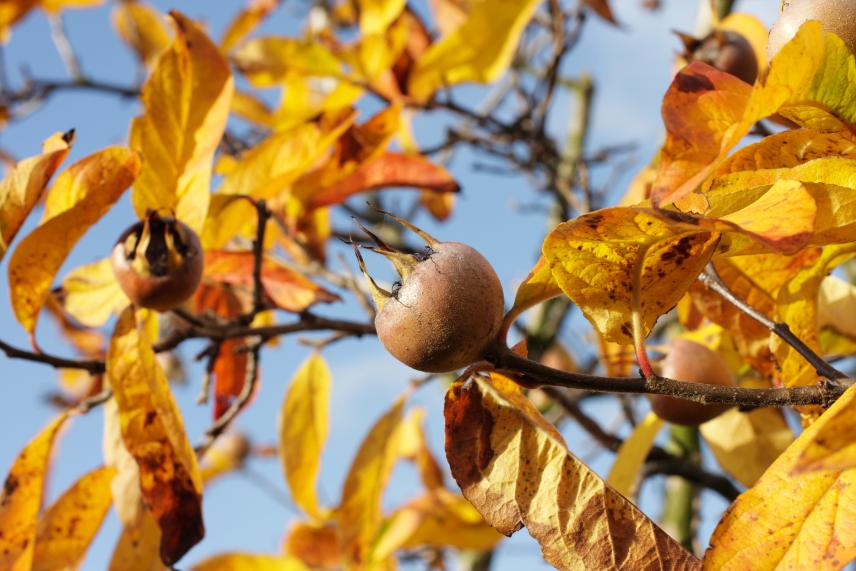
Medlar does not like soils that are too dry or too wet
As for pruning, it is not strictly obligatory as it can be for another fruit tree. Indeed, the common medlar is self-regulating. Nevertheless, a light pruning is recommended every five years. This pruning is carried out in early winter, outside freezing periods, and aims to remove dead or damaged branches and balance the ramure by eliminating shoots that grow toward the centre.
For more information, feel free to consult my article dedicated to the pruning of the common medlar.
Because your loquat tree is attacked by a disease or parasitic infections
Like all other fruit trees, the common medlar can be susceptible to certain diseases or pest infestations. These diseases or pests can affect fruiting. That’s why it’s essential to observe your tree carefully to spot the first signs of disease or pest attacks.
Thus, the common medlar can be susceptible to Monilinia blossom blight in fruit trees, a disease of fruit trees that causes the blossoms and newly formed fruit to rot. Powdery mildew is also a relatively common disease on common medlars. These two diseases are managed preventatively with Bordeaux mixture sprays to be repeated three times from autumn through to flowering.
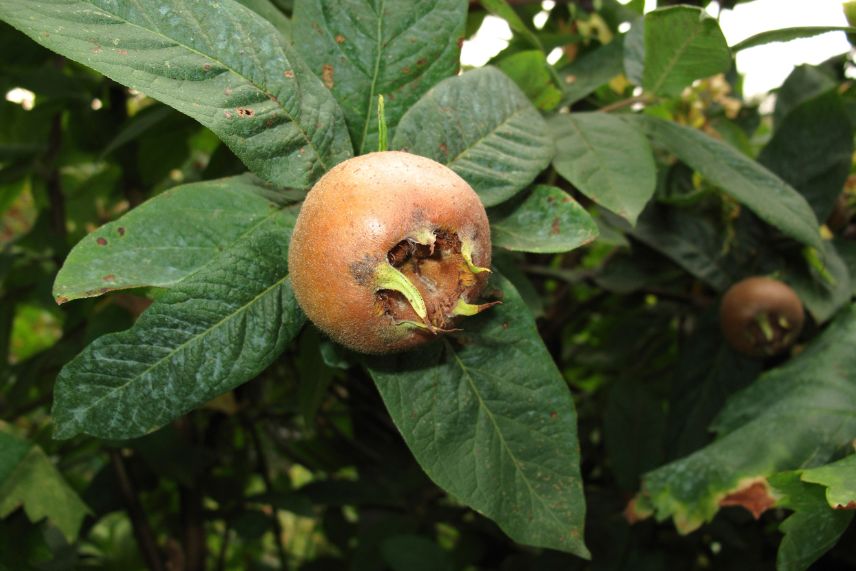
Some diseases or pests can affect medlar fruiting
Fire blight can also affect the common medlar. This serious disease is recognised by the scorched appearance of leaves and branches. Unfortunately, there is no treatment for this disease and the only solution is to remove the tree. In parallel, a report must be made to the local council. To avoid this fatal outcome, it is essential to combat aphids that vector the disease and to avoid injuries to the tree. That is why pruning should be light. Similarly, after storms or inclement weather, be sure to remove broken or damaged branches.
Finally, the final cause of poor fruiting lies in the presence of aphids or scale insects. Indeed, their presence in large numbers can affect fruiting. Therefore, as soon as the first signs of an attack appear, spray the tree carefully. Otherwise, a spray of black soap mixed with water is recommended.
Because pollination did not take place properly
The common damson is a self-fertile tree, meaning that it has, on the same plant, male and female organss. It therefore manages pollination on its own, and the presence of another nearby common damson tree is not obligatory. Thus it is insects, drawn to the sweet fragrance of the flowers, that carry out pollination. To attract bees, butterflies and other pollinating insects, you can sow, within a perimeter close to the damson tree, plants with melliferous and nectariferous flowers.
Note that planting another nearby common damson tree can optimise fruiting through cross-pollination.
- Subscribe!
- Contents

Comments