





























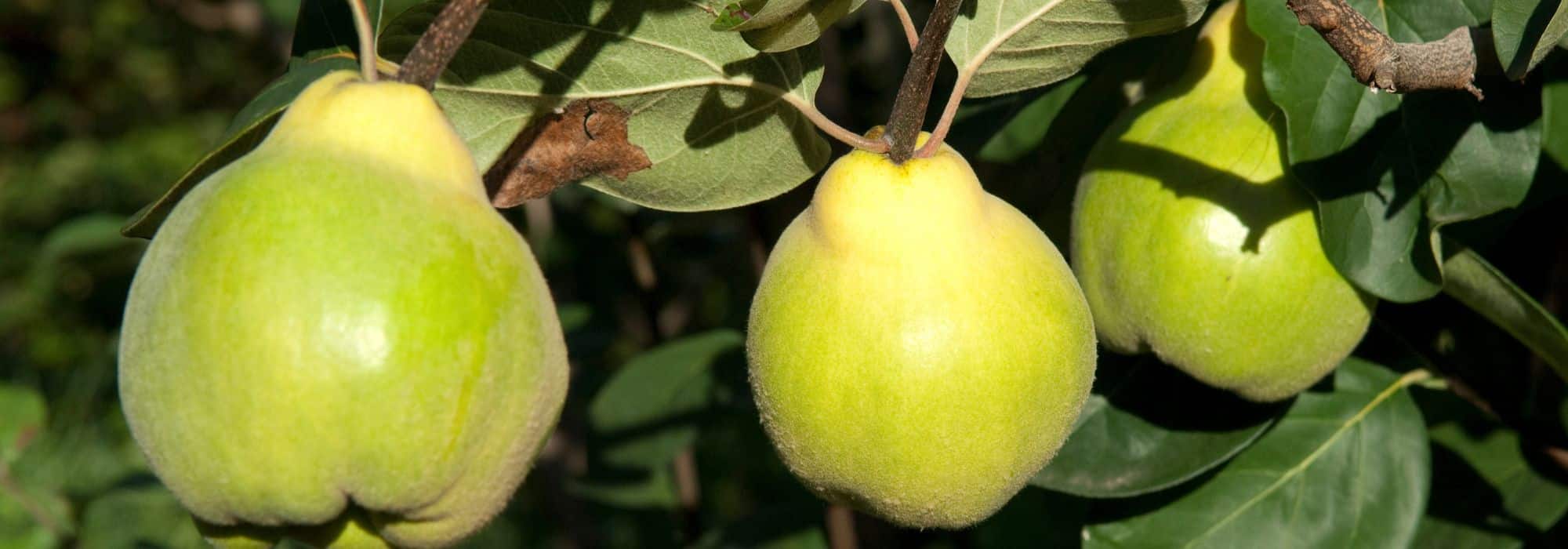
Why isn't my quince tree bearing quinces?
The reasons why the quince tree fails to bear fruit, and our tips for producing beautiful fruit
Contents
The fruiting quince tree (Cydonia oblonga)… Here is a fruit tree that tends to disappear from our orchards and gardens. Perhaps because its fruits, those quinces with their generously shaped forms, are only enjoyed when cooked—in compotes, crumbles, jellies, jams, fruit pastes… or as an accompaniment to poultry, game, or meat. Not to mention their skin, sometimes tough, which makes peeling difficult. Quince is therefore a fruit with a unique flavour, but also a fruit tree that harbours a great many advantages for a gardener. It is, first and foremost, a very decorative tree thanks to its blush-white flowering which occurs in April or May and a regular, well-balanced habit. It is also a self-fertile fruit tree that adapts fairly easily to different cultural conditions. And it does not require particularly intensive maintenance, as with other fruit trees.
That said, some quince trees can be more capricious and not bear fruit as they should. Behind this absence of fruit often lies a clearly identifiable reason related to planting, maintenance, or climatic conditions… There is certainly a solution to set things right.
Let us discover together all the reasons that can prevent your quince tree from offering you beautiful quinces and, above all, how to address this absence of fruiting.
For more information: Quince tree, quince fruit: plant, prune and maintain

Because it is too young
Last autumn, you planted a quince tree in your garden. It’s a fairly good idea, as quince trees are generally very productive. But this autumn, it hasn’t produced any fruit and you’re worried. In fact, this is quite normal, since it typically takes about 3 to 4 years, or even up to 5 years, before it bears fruit—the first harvest after planting. By contrast, when well established, the quince tree can live for up to 80 to 100 years. Admittedly, its fruiting will decline with time, but it can continue to bear fruit for around fifty years.
By contrast, quince trees can be subject to the alternate bearing, as with most pome fruit trees. But less so than an apple tree or a pear tree. However, it’s quite possible. If, this season, your quince tree has not fruited, it may be because it was very generous last year!
Due to climate conditions
Let’s recognise that quince trees are fairly easy fruit trees to grow in all regions, whatever the climate.
It enjoys excellent hardiness of around -25°C.
Cold certainly doesn’t bother it. Likewise, flowering typically occurs in May, a period when spring frosts are rare. But they can still occur.
By contrast, some quince trees such as ‘Monstrueux de Vranja‘ or Champion have earlier flowering, as early as April. And, at that time, spring frosts can still occur in some regions with a continental or montane climate.
So, if your quince tree hasn’t borne fruit this year, it may be because its flower buds or flowers have frozen…
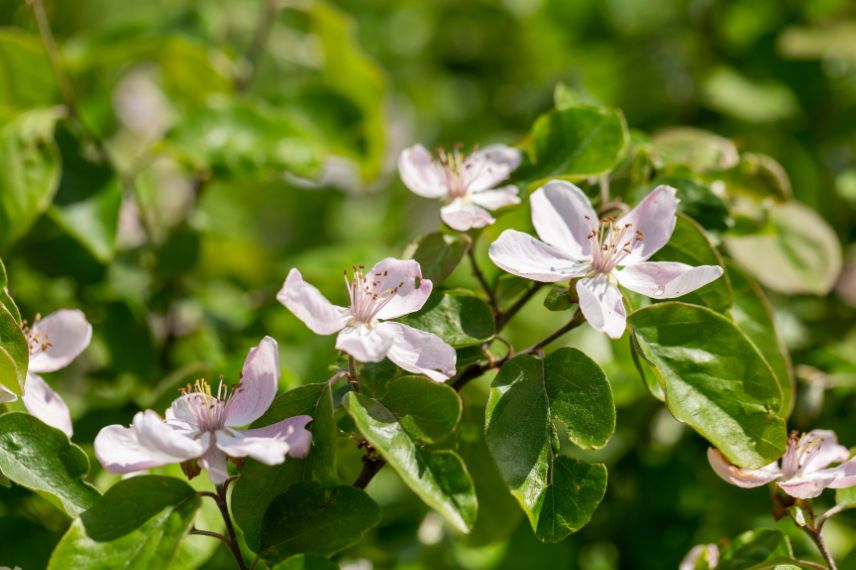
April flowering can be sensitive to spring frosts
Those living further north on the territory who would like to plant a quince tree in their garden will therefore opt for a variety such as ‘Rea’s Mammoth‘ which flowers in May.
Native to temperate regions of the Caucasus and Iran, naturalised in the south of France, the quince tree also greatly dislikes wet, humid summers. These summers favour, among other things, the development of cryptogamic diseases to which it is relatively susceptible. If the summer has been particularly wet, that is surely one of the reasons it has borne little or no fruit.
Overall, the quince tree thrives in the Provençal climate with hot, dry summers, provided that the soil stays cool. Nevertheless, it does not particularly enjoy a position around the Mediterranean due to winds bearing sea spray. The quince tree also thrives in an oceanic climate.
Because it wasn’t planted under good conditions
Although relatively undemanding in terms of planting and cultivation conditions, failure to meet certain criteria may lead to poor fruiting or a complete absence of fruit. Thus, the fruiting quince tree needs deep, light soil. At planting time, you will need to dig a hole at least 50–60 cm deep in soil that has been prepared beforehand and, above all, freed from stones and weeds. Be careful not to scrape too much and to smooth the edges of the hole.
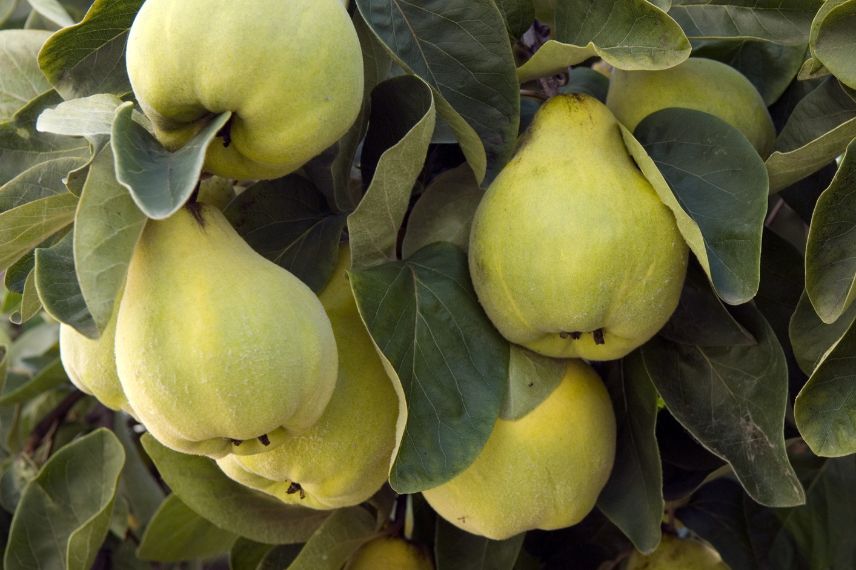
To bear fruit, the quince tree needs deep, cool and fertile soil, neutral or tending toward slightly acidic or calcareous
Next, the quince should be planted in fertile and cool soil. Too dry soil can compromise fruit production. Similarly, when planting, it is essential to add a fertiliser to the excavated soil such as well-rotted compost, potting compost, a base fertiliser or crushed horn.
Finally, although very adaptable, the fruiting quince prefers neutral to slightly acidic soils, or even slightly calcareous. However, soil that is too calcareous is not conducive to good fruiting. The quinces will be fewer in number and of poor quality. Conversely, in soil that is too acidic, quinces will lack aroma and flavour.
Finally, the quince thrives in sun or partial shade. But you should plant it in a spot sheltered from cold winds or air currents. Especially early-flowering varieties such as ‘Vranja’ or the variety ‘Portugal’ which also flower as early as April.
Failure to meet any of these planting criteria may result in poor fruiting of your quince tree.
Read also
How to harvest and store quinces?Because it does not receive proper maintenance
Unlike other fruit trees, the quince tree requires very little maintenance. Nevertheless, it still needs at least basic maintenance in terms of watering, pruning and soil upkeep.
The quince tree prefers cool, moist soil and will not tolerate soils that are too dry. That is why regular and substantial watering is essential during periods of hot summer weather or drought. And above all, the first three years after planting, since thereafter, if planted in sufficiently deep soil, it should manage.
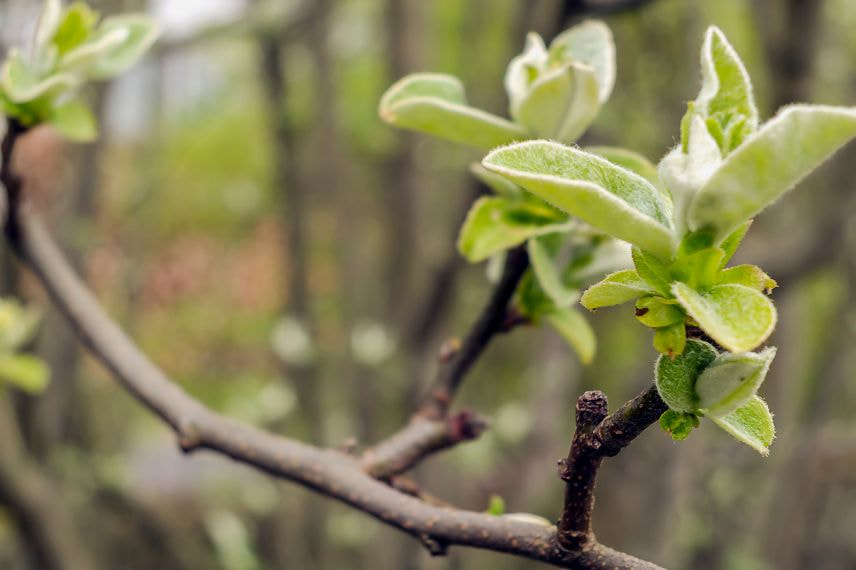 Bud burst of quince leaves
To keep your quince tree happy, it is also important to clear the soil within a 50 cm radius around the trunk of weeds. And this helps the tree make the most of the water you provide. Likewise, it is strongly recommended to remove any mummified or spoiled fruit that has fallen beneath the tree.
At the base of the tree, it is wise to lay a good mulch of RCW (ramial chipped wood), compost, straw or sound dead leaves. And to maintain soil fertility, a good supply of compost or manure, well-decomposed, is essential in autumn. In spring, a fruit-tree fertiliser will boost your quince tree.
As for pruning, it is not obligatory. Except during the first three or four years which will allow you to shape the tree. It will simply involve evenly spacing and balancing the main scaffold branches. Thereafter, pruning consists only of removing dead or damaged shoots, and removing excess branches. Also remove branches that grow towards the centre to ventilate the centre of the canopy.
For further reading: How to prune the quince tree?
Because of pollination
The quince tree is a self-fertile fruit tree, meaning the flowers pollinate themselves as they bear both male and female organs. Thus, the flowers on the same tree are self-fertilised, that is to say the pollen from one flower fertilises the pistil of another flower, aided by the wind, but mainly by insects such as bees and bumblebees. In a garden where many varieties of melliferous plants grow, pollination will be perfect. To produce quinces, a single tree is enough.
For toutefois, if you plant two different varieties, fruiting will be even better.
Because it is diseased or infested with pests
That is the main reason your quince tree isn’t fruiting. Indeed, the quince tree can be susceptible to certain diseases. And in particular Entomosporiosis which tends to occur, especially during damp springs and summers. It appears as brown spots on leaves.
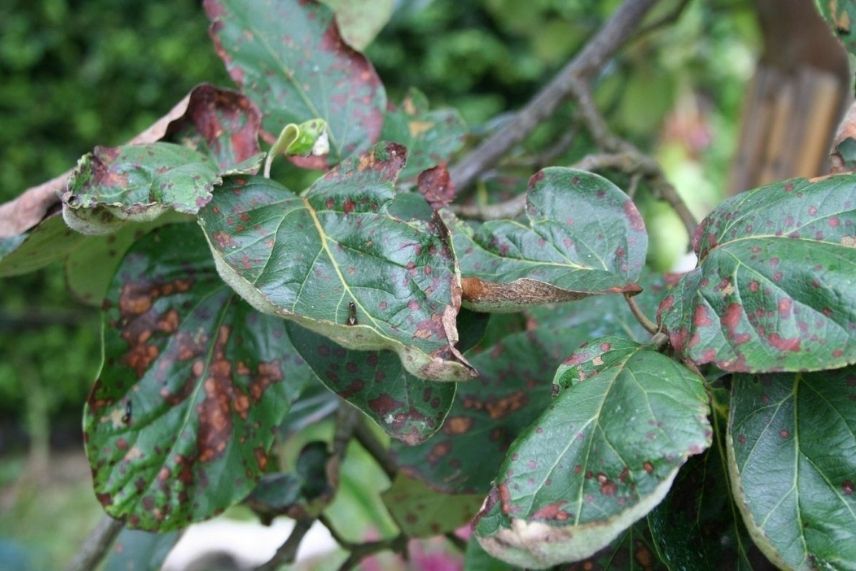
Entomosporiosis affects quince trees a lot (our photo)
Brown rot also affects fruiting. Indeed, this rot mainly attacks young fruit. Other diseases such as apple scab or powdery mildew can also affect quince production.
To prevent most of these diseases, removing damaged fruit and fallen leaves from under the tree is preventive. Similarly, spraying a decoction or horsetail manure in spring and autumn helps prevent cryptogamic diseases, possibly strengthened by Bordeaux mixture.
As for pests such as aphids or codling moths, they can also affect or reduce fruiting.
For more information:
- Subscribe!
- Contents
Comments