





























Winter interest trees
Our selection for an attractive garden in the heart of the cold season
Contents
If you want to bring your garden to life during the winter months, look for species with original and remarkable bark, silhouettes, or leaves. Although flowering is scarce at this time when the garden is dormant, a few specimens do bloom in the heart of winter.
In this selection, discover 7 decorative trees for winter, a time when under the frost, lines and shapes create the backdrop, revealing the architecture of the garden. Whether you have a large space or a small one, you will find the tree that will make your winter shine!

Acer davidii ‘Viper’ - Snake Bark Maple
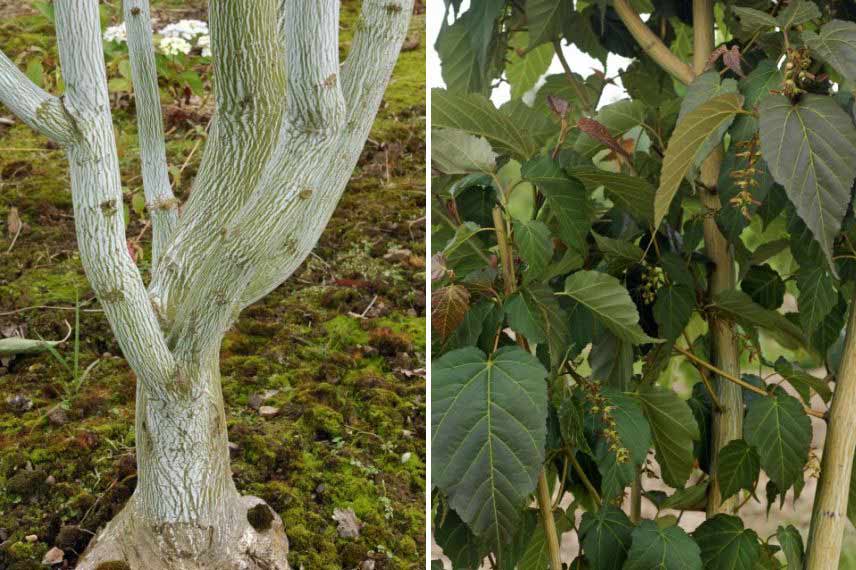
Snake-bark maples are among the trees whose ornamental wood is a true marvel in winter. Particularly aesthetic and valuable at this time of year, Acer davidii ‘Viper’, or David’s Maple, features a bicoloured green wood striated with white. When stripped of its foliage in winter, one can fully appreciate its branches with graphic and luminous stripes, reminiscent of a snake’s skin.
Often developing multiple entirely marbled trunks, the ‘Viper’ maple is a small deciduous tree well-suited to modest-sized gardens, as it typically reaches an average height of 3.50 m and a spread of 2.50 m. It thrives only in non-calcareous, cool soils, preferably in partial shade. Its deciduous leaves are red at the bud burst period, turning light green, then dark green at ripeness, and finally a beautiful orange in autumn.
Prunus serrula 'Amber Scots' - Tibetan Cherry
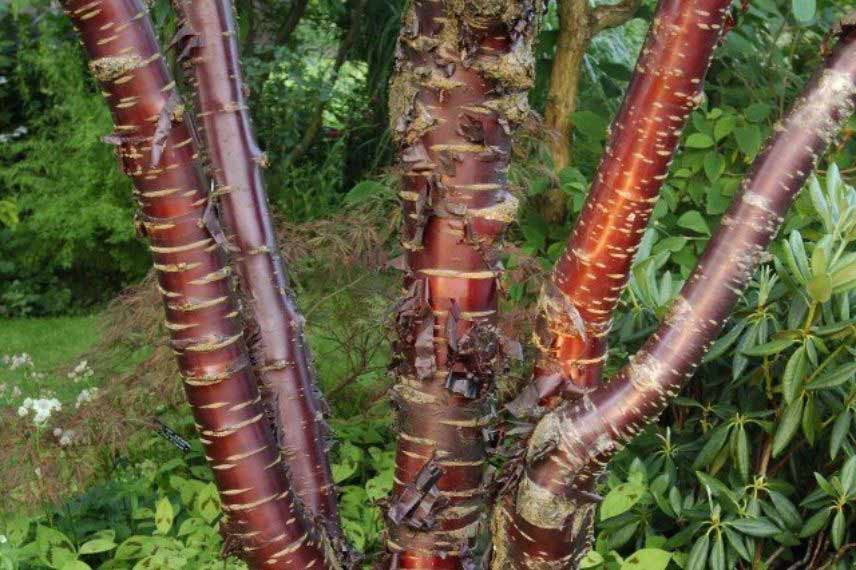
À ne pas confondre avec le Cerisier à fleurs (Prunus serrulata), the Tibetan Cherry Prunus serrula ‘Amber Scots’ is characterised not by its rather discreet flowering, but by its shiny, lustrous bark, whose mahogany red hue with caramel reflections is one of the most beautiful sights to admire in the garden during winter. It is when it peels that this bark is most interesting, as underneath, the new layer is shiny and glistens in the sun.
Interesting throughout the year and easy to grow in ordinary soil, the Prunus serrula ‘Amber Scots’ is a beautiful small tree with a naturally upright habit that can reach a height of 10 m and a spread of 7 m. Its elongated leaves with prominent veins are light green at bud burst, turning dark green in summer before changing to golden yellow in October. During April, it is covered with a multitude of delicate white flower bouquets.
Perfectly hardy, it thrives in full sun or partial shade, in any deep, fairly rich, rather cool, and well-drained soil, without excess lime.
Discover other Winter-flowering shrubs
View all →
Available in 1 sizes
Available in 2 sizes
Available in 1 sizes
Available in 1 sizes
Available in 1 sizes
Available in 2 sizes
Available in 1 sizes
Available in 1 sizes
Available in 1 sizes
Available in 1 sizes
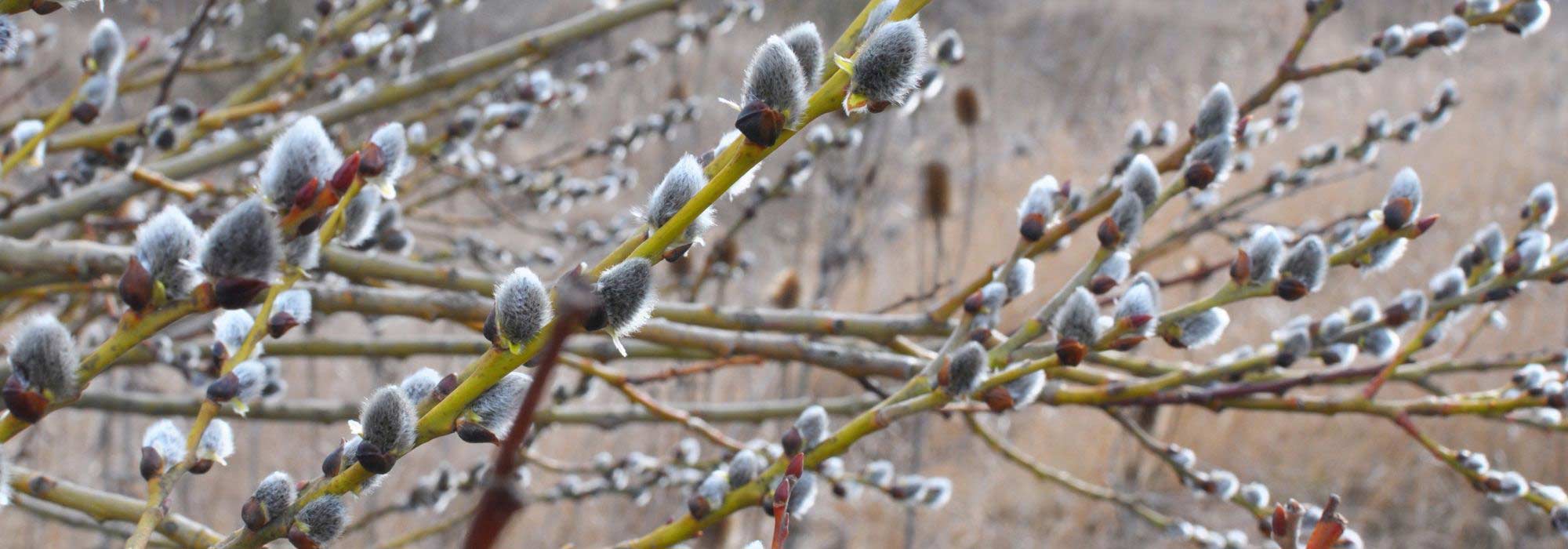
Salix caprea - Goat Willow
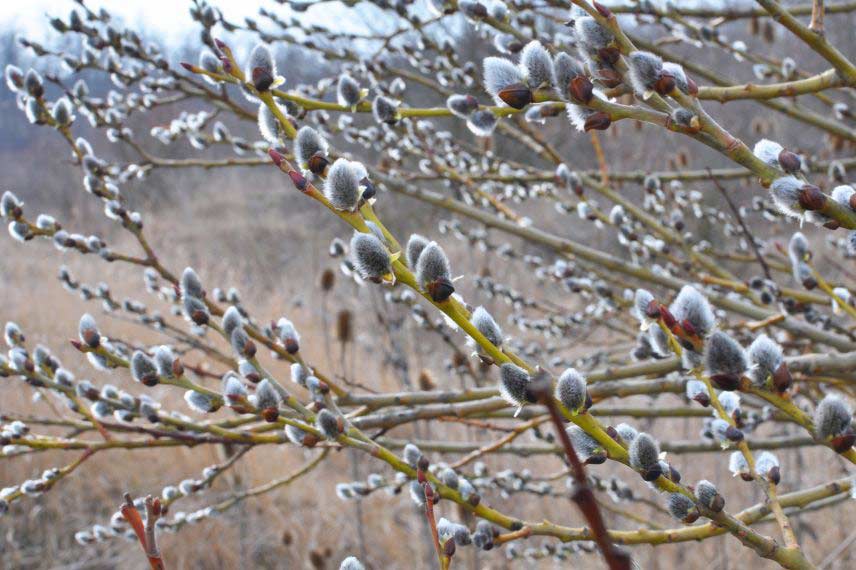
Catkins can bring real ornamental interest to trees in winter. Among these, Salix caprea or Goat Willow, which adorns itself with large silver catkins in February-March. It is a small deciduous native tree whose adult height can vary from 2 m to 10 m with a spread of 3 to 8 m. In male specimens, the bare and shiny branches are adorned at the end of winter with stunning silver male catkins that are superb in cut flower arrangements. With a silky texture, they are decorated with bright golden yellow anthers filled with pollen, highly appreciated by pollinating insects. In female specimens, the light green catkins are more discreet.
This “goat willow”, with its light and elegant form, is a hardy tree that is very easy to grow in any slightly deep soil, even relatively dry in summer.
Read also
10 good reasons to plant a treeAcacia dealbata 'Gaulois Astier' - Florist's Mimosa
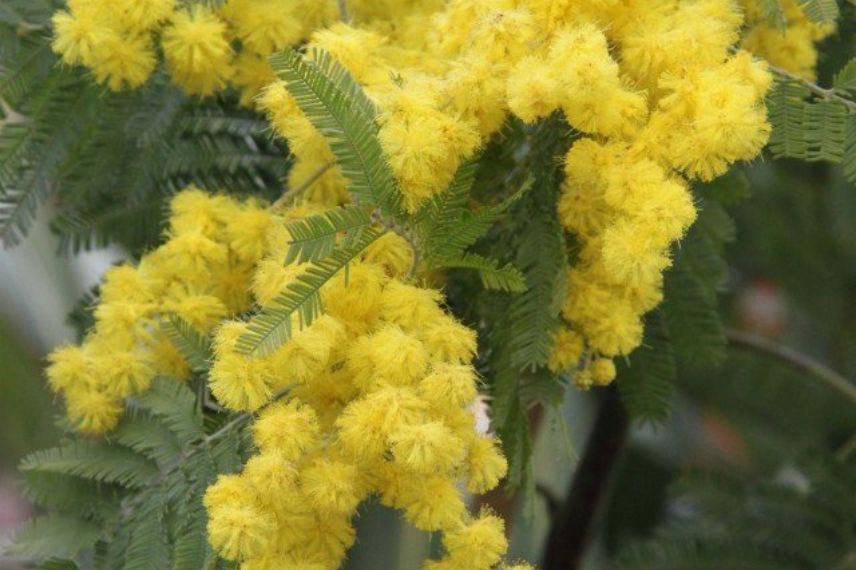
Its flowering often bursts forth in thousands of sun-yellow pom-poms in the heart of winter! Recognisable among all, the Florist’s Mimosa Acacia dealbata ‘Gaulois Astier’ is a tree immensely appreciated by gardeners who enjoy this generous display of flowers when nature is at rest.
Small evergreen tree suited to mild climates, hardy down to -10°C in a sheltered position, this grafted mimosa possesses all the qualities of the winter Mimosa, but does not exhibit the sucker and invasive character it is rightly reproached for. Reaching 5 m in height and 4.5 m in spread at maturity, it is best planted in a very sunny and sheltered position from strong winds and has the advantage of tolerating calcareous soils very well.
Virginie and Olivier present the Mimosa, a must-have for coastal gardens:
Arbutus unedo - Strawberry tree
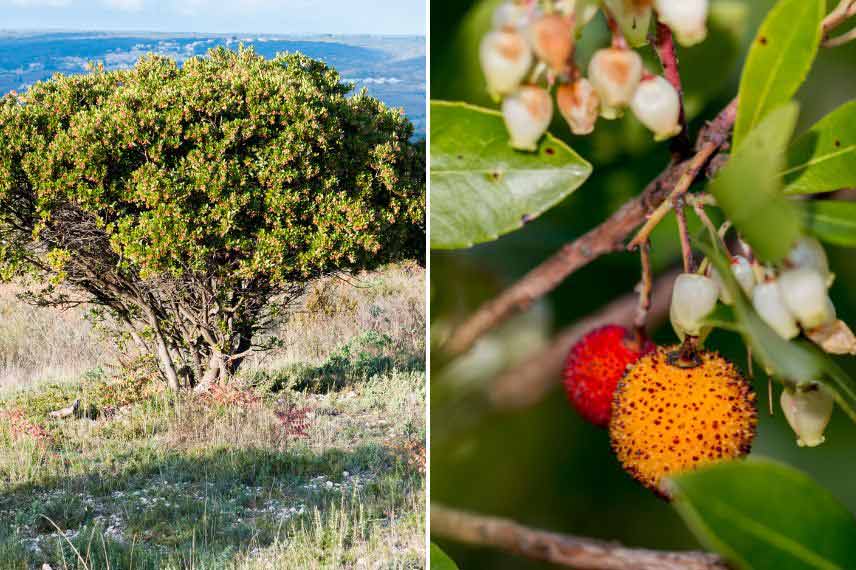
Commonly known as the “Strawberry Tree” due to its edible red fruits, Arbutus unedo or strawberry tree is a small evergreen tree with glossy leaves. It reaches an adult height of about 6 m and features very decorative wood. In late autumn and early winter, it produces a large quantity of pale pink-white flowers that appear at the same time as the fruits from previous years turn red. It is also ornamental for its very decorative orange-brown bark, which exfoliates with age.
This small tree of Mediterranean origin is sufficiently hardy (-10/-12°C) to be cultivated quite far from its native region, for example along the Atlantic coast. It is well adapted to well-drained, dry soils and thrives in seaside gardens as long as it is not exposed to direct sea spray. Resistant to summer drought, with exemplary undemanding nature, the strawberry tree is valuable for creating the persistent structure of a free-standing hedge and makes a beautiful specimen when placed in isolation.
→ Strawberry Tree, Arbutus: planting, pruning and maintenance tips
Eucalyptus cinerea 'Silver Dollar' - Grey Gum
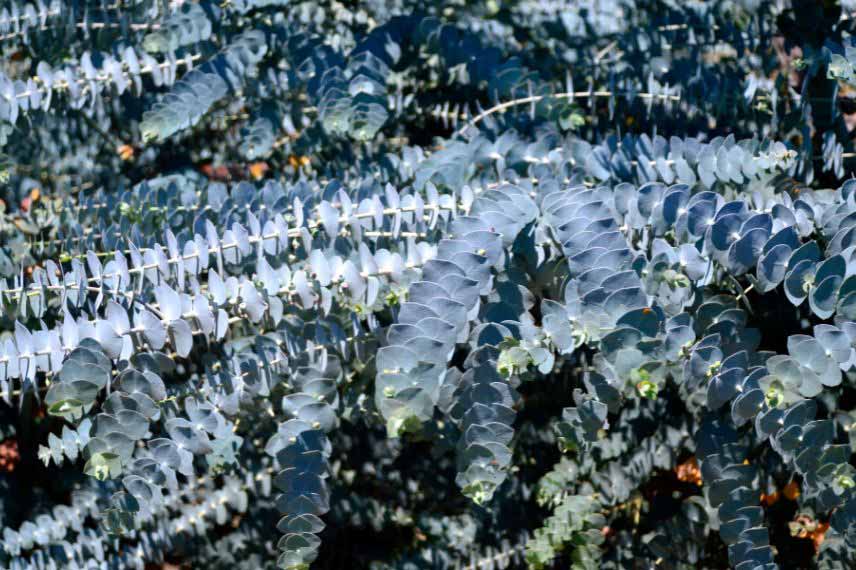
Small tree from the myrtle family, Eucalyptus cinerea ‘Silver Dollar’ or Silver Dollar Gum is a fast-growing small tree that bears evergreen foliage in winter, composed of small rounded or heart-shaped leaves, glaucous in colour with metallic silver reflections. They emit a characteristic menthol aroma when crushed. Its bark, more persistent than that of most eucalyptus, exfoliates very little. Thick and rough, it is grey, taking on varying shades of mahogany orange depending on the season. The ‘Silver Dollar’ Eucalyptus will reach between 10 and 15 m in height with a spread of 6 to 10 m if not pruned. If shortened every spring, it will be wider, extremely dense, but shorter.
Eucalyptus cinerea adapts to clay or sandy soils, but it does not thrive in calcareous and very dry lands. A well-established specimen will withstand brief frosts of around -10 to -12 °C.
Fagus sylvatica 'Purpurea Tricolor' - Variegated Purple Beech
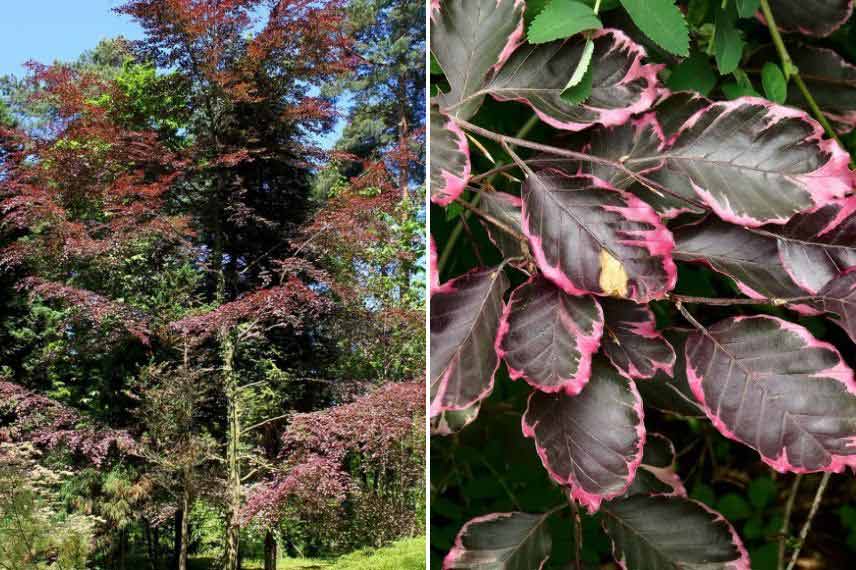
Characterised by its narrow weeping habit, both elegant and original, the Fagus sylvatica ‘Purpurea Tricolor’ or Tricolour Purple Beech boasts an unprecedented dark purple foliage, broadly variegated with pink and white, turning a beautiful copper colour in autumn. Marcescent, it clings to the branches until the end of winter, only detaching just before the new leaves appear. It will form a fairly imposing tree if grown freely, reaching about 10 m in height and 8 m in spread. Its cylindrical trunk is covered with smooth light grey bark.
A magnificent specimen to install in a large garden, the Tricolour Purple Beech thrives particularly well in cool, but not overly wet, well-drained soils, even calcareous and preferably rich in humus. Perfectly hardy, it enjoys partial shade and non-burning sunlight and flourishes in cool and temperate climates, as well as in mountainous areas.
 →
→ For further reading...

- Subscribe!
- Contents
![[wps_products_grid category="arbres" interest="winter"]](https://en.promessedefleurs.eu/blogwp/wp-content/uploads/2022/12/arbres-interet-hivernal.jpg "winter interest trees")
Comments