






























Wintering plants in a conservatory
Our tips and tricks for wintering tender plants in a conservatory
Contents
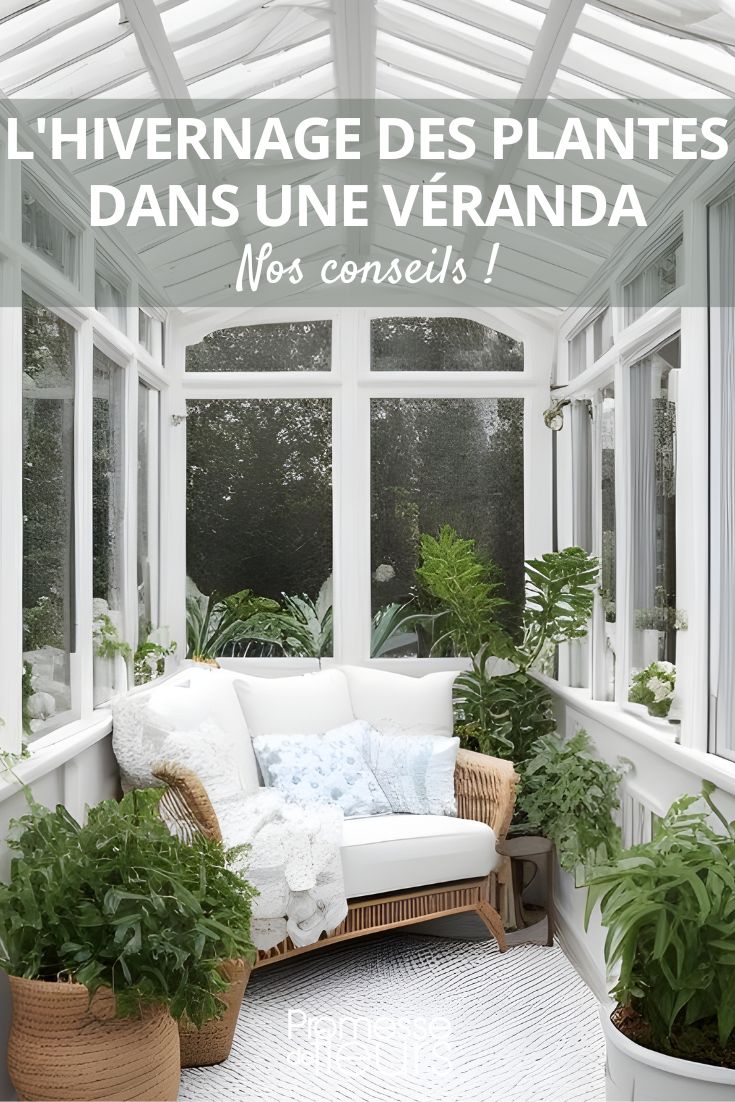
The conservatory is a room in its own right, open to the garden or nature. Bathed in natural and warm light thanks to its large windows, it serves as an intermediary between the outside and the inside of the house, an extension of the home. From spring to autumn, it is pleasant to gather there with friends or family, or to relax comfortably in a lovely armchair. However, if your conservatory is poorly heated or unheated, it becomes more difficult to spend time there in winter. This room becomes the ideal space to winter plants that are sensitive to frost, grown in pots, in the garden, on a terrace, or a balcony, which cannot spend the winter outdoors. Especially in regions with harsh winters where protections like frost covers are insufficient.
During this wintering period, your plants need specific conditions in terms of temperature, light, humidity, and particular care to get through the winter as best as possible. And most importantly: to ensure their future flowering and/or fruiting!
Let’s discover together how to winter in a conservatory the plants that are least tolerant to cold and frost.

The benefits of a conservatory for overwintering tender plants
Indubitably, a conservatory is a true living space, from spring to the end of autumn, where every family member can find their joy: a moment of relaxation to read, a family meal or gathering with friends in the evening, or time to engage in a craft activity… It must be said that a conservatory has a multitude of advantages that make it a pleasant place to live.
However, if it is not heated (but perfectly insulated), the conservatory may be somewhat deserted by the family. But it is the ideal place to store potted plants that spend spring, summer, and early autumn in the garden, on the terrace, or the balcony. Indeed, many of these plants are frost-sensitive or moderately hardy. Even protected by a winter cover, they would not survive the winter outdoors, at least in regions approximately north of Valencia, where winters can be harsh, cold, and subject to the elements.
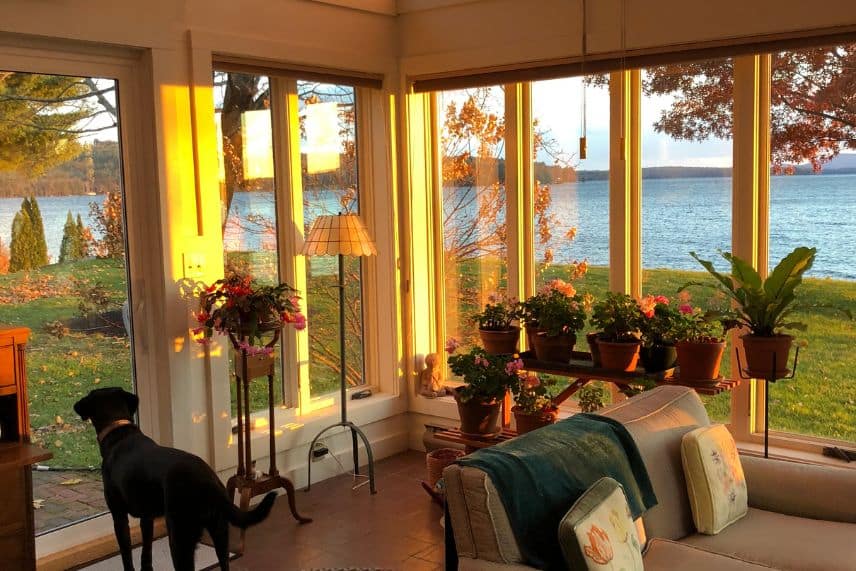
In winter, a conservatory benefits from optimal brightness
Indeed, in winter, a conservatory offers optimal conditions for wintering frost-sensitive or tender plants:
- Depending on the regions and periods, the temperature can range from 5 to 6 °C to 15 to 18 °C, sometimes higher in coastal areas. Obviously, the temperature drops at night but quickly rises during the day with the slightest ray of sunshine. In short, it is generally much cooler than in living rooms. This relative coolness is perfect, as in winter, plants physiologically enter a period of dormancy. This period of relative cold is essential for achieving beautiful flowering and proper fruiting.
- In a conservatory, the light is optimal, even in winter. Indeed, thanks to the large glass windows and generally ideal exposure of the conservatory, plants benefit from maximum brightness, well above that of living rooms.
- Finally, in a conservatory, frost-sensitive plants, many of which originate from tropical or subtropical areas, are protected from all the elements that could harm their well-being. From frost, of course, but also from sometimes icy rains, cold winds, and snow…
What conditions are needed for overwintering plants in a conservatory?
The conservatory is a perfect shelter for plants that are sensitive to cold because they are not hardy at all or only slightly so. However, even though this environment meets their needs, it is still artificial. That’s why it is essential to adhere to a few conditions to ensure your plants have a great winter!
Thus, the ideal temperature for overwintering tender plants is between 5 and 10 °C. This temperature allows most plants to enter their winter dormancy period, which is necessary for their development. On the other hand, if you have some more tropical plants like orchids, the nighttime temperature should not drop below 10 °C. Also, remember that the temperature will inevitably be a bit lower near the windows.
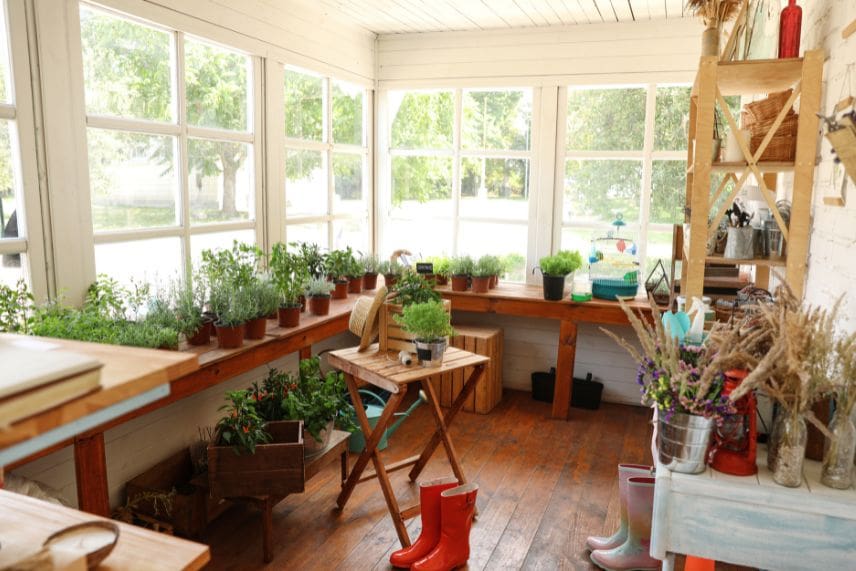
In a conservatory, the conditions of temperature, humidity, and light are optimal
Next, in a conservatory, light is optimal in the middle of the day, even if the weather is overcast. The sun can shine on some beautiful winter days. If your plants are exposed to direct sunlight, their foliage can burn even in winter. Therefore, it may be wise to install very light curtains on south-facing windows to attenuate the intensity of the sun’s rays. Alternatively, simply move your plants away from those rays…
Finally, the most delicate aspect of a conservatory in winter is managing the humidity level. Plants should not live in an environment that is too dry or too humid. The key is to find the right balance. That’s why it is essential to regularly ventilate the conservatory by opening a window or door for a few minutes each day, even in cold weather, but preferably in the middle of the day. Avoid creating cold drafts at all costs as they would be very harmful to your plants.
It is also recommended that to achieve the correct humidity level, you place your potted plants on a layer of clay balls that will absorb and continuously release moisture. Similarly, to facilitate good air circulation for your plants, space them out as much as possible. These precautions are crucial to ensure the survival of your plants, as well as to prevent the proliferation of pests such as mealybugs, aphids, or red spider mites, also known as tetranychids.
Which plants can survive the winter in a conservatory?
Several types of plants can winter in a conservatory, as long as they are frost-sensitive or moderately hardy:
- Citrus trees such as the lemon tree, orange tree, and mandarin tree… should be kept warm during winter at an ideally maintained temperature between 8 and 10 °C. For more information, I invite you to read Alexandra’s article: Overwintering orange trees, lemon trees, and other citrus trees.
- The oleander (Nerium oleander), a Mediterranean-origin bush, is hardy only down to about -6 °C for most varieties.
- The bougainvillea (Bougainvillea), a climbing plant with very decorative bracts, enjoys spending winter in a conservatory for its brightness and relative warmth.
- The dipladenia is also a perennial climbing plant, often grown as an annual, which can indeed winter in a conservatory. In spring, simply bring it back outside for a beautiful flowering.
- The pelargonium or zonal geranium that adorns our balconies or flowerbeds in winter can also winter in a conservatory.
- The fuchsia with its lovely bell-shaped flowers is often grown as an annual, but it is a frost-sensitive perennial that survives in a conservatory during winter.
- The Solanum is a very floriferous climbing plant from summer until the first frosts.
- The begonia is a bulbous plant that absolutely cannot tolerate cold.
- The lantana is an extremely floriferous plant that should be brought into the conservatory as soon as the first cold weather arrives, at a temperature of 10 to 15 °C.
- The jasmine (Jasminum): there are many varieties, but many are not very hardy. Only the star jasmine (Trachelospermun jasminoides), winter jasmine (Jasminum nudiflorum), and common jasmine (Jasminum officinale) can withstand lower temperatures and may winter outside.
- The tibouchina (Tibouchina) or spider flower is a frost-sensitive shrub notable for its purple flowering.
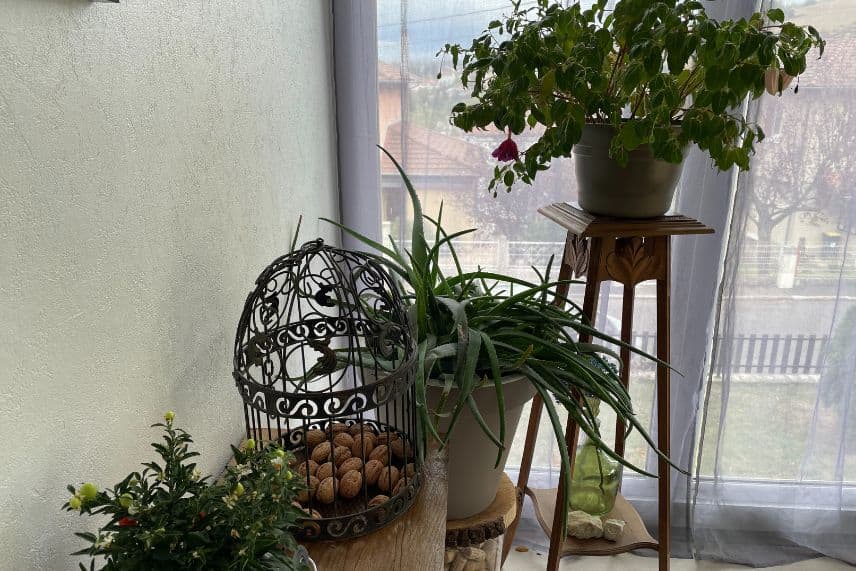
In addition to these flowering plants or shrubs, you can also winter succulents and cacti, frost-sensitive or moderately hardy, agaves and mangaves, aloes, some palms, cordylines, and phormiums, olive trees…
For further reading: 7 flowering plants to winter in a conservatory
What specific care should be given to plants?
In winter, in a conservatory, plants require minimal maintenance. As a reminder, they are in a state of dormancy, and sap no longer circulates, so care will be less important. However, a few actions are essential for their well-being. In particular, watering must be measured. Indeed, in winter, when temperatures have dropped, the water needs of plants are reduced. Conversely, excess water can lead to diseases or root rot.
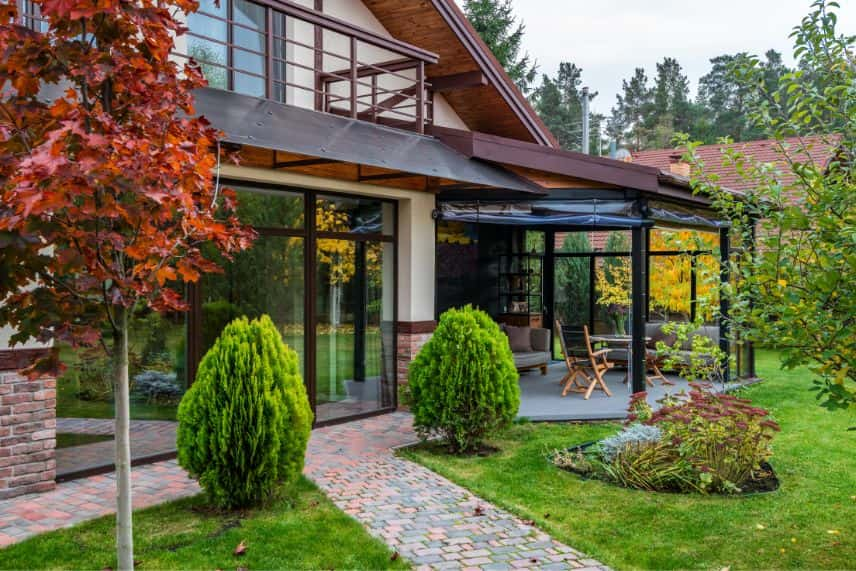
In winter, in a conservatory, it is important to ensure proper watering of plants
How to water your plants in winter in a conservatory?
- Allow the surface of the substrate to dry well between watering sessions (except for certain citrus trees like the lemon tree, which needs water as it continues to bear fruit).
- Never let water stagnate in the saucer or cache-pot.
- Ideally, water with rainwater at room temperature or tap water that has been left to stand for a day.
- Mist the foliage of your plants from time to time.
Carefully observe your plants to spot any signs of pest attacks or the slightest signs of disease. Otherwise, in winter in a conservatory, fertilisation should be stopped, and pruning should not be done.
Our little extra tips
In a conservatory, even more than in any other room in the house, the temperature variation between day and night is quite significant. Similarly, the temperature is often one or two degrees lower next to the windows than on the opposite side. This is why it is best to keep the most delicate plants away from the glass doors.
Avoid placing your pots directly on the floor. It is therefore preferable to set your plants on shelves or furniture, or even hang them in lovely macramés, or place them on beautiful columns to give them height.
- Subscribe!
- Contents
Comments