





























You dream of a lush vegetable garden on your balcony or terrace, but achieving success seems far too conventional? Why aiming for abundant harvests when you could join the prestigious circle of "frustration growers"?
In this article, we present to you 6 foolproof tips for failing at your container garden. These 100% absurd tips will transform your balcony into a joyful botanical disaster. Of course, if you do the exact opposite, you might just harvest vegetables worthy of a Michelin-starred chef... but where's the fun in that?
Take notes and get ready to turn your balcony or terrace into a true laboratory of improbable and memorable gardening experiments!
Lesson 1: Choose your plants poorly!
Basil, strawberries, leeks, cacti... Plant everything you can find, regardless of whether these plants prefer shade, full sun, or even an arid desert. After all, a cactus and a lettuce are pretty much the same thing, right?
Don't stop there: completely ignore care sheets or seed labels. Seasons? A lazy gardener's invention. So, plant your tomatoes in the middle of December for guaranteed dramatic effect, and why not some radishes in the height of summer? It will add a lovely touch of unpredictability to your balcony.
Bonus tip: if a plant doesn't grow, blame the wind or your neighbours. After all, why should it be your fault?
The real advice: choose plants suited to your space, exposure (sun or shade), and the season. Herbs like basil or parsley are perfect for beginners!
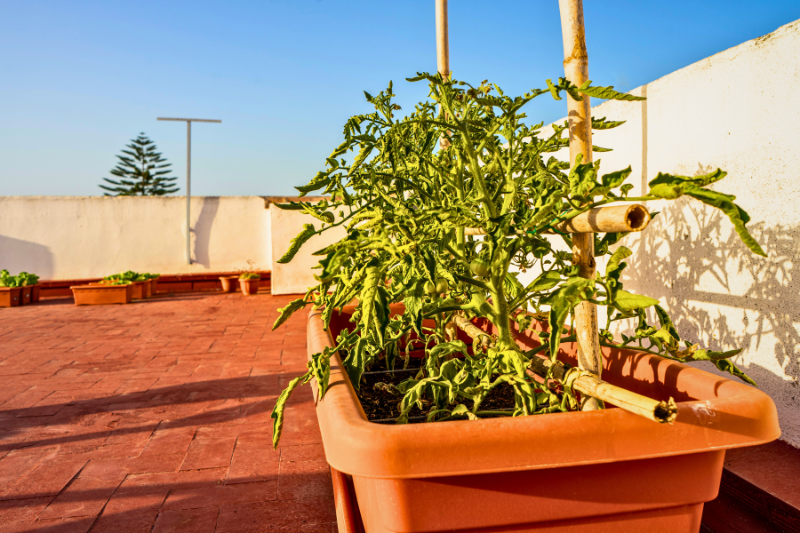
Lesson 2: Water blindly, or better yet, not at all!
Gardening is complicated enough, so why bother with thoughtful watering? Opt for the "Russian roulette of watering" method. One day, drown your plants in a spa-worthy bath (or a municipal pool), and then let them ponder their thirst for three weeks. Plants love these emotional rollercoasters... well, in theory.
Be creative: a blast of cold water at dawn, a day where you completely forget their existence, and a light mist of lukewarm water just before a heatwave. It's a great way to test their resilience... and your patience.
Bonus tip to perfect this method: don't bother learning the specific needs of each plant. A succulent and a basil plant? Same battle! Don't all plants have the same taste for water? (Spoiler: no, not at all.)
The real advice: consistency is key. Adjust watering to the needs of each plant. And a small watering can with a fine spout is better than your neighbour's hose.
Lesson 3: Completely ignore container size
Disregard container size! Do you have a lovely mint plant? Plant it in a tiny pot, ideally the size of a thimble. After all, why give it room to thrive when you can force it to become a minimalist artist? In contrast, your strawberry plant deserves to dream big: put it in a giant container designed for a palm tree. After all, it needs to compensate for its limited growth ambitions.
Consistency? Too boring. Logic? The sworn enemy of fun! Imagine carrots in a gratin dish or tomatoes in a bonsai planter. Nothing like surprising your plants (and their root systems). At least you'll be sure your garden looks like no other.
Bonus tip: don't bother with drainage holes or suitable materials. Who said plants needed well-aerated soil? Aim for originality, and let your plants live their best (and last?) life.
The real advice: plants need space to grow. Choose suitable containers and think about drainage (hello, small stones or clay balls at the bottom!).
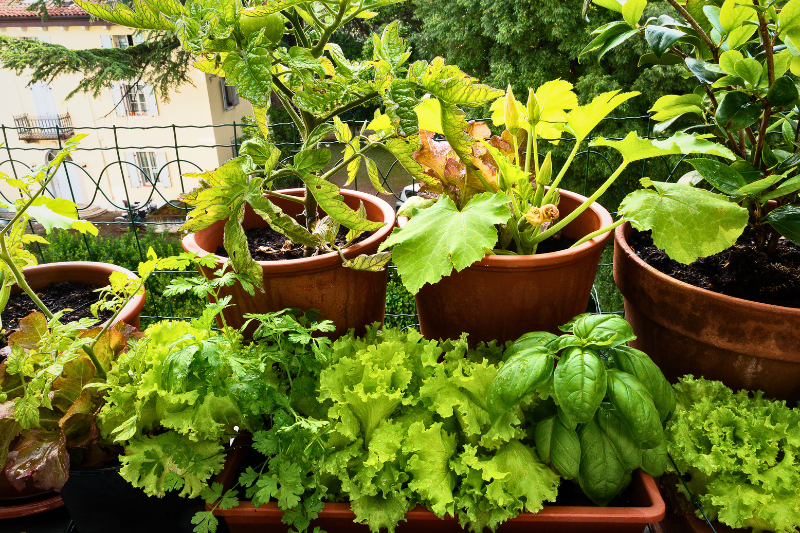
Lesson 4: Use the most dubious soil possible
Do you really want to be original? Forget the classic potting soil, far too mainstream. Instead of investing in a rich, suitable substrate, go on an adventure and collect unexpected treasures: construction sand found on the sidewalk, dusty soil gathered during your last mountain trek, or rubble salvaged from an alley. It's a true ode to diversity... or at least, to improvisation.
The idea is simple: the more sterile, compact, and hostile the mix, the better! Why settle for nutrient-rich soil when your vegetables can experience extreme survival? You could even spice up the experience by adding a bit of gravel to remind them of the joys of a stony desert.
And above all, don't forget to proclaim your love for innovation loudly: "Here, we plant boldly, not scientifically!" Sure, your plants might wonder why they are condemned to grow in soil that could just as well be used to build a highway. But isn't that the essence of experimentation?
The real advice: good potting soil is essential for a container garden. Invest in a special potting soil or enrich it with compost.
Lesson 5: Let Mother Nature do all the work
Once your seeds are carefully sown (or randomly thrown, let's be honest), take a deep breath and solemnly declare: "From now on, it's you and me, universe!" Then, proudly walk away from your plants and let them face their fate. Why waste your time checking on their condition? After all, they are plants; they know how to grow on their own, right? (Spoiler: no, not at all.)
No need to water them regularly, monitor if weeds are choking them, or check if insects are nibbling their leaves. All of that is detail! Plants are big and strong; they will manage without your help, just like in the wild. What you might forget is that a balcony or terrace has little in common with a lush jungle where ecosystems self-regulate. Here, if you do nothing, your plants will do exactly the same: nothing at all... except die.
Bonus tip: to perfect this "zero maintenance" method, completely ignore signs of distress. A plant that is yellowing, wilting, or seems to be crying for help? Look away with a stoic expression. It's a life lesson for them and a great opportunity for you to practice emotional detachment.
The real advice: a garden, even on a balcony, requires a minimum of maintenance. Remove dead leaves, watch for pests, and give a little love to your plants.
Lesson 6: Ignore space requirements
Why limit yourself to reality? In your mind, your 2-square-metre balcony is probably as vast as the plains of the Midwest. So go wild: plan for ten tomato plants, three courgettes, a row of strawberries, and while you're at it, a cherry tree. It doesn't matter that your space is more suited to a camping chair than a budding farm.
Be bold: stack your pots, layer your planters, and why not hang containers from the ceiling (never mind if you can no longer open the door). Did you dream of an abundant garden? Just play Tetris with your plants. Sure, your plants will have to fight for every inch of sun or air, but isn't that how the greatest champions are born?
Bonus tip: completely forget that a courgette needs plenty of space to spread out. Plant it in a small pot wedged between a geranium and a basil plant. Watch the chaos: the leaves will wrap around the other plants, and it will be a true botanical battlefield on your terrace.
The real advice: think about the space needed for each plant and how they grow. Opt for a few well-spaced crops suited to your balcony or terrace rather than a true plant traffic jam!

Comments