





























Cultivated for several millennia around the Mediterranean basin, saffron has first conquered our plates before finding its way into our gardens. Still rare and precious, this spice, harvested from the flowers of Crocus sativus, requires a touch of patience and a pinch of skill. Grow your own saffron and save money by following these tips.
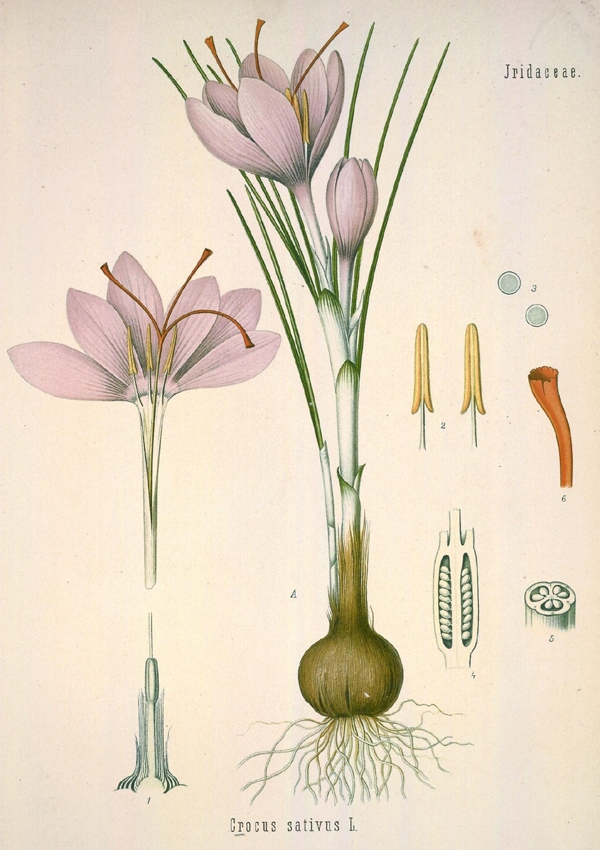
Cultivation of Saffron
The bulbs of saffron crocus are planted in mid-summer, ideally between July and August. It is one of the few plants that can be planted during a heatwave without worrying about its establishment. Depending on the region, the planting method will vary:
- In mild or warm regions (continental or Mediterranean climate), the bulbs are planted in clusters of 3-4, at a depth of 15 to 20 cm (this depth primarily protects the bulb from heat and drought), in well-draining soil, facing south or west.
- In cold or humid regions (oceanic or temperate oceanic climate), the bulbs are planted between 10 and 15 cm deep (if planted too deeply, the bulb will rot; if not deep enough, it will freeze). They should be in full sun, in very well-draining soil, placed on a bed of gravel or sand, as excess water can cause the bulb to rot.
In summary, Crocus sativus should be planted facing south at a depth of 15 cm in very well-draining soil.
Nota bene: the main producers are Iran (80 tonnes), Pakistan (20 tonnes), and Greece (10 tonnes), while France produces only 25 to 50 kg.
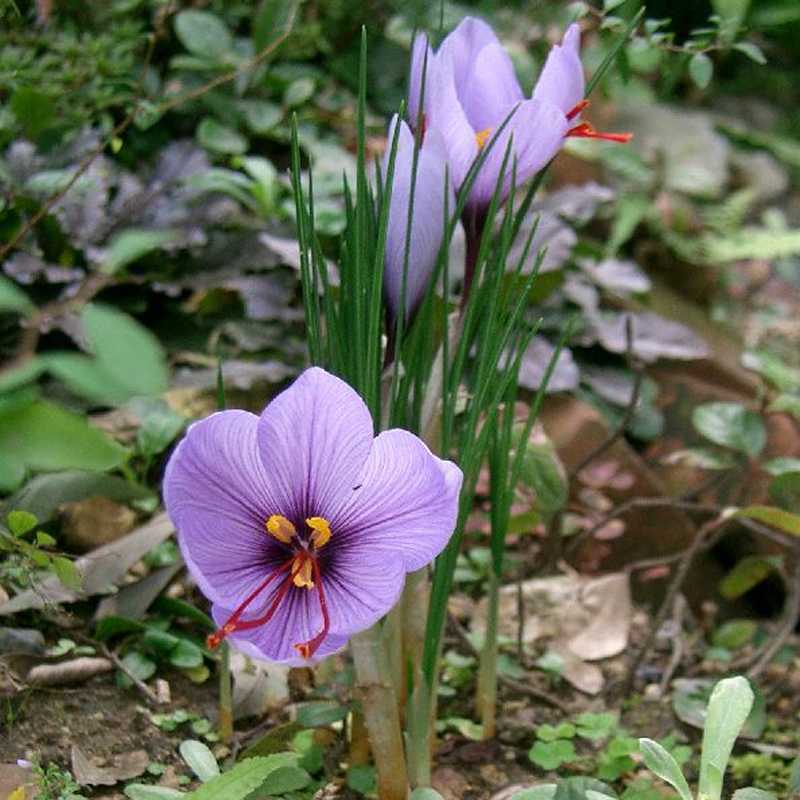
Compared to other Crocus species, the Crocus sativus has inverted vegetation. It flowers in October and dries in spring while others bloom in April and dry in summer.
The harvest takes place in autumn, between October and November. The stigmas are "ripe" when they emerge from the flower. Pick the flowers in the late morning when humidity is low, trim them, and dry the stigmas either in the sun or in a warm oven (no more than 60°C) for a maximum of 30 minutes. Store the precious stigmas in a small airtight box.
Why is saffron so expensive?
The saffron harvest is a completely manual and extremely delicate process. Each flower of Crocus sativus contains only three red stigmas, which must be carefully removed by hand in the early hours of the day to preserve their quality. The yield is very low: it takes about 150,000 flowers to produce 1 kg of dry saffron, which is why this spice is often referred to as "red gold".
The market price of saffron can reach up to 30,000 euros per kilogram, or 30 € per gram, depending on several criteria: the quality of the stigmas (size, colour, aroma), limited production (as saffron only grows under specific climatic conditions), and origin (saffron from Iran, Spain, or Kashmir being the most renowned). This combination of low yield, intensive labour, and variable quality makes saffron one of the most expensive spices in the world.
What yield can one expect from a garden cultivation?
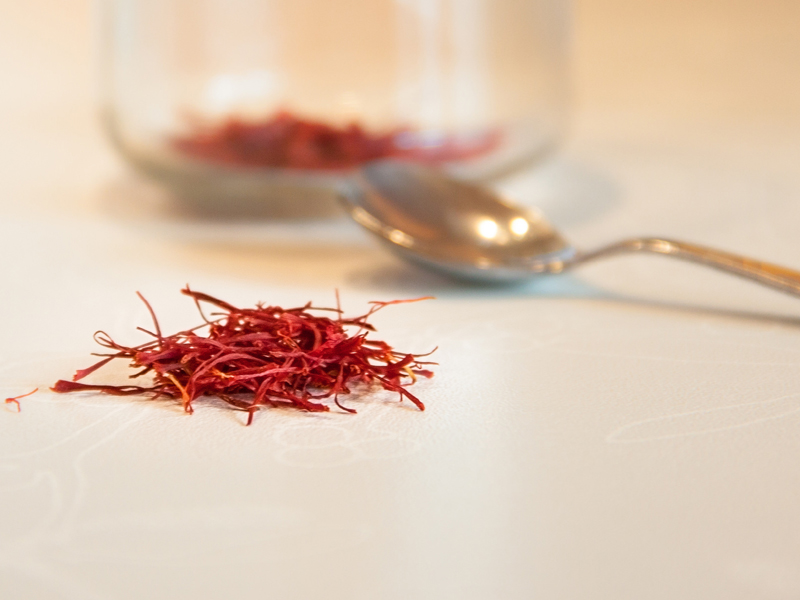
Let’s be honest, the yield of saffron in a garden remains relatively modest. For a small cultivation, you can expect around 50 to 100 saffron bulbs of calibre 8+: 100 bulbs can produce between 0.5 and 1 g of dry saffron per year in the first year.
After that, you can expect 300 flowers after 3 years, yielding 3 g of saffron. The bulbs can remain in the ground from one year to the next and multiply naturally.
With a larger plot, it is possible to plant several hundreds or thousands of bulbs, which will increase production. However, even with a small area, growing saffron can be economically interesting, as a small amount is enough to replace a very expensive spice in the market.
Growing saffron in the garden: a rush for gold?
Let’s not exaggerate! However, depending on your saffron consumption, growing it in your garden can still lead to substantial savings in the medium term.
Growing your own saffron represents a modest initial investment, but it is worth calculating nonetheless. The starting cost includes purchasing the bulbs, which can range from 0.20 to 1 euro per bulb depending on quality and variety. At Promesse de Fleurs, saffron crocus bulbs can be purchased from 0.36 € for 100 bulbs, or 36 €. Additionally, some basic gardening tools (spade, gloves) and the time needed for planting, maintenance, and harvesting are required, although saffron is a relatively low-maintenance plant.
Thus, in the first year, the return on investment is not immediate: the gram of saffron harvested in the first year (equivalent to 30 €) does not cover the initial investment of around forty euros. Consequently, you will have to wait at least until the second year to say: growing my own saffron is profitable!

Comments