





























The sunny days are fast approaching, and you realise that your garden or terrace looks rather sad? Do you have an unsightly wall to hide, a view to forget, or a boring fence? Or perhaps you simply want some colour... and quickly!
Here’s a selection of 10 annual climbing plants with ultra-rapid growth, perfect for creating a floral decor in the blink of an eye for the season. These lianas climb any support you provide and can also weave into bushes to enhance or prolong their flowering. The icing on the cake is that they require little ground space and are very easy to grow!
Ipomoea, sound the trumpets!
Ipomoea is a climbing liana that climbs on its own. Valued for its extremely easy cultivation and generous flowering that occurs without interruption from summer to frost.
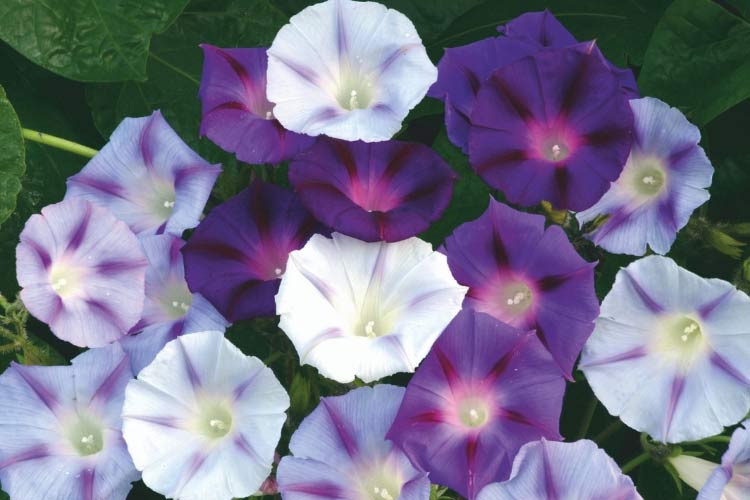
Its trumpet-shaped flowers come in a variety of colours: white, blue, mauve, purple, red... some are even striped or come in elegant shades. They open in the early morning and close in the afternoon, at the height of the heat. The leaves, a vibrant green, are heart-shaped.
- Height: 2.5 metres to over 6 metres depending on growing conditions.
- Requirements: heat and rich soil that remains cool. Full sun exposure, sheltered from the wind.
- Uses: in the ground, in pots (terrace, balcony). Can be used as a groundcover.
To learn everything about Ipomoeas, check our plant sheet : Ipomoeas, sowing, planting, cultivation and maintenance.
Sweet Pea, the fragrance plus
Who hasn’t succumbed to the delicacy of sweet pea? This climber flowers from June to September, with blooms in various colours, bright or more pastel. They can be white, pink, red, purple, salmon, and some are even bicoloured. Their sweet fragrance is another of their assets, filling the house if you cut a few stems to make bouquets (this also encourages the plant to produce new flowers!).
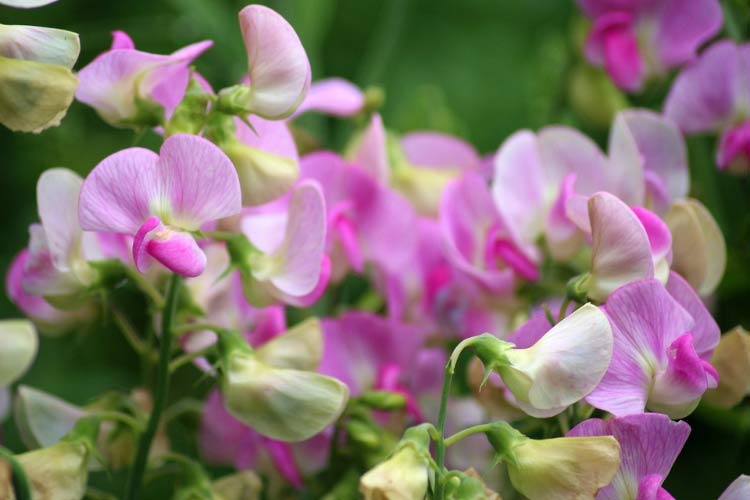
The Sweet Pea attaches itself to its support with fine but sturdy tendrils. The foliage, green with bluish highlights, is light and elegant.
- Height: 1.5 to 2 metres
- Requirements: a rich, deep but drained soil, in the sun.
- Uses: in the ground, in pots.
Learn everything with our sheet on the Sweet Pea, its cultivation, care, and uses.
Nasturtium, for the garden and the kitchen
Perhaps the easiest of the annual climbers, the Nasturtium is very popular. Impossible to miss, it is perfect for beginner gardeners. From May-June until the first frosts, it displays rounded and generous foliage, above which exotic-looking funnel-shaped flowers in red, yellow, or orange bloom continuously. No need to stake it, the petiole of the leaves wraps around the first support it encounters. If it finds none, the plant then forms a colourful groundcover.
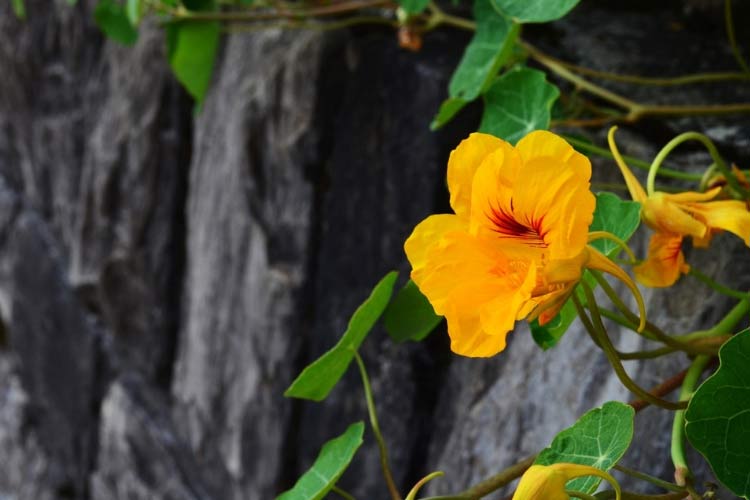
Hanging, the plant eventually cascades from its container. All parts of the plant are edible and add a spicy note to salads. The leaves are also rich in vitamin C! Aphids are fond of nasturtiums, which helps prevent them from colonising other plants, a very useful asset near a vegetable garden.
- Height: 3 to 4 metres
- Requirements: any soil that is not too rich to poor, even dry. Sun or partial shade exposure. Tolerates maritime climate.
- Uses: in the ground, in pots, hanging, vegetable garden (to contain aphids). Can also be used as a groundcover.
Discover our tips for Planting, sowing, and maintaining the Nasturtium.
The Spanish Bean, beautiful and good!
If the Spanish Bean can be used in the vegetable garden, it is also for its ornamental value that it is used in the garden. Its abundant and fresh green foliage creates a beautiful screen. In summer, cluster flowers at the tips of the stems adorn this tall climber. Red, orange, white, pink, and even bicoloured, they appear in abundance and give way to elongated pods, delicious if harvested while still young.
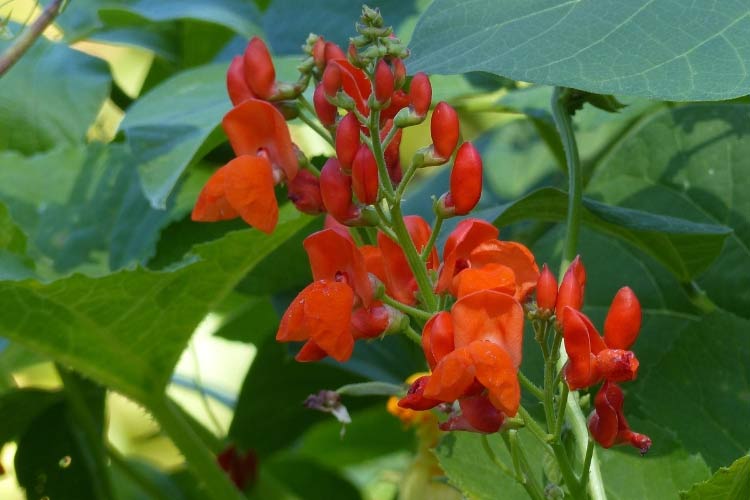
The large beans they contain are also edible. Like all beans, this one climbs on its own, so a suitable support must be provided for its size. Its cultivation is very easy to achieve.
- Height: 3 to 5 metres
- Requirements: a loose, fresh, well-drained soil, in the sun.
- Uses: ornamental garden, in the ground. In the vegetable garden. In pots, to create an aesthetic screen on a terrace.
Cobaea, a bygone charm
A perennial climber, grown as an annual in our climates, Cobaea displays lush foliage, green with bluish highlights. The flowers, bell-shaped with curled edges, bloom in greenish hues before turning cream-white to blue depending on the variety. Supported by long peduncles that make them droop, they seem to observe the gardener. The flowering is quite late and may not occur until August, but it lasts until the first frosts.
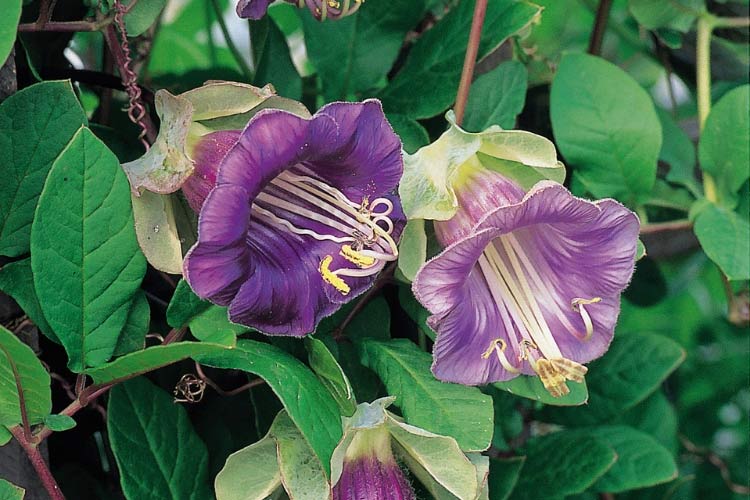
Easy to grow, it wraps around its support on its own. This lovely climber with undeniable charm adds a retro touch to the garden.
- Height: 3 to 4 metres
- Requirements: any fertile soil that does not dry out, in sunny or partially shaded exposure.
- Uses: in the ground in the garden or in pots on a patio, courtyard, or balcony.
Mina lobata, an exotic look with warm tones
A perennial climber behaving like an annual in our latitudes, the Mina lobata, known as "Indian plume," is a very original liana. Its foliage is thick and abundant, with 3 lobes, already offers decorative interest. It highlights the inflorescences, with numerous upright spikes of tubular flowers that evolve from bright red to orange, then to a bright yellow, finishing in cream. The different colours coexist on the plant from July to frost.
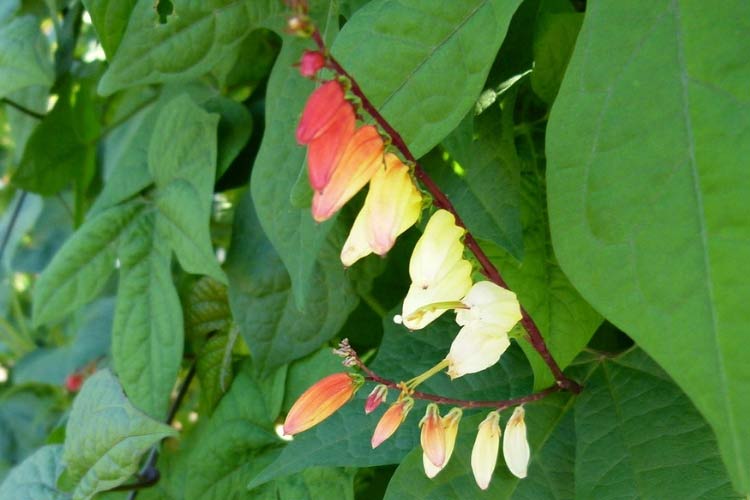
From a distance, the plant resembles a chandelier adorned with hundreds of candles. Up close, the arrangement of the flowers gives the impression of admiring a headdress of Indian feathers. Its exotic look never goes unnoticed! Simple to grow, the plant wraps around its support and self-seeds easily without becoming invasive. You can try to keep it from one year to the next by placing it in a pot that you shelter during the bad season.
- Height: 2 to 3 metres
- Requirements: any moderately fertile and well-drained soil, in a sunny and very warm location.
- Uses: ideal for an exotic atmosphere, both in the ground and in pots on a very bright terrace.
Black-eyed Susan, voluptuousness and exuberance
A frost-sensitive perennial, the Black-eyed Susan should be treated as an annual when planted in the garden. In pots, you can winter it to try to keep it. This very floriferous climber displays, from June to frost, flowers in various shades of orange or yellow with a centre resembling a black eye, which has earned it its name. Melliferous, this climber attracts pollinators. The dark green foliage is heart-shaped and provides a beautiful backdrop for the flowering.
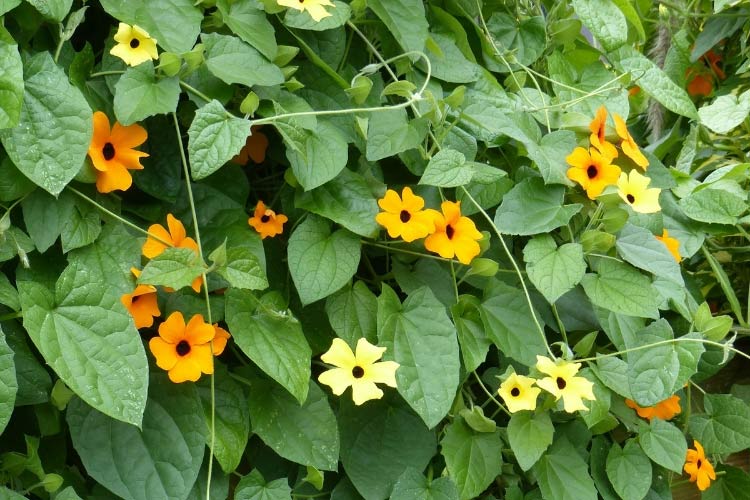
The Black-eyed Susan climbs on its own, entwining its voluble stems around any support, but it can also spread through the flowerbed and serve as a flowering groundcover or elegantly cascade from a hanging basket.
- Height: 2 m
- Requirements: rich and humus-bearing soil, well-drained, in full sun or partial shade. Shelter from strong winds.
- Uses: flowerbeds, pots, greenhouses, hanging baskets.
To learn everything, check our sheet "Black-eyed Susan: sowing, planting, and care"
Lofos, a "climbing snapdragon"
The Lofos (known as Lophospermum by botanists) is a perennial that does not withstand the cold. Both light and showy, it blooms from summer to frost in shades of red, pink, or  white. The tubular flowers resemble those of foxgloves or snapdragons and adorn a narrow, triangular foliage with distinctly toothed edges. Green with grey highlights, it adds to the decorative interest.
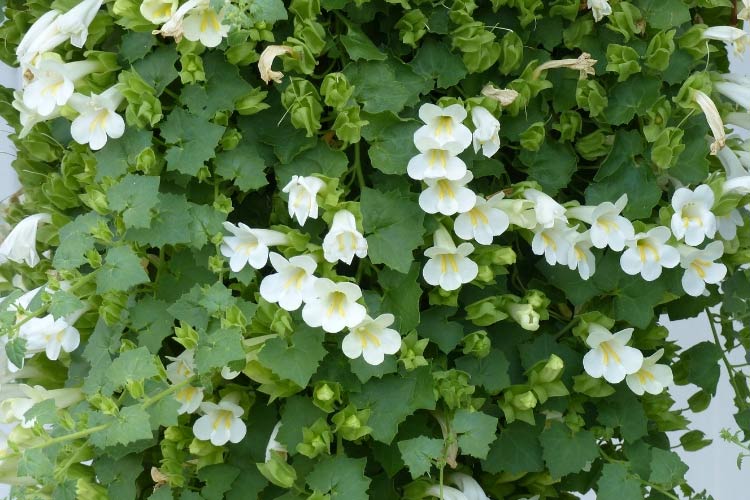
In regions with mild winters, the plant can regrow from the stump even if the aerial parts disappear. However, it is more realistic to consider it as an annual or to plant it in a pot to place in a conservatory during the bad season.
- Height: 3 metres (for the same spread)
- Requirements: drained, fresh to moderately dry soil, in bright but not scorching exposure (partial shade possible).
- Uses: in the garden, as a climber but also as a groundcover or in hanging baskets. In a not too hot conservatory in summer.
Clitoria, a blue pea full of femininity
Increasingly used, the Blue Pea or Clitoria ternata is a short-lived perennial and frost-sensitive plant that is part of the climbing perennials used as annuals to quickly decorate the garden. Its perennial character can be found by cultivating it in a pot in a conservatory.
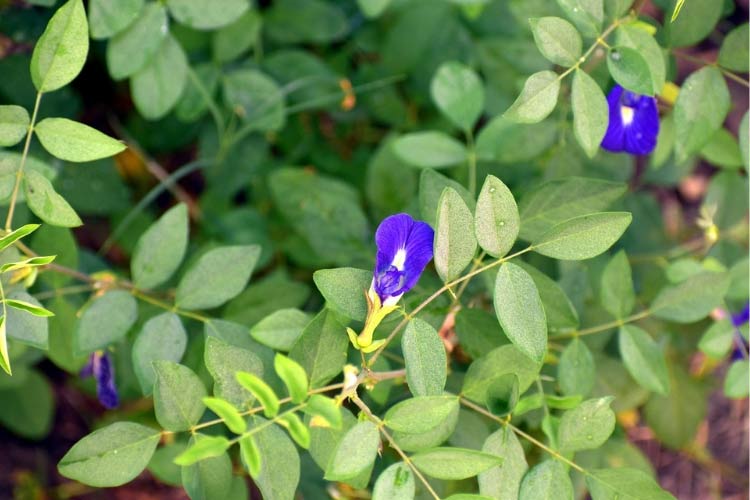
From a green, pinnate foliage emerge suggestive-shaped flowers that have earned it its name. They are a deep blue with a white throat tinged with yellow, appearing in abundance from July to September, sometimes longer depending on weather conditions. Melliferous, this climber is appreciated by bees and butterflies. The beans that follow the flowers are said to have aphrodisiac properties. Easy to grow, its original and tropical look is sure to make an impression.
- Height: 3 metres
- Requirements: rich, fresh but drained soil. Non-burning sunny exposure or partial shade.
- Uses: in the ground, to climb a large bush, a trellis, a fence…or in a pot for a terrace. In a conservatory, it behaves like a perennial.
Dolichos, it accumulates the assets
The Dolichos or Lablab is a climber whose every part offers ornamental interest. Also called "Indian Pea," its generous foliage, green tinged with burgundy highlights adds beautiful depth. From July to September, it is dotted with flowers similar to those of sweet peas, in shades of pink and lilac, and slightly fragrant.
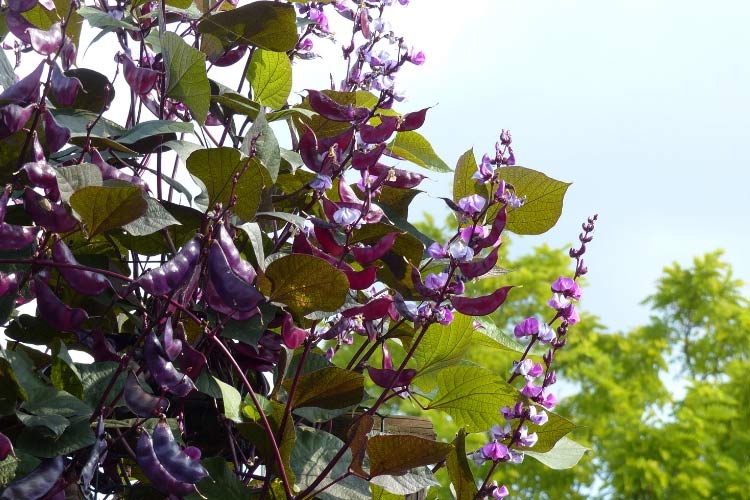
Melliferous, this liana welcomes many butterflies and other pollinators. Shiny purple pods then adorn the plant for a decorative effect that lasts late into autumn. Easy to grow and with very rapid growth (the flowers open about 5 weeks after sowing), this climber that climbs on its own is essential for creating a stunning decorative display!
- Height: 3 to 5 metres
- Requirements: any drained soil, even dry and calcareous, in sunny and warm exposure.
- Uses: in the garden, in hot and dry places. In pots, on a patio or terrace.

Comments