


Throughout history, plants and gardens have attracted people, both for nourishment and for relaxation while admiring nature at work. The history has thus been marked by numerous individuals who have distinguished themselves through their contributions to gardens. From André Le Nôtre to Gilles Clément, including La Quintinie and Capability Brown, join us to discover the journeys of some of the most creative gardeners, botanists, and landscape architects in history.
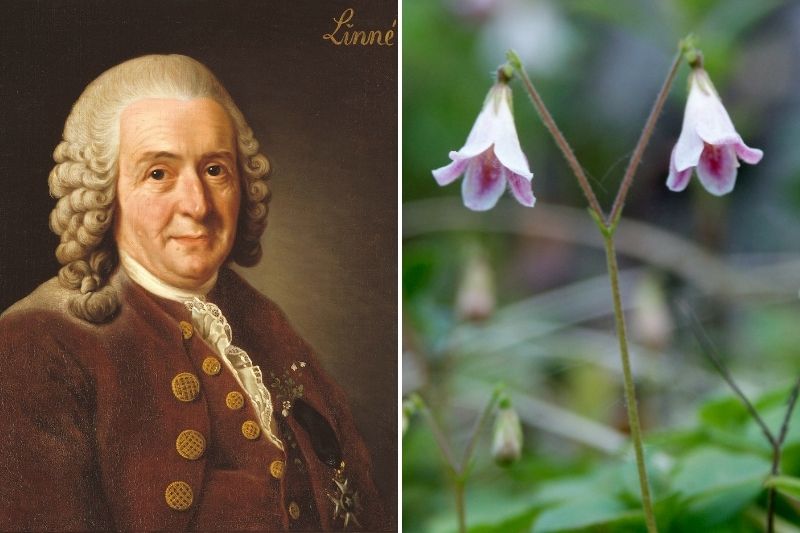
Carl von Linné, inventor of binominal nomenclature
Between the 15th and 18th centuries, many European naturalists embarked on expeditions around the world. Their goal was to catalogue the unknown fauna and flora in their countries and bring back samples to try to harden them. Physician, naturalist, and gardener, Carl von Linné (1707-1778) is one of these individuals. He notably travelled to Lapland in 1732 to study plants. His greatest work remains the invention of the classification of living beings, which he undertook with Peter Artedi, reserving the domain of flowers for himself. He published numerous works on this subject, particularly Systema naturae and Species plantarum. His major scientific contribution is the invention of binominal nomenclature, which allows for the precise and universal designation of living beings, including plants, by using a genus followed by a species name.
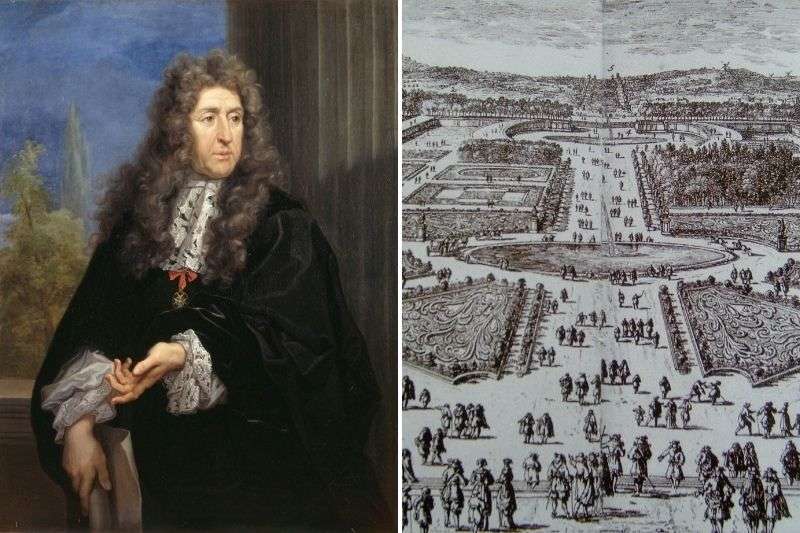
André le Nôtre, creator of French gardens
Gardener to King Louis XIV, André Le Nôtre (1613-1700) is undoubtedly the most famous of gardeners. Born into a family of gardeners, he is known for inventing the art of the French garden, with its floral embroidery, topiary, and well-aligned geometric shapes. He began creating the gardens of the Château de Vaux-le-Vicomte, after which he was hired by Louis XIV to design the grand gardens of the Château de Versailles. Since then, the art of the French garden has brought fame to France around the world and made André Le Nôtre very famous, who also designed the Tuileries garden, where he created the perspective that still leads today to the Champs Élysées.
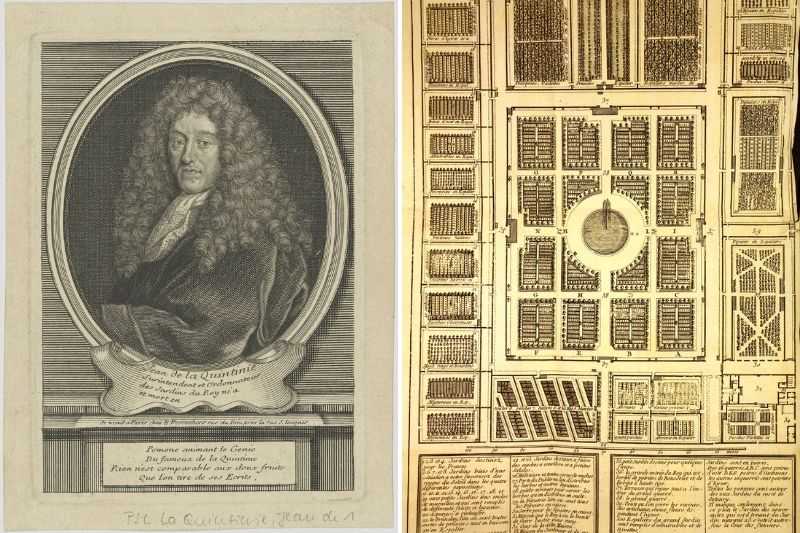
La Quintinie, creator of the King's Kitchen Garden
A contemporary of Le Nôtre, with whom he collaborated, Jean-Baptiste de La Quintinie (1626-1688) is the creator of the King's Kitchen Garden at the Château de Versailles, as well as other kitchen gardens in Sceaux, Chantilly, and Rambouillet. This fabulous gardener dedicated himself to improving the production of fruits and vegetables. He particularly experimented with growing under frames and glass bells, hardening new species, training fruit trees in espaliers, and using grafting in arboriculture. Le Nôtre recorded all his reflections on the art of the kitchen garden in a book published in 1690 entitled Instruction pour les jardins fruitiers et potagers.
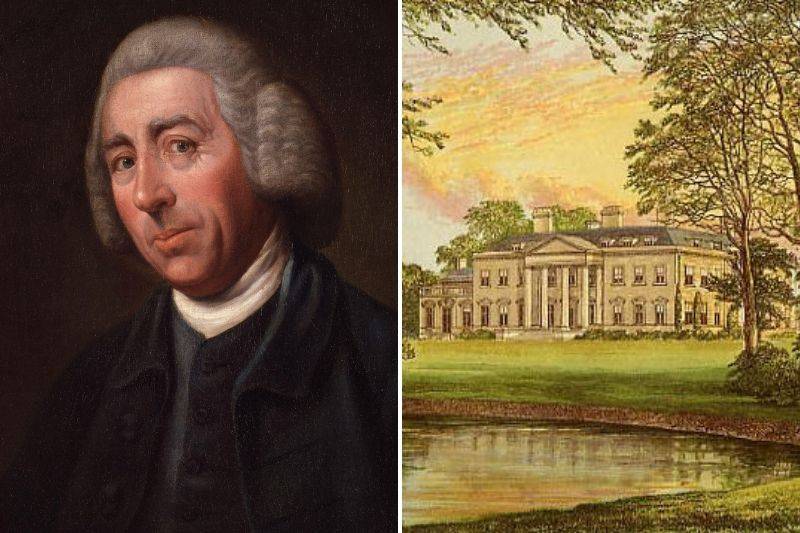
Capability Brown, one of England's greatest gardeners
While the French garden continues to enjoy enduring success today, the English garden was born in the 18th century from the mind of Lancelot Brown (1716-1783) and his contemporaries William Kent and Charles Bridgeman. This new form of garden takes the opposite approach to the geometric French garden, adopting a wilder style where nature is given greater freedom. Lancelot Brown is also known as Capability Brown, because he systematically mentions to his clients all the potential (capability in English) of the gardens he creates. He is notably the author of the gardens of Blenheim Palace, Warwick Castle, Burghley Park, and Croome Court.
Gilles Clément, for a garden in motion
Let’s leap into the 20th century! Renowned horticultural engineer, landscape architect, and gardener, Gilles Clément invents a new way of thinking about gardens through three concepts: the Garden in Motion, the Planetary Garden, and the Third Garden, which have led to the publication of several works. The principle of the Garden in Motion is inspired by the idea of fallow land and has been applied in Gilles Clément's personal garden La Vallée, located in his native Creuse, and in his public garden projects such as the André Citroën Park, the garden of the Quai Branly Museum, both in Paris, as well as the Rayol estate in Var. This principle can be summarised as: “doing as much as possible with nature, as little as possible against it.” The idea of the Planetary Garden was the subject of a major exhibition led by Gilles Clément in 2000 at the Grande Halle de la Villette. It is a project of humanist ecology aimed at attempting to exploit biodiversity without destroying it.

Patrick Blanc, inventor of the living wall
Botanist and researcher at CNRS, Patrick Blanc is the inventor of one of the most innovative forms of garden: the living wall. This type of garden contributes to the well-being of the urban population and the development of biodiversity. Patrick Blanc is known for creating the living wall of the Quai Branly Jacques Chirac Museum, which houses 376 species from around the world. Subsequently, he continued his work by creating many other living walls in France and around the world. For example, you can admire in Paris those at the Natural History Museum (vegetal ceiling), the Cartier Foundation, the Pershing Hall Hotel, and BHV Homme. An insatiable researcher for new plants around the world, he discovered a new species in the Philippines called Begonia blancii.

For further reading...
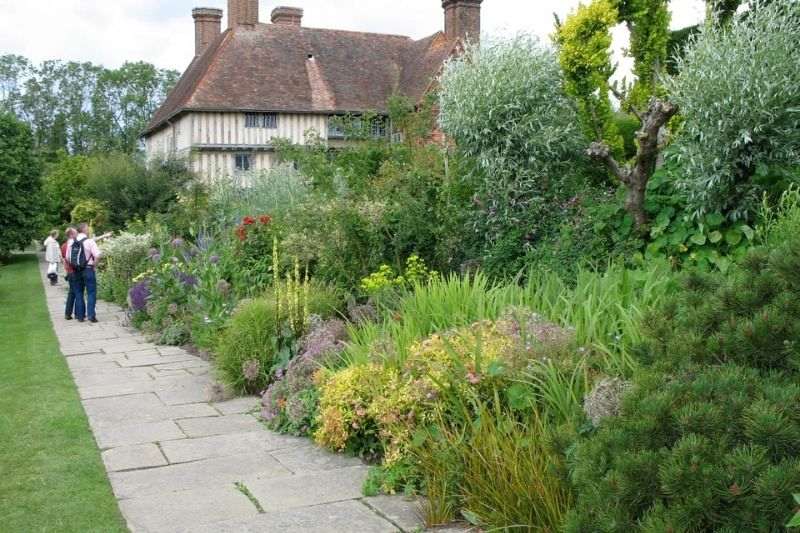
Over the past centuries, many gardeners and landscape architects have contributed to a better understanding of flowers and the creation of increasingly beautiful gardens and parks. Notable figures include Frederick Law Olmsted (1822-1903), designer of Central Park in New York in 1857 and a pioneer of urban parks; Adolphe Alphand (1817-1891), engineer and creator of the parks of Paris; Louis Benech, landscape architect who renovated the Tuileries garden in 1990; Alain Baraton, current head gardener of the Château de Versailles; André Eve, creator of numerous roses; Christopher Lloyd, creator of the Great Dixter garden in England; as well as landscape architects Michel Corajoud, Michel Desvignes, Alexandre Chemetoff, Pascal Cribier, Jacques Sgard, Charles Jencks, ... Discover their ideas and creations by consulting the works they have published. They are wonderful sources of inspiration for your own garden!

Comments