




























We often talk about gentian blue or meconopsis blue, but hardy geraniums also boast a palette of blue that would make the most beautiful gentians blush. Here’s a small selection of the most stunning blue geraniums at the moment.
There are the all-rounders, suitable for all exposures and versatile in their uses. They thrive almost anywhere, flowering profusely for long periods; they are just as comfortable in a wild garden mixed with alliums and grasses as they are in a mixed border at the foot of an English rose or "arranged" among a selection of perennials in a gradient of blue with a hint of gold.
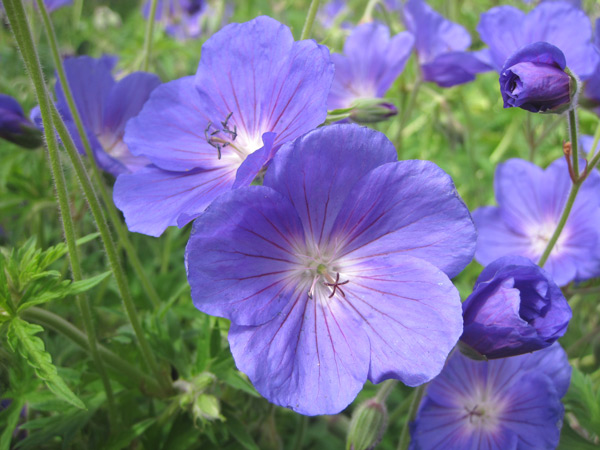
Geranium Orion
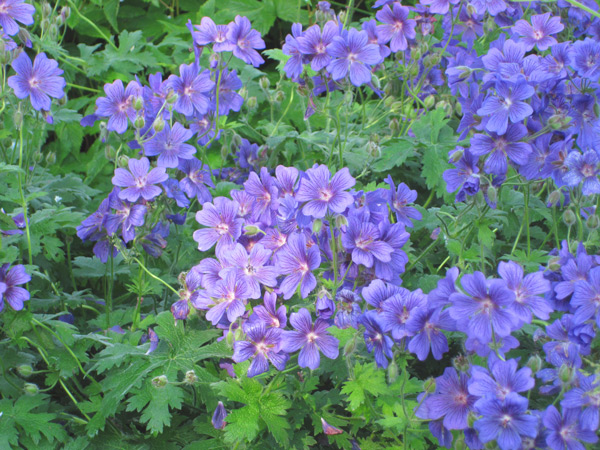
Geranium (x) magnificum
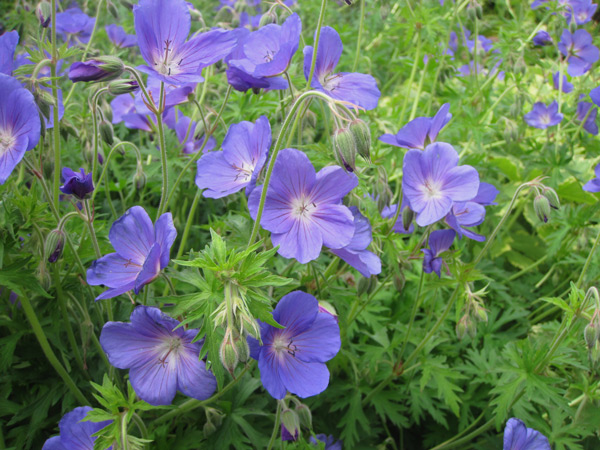
Geranium Johnson's Blue
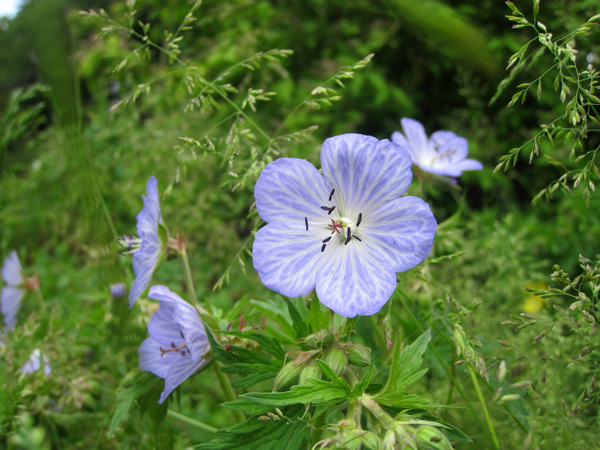
Geranium pratense Mrs Kendall Clark[/caption>
Then there are the hidden ones; carpeting under a tree in cool shade or cascading down a bank among periwinkles, elf flowers, and campanulate squills, they can even thrive in dry shade, flowering infrequently but for long periods and often self-seeding well to form beautiful colonies.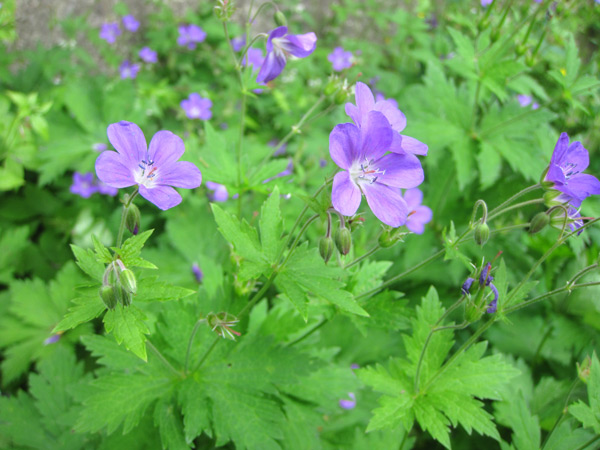 Geranium sylvaticum
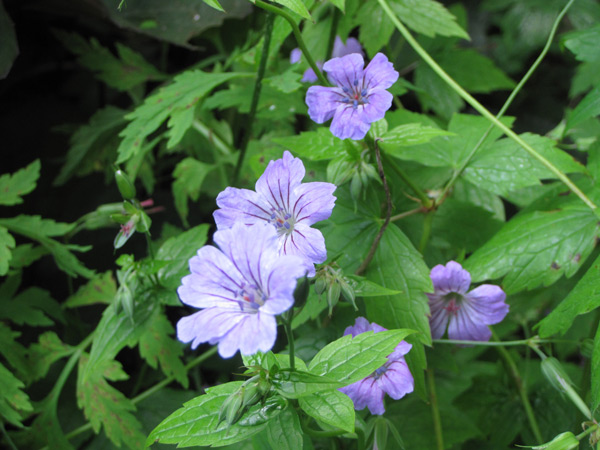
Geranium nodosum
And then there are the thrifty ones; they require little. Little water, little food, but plenty of sun. They thrive among yarrow, campanulas, and lavenders in a dry meadow garden or a scree garden, and they even grow in calcareous soils.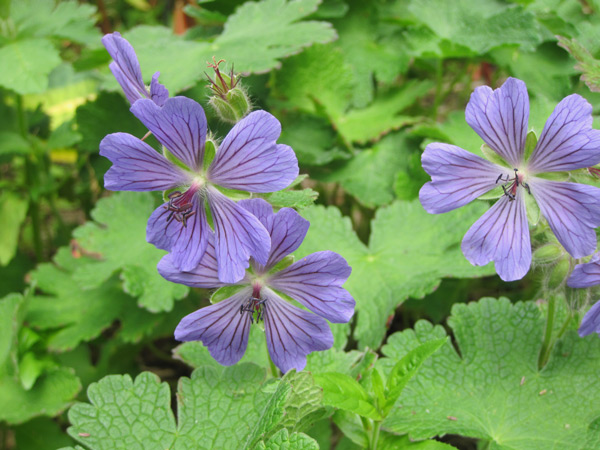 Geranium Philippe Vapelle
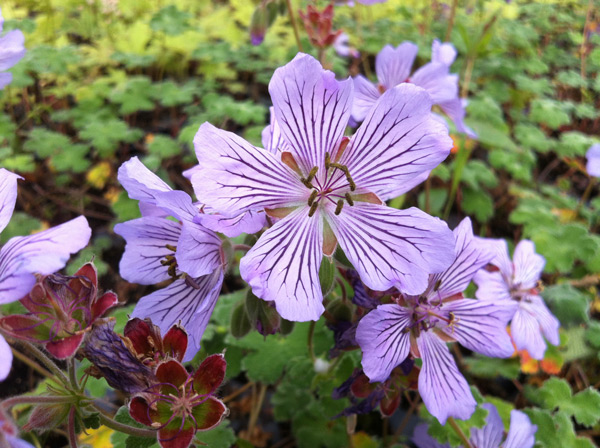 Geranium renardii Tcschelda, a new introduction with beautifully veined flowers
Among the cultivars, hybrids, and wild species, there is something for every taste and, above all, for every use—how can one resist? A tip to showcase them even more: plant them in masses, at about 5-6 plants per square metre, but with a touch of pale yellow plants; the best choices are Scabiosa ochroleuca, Phlomis russeliana, Alchemilla mollis, or the magnificent Nepeta govaniana; the contrast is striking!

Comments