





























Did you know that 2016 is the International Year of Pulses? This may seem a bit odd, but after visiting the United Nations Food and Agriculture Organization's website, you'll understand that it is not at all. But let's return to the garden scale...
What are pulses?
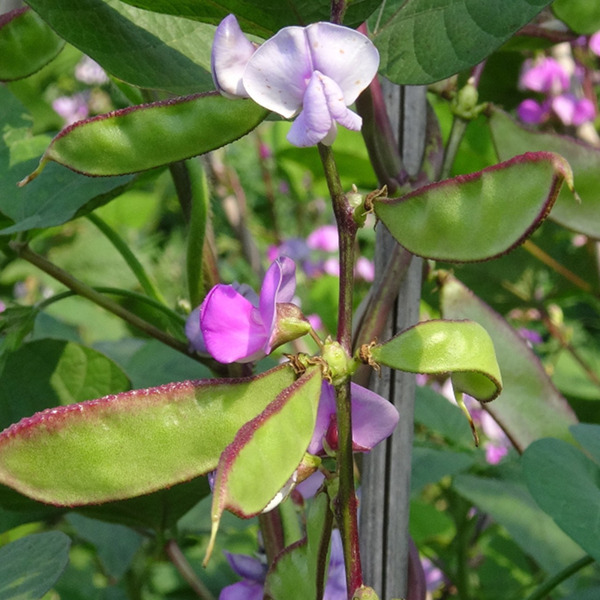 Typical inflorescence and pod of pulses
Well, it depends! In botany, in common language, it refers to all plants belonging to the Fabaceae family (formerly Papilionaceae), their common feature being that they bear fruits in pods, such as acacia, wisteria, broom, lupin, etc. In the vegetable garden, it includes all beans, peas, broad beans, as well as green manures like vetch, field pea, clover, etc. However, in cooking, the term pulse refers to dried vegetables, meaning: still the beans, but those that are shelled and can be dried and consumed later, broad beans, peas, whether whole or split, as well as lentils, peanuts, soybeans... I suggest, once is not customary, to adopt this perspective, because after all, it is also for eating that we cultivate our vegetable garden. So, why growing pulses?
Reason No. 1: They are easy to grow
With the exception of the lentil, which is quite tiny, all these plants have large seeds, which greatly facilitates sowing. Not very demanding, they adapt to a wide range of soils and climates. The harvest is also very simple.
Reason No. 2: They are good for the soil
Pulses share a characteristic that is sometimes overlooked: their roots have small swellings called nodosities that house bacteria of the genus Rhizobium. These are what give them their remarkable ability to fix atmospheric nitrogen in the soil.
This is very useful for enriching the soil, both in the context of crop rotation and for companion planting.
Reason No. 3: They store well and at room temperature
The advantage of dried vegetables also lies in the fact that… they can be stored in a simple cupboard. Properly dried, in a well-ventilated place, there is no need for sterilisation, blanching, jars, or freezers: simple airtight containers are sufficient. Their indicative shelf life is one year, but you won't get sick if you keep them a little longer.
Reason No. 4: They allow you to (re)discover new flavours and try new recipes
Somewhat forgotten, pulses are nevertheless interesting in cooking, whether the recipes are traditional (what would Cassoulet be without beans?) or exotic. In my personal ranking, I include: chili sin carne, hummus, split pea purée, Portuguese broad bean spread, and coral lentil soup with coconut milk... Enough to delight the taste buds, right?
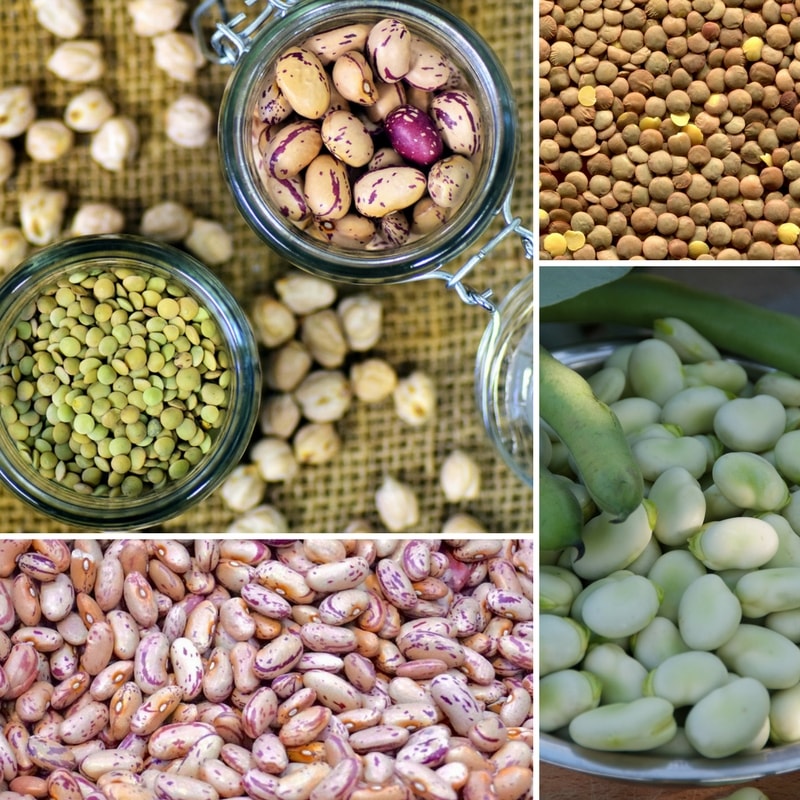
Reason No. 5: They are good for health... and for the planet!
From a dietary perspective, pulses have everything to please. Just consider:
- they are rich in slow carbohydrates and fibre,
- their energy value is significant, but they are low in fat,
- they are good sources of vitamins and minerals...
Finally, at a time when the ecological impact of livestock farming is being questioned and where making our plates more plant-based is becoming an emerging concern, pulses come at the right time. Indeed, dried vegetables, especially when combined with cereals, represent a promising alternative to animal proteins, the production of which requires, for the same quantity, up to 10 times more water.
So, convinced? Which pulses will you grow in your vegetable garden this year?
For broad beans, it's a bit late... but there is still time for flageolets, the magnificent Flambo bush shelling bean, Twist chickpeas, or lentils!
For further reading -in French:
- I grow peas, broad beans, beans... Protein in my vegetable garden - Blaise Leclerc - Editions Terre vivante
- Fabulous pulses - 140 traditional recipes - Claude Aubert - Editions Terre vivante

Comments