





























If the small, discreet yet highly fragrant flowers of Sarcococcas and Daphnes have stimulated my sense of smell all winter, it is now the majestic flowers of Magnolias and Camellias that delight my field of vision at the start of spring. Adorned with magnificent and abundant flowers or with graphic and colourful foliage, ericaceous shrubs are, in my opinion, among the most beautiful ornamental shrubs one can have in the garden. Here are 5 tips that have helped me successfully cultivate ericaceous shrubs.
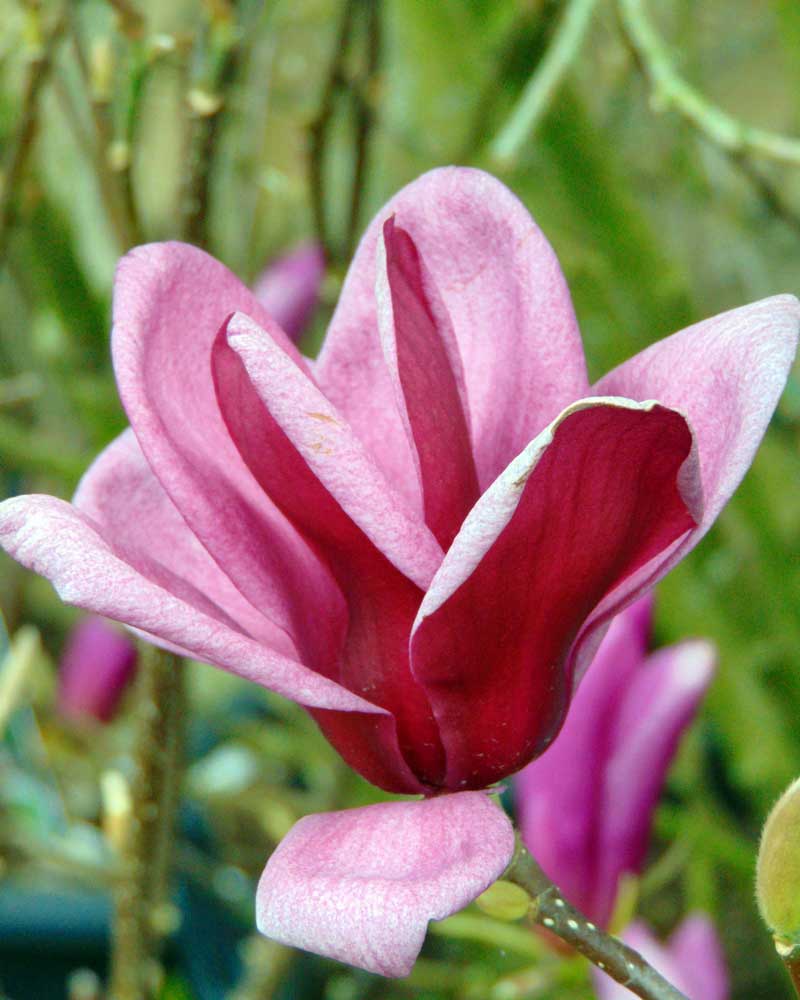
Magnolia Genie
1- An acid soil will give you access to the fabulous world of ericaceous shrubs
These shrubs are primarily forest plants growing on a layer of humus-bearing soil over a non-calcareous parent rock. This soil, derived from the decomposition of various leaves and branches, is light and has an acid pH. In other words, an ericaceous shrub thrives where there is no limestone, hence they are referred to as "acidophilous shrubs". This category includes the large families of Rhododendrons and Azaleas, Camellias, Japanese Maples, Pieris, Hydrangeas, Magnolias, and many others.
2- ... an acid soil yes, but it must be light and cool even in summer
The key to their success lies in the quality of the soil; it must be acid, light, and cool in summer. Many rhododendrons, hydrangeas, or camellias live in regions with temperate and cool summers. Here, it is advisable to plant them in a cool atmosphere during summer. Plant them at the edge of woodlands, near a water source where humidity is high and where the soil does not turn to dust during dry periods. Ideally, apply a mulch in spring, 6-8 cm thick at the base to retain coolness in summer; otherwise, be prepared to bring out the hose every evening to refresh their foliage.
3- Water in summer yes, but not too much in winter!
This is the great contradiction of acidic soil shrubs; they require water in summer but little in winter. To understand this, one must know that most of these shrubs, which live on a thin nutrient-rich soil (and by extension all shrubs that thrive in these conditions), have developed a dense but shallow root system. They do not extend their roots far to seek water deep down like an apple tree or an oak, but develop a network of superficial roots like those of Rhododendrons, Hydrangeas, Daphne, and Pieris.
If the soil is heavy and waterlogged in winter, the roots will at best be asphyxiated, and the shrub will die quickly. At worst, stagnant moisture will allow the proliferation of a parasitic fungus, Phytophthora. It will first parasitise the roots, then gradually block all the channels that transport the sap. In spring, the branches will dry out and then suddenly die, causing the shrub to languish and eventually perish. This is what happened to some of my Japanese maples planted in my heavy, wet soil. Only those planted higher up, on a bank or in my rockery, survived Phytophthora.
4- Anything but heather soil at planting!
"True" heather soil meets a strict standard that only allows soils derived from the acid humus horizon of sandy soils. Poorly structured, this soil is heavy and retains a low amount of water. It is sometimes added to acid substrates to weigh them down and give them body, but it is not essential for acidophilous plants. In contrast, the so-called "heather soil", which is a French term, contains a high proportion of sphagnum peat, making it better suited for cultivating acidophilous plants but not perfect.
Planting is the crucial step, so it is essential to stack the odds in your favour. Do not hesitate to create a wide planting basin and take the time to prepare the soil. Plan a planting hole 5 to 10 times wider than the root ball and prepare the soil to a depth of 50 cm. Depending on the soil quality, add blonde peat, leaf compost, pumice, pine bark, and acidic soil. Ideally, use 1/5 of topsoil mixed in equal proportions with peat, heather soil, leaf compost, and pumice.
5- An optimised exposure
Filtered light and a gentle breeze are all that ericaceous shrubs need for happiness. They fear the sun during the hottest hours of the day but dread the wind even more. Accustomed to the calm and gentleness of woodlands, they are wary of storms that break their branches and uproot them, as well as cold winds that scorch their evergreen foliage and freeze their tender wood. Plant them at the edge of woodlands, under large trees, or near a sheltered wall. When they are young, do not hesitate to place a windbreak tarp in winter; they will be all the more beautiful!

Comments