





























Waste is part of everyday life. While we strive to reduce it to the bare minimum, there will always be some left. Cardboard is part of it.
And it’s clear that you can quickly become swamped with tonnes of cardboard if you’re not careful. Especially if you order plants online!
Fortunately, all this cardboard can be reused in the garden for several uses: mulching, creating new beds, composting...
This type of material has now become a real staple in the garden... Discover how to use it.
Which cardboard to use ?
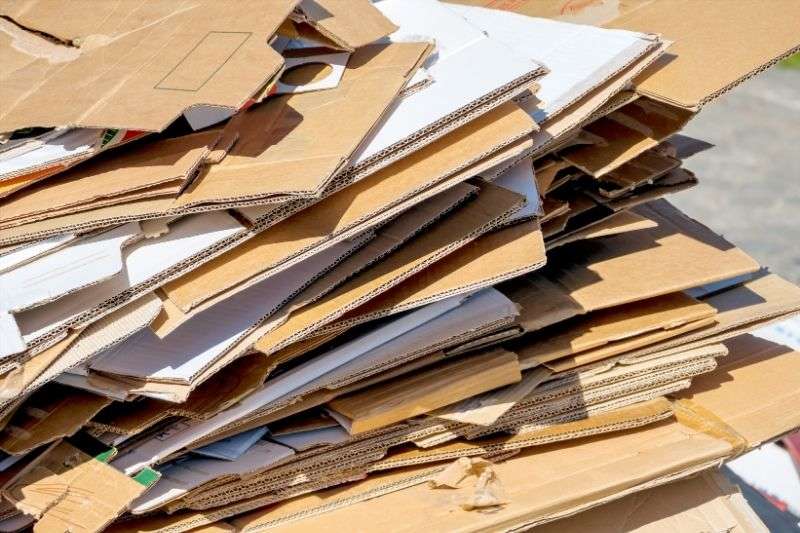
As rough as possible! Untreated brown cardboard with as few markings as possible, or none at all. Indeed, inks contain chemical compounds, including heavy metals, which will pollute your soil. Never use white or coloured cardboard for the same reasons. You should also remove from the cardboard anything that is not biodegradable, such as staples, sticky tape...
Using cardboard for mulching
We can’t say it enough: don’t leave your soil bare!
The ideal is therefore to plant densely, use groundcover plants, or, where that isn’t possible (in the vegetable patch, for example), to lay a good mulch on the bare soil. The benefits of mulching are many: retain soil moisture, improve soil structure, prevent soil compaction and leaching, and reduce the proliferation of adventives.
For mulch, you have the choice: straw, RCW (Ramial chipped wood), flax shives, miscanthus chippings, bark... and, you guessed it, CARDBOARD.
The use of cardboard as mulch offers major advantages over any other mulch: cardboard is free and its recycling helps cut waste; cardboard is available all year round for us, unlike some mulches that are more seasonal such as fallen leaves or lawn clippings, for example. Additionally, earthworms seem to revere cardboard, eagerly feeding on it as soon as it’s laid. Cardboard provides a good source of cellulose for them.
The laying of cardboard as mulch is simple:
- Water the bare soil thoroughly;
- Lay the cardboard in a large sheet or in strips (better for faster breakdown) on the bare soil or just around the plants;
- Water everything again more thoroughly than the first time to ensure the cardboard is well moistened.
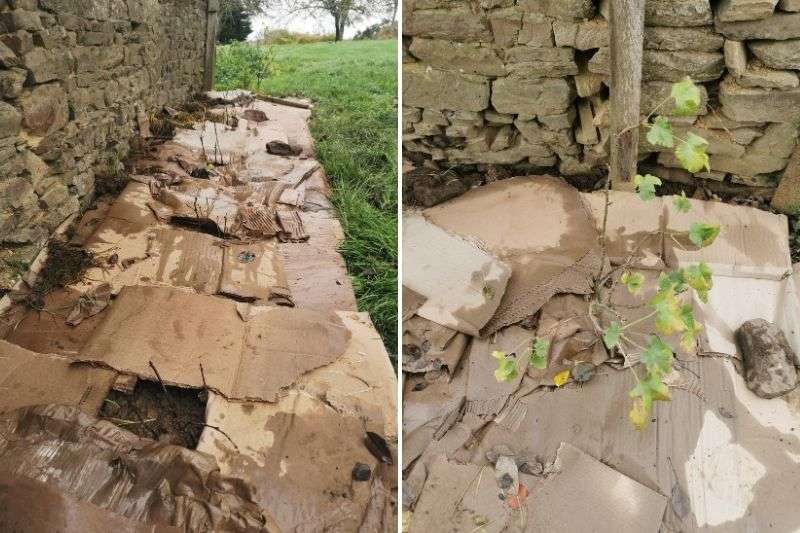
There you go—it's as simple as that. For the fussy among us (like me), you can hide the rather unsightly cardboard in the first days with a thin layer of branch chippings, straw or similar.
Using cardboard for creating a new bed
Cardboard can also come to your aid in creating a new vegetable bed or a new perennial bed. Tilling is tedious and disturbs the soil’s structure and life. So why not let earthworms and the rest of the soil life do the job of creating a growing site for you? With cardboard, it’s a breeze!
- Mow or trim the vegetation to the edge of the area;
- Water well;
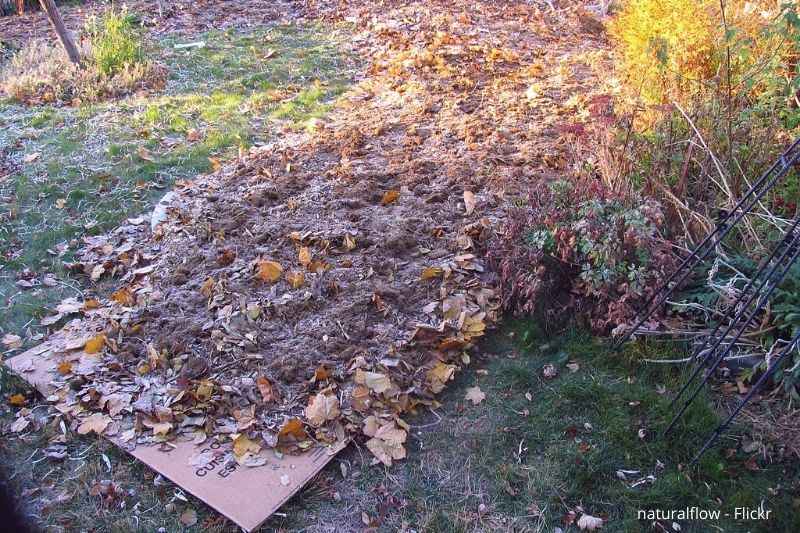
- Place your cardboard flat over the entire surface;
- Water generously to thoroughly dampen the cardboard and place heavy stones or bricks around the edges to stop it from blowing onto a neighbour’s plot;
- You can add a thick layer of fallen leaves (if it’s autumn) or lawn clippings (if it’s spring or late summer) to enrich the bed a little. Personally I’ve done it once without this layer and it still worked.
Cardboard in lasagne beds?
And lasagne beds, you ask? I’m obviously talking about lasagne gardening, not the ones on your plate. The technique is simple: on the soil create alternating layers of green waste and brown waste. It’s a bit like growing directly in a compost that’s forming. The aim is to create a quick, cultivable and fertile surface. It’s a great idea if your soil is tricky to cultivate (poor soil, compact soil, too many stones...). Additionally, it allows you to prepare the ground for the next year without losing a growing season. A lasagne bed lasts only one year, but underneath the soil will be perfect for planting or creating a bed, for example (of course it won’t solve any potential stone issues).
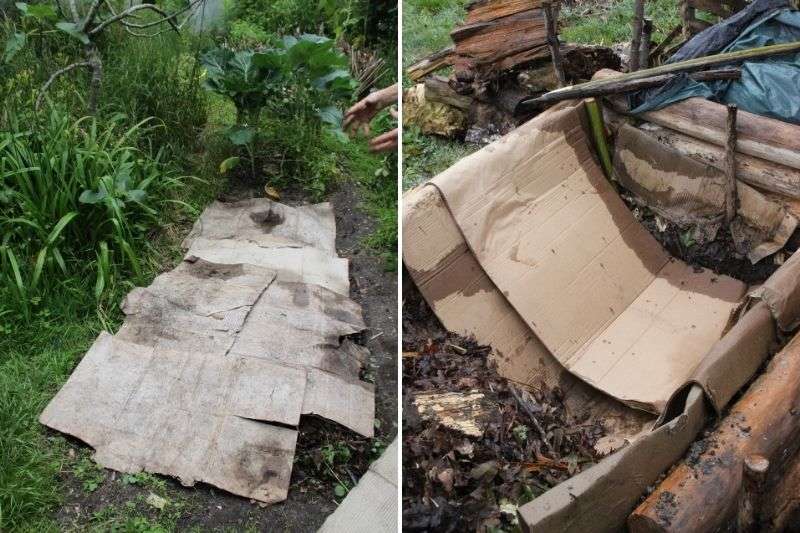
Cardboard can therefore be used in lasagne gardening. Already for the base layer, as noted above, but also for the brown waste layers. The cardboard can act as the "brown layer" alternated with the green waste.
Can cardboard go in the compost?
Yes, indeed! And cardboard is actually quite welcome for balancing the carbon/nitrogen ratio (C:N).
In home gardens we often have many nitrogen-rich items (green waste): lawn clippings, kitchen scraps, weeds not yet seeded... but relatively few brown wastes to compost such as wood, straw or fallen leaves. Yet for compost to transform best it also needs carbon. Cardboard, rich in cellulose, is a brown waste and will be perfect for supplying carbon and thus rebalancing your compost pile.
→ For more on succeeding with compost, see Ingrid’s advice on the subject.
Still more cardboard in stock?
Cardboard can also be used for seedlings that require cool conditions to germinate. Protect your seedlings with cardboard while the young shoots push through the soil. Simply place the cardboard over the seeded soil and check every morning that the germination hasn’t yet occurred. If it has, remove the cardboard promptly.
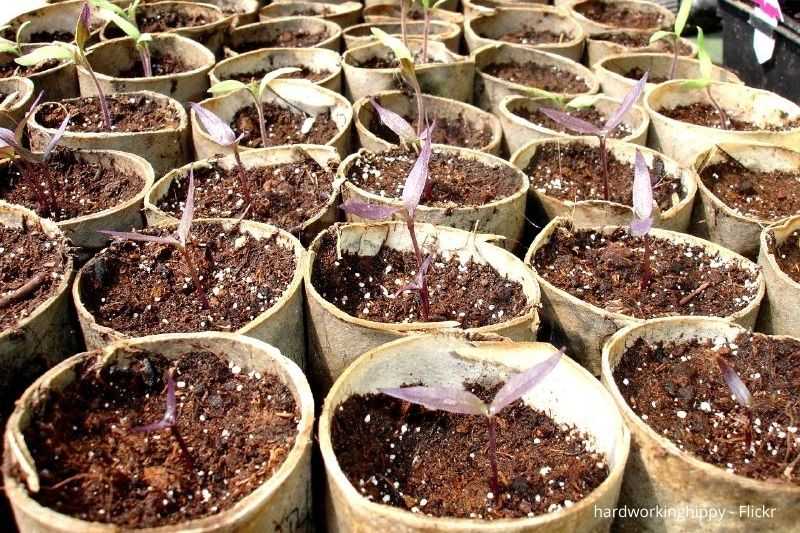
You can also cut strips of cardboard to support soil blocks for seedlings. This will save you plastic pots for your young vegetable or flowering plants before transplanting. For this, prefer corrugated cardboard which handles moisture less poorly. Toilet paper rolls are also very effective, in addition to already having the desired shape. Obviously, this cardboard use can only be a temporary solution until the plant grows enough to be planted in open ground.

Comments