


Every autumn, many trees and shrubs reveal their finest colours, offering a true spectacle: the leaves take on scarlet, coppery or golden hues before falling... Although it amazes us, this phenomenon is the result of a real strategy implemented by plants to protect themselves in winter. They go into dormancy, marking a necessary pause that allows them to resume growth in spring. We invite you here to discover this mechanism that explains the flamboyant colours of autumn!
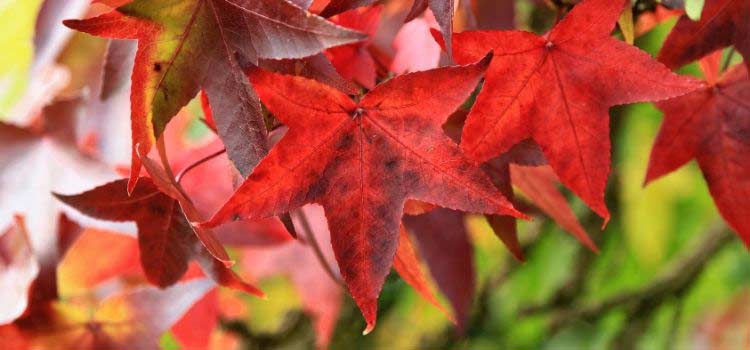
Liquidambar styraciflua is one of the finest trees for autumn foliage! (photo: Frank Vincentz)
Where does the green color of the leaves come from?
The leaf helps the tree capture sunlight. In spring and summer, the leaves are green because they contain chlorophyll. This is a pigment that allows the plant to capture light energy, and to use it to synthesise organic molecules from water (taken up from the soil) and CO2 (taken up from the atmosphere). Thanks to chlorophyll, leaves absorb, from light, blue and red wavelengths, but not green ones... The green colour is therefore reflected by the leaf, which is why we perceive it. Other pigments are present in the leaf, but they are masked by chlorophyll.
Why does the colour change in autumn?
When the length of the day decreases, the tree seeks to go into dormancy and conserve its energy. It will therefore block the sap supply to the leaves, producing at their base a small cork plug. Thus, the leaves no longer receive water and minerals, chlorophyll pigments are no longer renewed and eventually disappear... As they were responsible for the green colour of leaves, these then change colour. However, the other pigments present in the leaves remain – xanthophylls (yellow) and carotin (orange) – with the disappearance of chlorophyll, they become apparent, which gives the leaves superb orange tones!
The red colours, on the other hand, are due to new pigments that are synthesised in autumn, from the sugars present in the leaf: anthocyanins (responsible for deep red, violet and purple colours). At the same time they help protect the leaves from solar radiation, and at the same time prevent insects and other animals from attacking the plant: the red colour repels them, as in nature this hue signals toxicity.
In autumn, not all trees take on the same colour, but several factors cause the colour of the foliage to vary: soil pH, moisture and drought, genetics (the colour varies depending on species and varieties), the age of the plant... Each colour depends on the specific proportions of each pigment, and on how they are expressed!
In North America and Asia, red colours (due to anthocyanins) are particularly marked, while in Europe autumn leaves are more often yellow or orange.
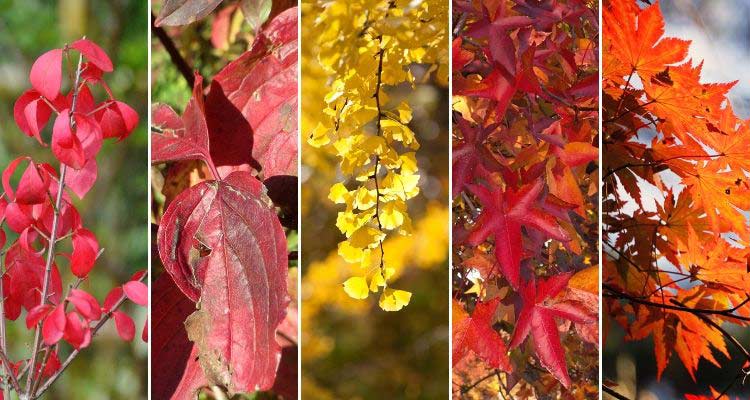
Winged euonymus (photo: Jean Jones), bloodtwig dogwood, Ginkgo biloba, American sweetgum and Japanese maple
Leaves eventually fall...
As they are no longer fed with sap, the leaves dry out, turn brown and eventually fall. This is a way for the tree to save its energy and go into dormancy, awaiting milder temperatures. Its metabolism slows, conserving its water and mineral elements. Leaves are thin and tender tissues; in cold weather they would be prone to freezing and dropping... so there is no point for the tree to try to keep them! Evergreen plants, on the other hand, generally have thicker, tougher leaves able to withstand cold temperatures. They continue to photosynthesise in winter, but even for them the metabolism slows.
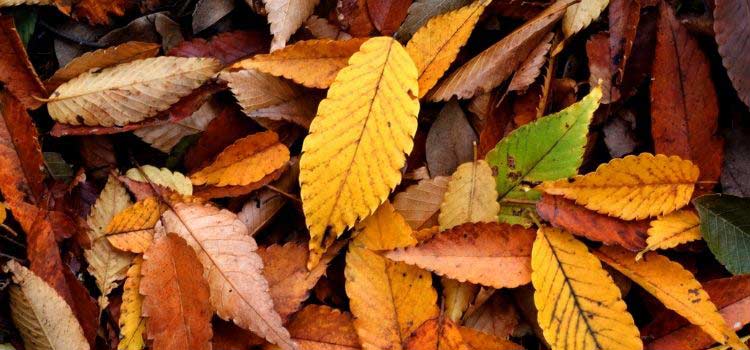
When they fall, the leaves of deciduous trees bring organic matter to the soil. They protect the soil, support insects and microorganisms, and as they decompose, they enrich and improve the soil texture, aiding humus formation. While the ground is covered with a coloured carpet, the falling leaves allow us to admire the tree's entire architecture! This highlights the colour and texture of its bark, branches and branching.
In spring, with longer days, the roots will again draw water and minerals from the soil, which will then circulate in the tree's sap. This “sap rise” will enable bud burst and the appearance of new leaves... allowing photosynthesis through to the next autumn!


Comments