





























When caring for your potted plants, you often think about watering, light, or fertiliser... But have you ever considered the importance of keeping your flower pots clean? Cleaning flower pots is a step often overlooked by many gardeners, yet it helps prevent diseases and ensures healthy growth for your plants.
In this tutorial, discover how, when, and with what to maintain your plant pots to provide a healthy environment for your little green corner.
Why should you clean your flower pots?
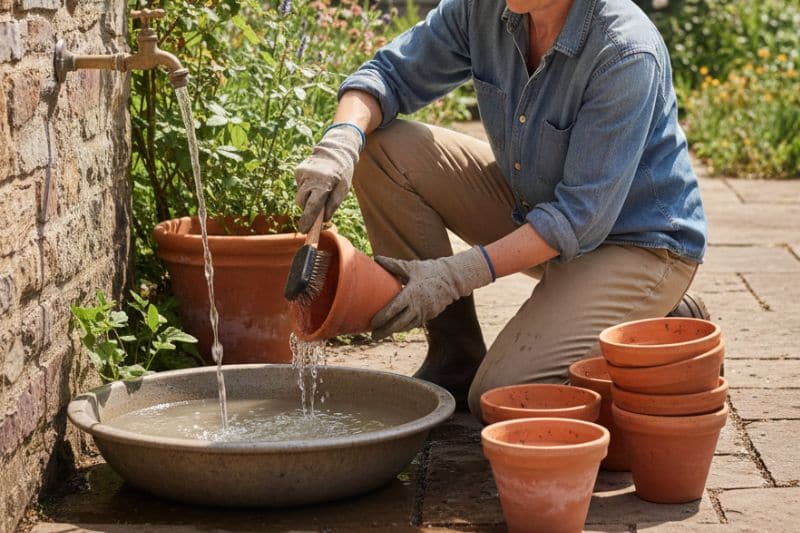
Cleaning your flower pots may seem secondary, but it is (almost) essential for the well-being of your plants. Over time, containers accumulate soil, organic residues, mineral salts, and sometimes... nasty pathogenous agents! These can cause fungal or bacterial diseases or attract parasitic pests. In short, nothing good for our plants.
By regularly maintaining your flower pots, you significantly reduce these risks. It’s also an opportunity to check the overall condition of the pot, particularly its drainage, porosity (for terracotta pots), or the appearance of cracks.
When should you clean your flower pots?
Here are the times when you should consider cleaning your flower pots:
- Before each repotting: to avoid transferring diseases from one plant to another. This advice even applies to pots before sowing!
- At the end of the season: before wintering, it’s the ideal time to clean everything up.
- After the death of a sick plant: the pot may still contain spores, fungi, or bacteria invisible to the naked eye.
- As soon as you notice white deposits or mould on the outside or inside of the pot: a sign that the pot needs a good clean.
Note: If you see mould on your plant's soil, the problem does not come from the pot, but from the substrate itself. In this case, it is better to change the soil, aerate the soil, and moderate watering.
What equipment to use for cleaning your flower pots?
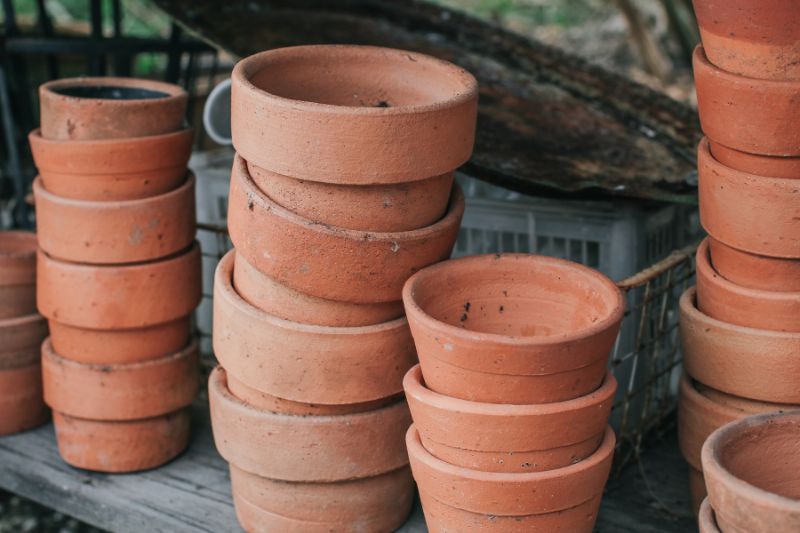
To rejuvenate your pots, you will need:
- A stiff brush: to remove ingrained residues.
- White vinegar: an excellent natural disinfectant, perfect against limescale stains. Natural, it is economical, eco-friendly, and remarkably effective!
- Black soap or mild dish soap: to clean without damaging the materials.
- Hot water: helps dissolve deposits more easily.
- Gardening or dishwashing gloves.
- A basin or bucket.
Steps to clean your plant pots
1- Completely empty the pot: start by removing all the soil and remaining plant residues and roots.
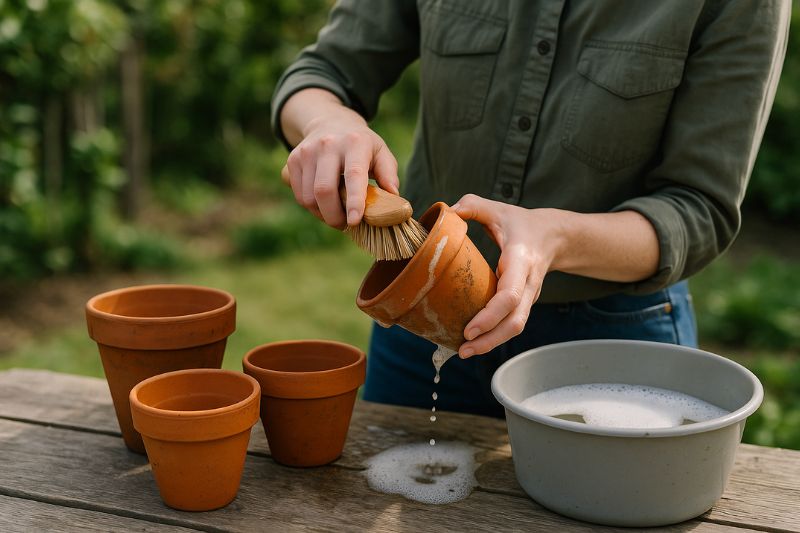
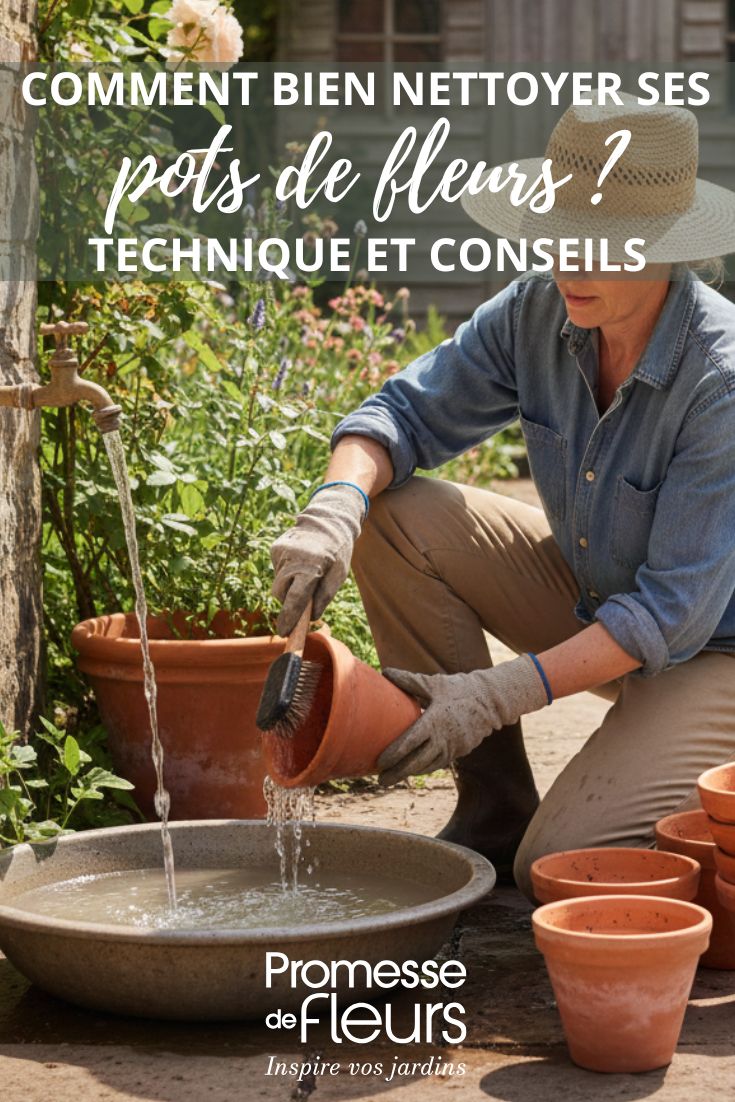
2- Scrub the inside and outside: use a stiff brush and a mixture of hot water, mild soap (a few drops), or a bit of white vinegar (1 part vinegar to 10 parts water).
3- Disinfect: if the pot has contained a sick plant or if you want a more thorough disinfection, soak it for 30 minutes in a basin containing:
- 1 litre of lukewarm water
- 100 ml of white vinegar or a tablespoon of bicarbonate.
Note: This also helps remove limescale deposits.
4- Rinse thoroughly: after soaking the pots, rinse them thoroughly with clear water to remove any traces of cleaning product.
5- Let your pots dry completely in the open air before reusing them. Ensure they are completely dry to prevent mould growth.
Good to know: these steps apply to both plastic and terracotta or ceramic pots.
Special case: cleaning zinc pots
Zinc pots, very aesthetic, require a bit more delicacy. Unlike terracotta or plastic, this material does not tolerate acidic products like white vinegar well.
Here’s how to clean them without damaging:
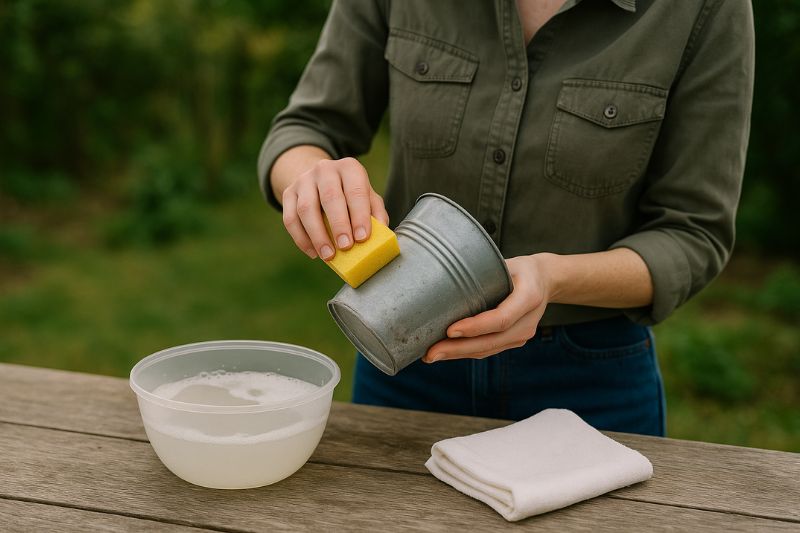
- Prepare a gentle solution with 1 litre of lukewarm water and a few drops of black soap (or mild dish soap).
- Clean using a non-abrasive sponge, focusing on dirty or dusty areas.
- Rinse thoroughly with clear water.
- Dry immediately with a clean, soft cloth to prevent stains or rust from appearing.
Additional tips for maintaining your pots daily
- Avoid stagnant water in saucers, which encourages the proliferation of mosquitoes and mould.
- Regularly check the drainage hole: a poorly drained pot promotes root rot.
- Store unused pots away from moisture to prevent degradation.

Comments