Davidia involucrata Lady Dahlia - Dove Tree
Davidia involucrata Lady Dahlia - Dove Tree
Davidia involucrata Lady Dahlia
Dove Tree, Handkerchief Tree
Back-to-school special offer!
Get €10 off for every €50 you spend! And get up to €40 off on a single order.
How does it work?
1. Shop your favourites
Add your favourite plants to your basket. For every €50 you spend (excluding delivery charges, store credit and the plastic-free option), you’ll receive a €10 voucher.
€50 spent = €10 voucher
€100 spent = €20 voucher
€150 spent = €30 voucher
€200 spent = €40 voucher
2. Place your order
Once your basket reaches one of the spending thresholds, place your order. You can even choose your delivery date!
3. Receive your voucher
As soon as your order has been shipped, you’ll receive an email containing your personal voucher code and its value.
4. Use it on your next order
Your voucher is valid for 90 days from the date you receive it. It can be used once only, on a new order worth at least the value of the voucher, excluding delivery charges.
Please note: Vouchers can be combined with other offers, but cannot be split or refunded.
Why not try an alternative variety in stock?
View all →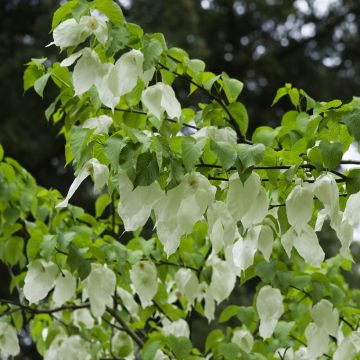
Available in 2 sizes
Available in 2 sizes
This plant carries a 24 months recovery warranty
More information
We guarantee the quality of our plants for a full growing cycle, and will replace at our expense any plant that fails to recover under normal climatic and planting conditions.
Would this plant suit my garden?
Set up your Plantfit profile →
Description
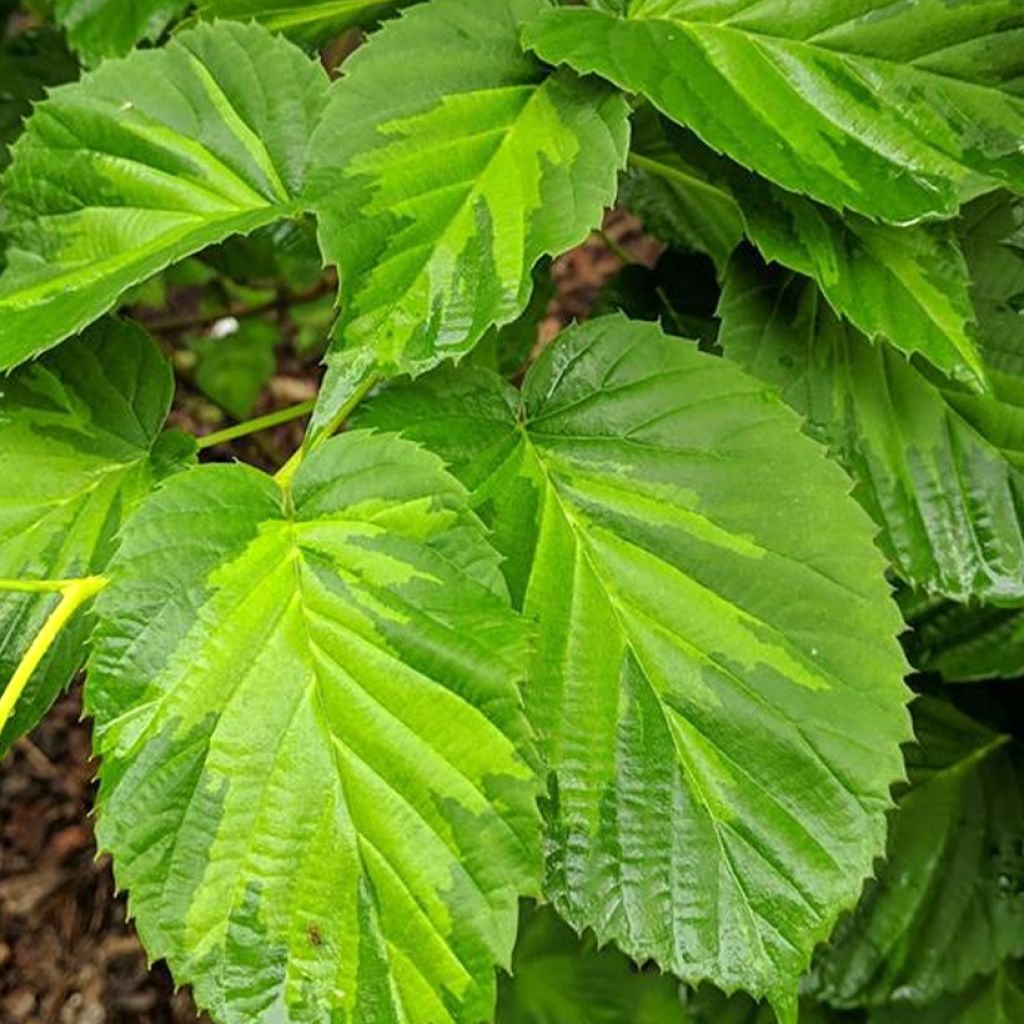
The Davidia involucrata 'Lady Dahlia' is a rare variety of the dove tree, which is already uncommon in our gardens despite its ornamental interest. This tree produces remarkable flowering, in the form of large white bracts that indeed resemble handkerchiefs. Lady Dahlia offers an additional appeal with its variegated deciduous foliage, green with light yellow blotches, which is quite decorative in spring. This hardy species, preferring a rather moist and cool climate, is quite easy to grow in ordinary soil that is deep, fertile, light, and fresh. Its rarity and beauty justify giving it a prominent position, preferably in partial shade and sheltered from the wind.
Davidia involucrata is a representative of the relatively unknown family Nyssaceae, of which the most well-known member is probably Nyssa sylvatica with its magnificent autumn colours. This hardy tree, the only species in its genus, is native to the western Sichuan province in China. It was discovered there in 1869 by a missionary botanist named Jean-Pierre Armand-David, who gave it its specific name. In its natural habitat, this tree with a rounded habit can live for a hundred years and reach a height of 20 m. In our gardens, it rarely exceeds 12 m in all directions, but such specimens are rare because it remains a relatively unknown plant.
Interestingly, despite the rarity of the botanical species, there are several cultivars with variegated foliage, a sign of the interest of breeders and collectors. Lady Dahlia stands out with its green leaves with a central yellow-green to chartreuse blotch, depending on the sun exposure. This colouration takes on an irregular form, stretching between the veins in a random pattern, and varies from one leaf to another. Beautifully decorative in spring, this colouration fades during the summer. The leaf blade is cordate and relatively elongated, with a relatively homogeneous margin and an acuminate tip. Measuring 8 to 16 cm long, the leaves, which somewhat resemble those of the lime tree, are borne on petioles 4 to 7 cm long.
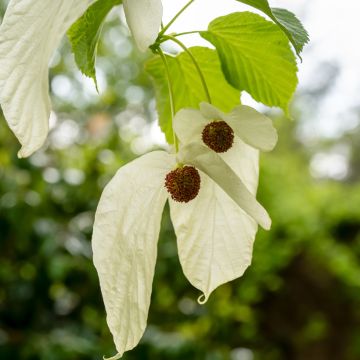
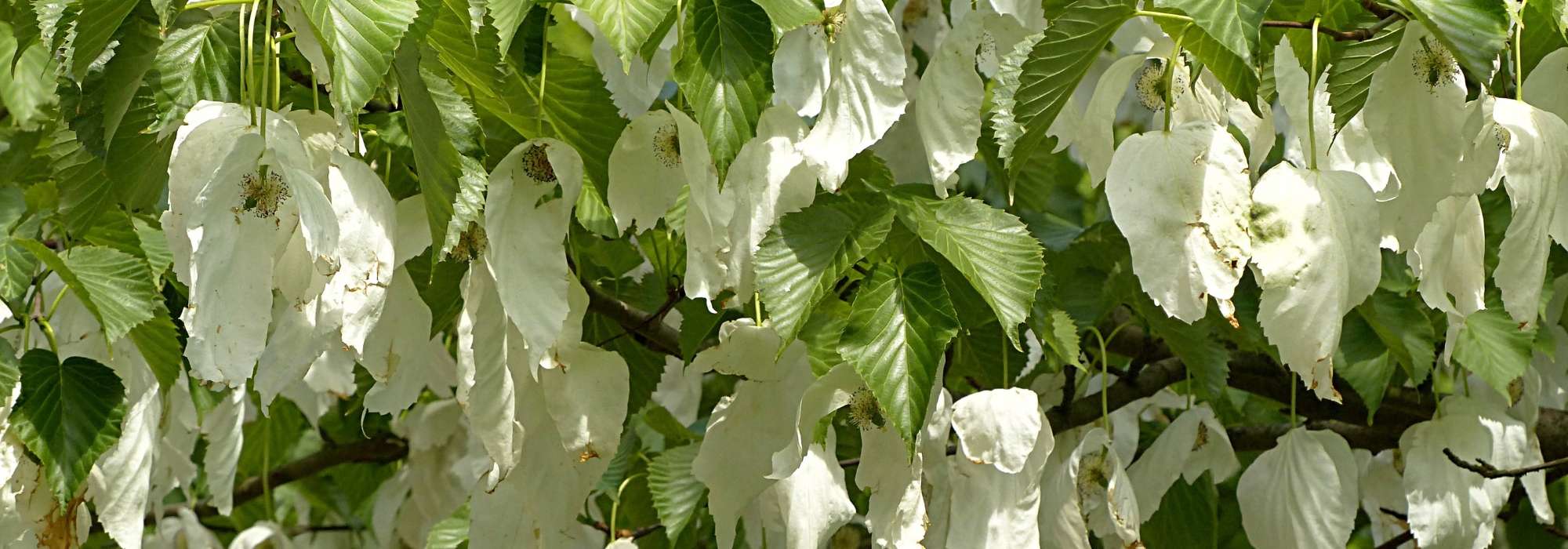
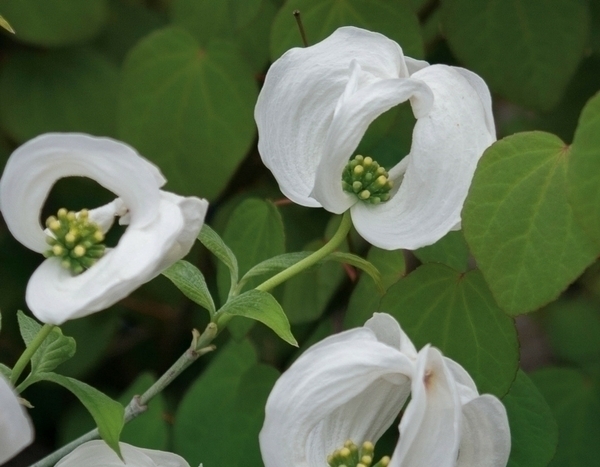
The other ornamental feature of this tree lies in its extraordinary flowering, unlike any other among trees in temperate regions. From May to June, hanging inflorescences approximately 15 cm long appear, composed of small flowers 1-2 cm in diameter, surrounded by a pair of unequal large bracts, one about one and a half times larger than the other. These bracts are transformed leaves that more or less imitate petals, here oversized and cream white. The globular flowers consist of purple-red anthers, which create a magnificent contrast against the white bracts, and numerous inconspicuous white stamens. After flowering, pendant fruits measuring 2-4 cm in diameter persist on the tree throughout the winter.
With slow growth, approximately 40 to 50 cm per year, this variety will reach a height of 3.5 m to 4.50 m in 10 years, and will reach a height of 8 to 9 m at maturity, with a relatively spreading habit. Hardy to around -18°C, the Davidia thrives in cool climates, much more than in the hot areas where it suffers from dry air. It can grow in full sun, but it is preferable to provide it with light shade to place it in the cool environment it prefers.
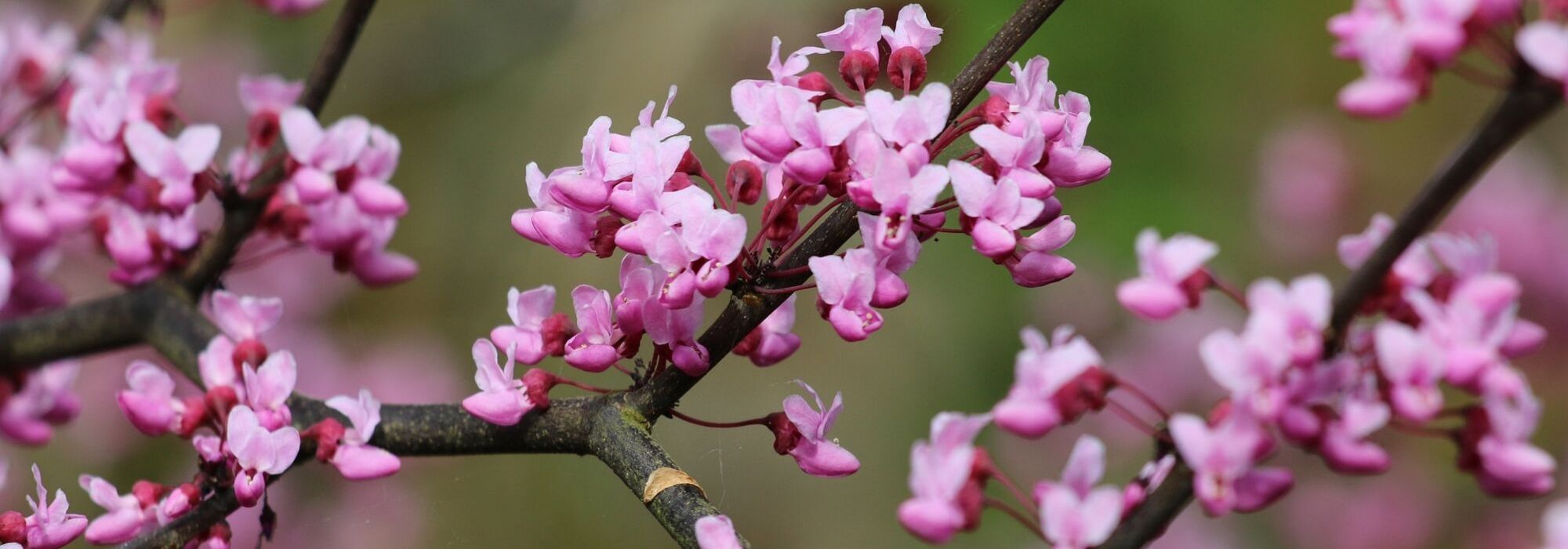
Lady Dahlia Dove Tree is the counterpart of Lady Sunshine, with its heart-shaped leaves edged in cream white. A tree with a romantic charm, its astonishing white pockets never fail to elicit admiration. Depending on the size of your garden, you can plant it on the edge of large trees, isolate it on a lawn, or associate it with other ornamental plants in a flower bed. To enhance spring, plant Chinese Azaleas at its feet, with their multiple floral shades that harmonize with Lady Dahlia's white handkerchiefs. For summer, opt for Hydrangea paniculata Pinkachu, a beautiful Hydrangea with charming abundant inflorescences that change from white to red between July and October. And to enliven winter, nothing beats a beautiful carpet of Hellebores, these Christmas Roses that defy the harsh season by offering superb flowers in white, green, yellow, pink, or purple, depending on the cultivars.
Plant habit
Flowering
Foliage
Botanical data
Davidia
involucrata
Lady Dahlia
Nyssaceae
Dove Tree, Handkerchief Tree
Cultivar or hybrid
Planting and care
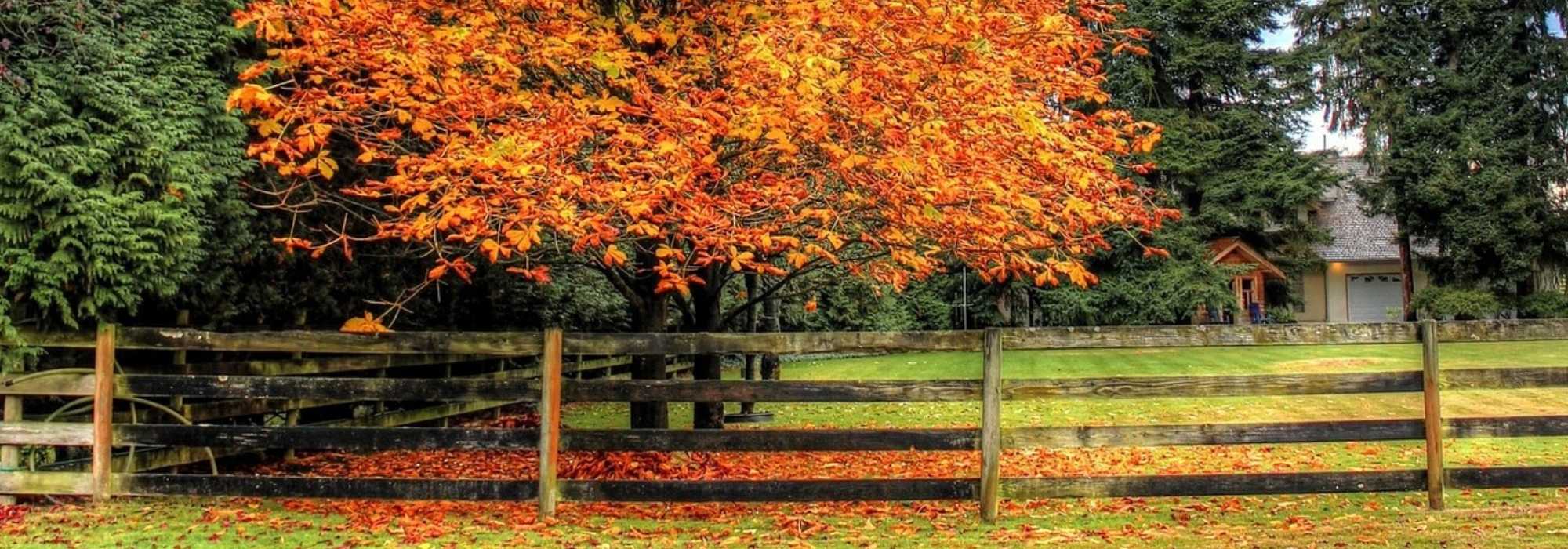
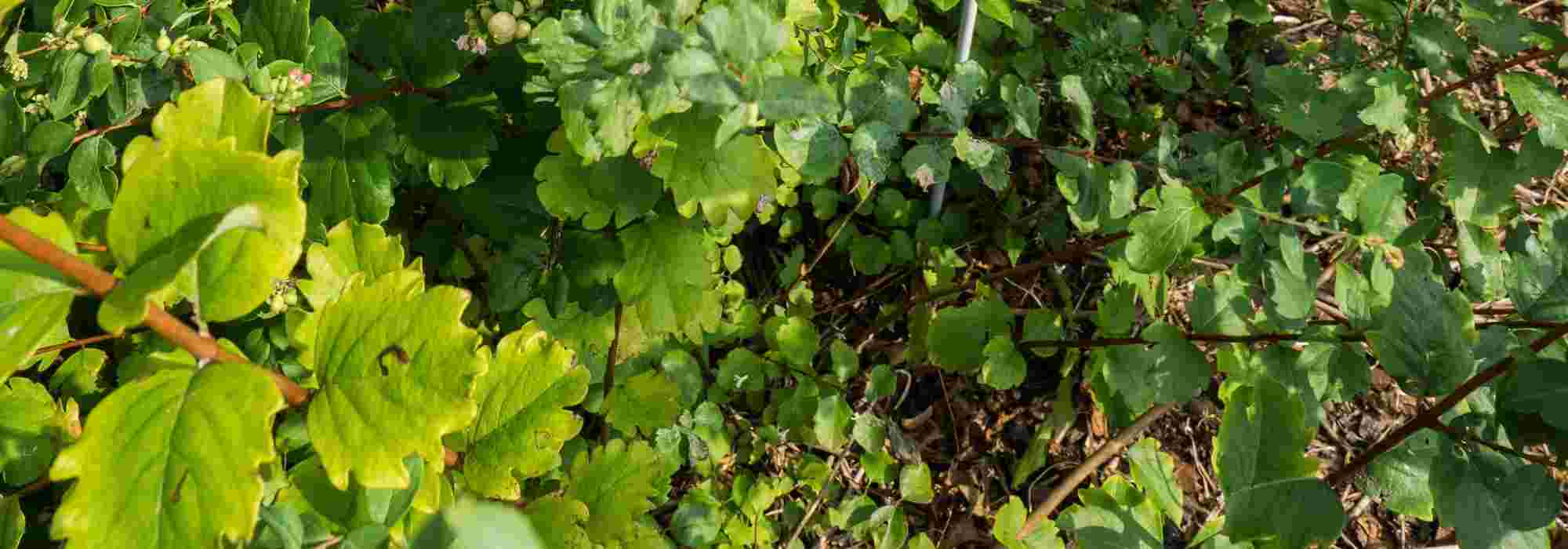
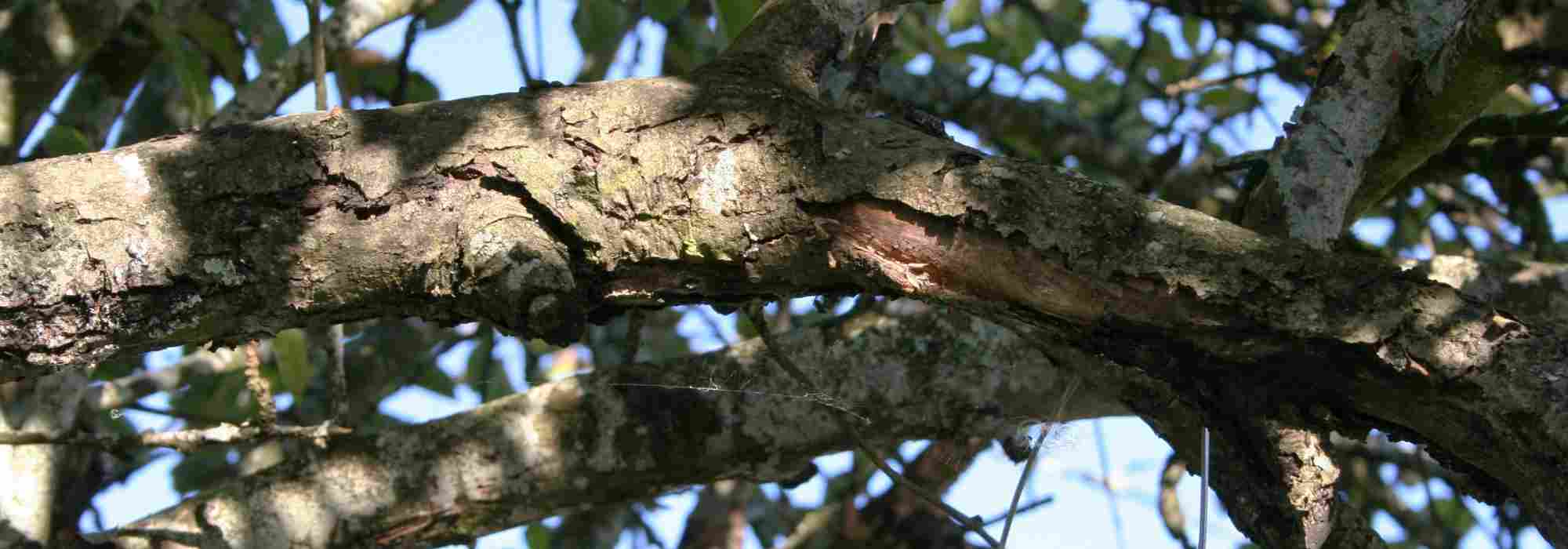
Davidia involucrata thrives in mild sun and partial shade, sheltered from strong and cold winds and spring frosts. It needs direct sunlight to flourish, but it is sensitive to scorching conditions and heatwaves. This tree tolerates even intense and long-lasting frosts. Plant it in autumn in a fertile, moist but well-drained soil rich in humus. It tolerates the presence of limestone in the soil. In hot seasons, water regularly and allow the soil to dry out between each watering to prevent root rot due to stagnant water. In winter, do not water. You can fertilise at the end of winter or early spring, at the beginning of vegetation, using organic or slow-release fertiliser. You can even treat it preventively at the end of winter with a fungicide. Pruning is not obligatory. If desired, from February to April, remove dead or obstructing branches that affect the tree's habit.
Planting period
Intended location
Care
Planting & care advice
-
-
-

-
-
-
-
-
This item has not been reviewed yet - be the first to leave a review about it.
Recently viewed products
Haven't found what you were looking for?
Hardiness is the lowest winter temperature a plant can endure without suffering serious damage or even dying. However, hardiness is affected by location (a sheltered area, such as a patio), protection (winter cover) and soil type (hardiness is improved by well-drained soil).

The flowering period indicated on our website applies to countries and regions located in USDA zone 8 (France, the United Kingdom, Ireland, the Netherlands, etc.)
It will vary according to where you live:- In zones 9 to 10 (Italy, Spain, Greece, etc.), flowering will occur about 2 to 4 weeks earlier.
- In zones 6 to 7 (Germany, Poland, Slovenia, and lower mountainous regions), flowering will be delayed by 2 to 3 weeks.
- In zone 5 (Central Europe, Scandinavia), blooming will be delayed by 3 to 5 weeks.
In temperate climates, pruning of spring-flowering shrubs (forsythia, spireas, etc.) should be done just after flowering.
Pruning of summer-flowering shrubs (Indian Lilac, Perovskia, etc.) can be done in winter or spring.
In cold regions as well as with frost-sensitive plants, avoid pruning too early when severe frosts may still occur.
The planting period indicated on our website applies to countries and regions located in USDA zone 8 (France, United Kingdom, Ireland, Netherlands).
It will vary according to where you live:
- In Mediterranean zones (Marseille, Madrid, Milan, etc.), autumn and winter are the best planting periods.
- In continental zones (Strasbourg, Munich, Vienna, etc.), delay planting by 2 to 3 weeks in spring and bring it forward by 2 to 4 weeks in autumn.
- In mountainous regions (the Alps, Pyrenees, Carpathians, etc.), it is best to plant in late spring (May-June) or late summer (August-September).
The harvesting period indicated on our website applies to countries and regions in USDA zone 8 (France, England, Ireland, the Netherlands).
In colder areas (Scandinavia, Poland, Austria...) fruit and vegetable harvests are likely to be delayed by 3-4 weeks.
In warmer areas (Italy, Spain, Greece, etc.), harvesting will probably take place earlier, depending on weather conditions.
The sowing periods indicated on our website apply to countries and regions within USDA Zone 8 (France, UK, Ireland, Netherlands).
In colder areas (Scandinavia, Poland, Austria...), delay any outdoor sowing by 3-4 weeks, or sow under glass.
In warmer climes (Italy, Spain, Greece, etc.), bring outdoor sowing forward by a few weeks.
Shipping country and language
Your country of residence may be:
Your country of residence is:
For a better user experience on our website, you can select:
Your shipping country:
-
 Austria
-
 Belgium
-
 Bosnia & Herzegovina
-
 Bulgaria
-
 Croatia
-
 Cyprus
-
 Czechia
-
 Denmark
-
 Estonia
-
 Finland
-
 France
-
 Germany
-
 Greece
-
 Hungary
-
 Iceland
-
 Ireland
-
 Italy
Italy
-
 Latvia
-
 Liechtenstein
-
 Lithuania
-
 Luxembourg
-
 Malta
Malta
-
 Netherlands
-
 Poland
-
 Portugal
-
 Romania
-
 Serbia
-
 Slovakia
-
 Slovenia
-
 Spain
Spain
-
 Sweden
-
 Switzerland
Language:
-
French
-
 English
-
Spanish
-
Italian
-
German
-
Portuguese
-
Dutch
-
Finnish
My Account
Hello
My wish lists
My cart
Log in / Register
Existing customer?
This form is protected by reCAPTCHA - the Google Privacy Policy and Terms of Service apply.
New customer?
Create an account to track your orders, access our customer service and, if you wish, make the most of our upcoming offers.