





























10 Dogwoods for a small garden
Compact dogwoods for small spaces
Contents
The genus Cornus is a fairly vast and diverse botanical genus. There are bushy dogwoods with colourful branches, dogwoods that develop into trees over the years, revealing either a distinctive silhouette or magnificent flowering with large white or pink bracts, and even dogwoods that produce edible fruits. If you have a small garden, the choice should be focused on smaller, more compact Cornus that can be grown in pots or have a particularly space-saving form, such as a fastigiate habit.
→ Let’s discover in this article the best dogwoods to plant in a modest-sized garden. They will be classified into 4 categories: bushy shrubs with colourful branches, small trees with tiered habits, fruiting dogwoods, and finally flowering dogwoods.

Colourful dogwoods
Colourful wood dogwoods tend to take up a bit of space: often around 2 m high and as wide. While this size remains reasonable in a small garden, these dogwoods can sometimes be a bit cumbersome if space is limited.
Fortunately, there are dwarf decorative dogwoods like Cornus sericea ‘Kelseyi’, which will not exceed 75 cm in height and 1 m in width, Cornus sericea ‘Kelsey Gold’ with golden foliage (and more delicate to grow!) or Cornus sericea ‘Kelsey Dwarf’, just as small as the others but with a more spreading habit. Low-growing, these dogwoods are wonderful as borders, groundcovers, or for greening a slope, but they also lend themselves well to pot or container cultivation. Very hardy, these dogwoods thrive in sunny or semi-shaded situations. They prefer acidic, heavy soils but also tolerate limestone.
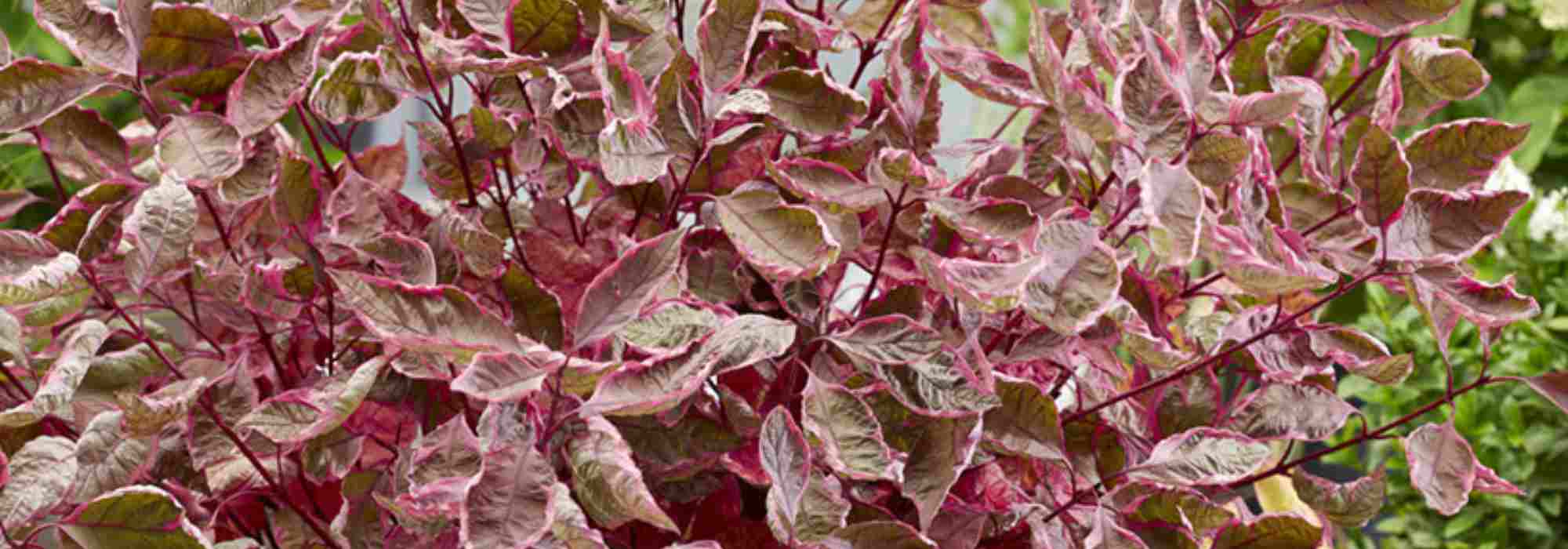
New to the market, the stunning Cornus alba ‘Miracle’ is making waves with its foliage featuring tri-coloured young shoots, which are very pink, turning to green edged with cream white and pink, then shifting to purple pink in autumn. Once the foliage has fallen, the bright red stems take centre stage. Following a discreet spring flowering, lovely bluish-white berries appear. In short, it’s a shrub that looks good all year round! The ‘Miracle’ variety is also very compact compared to other white dogwoods: no more than 1.10 m in all directions. Due to its small size, it can be integrated into a small shrub bed, within a low hedge, or in a large pot. The Cornus alba ‘Miracle’ will thrive in fertile, humus-bearing, fresh, or even moist soils, even heavy and slightly calcareous.
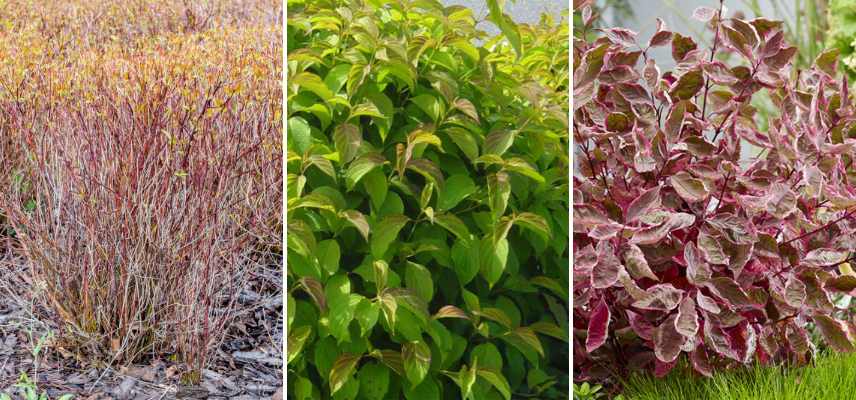
Cornus sericea ‘Kelseyi’, Cornus sericea ‘Kelsey Dwarf’ and Cornus alba ‘Miracle’
Hard to find, Cornus racemosa ‘Hurzam’ is a very compact selection of Cornus racemosa. It will not exceed 1.20 m in all directions. The young stems are red and then turn green. Stunning in autumn, the foliage takes on very purple hues.
Good to know: Cornus pumila is a naturally small species of American dogwood. Its height is about 60 to 80 cm, rarely more. It is a very tightly formed cushion-shaped shrub with green leaves tinged with red, turning orange in autumn. The white flowers attract butterflies, and the black fruits attract birds. It is very hardy (-20°C), has a strong ability to adapt to different soils and climates, and withstands drought quite well (although it prefers fresh soils). Currently limited to the role of “dogwood for collectors crazy about Cornus”, Cornus pumila is expected to make a remarkable entrance into our European gardens in the coming years.
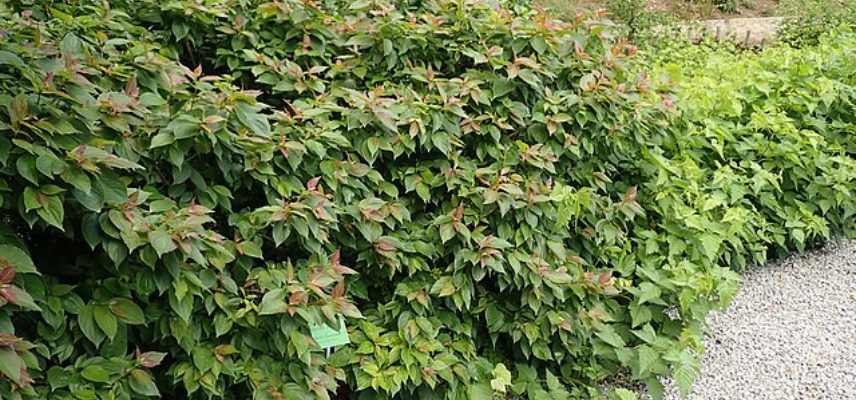
Cornus pumila (© Salicyna – Wikimedia Commons)
Read also
Pruning cornus to maintain their coloursLayered habit dogwoods
We categorically forget about pagoda dogwoods (Cornus controversa), as they are far too bulky for a small garden. Instead, let’s focus on its botanical cousin, Cornus alternifolia, the second species of dogwoods that has alternate foliage and a very tiered habit. The cultivars of the alternate-leaved dogwood or Cornus alternifolia are pleasingly compact.
This is particularly true of Cornus alternifolia ‘Golden Shadow’, which will not exceed 3 m in height and 2 m in width. This dogwood forms a bush with a tiered habit, featuring horizontal branches covered in a variegated foliage that changes with the seasons. Margined in yellow, it is tinged with rosy orange in spring, greener in summer, and then purplish in autumn. Its subtle cream flowering is followed by purple berries that are favoured by birds. This bush prefers cool climates, soils that are not too dry and low in lime, and a position in full sun or partial shade. The alternate-leaved dogwood is perfect as a specimen, in hedges, or at the back of borders.
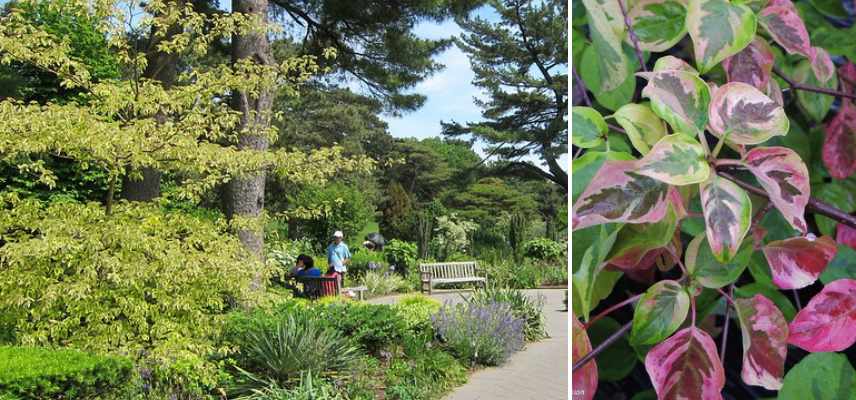
Cornus alternifolia ‘Golden Shadows’: habit (© Cultivar 413), and variegated foliage with pink
Discover other Cornus
View all →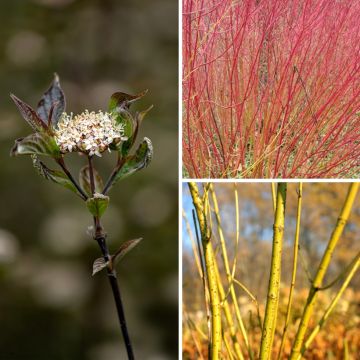
Available in 0 sizes
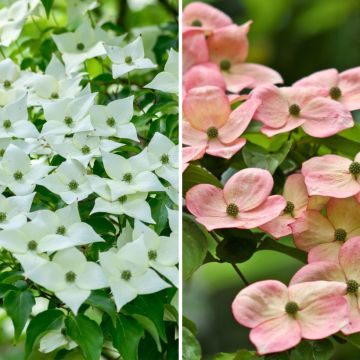
Available in 0 sizes
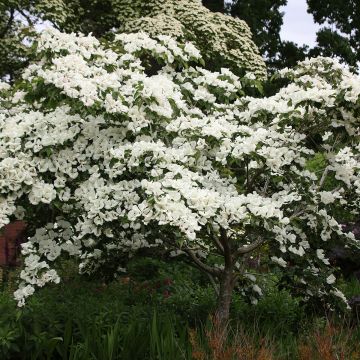
Available in 2 sizes
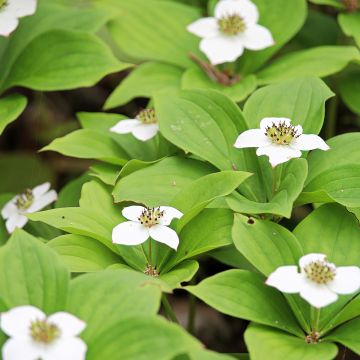
Available in 2 sizes
Available in 2 sizes
Available in 3 sizes
Available in 2 sizes
Available in 6 sizes
Available in 1 sizes
Available in 1 sizes
Fruit dogwoods
Many cultivars of Male Cornel (Cornus mas) have emerged and continue to appear each year: some produce larger fruits, in different colours than red, or in greater quantities than the typical species.
Currently, there isn’t really a very compact cultivar of Male Cornel or Cornus officinalis (another fruiting cornus). However, in a small garden, the Cornus mas ‘Jolico’ is ideal: 3 m in height, but only 2 m in width. From February, the bush is covered with a multitude of small star-shaped flowers gathered in bouquets before the foliage appears. Fruiting follows with cornels, 2 to 3 times larger than the typical species.
Very hardy, drought-resistant, and tolerant of limestone, this small Cornus will easily find its place in most gardens, as well as on a terrace or large balcony due to its modest dimensions.
Note: there is a fastigiate variety named Cornus mas ‘Fastigiata’ which is, unfortunately, difficult to find. In time, the bush grows up to 4 m tall, but with a reduced width of no more than 1.5 m.
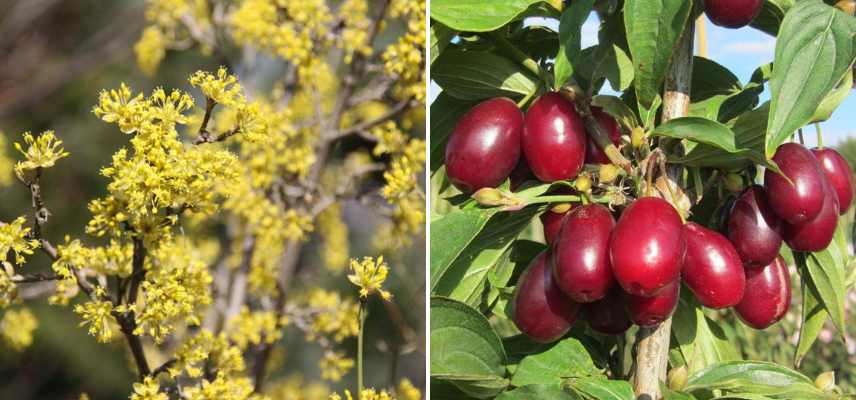
Cornus mas ‘Jolico’: flowering and fruiting
Flowering dogwoods
Among flowering dogwoods (or rather “bracted” dogwoods) such as Cornus kousa, Cornus florida, Cornus capitata, Cornus nuttallii, … and all their hybrids, there are shrubs that take up relatively little space. This is the case for several cultivars described below:
- Cornus florida ‘Cherokee Daybreak’ (2.50 m high and 2 m wide): the flowering is characterised by large white bracts, and the foliage is variegated, turning pink and then red in autumn;
- Cornus kousa ‘Bonfire’ (2.50 m in all directions): a very ornamental shrub with pendulous leaves, medium green marginate with primrose yellow and golden yellow. The flowers are smaller than those of other species and appear in an astonishing lemon green before quickly turning to pure white;
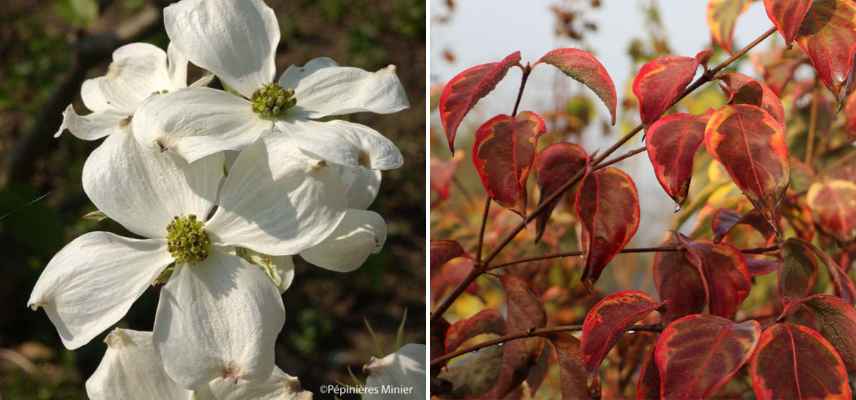
Cornus florida ‘Cherokee Daybreak’ and Cornus kousa ‘Bonfire’
- Cornus kousa ‘Robert’s Select’ (2 m in all directions): a variety highly valued for its very large pure white flowers in late spring and its foliage turning red in autumn;
- Cornus kousa ‘Copacabana’ (3 m high and 2 m wide): a cultivar remarkable for the colour of its foliage, which varies in shades of red-purple and beautiful spring flowering white tinged with pink.
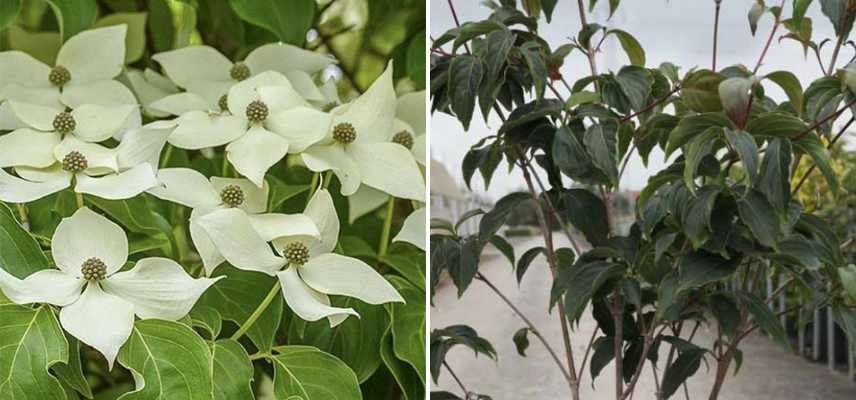
Cornus kousa ‘Robert’s Select’ and Cornus kousa ‘Copacabana’
All these dogwoods appreciate not too hot sun or partial shade and a cool, well-drained, neutral to acidic soil.
- Subscribe!
- Contents
Comments