





























5 hollies to plant in pots
Small hollies for a terrace or balcony
Contents
Hollies are full of qualities: very hardy, low-maintenance, with mostly evergreen foliage and colourful fruiting. What is less known is that there are a few species and varieties of holly or Ilex dwarf or miniature (about less than one metre in height) that can be grown in pots or containers for placement in a courtyard, on a terrace, or in the garden. Here is our small selection of the most beautiful dwarf hollies to grow in pots or containers.
→ To learn all about growing hollies in pots, also read our article on the subject.
In general: hollies appreciate a soft, humus-bearing, and light substrate, such as a good quality bush compost. Add a bit of drainage, at a rate of 10 to 20% of river sand.

Ilex aquifolium 'Myrtifolia' or Myrtle-leaved Holly
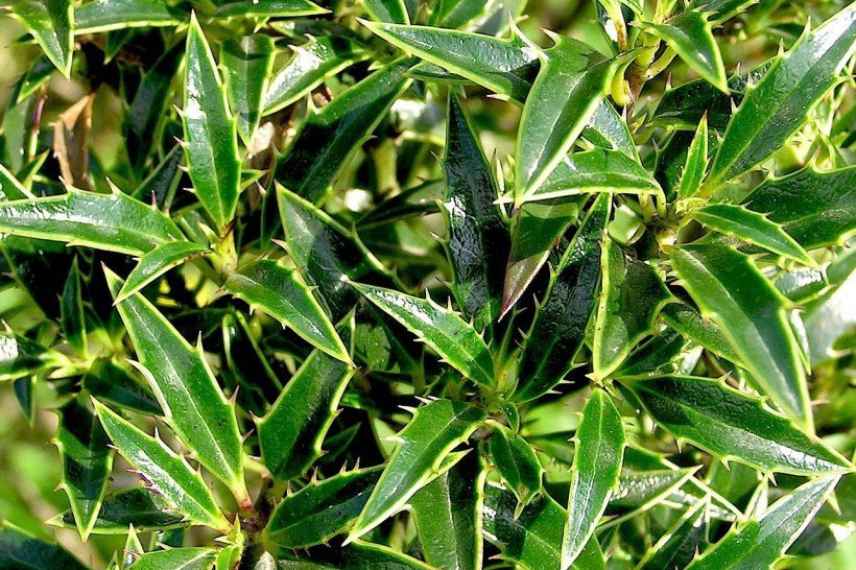
This is a variety derived from the Common Holly, our well-known native holly with its evergreen dentate foliage and bright red berries: Ilex aquifolium. Unlike the typical species, the Ilex aquifolium ‘Myrtifolia’ features fine, narrow foliage that is beautifully cut, earning it the name Myrtle-leaved Holly (the translation of Myrtifolia). Moderately thorny, its dark green leaves are finely serrated along the edges. Slow-growing, its slender conical silhouette is particularly elegant and fits well into a neat setting, in a small garden, contemporary or urban style.
The Common Holly prefers acidic, humus-bearing, deep soils and cool situations, but adapts to calcareous soils. It should be planted in full sun in cooler climates, but rather in partial shade in warmer climates. The Ilex ‘Myrtifolia’ can grow up to 3 m tall and 1.5 m wide, but it can remain in a large pot for a long time.
Please note: this variety of holly is always male, so you will not have red fruits on this bush.
Read also
Holly: planting, pruning and careIlex crenata or Crenate Holly 'Lingold Adorne'
Once relatively unknown, crenate hollies have come to the forefront thanks (or rather “due to”) a small butterfly from Asia. Indeed, boxwoods have been decimated in recent years by the box tree moth. It became necessary to find plants capable of replacing this boxwood: they needed to be evergreen, hardy, and able to withstand repeated pruning. One of these bushes possessing all these qualities was the crenate holly or Ilex crenata. Among the many varieties of crenate hollies, there are some small, almost dwarf varieties. These are ideal for pot cultivation.
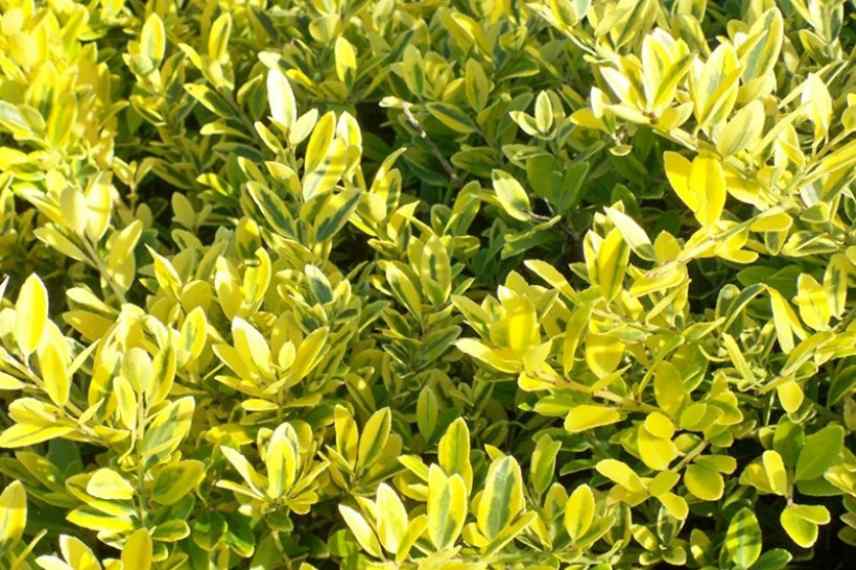
This is the case with Ilex crenata ‘Lingold Adorne’, a variety of this Japanese holly. It features dark green foliage variegated with golden yellow and forms a very bright ball throughout the year. Particularly comfortable in pots, it also tolerates repeated pruning very well. You can thus begin to explore the art of topiary with minimal risk. In any case, even if you let it grow as it pleases, it will never exceed 1 m in all directions.
Very hardy and easy to cultivate, this Japanese holly does, however, fear scorching sun and calcareous soils. It should be planted in deep, rather cool, but well-drained soil and preferably in partial shade. In pots, a shrub compost with a small addition of sand will do the trick.
Discover other Evergreen shrubs
View all →
Available in 1 sizes
Available in 1 sizes
Available in 1 sizes
Available in 1 sizes
Available in 1 sizes
Available in 1 sizes
Available in 1 sizes
Available in 1 sizes
Available in 1 sizes
Available in 1 sizes
Ilex crenata or Crenate Holly 'Glorie Dwarf'
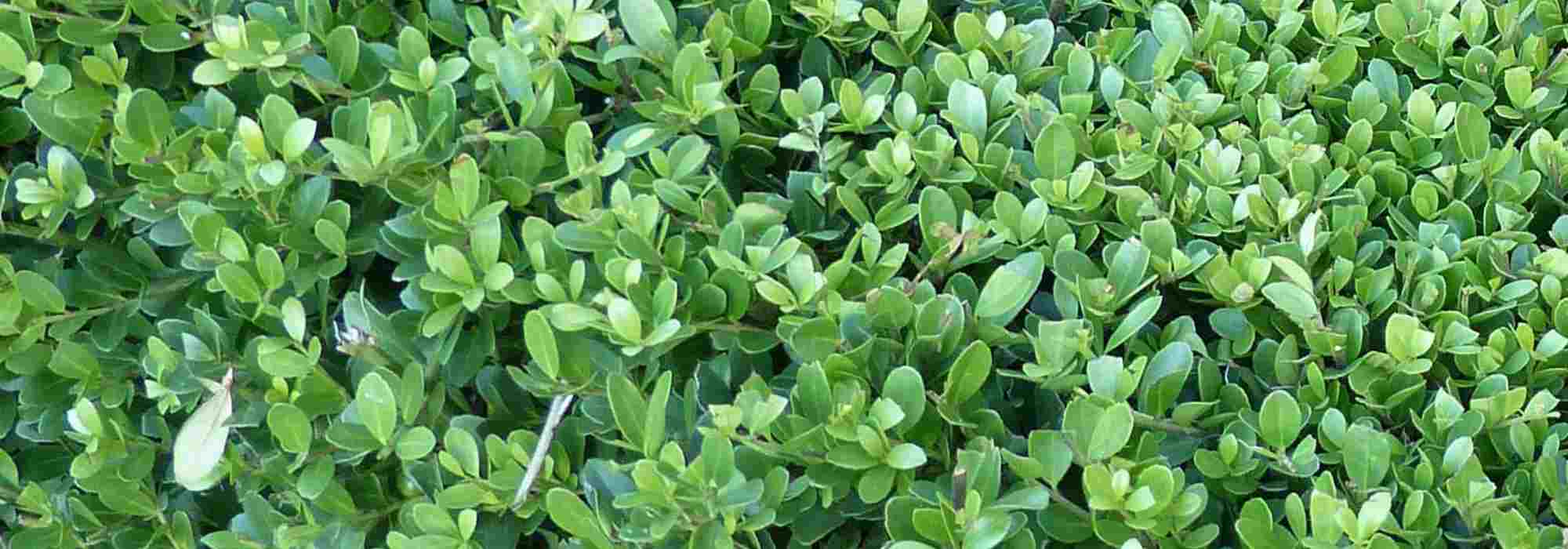
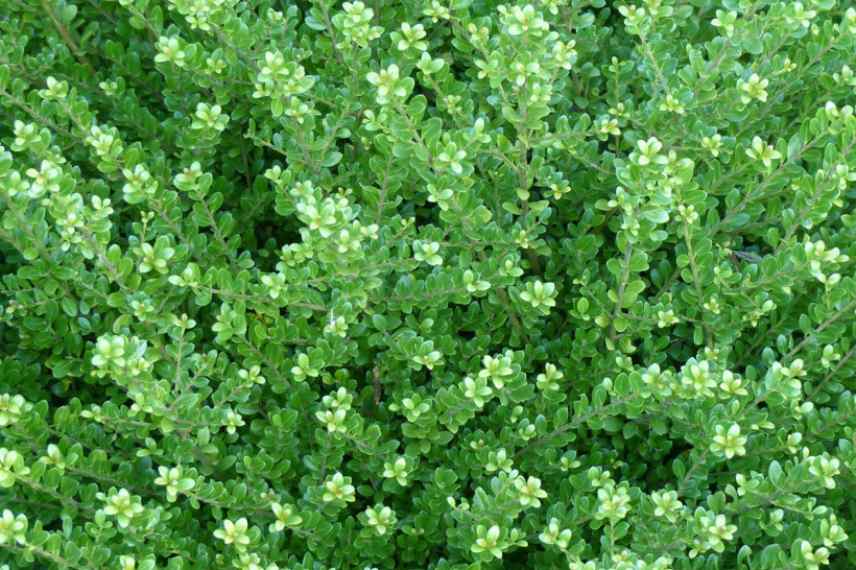
Here is another variety of the crenate holly, quite different from ‘Lingold Adorne’. Ilex crenata ‘Glorie Dwarf’ is a slow-growing variety of crenate holly with a very compact habit, no more than 70 cm in all directions. With its appearance resembling a small boxwood and its small glossy green leaves, it naturally adopts a rounded shape and tolerates pruning very well, allowing you to refine its form if you wish.
Perfect for a Japanese-style garden, as a substitute for boxwood in a French garden, it will also thrive in a pot on your terrace or balcony. For planting in a container or pot, choose a slightly acidic substrate (around pH 6.5) by adding a bit of non-calcareous sand (about 20%) to improve drainage. You should place your small crenate holly in partial shade.
Please note: crenate hollies are dioecious plants, meaning that a plant is either female or male. In autumn, female plants bear small black berries, shiny and lasting throughout the winter. Ilex crenata ‘Glorie Dwarf’ consists solely of female clones.
Read also
8 pairing ideas with holliesIlex meserveae or Dwarf Holly 'Little Rascal'
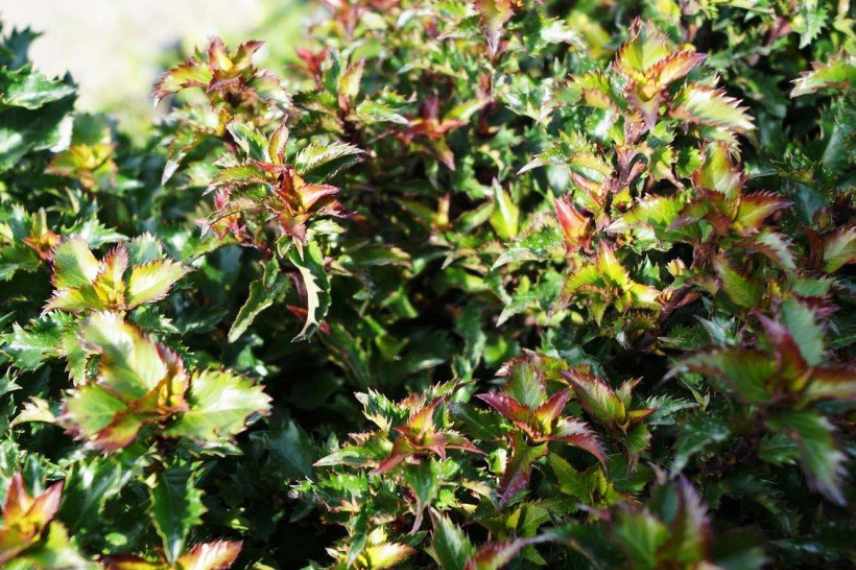
As the name suggests, dwarf hollies are small and therefore particularly suited for pot cultivation. The Ilex (x) meserveae ‘Little Rascal’ is indeed an adorable dwarf cultivar of Meserve holly, well-suited for small spaces. Its beautiful evergreen foliage, dense and thorny, is a glossy dark green that sometimes takes on a purplish hue with metallic reflections in winter due to the cold. Although it has fine thorns, the foliage is non-spiky and even quite soft to the touch.
Growing very slowly, it reaches an average height of 80 cm at maturity with a spread of 90 cm. It is worth noting that ‘Little Rascal’ is a variety that only produces male flowers. Consequently, you will not obtain any fruits from this bush.
Choose a sunny or partially shaded location and a slightly acidic, well-drained substrate, such as a good shrub potting mix for pot cultivation.
Ilex meserveae or dwarf holly 'Gentle'
Ilex (x) merseveae ‘Gentle’ (or ‘Annys Dwarf’) is also a compact cultivar of Meserve holly, well-suited for pot cultivation. The foliage, green with purplish hues in winter, is very similar to ‘Little Rascal’, but ‘Gentle’ is nonetheless a bit different. Indeed, it is even more compact (70 cm tall and 50 cm wide) and produces a lovely spring flowering that is slightly pink and particularly generous. Like the holly ‘Little Rascal’, Ilex ‘Gentle’ is a male cultivar and therefore does not produce any fruit.
For the rest, pot cultivation is identical to its “big brother”: a sunny or partially shaded location and a slightly acidic, well-drained substrate.
- Subscribe!
- Contents
Comments