




























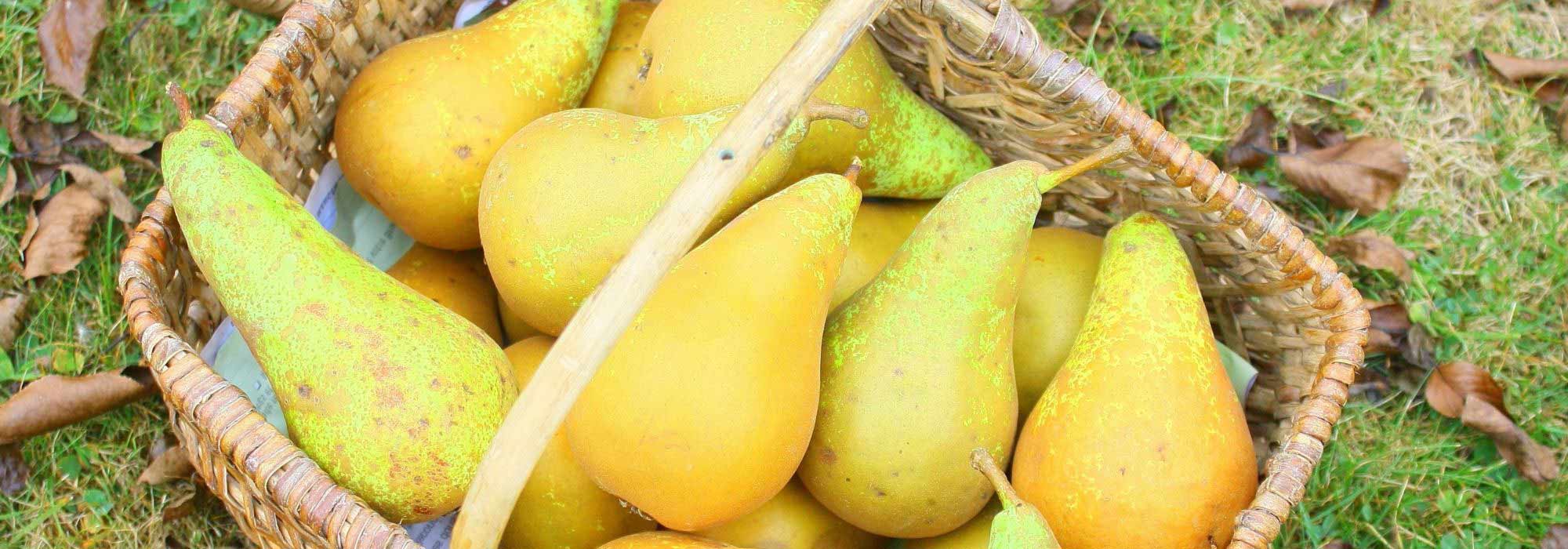
5 late varieties of pears
Selection of pear trees whose fruits are harvested at the end of the year and store for longer
Contents
The pear trees (Pyrus communis) are among the fruit trees particularly common in our orchards. Among the hundreds of existing varieties, some produce early pears, which are harvested in mid-summer, while others reach their ripeness at the end of autumn.
Late fruits have the advantage of being well-preserved as they are, allowing enjoyment throughout the cold season. To store them optimally for several months, you can find our tips in the dedicated article: “Harvesting and storing apples and pears”.
Late pear trees are also better suited to regions that regularly experience winter frosts, where early flowering can easily be destroyed.
Here is our selection of the 5 best late pears, to be harvested between October and December.

The ‘Conference’ pear tree: one of the most common pear varieties
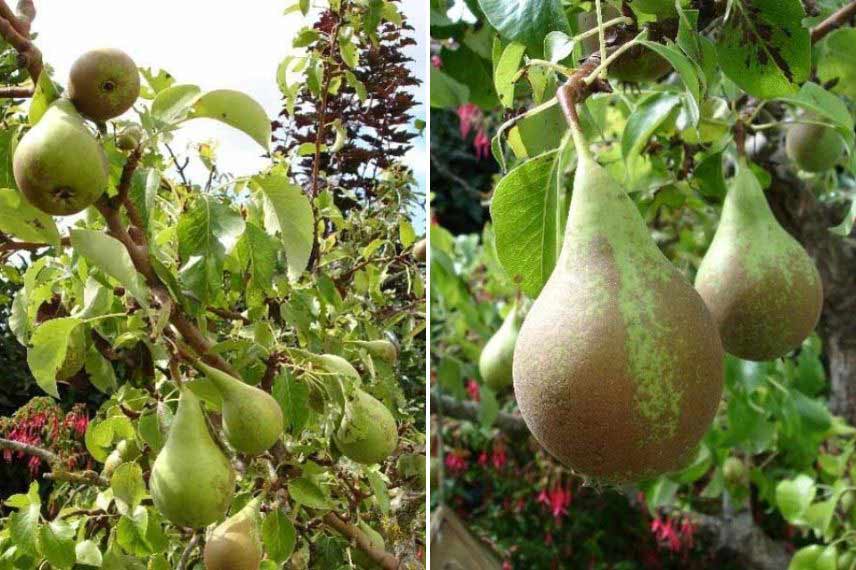
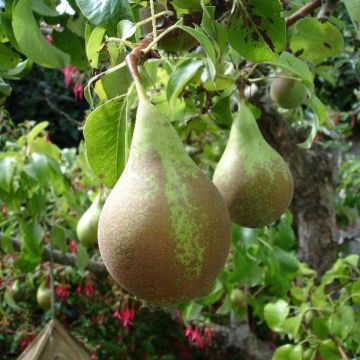
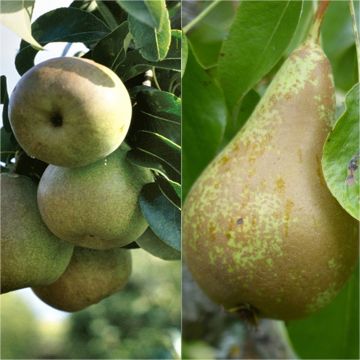
The pear variety ‘Conference’ is certainly one of the most well-known. It has the typical bottle or teardrop shape, with a green colour marbled with brown. A good size, the fruit measures 6 to 7 cm in diameter. In terms of taste, the white-cream flesh is juicy, firmer and grainy in the centre. It is slightly acidic but very sweet and refreshing. ‘Conference’ offers perfect fruits for eating fresh, which can be stored in a cool, airy place until around January. However, they can also, of course, be transformed into tarts, compotes, or desserts.
Flowering occurs late in April, revealing a myriad of small pinkish-white flowers. The fruits then reach ripeness between October and November.
This is a hardy pear tree that is not very susceptible to diseases, allowing it to adapt to many regions of France, even those that are humid or subject to severe frosts.
Like most pear trees, it will need at least one other variety flowering at the same time to ensure its pollination.
Provide it with a sunny location, sheltered from prevailing winds, in soil that remains fairly cool (moist). Conversely, avoid overly calcareous and draining soils.
Read also
Pear tree: planting, pruning and careThe ‘Doyenné d'hiver’ pear tree: large round fruits with excellent keeping qualities
The ‘Doyenné d’hiver’ pear tree is also known as ‘Bergamote de Pentecôte’. This is an old variety originating from Belgium, which produces excellent keeping pears.
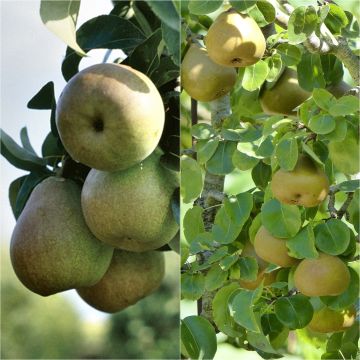
Its large, bulbous fruits reach nearly 10 cm in diameter and 11 cm in length. Initially green, they take on yellow or red hues depending on the intensity of the sun. The flesh is melting, slightly juicy, and a bit grainy in the centre. Its taste is particularly sweet, with a hint of acidity. These pears are best enjoyed simply with a knife, but they can also be cooked in sweet or savoury recipes.
Beyond the pleasant taste of its fruits, their long shelf life is also appreciated. Flowering occurs first in April. The pears are then harvested between November and December, reaching full ripeness in January. Under good storage conditions, they will keep all winter (hence its name, certainly!), even until early spring.
Although it is considered partially self-fertile, the presence of another variety of pear tree nearby will enhance pollination and fruit production.
Hardy and vigorous, it can, however, be susceptible to scab. Its cultivation is therefore best suited to regions that are not too humid.
Discover other Pear trees
View all →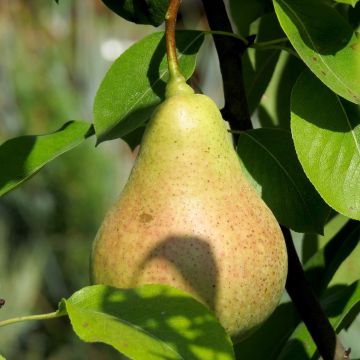
Available in 1 sizes
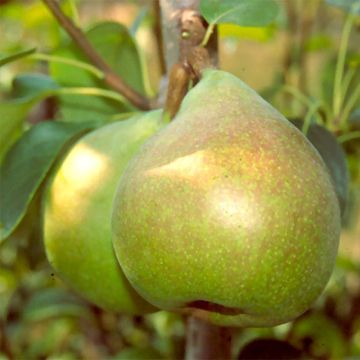
Available in 1 sizes
Available in 1 sizes
Available in 1 sizes
Available in 1 sizes
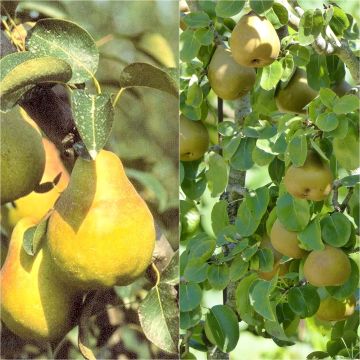
Available in 0 sizes
Available in 0 sizes
Available in 1 sizes
Available in 0 sizes
The pear tree ‘Sœur Grégoire’: late fruits to enjoy immediately or to store
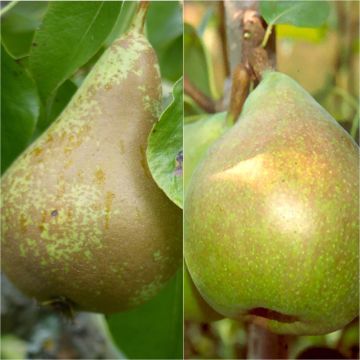
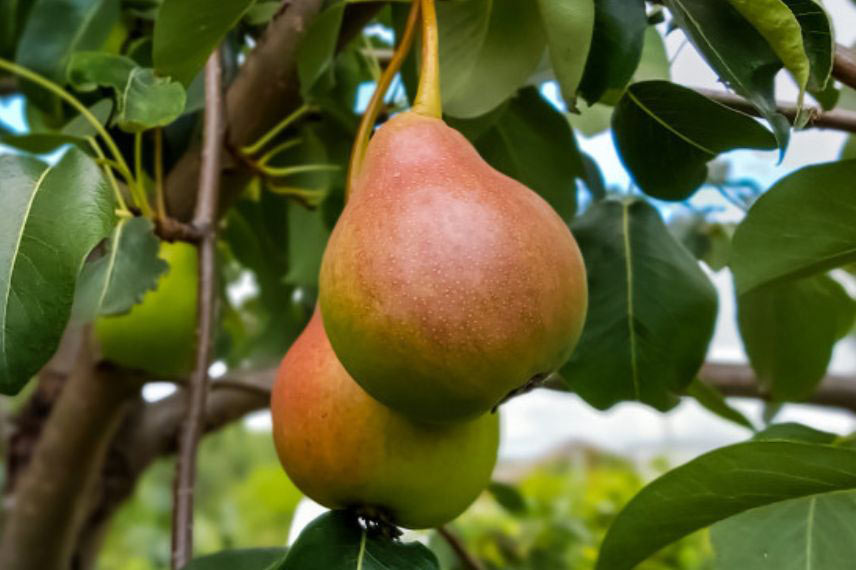
The variety ‘Sœur Grégoire’ is another late old pear tree. It rewards us with large, oblong pears measuring 9 cm in diameter, bumpy and bulging. Their colour, initially green, takes on lovely yellow tones tinged with pink over time. Their texture is melting and juicy. This tasty pear offers a beautiful balance between sweetness and acidity. To top it off, it contains almost no pips. The ‘Sœur Grégoire’ pear can be enjoyed raw, cooked, or on its own. In the kitchen, incorporate it into both savoury and sweet dishes.
This pear tree is in bloom in April. Harvesting takes place in November, and the fruits can be stored in a suitable place until January.
This variety is naturally hardy, fairly resistant to scab, and quite productive. Partially self-fertile, it will prefer to be grown alongside another cultivar to produce more fruit.
Provide it with a sunny and warm exposure (especially north of the Loire), in soil rich in organic matter, deep, not too dry, and non-calcareous.
Read also
Pear trees: the best varietiesThe ‘Curé’ pear tree: large pears to be harvested until December
The ‘Curé’ pear tree is also valued for its late fruits. The flowers appear in April, giving way to beautiful pears that are harvested between late October and December. Initially green, they turn yellowish punctate with grey-brown when they reach their ripeness. It is worth noting that pears are often harvested about fifteen days before their ripeness, as they continue to ripen once detached from their tree. ‘Curé’ pears can be stored until around January.
These large pears can reach 12 cm in length and 8 cm in diameter. They have the classic elongated shape of the fruit, plump in the centre and tapering at the base. The skin is quite thick and rough, protecting a flesh with a melting and juicy texture. In terms of flavour, this fruit is sweet, slightly tangy, and mildly astringent. It is typically consumed cooked, or raw at full ripeness.
This pear tree shares the same qualities as other old varieties: it is hardy, vigorous, productive, and resistant to scab. It can thus be cultivated in most regions of France, even at altitude, and always in proximity to another variety that will enhance its productivity.
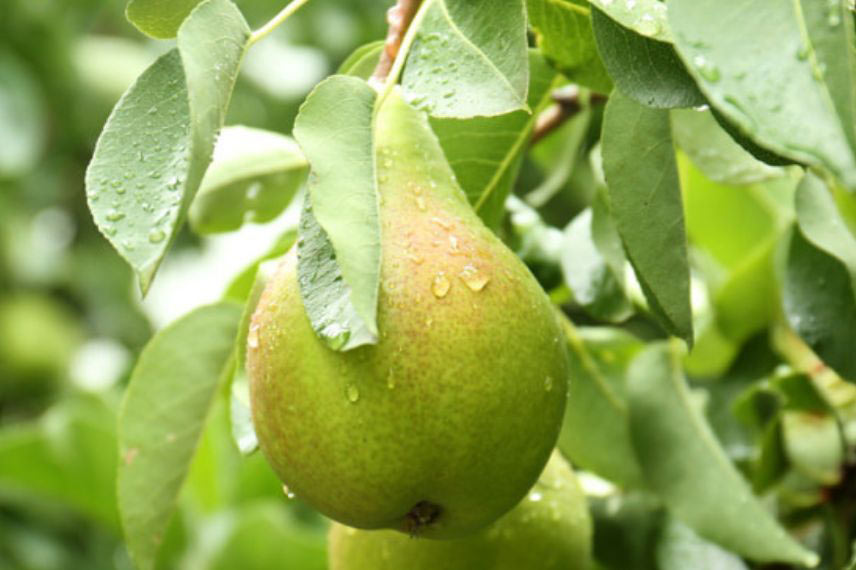
The pear tree ‘Figue d'Alençon’: a keeper variety from Normandy
The ‘Figue d’Alençon’ pear tree produces lovely fruits that start off green, taking on yellow and red hues with prolonged sun exposure. Measuring about 7 cm in diameter, these pears originate from Normandy and have a fig-like shape, which is how they got their name. In terms of texture, the fruits have a rather thick and rough skin, but a melting and juicy flesh. Sweet and tangy, it makes a perfect table pear when fully ripe. When younger, it can be a bit more astringent and is better suited for cooking, then used in various ways in the kitchen.
Its late flowering occurs in spring, in April. The harvest then spans from November to December. The pears will keep very well until February, even March, allowing you to enjoy them throughout the winter.
‘Figue d’Alençon’ will thrive in the sun in almost all our regions, thanks to its hardiness and natural resistance.
- Subscribe!
- Contents

Comments