





























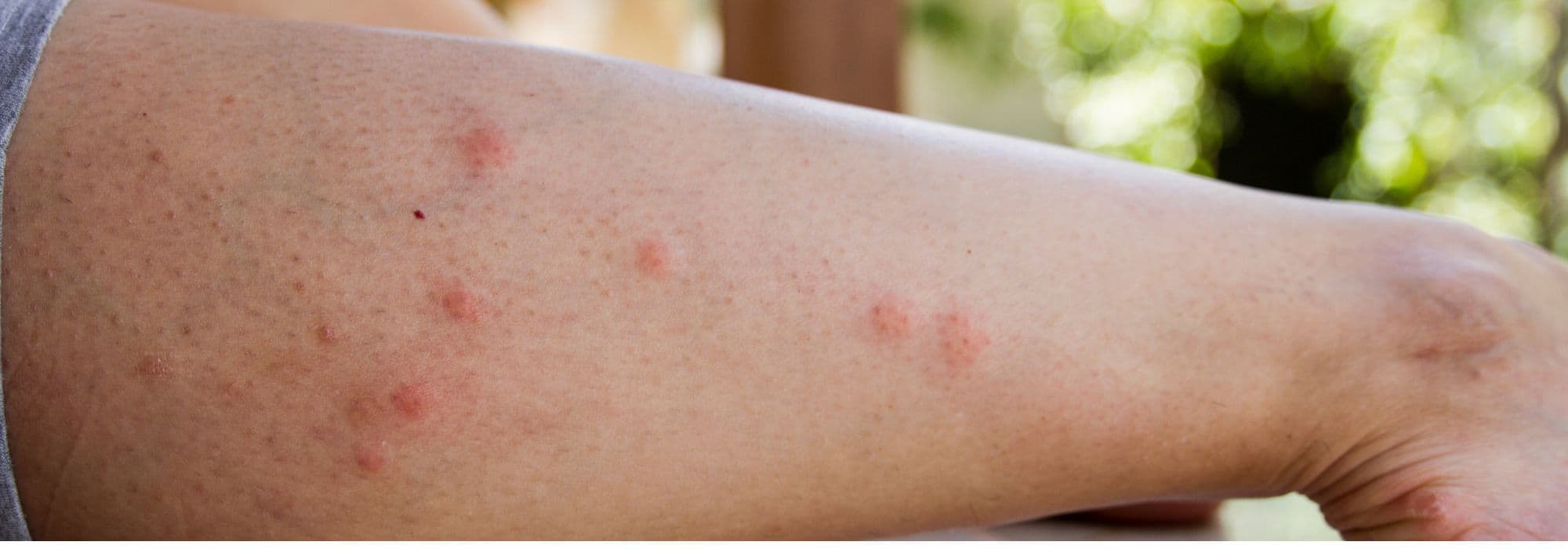
5 medicinal plants to relieve insect bites
Easy to find in nature, these plants are a great help in combating the discomfort of insect bites
Contents
Ouch, that stings! While wandering in the countryside, napping in the shade of a beautiful tree, or enjoying a meal with loved ones in the garden… Summer is a lovely season to enjoy nature and the outdoors. Unfortunately, summer is also the season of all dangers for those allergic (or simply fearful) of the stings from those despised insects that take delight in stinging us to inject their venom. For some of us, the consequences are minor and temporary. For others, a simple sting from a mosquito or wasp triggers a chain of (skin) reactions: itching, burning, redness, swelling, or even fever... And of course, we never have the soothing or anti-inflammatory cream handy!
However, nature offers us a multitude of plants known and recognised for their medicinal properties. Often, it’s just a matter of bending down to pick a few leaves or flowering tops that can provide relief after an insect sting. Others can be prepared in advance to treat the little troubles caused by insects. Discover the 5 best plants to relieve insect stings.

Safety tips and rules come first!
Would you consider eating a mushroom found at the edge of a wood that you cannot identify with certainty? Obviously not. The same applies to plants. Like mushrooms, some plants can be toxic, even deadly. That’s why it is essential to learn to recognise them with certainty, without a shadow of a doubt. And at the slightest doubt, it is better to refrain from picking and using them. Many small guides exist to help identify wild plants. However, this can be a somewhat lengthy learning process. Nevertheless, some species are quite easy to recognise and pose no risk.
Among these medicinal plants, many grow naturally in our countryside. Therefore, it is crucial to know the environments in which they thrive. Indeed, each plant has different needs in terms of soil type, moisture, sunlight… Learning to understand these needs makes it easier to find and spot these useful plants.
Similarly, before picking any plant, you must research its status. In certain regions or areas of regional or national protection, some plants are protected and therefore prohibited from being picked.
Also, remember that to allow these plants to reproduce, it is wise to only collect part of the plant without uprooting it. If you need a few leaves, there’s no need to extract the plant from the soil…
Finally, a last but not least piece of advice: prioritise picking plants in a healthy environment, away from cultivated fields that may be saturated with phytosanitary products such as fertilisers or pesticides, and far from major roads.
To minimise all risks of error or contamination, the ideal is to dedicate a small plot of your vegetable garden or garden to growing these medicinal plants, most of which are native. Overall, most are easy to cultivate and require little maintenance. They even multiply or self-seed easily (sometimes a bit too much, risking becoming invasive!).
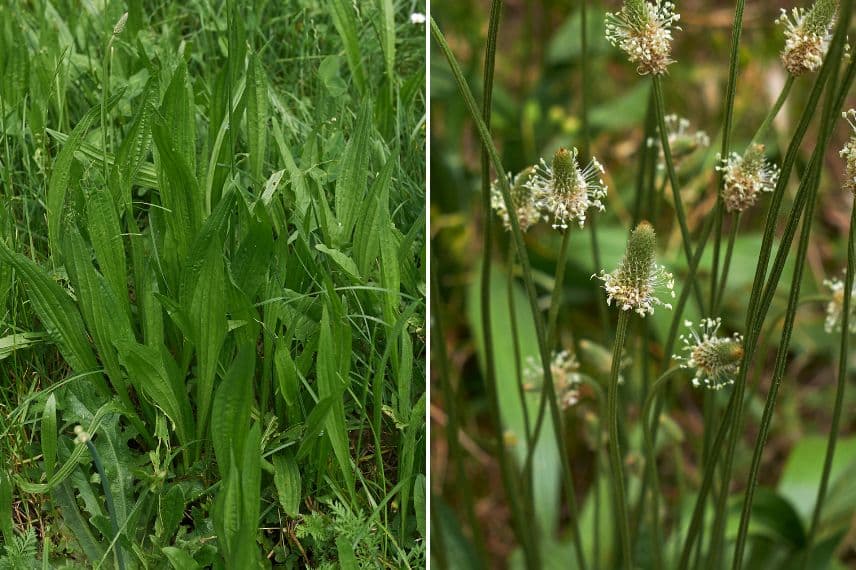
Lanceolate plantain, a rhizomatous perennial plant
The ribwort plantain (Plantago lanceolata) is a small, rhizomatous plant from the Plantaginaceae family, known for its medicinal, melliferous, and edible properties. It is recognised by its rosette of long, lanceolate leaves, featuring well-defined parallel veins that taper at the base. In the axil of the leaves, erect, channelled flower spikes covered in short, straight hairs emerge. At the tip of these floral stems, conical then cylindrical flower spikes bloom from May to September.
Ribwort plantain grows in meadows and fields, along country paths and banks, in clear woods, as well as in wastelands and embankments.
Ribwort plantain is renowned for its antitussive and expectorant properties, making it recommended for respiratory ailments due to its mucilage content. It is also believed to have digestive benefits and may help combat loss of appetite.
However, its antibacterial, anti-inflammatory, and antiseptic properties are particularly effective against insect bites.
How to use it? Pick leaves and crush them between your fingers, then apply the fresh juice that emerges directly onto the insect (or nettle) bite. You can also grind the leaves.
Alpine plantain or mountain arnica, a protected perennial plant
The mountain plantain (Arnica montana), also known as mountain arnica, is a spreading perennial rhizomatous plant from the Asteraceae family. In the first year, the rootstock produces a rosette of thick, ovate leaves covered in short hairs and marked with longitudinal veins. In subsequent years, tomentose stems rise bearing 2 to 3 pairs of opposite leaves. At their tops, from May to August, yellow-orange ligulate flower heads bloom. The plant emits a rather pleasant scent.
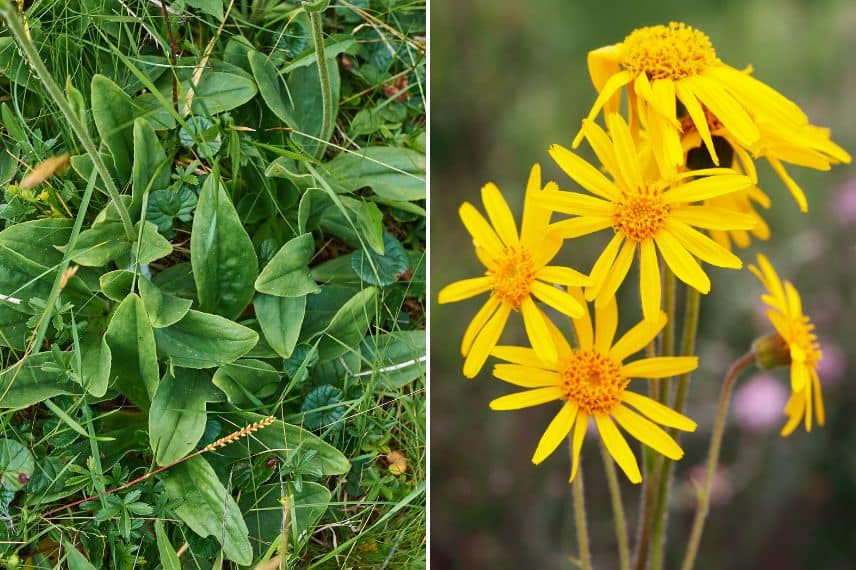
Mountain arnica grows at altitude, in wet or marshy meadows, in sparse turf moors, and in acidic soil. It also thrives in pastures as livestock do not eat it. The plant is protected in many areas due to its declining numbers. Only the collection of flowers may be permitted under certain conditions. The easiest option is to grow it yourself.
Mountain arnica is renowned for its anti-inflammatory effects following minor traumas such as bruises. However, it can also be used externally against insect bites for its soothing properties.
How to do it?
- In oil macerate: place 200 g of fresh flowers in 50 cl of neutral vegetable oil (sunflower, sesame, olive, grape seed…) in a jar and let it macerate for 4 to 6 weeks at room temperature. Then, simply strain it. The macerates can be stored for six months away from light and heat.
- In infusion: steep 5 g of dried flowers in 100 ml of boiling water for 15 minutes, then apply with a compress.
Read also
10 medicinal plants to relieve headachesMarigold, with lovely orange-yellow flowers
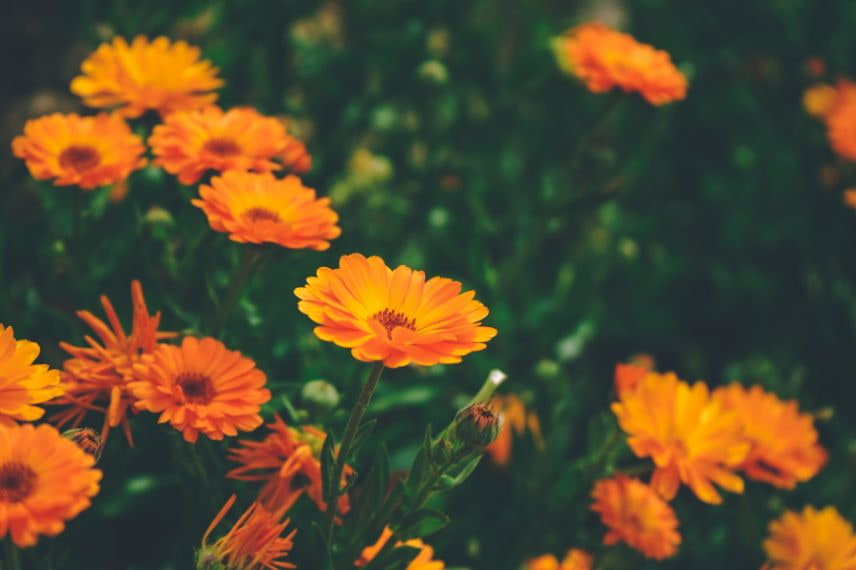
The garden marigold (Calendula officinalis) is an annual plant with a fusiform root. It produces upright stems 30 to 50 cm tall, angular, villous, covered with alternate, oblong, and spatulate leaves, which are also villous. It offers ligulate flowers that are usually orange or orange-yellow, sometimes lemon yellow or orange-red depending on the varieties, from May until the first frosts. These flowers are known for their melliferous properties and their ability to repel nematodes. They are also edible.
Of Mediterranean origin, this plant is cultivated in gardens and vegetable plots. It self-seeds very well in a spontaneous manner.
The garden marigold is recognised for its soothing, astringent, purifying, healing, and anti-inflammatory properties. It is effective in calming irritations from insect bites.
How to do it?
Pick flowers at noon without the stems and dry them in the sun for one to two weeks depending on the temperature. Place the flowers in a jar without packing them down and fill with vegetable oil. Allow to macerate in the sun for 3 weeks to a month, enclosing the jar in brown paper.
Lavender with a Provençal scent
Everyone knows lavender (Lavandula augustifolia) with its blue spikes closely associated with Provençal scents. Thanks to its hardiness, lavender can be grown throughout France, making it easy to have a plant in your garden or vegetable patch. Moreover, it is adorned with numerous virtues. It is a melliferous plant that attracts pollinating insects, but also acts as a repellent. Furthermore, it is a medicinal plant renowned for its diuretic, bactericidal, antiseptic, healing, antispasmodic… and soothing properties. This is why it can be used to alleviate pain from insect bites.
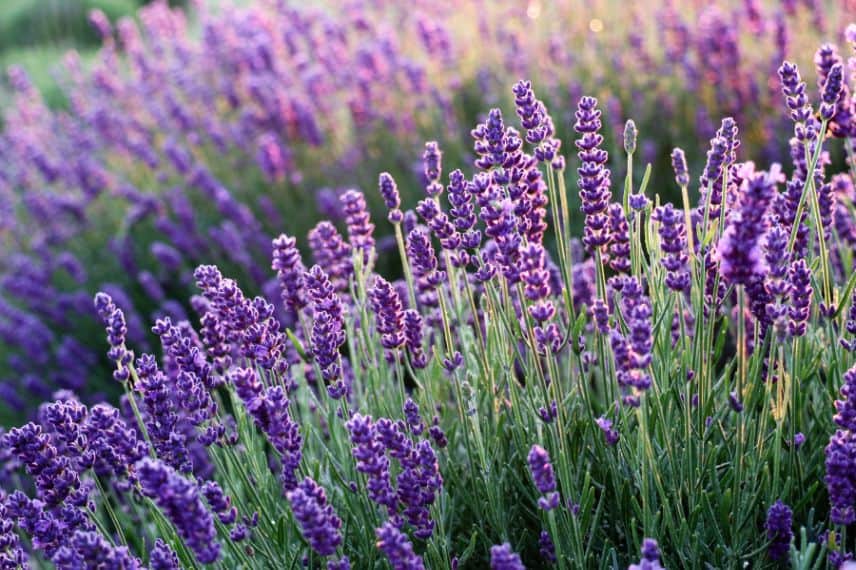
How to do it? Pick a leaf of lavender, crush it, and rub it on the painful area.
Perforate St John's-wort, a plant of hedges and thickets
The perforate St John’s wort (Hypericum perforatum) is a highly ramified perennial with an underground rootstock. It produces upright, sturdy stems that are branched at the top. Golden yellow flowers bloom from May to September in rich panicles. The leaves are opposite, sessile or with a short petiole, glabrous and entire.
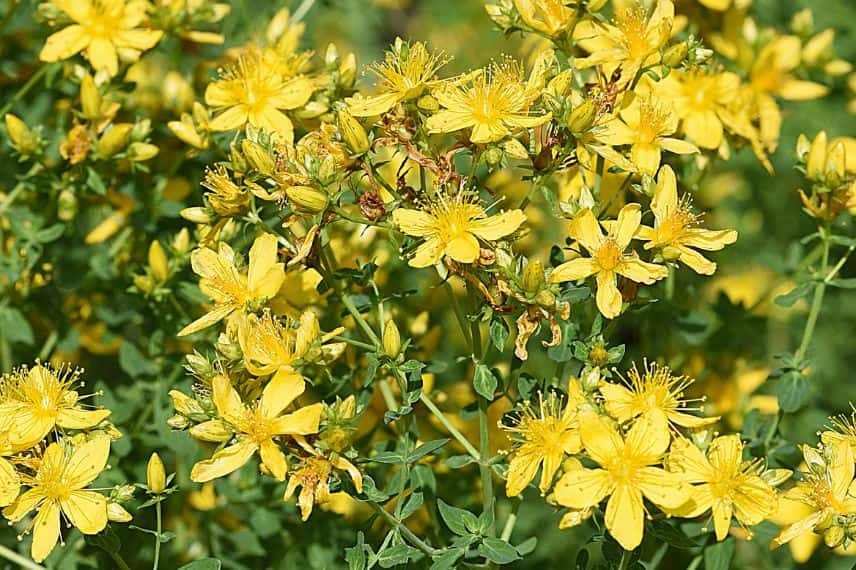
St John’s wort grows on scrubby slopes, in meadows and pastures, and among rocks, thriving in sunny locations. It is renowned for its soothing and relaxing properties, effective against insomnia and anxiety, as well as its antiseptic and healing qualities, particularly for sunburn, burns, and wounds. It can also be used to relieve insect bites.
The other St John’s worts, primarily ornamental, do not share the same properties.
How to do it?
Place fresh flowers in a jar and cover with a vegetable oil (grape seed, olive, sunflower…). Leave to macerate in the sun for 6 to 8 days, then strain.
- Subscribe!
- Contents
Comments