




























The 7 best pears for long-term storage
to enjoy these fruits in winter
Contents
Pear trees (Pyrus communis) are among the more common fruit trees in our gardens. Among the hundreds of existing varieties, some have the advantage of producing fruits with a pleasant taste and texture, but above all they can be stored for several months. A real advantage when you want to enjoy them during the winter.
They are often late-fruiting pear trees, with ripeness and harvest taking place in autumn. They are also better suited to regions that experience late frosts, which can affect flowering and thus fruit production.
Discover here our favourite storage pears.
To store your pears properly, you will also find all our tips in the article Harvesting and storing apples and pears. And to learn everything about growing pear trees in general, discover our complete guide: Pear tree: planting, pruning and care.

Pear 'Angelys'
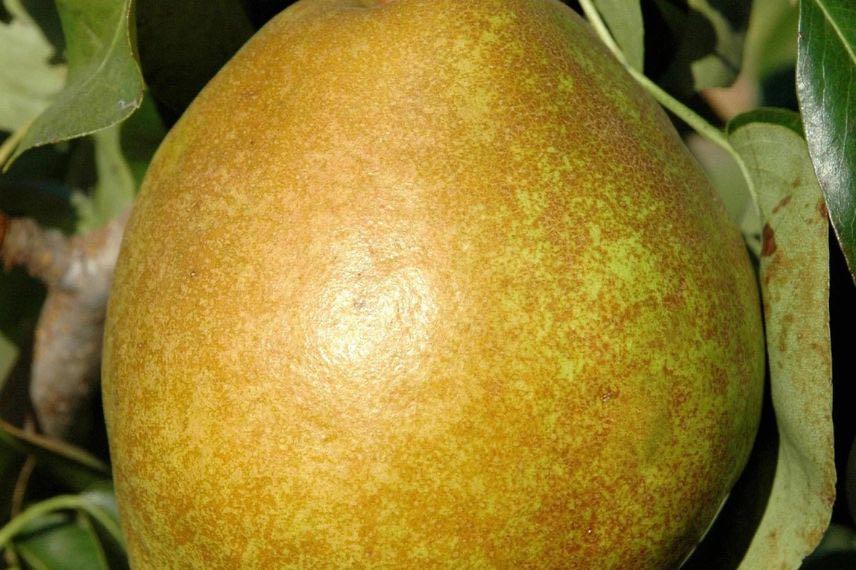
Very productive, the Angelys variety yields large pears reaching up to 8 cm in diameter. The pears have a yellow-bronze skin, as well as a sweet and tangy flesh, for a well-balanced flavour.
For this late-bearing pear tree, harvest takes place in autumn. If the fruits are sound and harvested before full ripeness, when they are still a little firm, they can be stored for a long time. With this variety, you can enjoy fruits rich in vitamins until March.
This variety was created by INRA Angers (National Institute for Agricultural Research) at the end of the 1990s. At maturity, it reaches 5 metres in height with a 3 metre spread and offers a spreading, naturally airy silhouette. It has the advantage of limiting the development of diseases.
Like most varieties, it is not self-fertile: it will therefore require the presence of other pear trees in order to bear fruit properly. For example, plant nearby pear trees such as ‘Conférence’, ‘Doyenné du Comice’ (one of its parent varieties) or ‘William’s’.
In terms of cultivation, its late flowering (around April) keeps it safe from frosts in most regions. However, give it a relatively sheltered, sunny location, in fresh soil (never completely dry), well-drained and deep.
Read also
5 late varieties of pearsPear 'Épine du Mas'
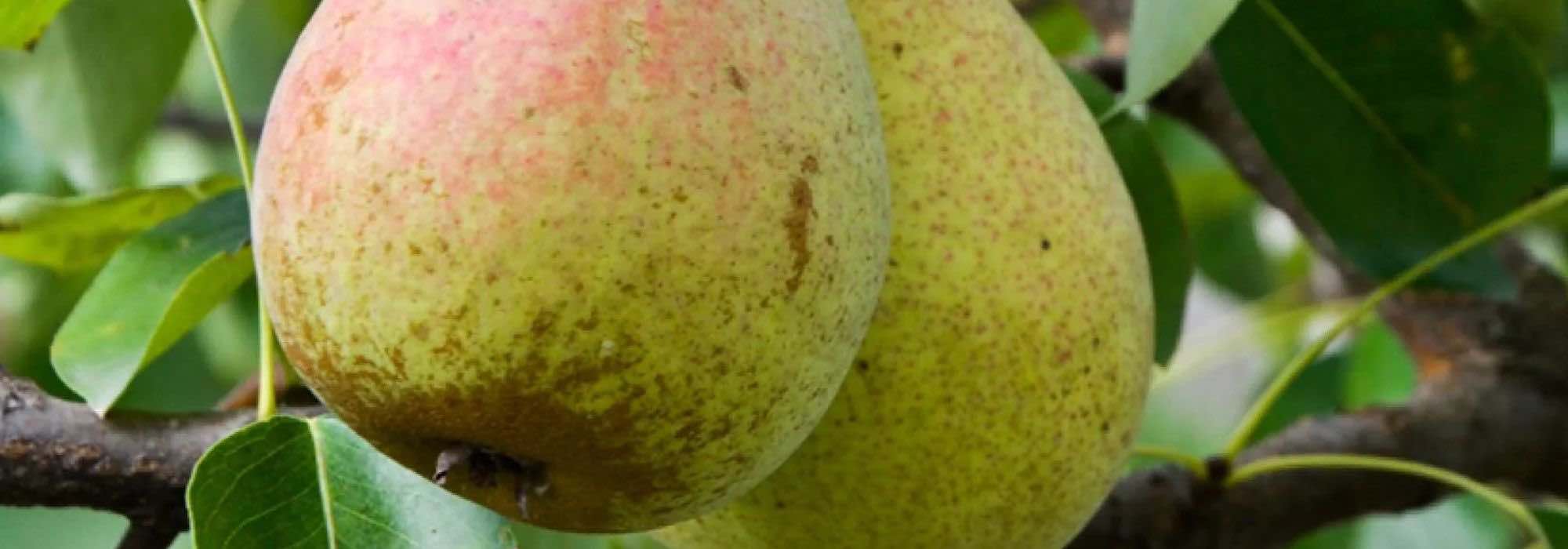
Also known as the ‘Duke of Bordeaux’, the pear tree ‘Épine du Mas‘ is an old, productive variety with rapid fruiting. It bears medium-sized pears with yellow-green skin, pink-tinged if grown on the sun-exposed side. The flesh is melting, juicy and sweet, well scented, sometimes a little grainy at the core. They make perfect pears to eat fresh.
Flowering occurs in April. Then, Harvest takes place in September–October for this variety with good keeping quality. Under ideal conditions (fruit spread out in a dry, dark and airy place), the pears will keep for several weeks, at least until December.
Hardy and vigorous, this pear tree with an upright habit reaches 4 to 6 metres in height.
Grow it near Beurre Hardy or William’s Rouge, flowering at the same time, to achieve cross-pollination that will increase productivity. This variety will thrive in moist, deep soil, not too well-drained, nor calcareous. Prefer a warm exposure, especially north of the Loire.
Fairly susceptible to scab (the main fungal disease affecting apples and pears), it should be avoided in particularly damp regions.
Pear 'Comtesse de Paris'
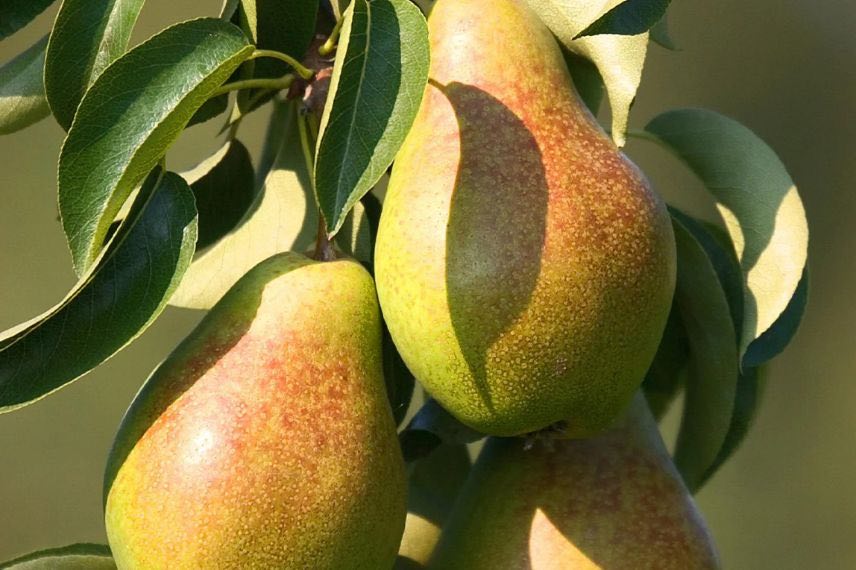
The Pear tree ‘Comtesse de Paris’ is one of the few self-fertile varieties that do not require the presence of other trees to bear fruit.
Its flowering takes place in April, for a harvest in late October and a long storage life, up to January.
At maturity, this pear tree reaches 4 metres in height with a 3-metre spread.
Plant this variety in a sunny, wind-sheltered position. Like other pear trees, it prefers cool, deep soils, fairly rich in potash to promote fruiting. So don’t hesitate to apply wood ash in winter, or an appropriate fertiliser.
Read also
Pear trees: the best varietiesThe pear 'Figue d'Alençon'
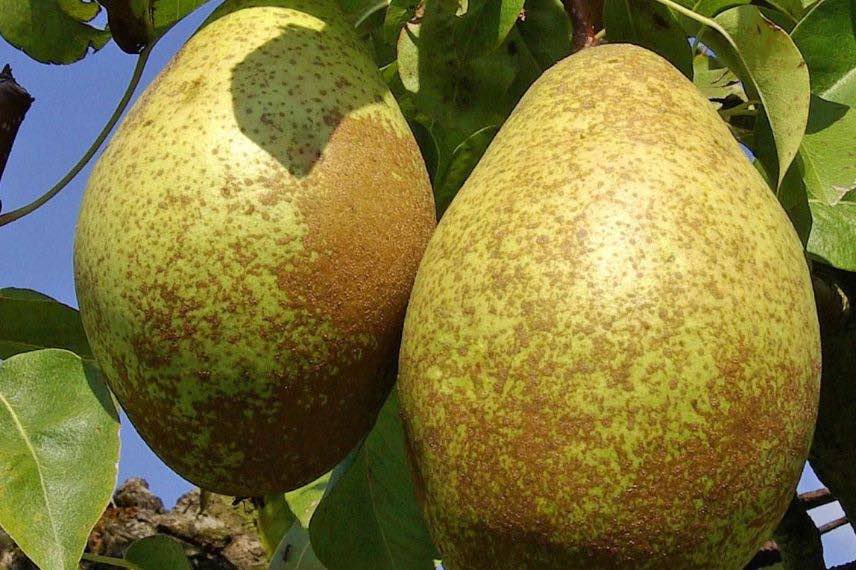
‘Figue d’Alençon’ is an ancient pear tree variety originating from Normandy, which remains popular. If it has inherited the name of another fruit, it is in reference to the shape of its pears that would resemble figs. They are indeed elongated, but rounded and knobbly at the tip. These pears reward us with a thick, rugged skin, initially light green, then yellow, speckled tawny at maturity. Under the sun, the skin also takes on a red tinge. On the palate, the fruit offers melt-in-the-mouth flesh, slightly granular, blending sweetness with a touch of acidity. An acrid note may however disappoint some taste papillae when the fruits are still young.
‘Figue d’Alençon’ yields excellent keeping fruit. The harvest runs from November to December and sound fruits, free from blemishes or russeting, can be kept until February, or even March.
In terms of size, expect about 5 metres in height and 4 metres in spread.
Partially self-fertile, this pear tree will be more productive if planted near varieties with the same flowering period, around April. Hardy and sturdy, it can be grown in all our mainland France regions, even at altitude. Fertile, productive and quick to bear fruit, it’s a reliable choice for the orchard. Provide it with a sheltered and sunny location, in rich and well-drained soil. Avoid calcareous soil and ensure the soil never dries out completely.
Doyenné du Comice pear
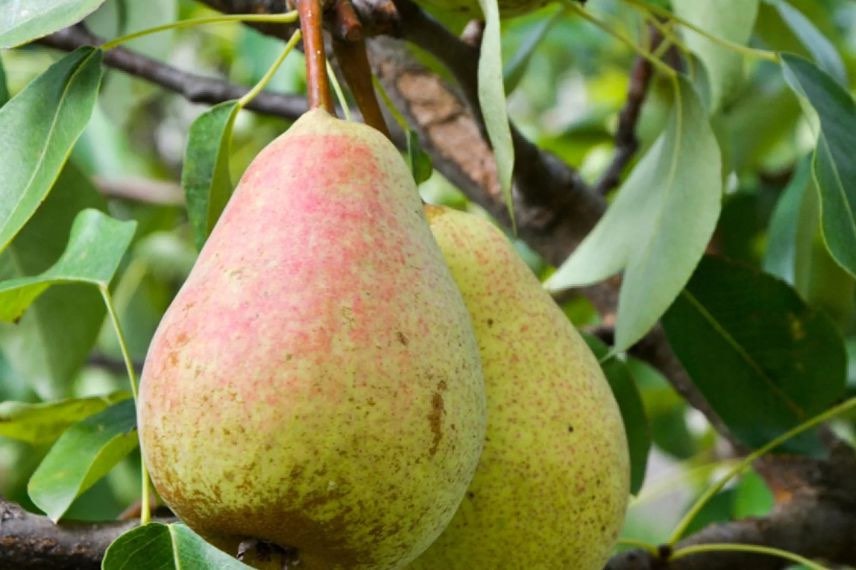
‘Doyenné du Comice’ is a vigorous variety, reaching 7 metres in height. It bears large fruits 8 cm in diameter, well rounded, with a pale yellow hue tinged with green. Its flesh is juicy and highly fragrant, perfect for eating raw as well as for enhancing savoury dishes or desserts.
Renowned for its excellent keeping qualities, it is harvested between September and October and can be stored for 3 to 4 months.
To ensure pollination, grow this pear tree near ‘Conference’ or ‘William’. Its only drawback? It is a fruit tree that can be prone to biennial bearing, meaning that its production may be lower in some years.
Here again, a sunny, sheltered position, in rich, moist, well-drained soil, will ensure its success in the garden.
The pear 'Bergamot of Pentecost'.
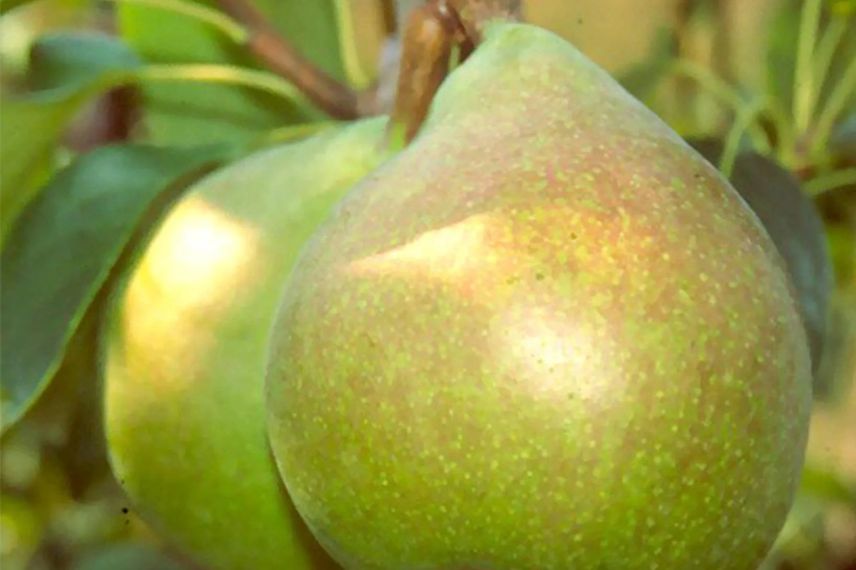
Large fruit that stores well until April: this is what the variety ‘Bergamote de Pentecôte’ offers.
The pear harvest takes place late, between November and December, which allows them to be kept for the rest of the cold season. You may also know this variety under the name ‘Doyenné d’hiver’.
With it, you can expect pears reaching about 10 cm in diameter, nicely plump. Their skin is green, with yellow tinges, and even red on sun-exposed areas.
In terms of flavour, this pear tree yields fruit with a melting flesh, not too juicy, sweet, with a hint of acidity and a musky aftertaste. Excellent eaten raw, it also lends itself to processing for savoury dishes, or sweet recipes such as compotes, fruit in syrup or pastries.
This historic Belgian-origin variety grows to around 5 metres in height with a 4 metre spread.
Grow it near other pear trees to boost pollination and avoid damp sites, which can promote pear scab.
Conference pear
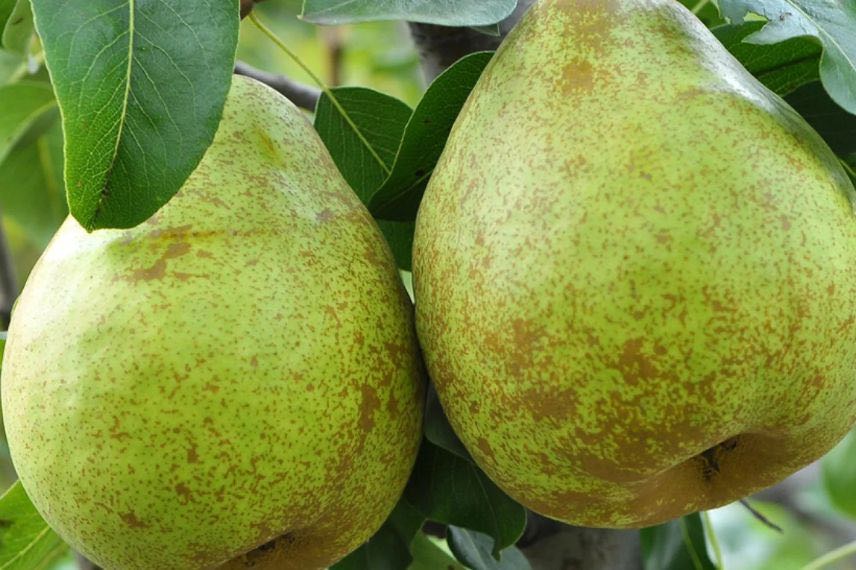
One of the most famous pear varieties: the ‘Conference’. Its pears, about 7 cm in diameter, have a teardrop shape. They have a pale green skin, randomly marbled with brown. The flesh is sweet, juicy, a little firm, with a slightly grainy texture at its centre. Bite into these fresh fruits or use them processed in many recipes (pastries, tarts, spirits, etc.).
Harvest takes place in September and can be stored until January. Ideally pick 15 days before full ripeness, to promote their keeping. Then place it in a cool place (around 10 °C), well-ventilated and fairly dry, away from direct light.
This ancient pear tree combines qualities: it is hardy, not frost-prone and little susceptible to scab, which makes it suitable for cultivation in all our regions, even the dampest ones and those prone to heavy frosts. Like other pear trees, it dislikes soils that are too dry or calcareous and needs a sunny position.
In terms of size, it reaches 6 metres in height with a 4–5 metre spread. Its silhouette is upright, slender.
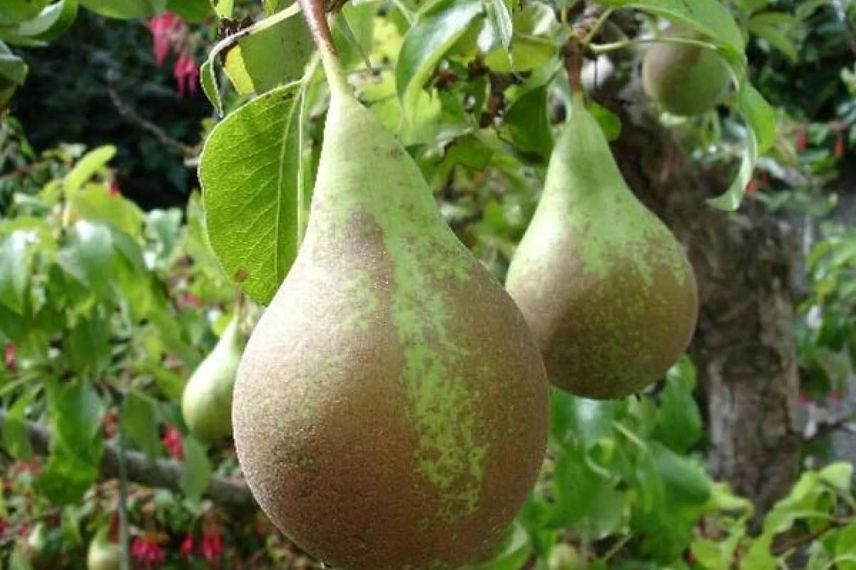
Not self-fertile, its pollination needs to be cross-pollinated with other pear trees that also come into bloom in April, such as other late varieties.
- Subscribe!
- Contents
Comments