





























7 evergreen butterfly bushes
Our selection of butterfly bushes that are beautiful all year round
Contents
We know Buddleia or butterfly bush well, this shrub with lush flowering. Hardy and low-maintenance, it has the advantage of growing easily in the sun, often in soils that are poor, unforgiving and polluted. Versatile, this flowering shrub offers a beautiful diversity of silhouettes, colours and foliage.
There are indeed several types of Buddleias, from shrubs to trees, including climbers. While most are deciduous, there are evergreen varieties that keep their foliage all year round, particularly in mild climates.
So discover our selection of 7 evergreen Buddleias, ornamental in all seasons.
And to learn all about cultivating and caring for Buddleias, consult our guide: Buddleia: the complete guide to growing the butterfly shrub.

Buddleja davidii ‘White Profusion’: a bush with refined flowering
Buddleia davidii are among the best known in the genus. They are reliable choices, commonly found in gardens. Recall that, while the type species is invasive, it is now no longer for sale, and most of the cultivars offered are sterile. If you would like more information on this subject, read our article: Invasive, dangerous for butterflies… Do we really need to fear Buddleia?
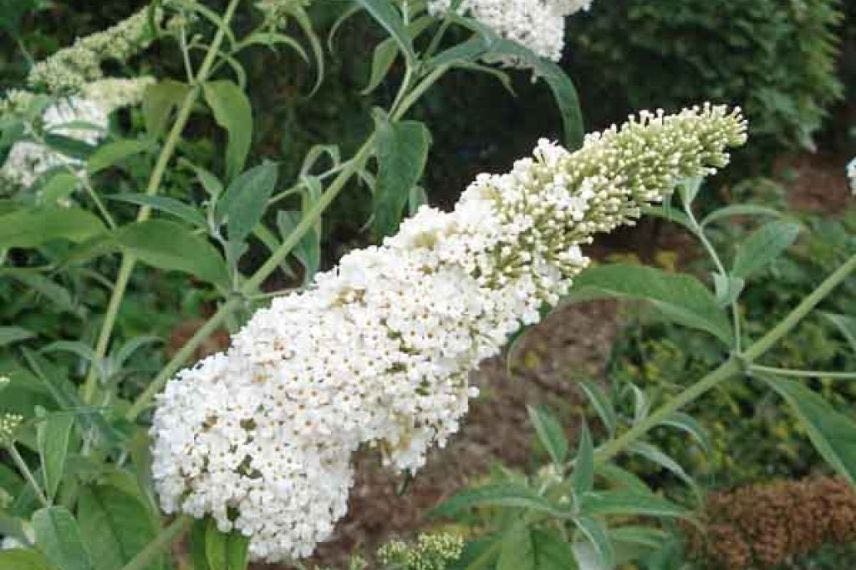
‘White Profusion’ stands out, as its name suggests, for its generous pure-white flowering. It brightens the garden all summer, thanks to its panicles measuring 30 to 40 cm in length. They are white, with a touch of yellow at the centre of each flower. This flowering releases notes of honey, which irresistibly attract butterflies and other pollinating insects. It is one of the most popular white Buddleias.
The foliage comprises long leaves with a green-silvery colour, with grey down on the reverse. They are pointed and lanceolate in shape. In mild climates, that is, if frosts are not too severe and occur only occasionally, it will be evergreen. Thus it is a Buddleia described as semi-evergreen, since it only retains its foliage when winter conditions are not too harsh.
This Buddleia forms a handsome, rounded, bushy shrub with a somewhat spreading habit, thanks to its flexible and arching stems. It will reach 3 metres in height and 4 metres across in under 10 years.
‘White Profusion’ is easy to grow. It will thrive in even poor soil and tolerate occasional drought. It is also an ideal candidate for city gardens, as it tolerates pollution well. It will work wonders in a sunny, monochrome border, for example alongside roses and summer lilac, which will also bloom white.
Buddleja alternifolia ‘Unique’: a dwarf variety with semi-evergreen foliage
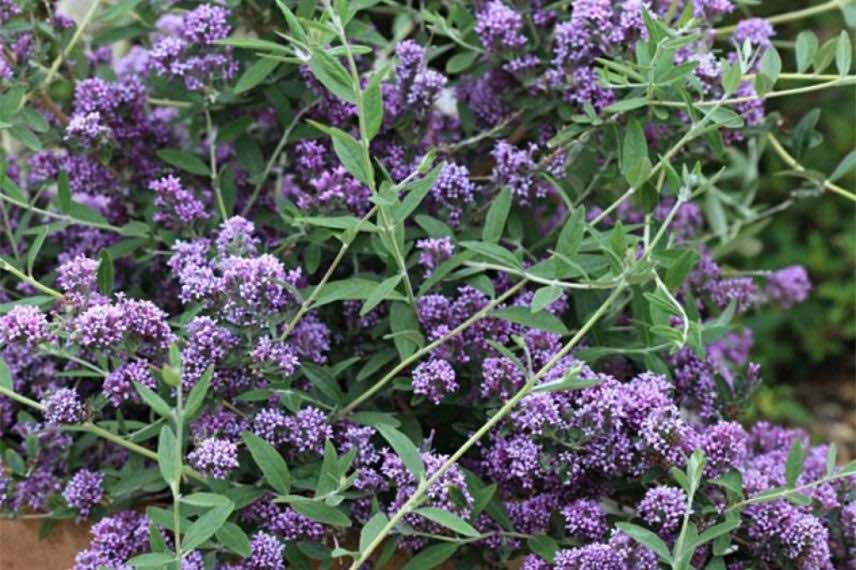
Le Buddleja alternifolia ‘Unique’ est un petit modèle, qui ne dépassera pas 1.20 m in all directions at maturity. Cette variété naine sera idéale pour égayer les petits jardins, mais aussi en pot sur la terrasse ou le balcon.
Particulièrement florifère, il nous gratifie d’une profusion de panicules fleuries de juin jusqu’à octobre. Elles sont constituées de fleurs couleur lilas, which attract pollinating insects. This flowering is slightly fragrant.
Its compact, weeping habit gives it considerable charm. Les rameaux portent de petites feuilles vert-gris, qui semblent presque argentées. Il conservera tout ou partie de ce feuillage si l’hiver est assez clément.
Underdemanding, this alternate-leaved Buddleja will tolerate all soil types in full sun. It will be perfect for creating a flowering pot display. Dress its base with hardy geraniums or asters.
Buddleja weyeriana x davidii ‘Flower Power’: a two-tone bush that retains its foliage
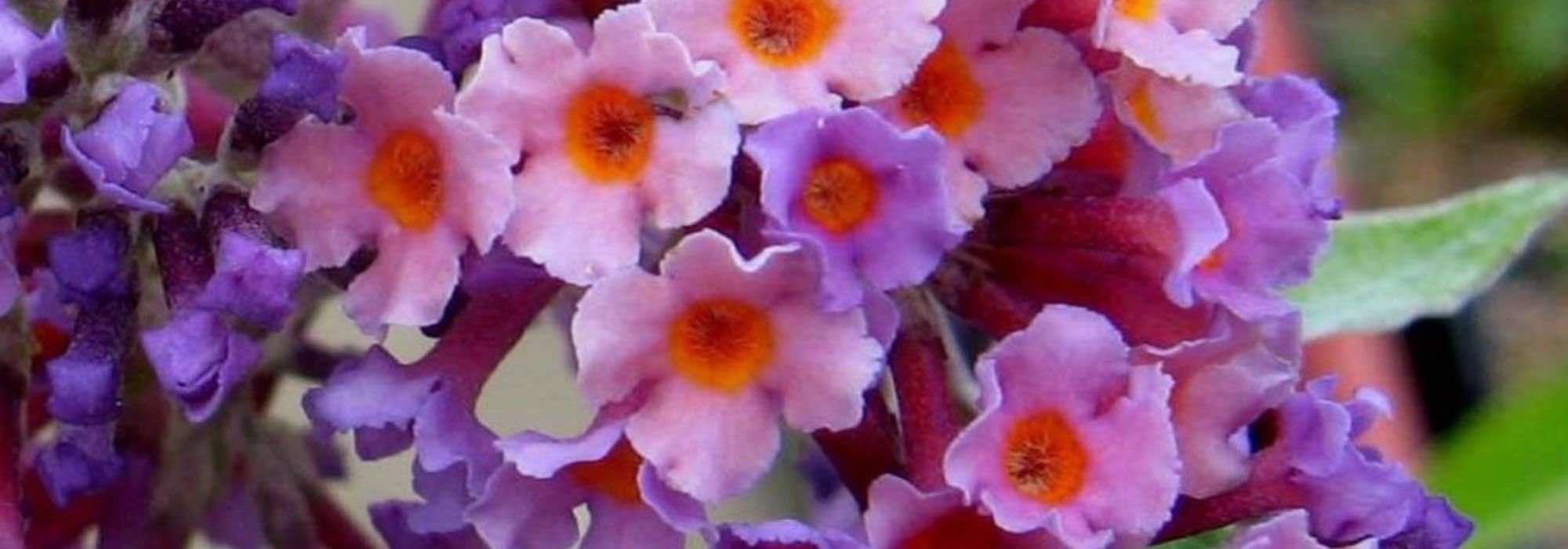
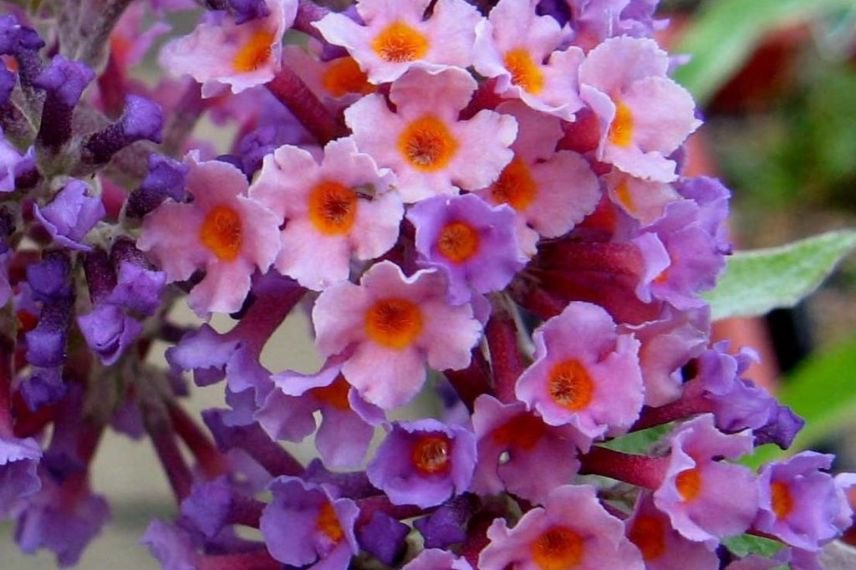
‘Flower Power’ stands out with an evolving bi-colour flowering. Purple flower spikes open to orange, before taking blue-violet tones. A variety that hardly goes unnoticed and provides a display all summer! Of course, it will also let you enjoy butterfly ballets, which will appreciate this shimmering and fragrant flowering.
The foliage is equally interesting and changeable. The fine, ovate leaves initially display a grey-green colour, before turning bright green over time. If winter isn’t too harsh, it will be an evergreen shrub that will keep its attractive foliage year-round.
This Buddleja has a modest habit, reaching 2 to 3 metres in height with a 1.5 metre spread. That makes it suitable for growing in most gardens. Its habit is open and bushy.
Plant this Buddleia in ordinary, well-drained soil, in a sunny position. It has the advantage of tolerating drought better than its Buddleia davidii relatives.
In a border, its colourful flowering will be enhanced by silvery foliage, such as that of artemisia or of the Helichrysum italicum.
Read also
8 Dwarf Butterfly Trees to Discover!Buddleja glomerata 'Silver Service': particularly ornamental foliage all year round.
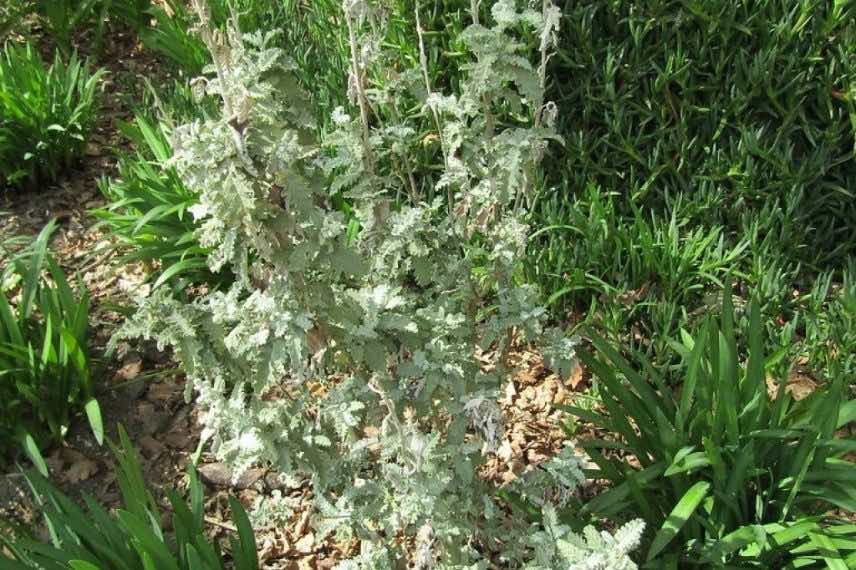
The foliage of this Buddleia glomerata ‘Silver Service’ is undoubtedly one of its ornamental assets. The shrub produces leaves that are astonishingly undulate and finely cut, coated with a silvery powder. Over time, they will take on subtle blue-tinged hues. It is an evergreen Buddleia, decorative even in winter.
But it is not only thanks to its foliage that this species stands out. The flowering is early, as it appears in late spring, between May and June depending on the climate. It consists of delicate, airy panicles, composed of pale yellow flowers, giving the shrub a hint of mimosa. This flowering is slightly scented, appreciated by our valued pollinators.
From its South African origins, this Buddleia has inherited a somewhat more limited hardiness. It will not tolerate frosts above -8°C, but will prove very drought-tolerant in summer.
At maturity, ‘Silver Service’ will reach only 1.5 metres in height by 1.2 metres in spread, which will allow it to be grown in a pot in regions with harsh winters, so that it can be protected from severe frosts.
Give it sun, ordinary but well-drained soil, even poor, stony or calcareous. It will do wonderfully in a rock garden, alongside other undemanding plants, such as lavender or rosemary. Their purple blooms will pair beautifully with the yellow flowers of our Buddleia.
Buddleja davidii x fallowiana 'Lochinch': leaves with evolving colour
‘Lochinch’ is a beautiful, colourful butterfly bush. It beautifully combines the ornamental appeal of its flowering with that of its foliage.
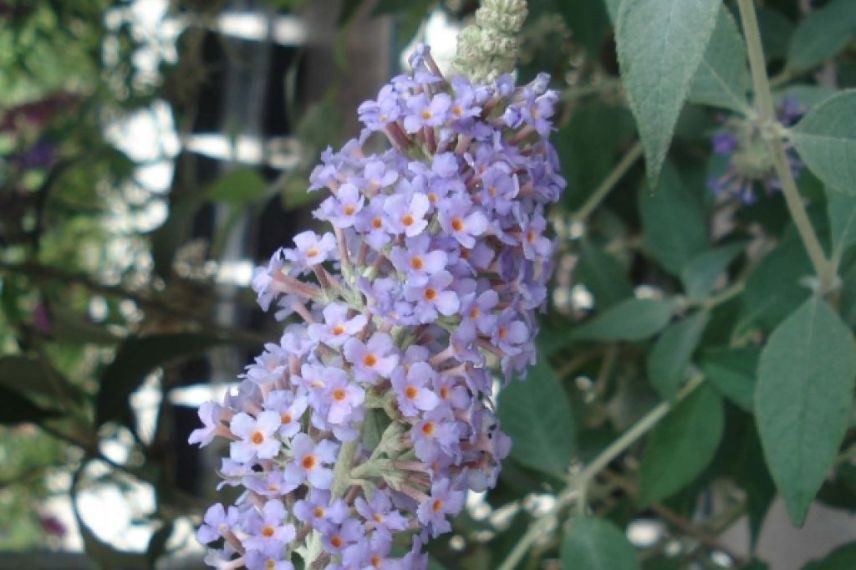
For extended months, from summer to autumn, it produces beautiful 20 cm-long flowering panicles, particularly dense. These panicles bear blue-lilac flowers, illuminated by an orange eye. Their honey fragrance, here again, delights nectar-foraging insects. Regular pruning will help stimulate the production of new flowers.
The oval, pointed foliage initially shows silvery tones, before taking on a green almond colour. Semi-evergreen, this foliage remains on the plant if winters are not too harsh or prolonged.
For its qualities, this shrub has also been honoured with a Royal Horticultural Society Award of Garden Merit, one of the most prestigious awards for a plant.
Quite vigorous, it will reach 2 to 3 metres in all directions after only about five years on average.
This Buddleia will thrive in sun or partial shade, in fairly cool soil. It does not tolerate prolonged summer drought well, so it will not be a good candidate for sun-baked gardens. For the rest, it proves relatively undemanding and robust, even tolerating calcareous soils.
In a scented border, it will be accompanied by mock-orange or Mexican orange blossoms.
Buddleja colvilei: lush, evergreen foliage.
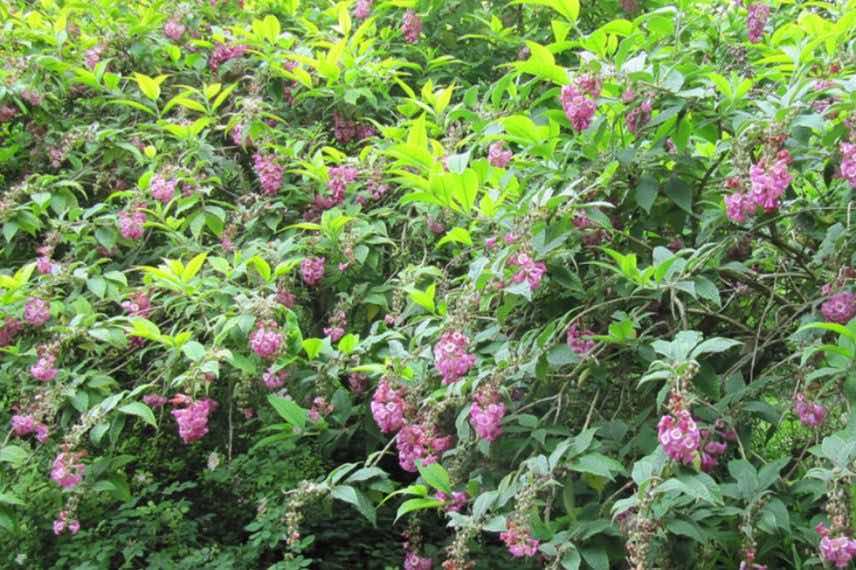
This wild shrub is quite rare in cultivation. The Buddleja colvilei butterfly bush graces us with the largest flowers in the genus, displaying a beautiful pink with a white centre. They are bell-shaped, which really sets them apart from other Buddlejas. They are arranged in terminal spikes about 20 cm long, appearing in summer and lasting for around three weeks.
The thick, dark foliage persists in mild climates. These leaves are borne on flexible shoots with brown-purple tints.
A true cascade of growth, this Buddleja, reaching 4 metres across in all directions, will add volume and lushness to the garden.
Its hardiness is somewhat lower than that of other Buddlejas (around -10°C). A bit more demanding, it will appreciate rather cool soils (that never fully dry out), fairly rich in organic matter, but well-drained. Plant it in a sunny position.
Its wild style will look wonderful in a free-growing hedge, alongside Cotinus coggygria or a Tamarix.
Buddleja stachyoides x tubiflora 'Orange Sceptre': great aesthetic qualities
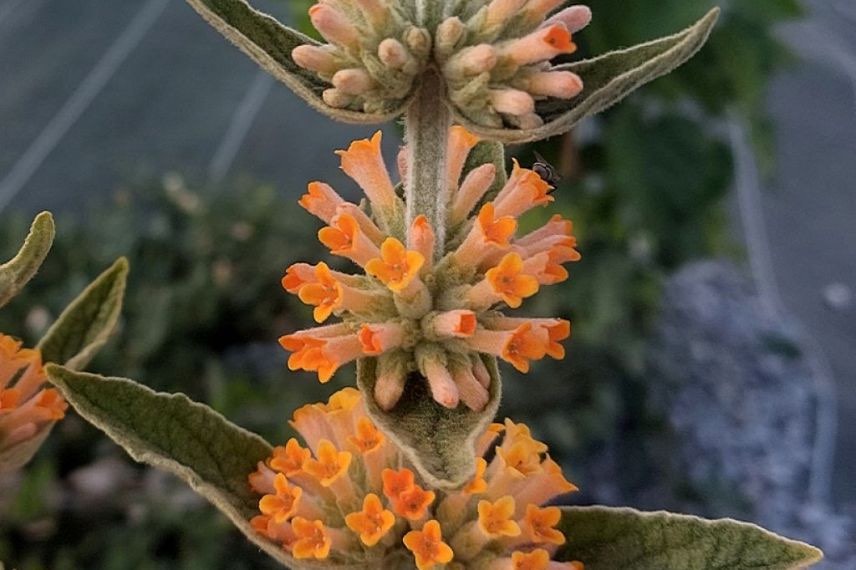
‘Orange Sceptre’ is a Buddleia that is still relatively rare, but we like it for its many decorative qualities. First, its green foliage, covered with a silvery down, persists if winter does not bring too many frosts. In mild climates, it even has the ability to flower for long months, right through late autumn.
Its inflorescences consist of clusters of small orange flowers, a colour not common among Buddleias.
Fairly modest, it will reach just over 2 metres in height with a 1.2-metre spread at maturity.
Like most of its kin, it will enjoy sun and well-drained soil—not too dry.
Its flowering will be perfect to add an exotic touch to the garden, for example alongside anEucalyptus.
- Subscribe!
- Contents
![[buddleia-flower-power]](https://en.promessedefleurs.eu/blogwp/wp-content/uploads/2024/01/7-buddleias-a-feuillage-persistant.jpg "7 evergreen buddleias")
Comments