
























FLASH SALES: discover new special offers every week!
7 evergreen heathers to plant as groundcover

7 evergreen heathers to plant as groundcover

Bringing Colour to the Winter Garden

Contents

Modified the 21 December 2025  by Leïla 6 min.

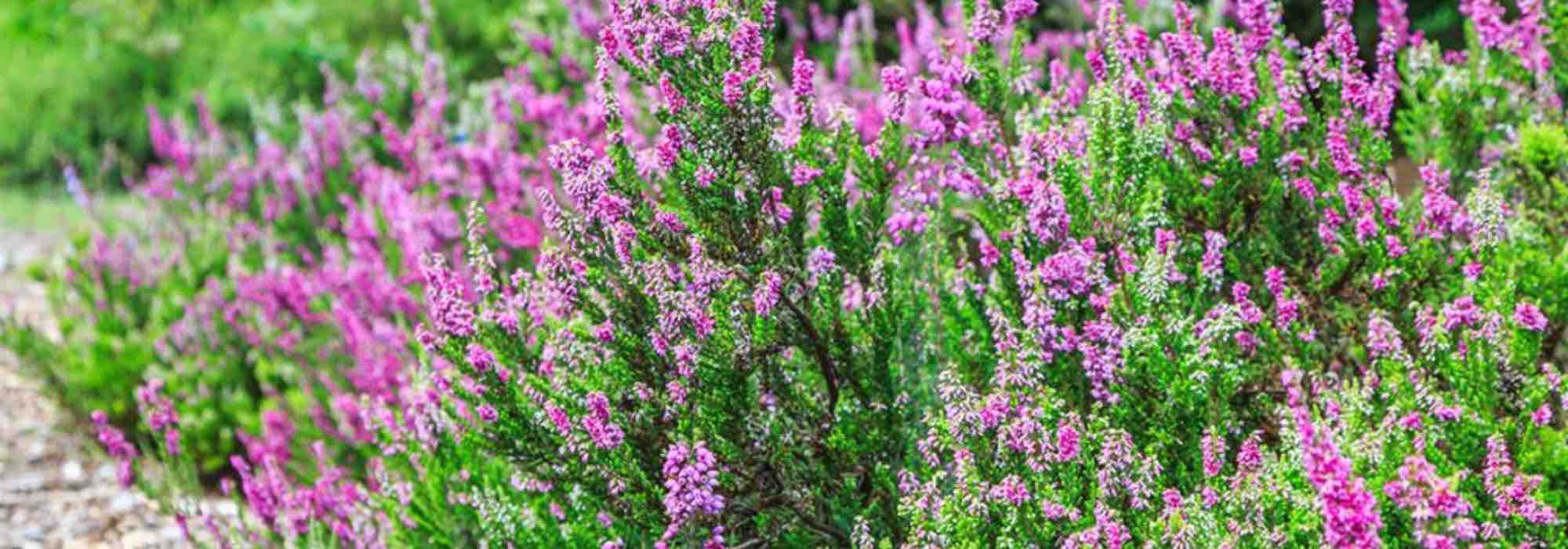
Winter often transforms gardens into monochrome canvases, but several plants are excellent allies for introducing lasting colour. Among them are the evergreen heathers. These robust and low-maintenance plants create a vibrant carpet of greenery, even during the coldest months. In this article, we present a selection of 7 winter heathers, each with its unique characteristics, to enhance your garden with their winter flowering and decorative foliage. Whether you are looking to cover a shaded area beneath trees or create a striking contrast in your borders, these groundcover heathers offer a palette of colours and textures that will meet your needs.

→ Read our complete guide on heathers.

Difficulty

Erica x darleyensis 'Winter Belles Lucie'

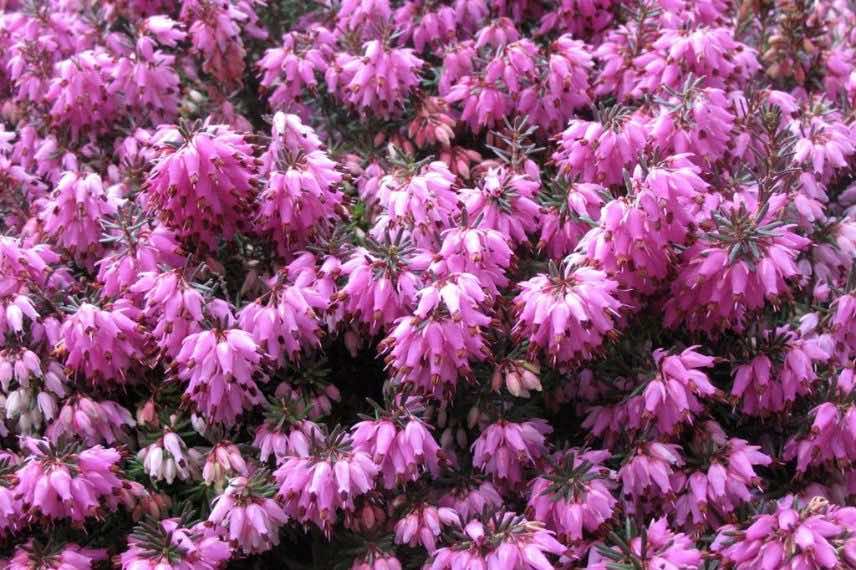
Erica x darleyensis ‘Winter Belles Lucie’ is an improved version of the famous variety ‘Kramer’s Rote’. It stands out for its larger size and rounded habit. Its late winter flowering produces pink bell-shaped flowers, twice the size of its parent, almost completely covering its bronze-hued evergreen foliage. Resulting from the cross-breeding of Erica carnea and Erica erigena, ‘Winter Belles Lucie’ was awarded “The Heather Society’s Premier Award” in England in 2011 for its performance and longevity in the garden.

This evergreen bush, with slow growth, reaches 55 cm in height and 60 cm in width at ripeness. It flowers from December to April, with urn-shaped pink to purple flowers, surrounded by dark green linear leaves that take on bronze hues in winter. It beautifies gardens for 6 to 7 months, even in slightly calcareous or dry soils.

Perfect for winter borders, it pairs well with other heathers with different coloured foliage or flowers to create colour patchworks and achieve up to 7 months of blooms. You can also combine it with Callunas or Erica arborea to extend flowering throughout the year. An excellent groundcover, it also pairs perfectly with dwarf conifers.
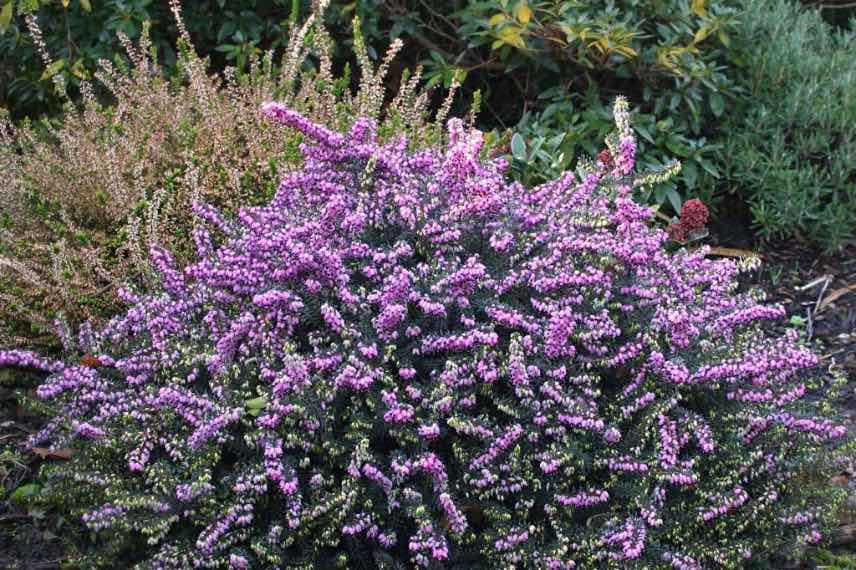
Erica darleyensis

Erica canaliculata

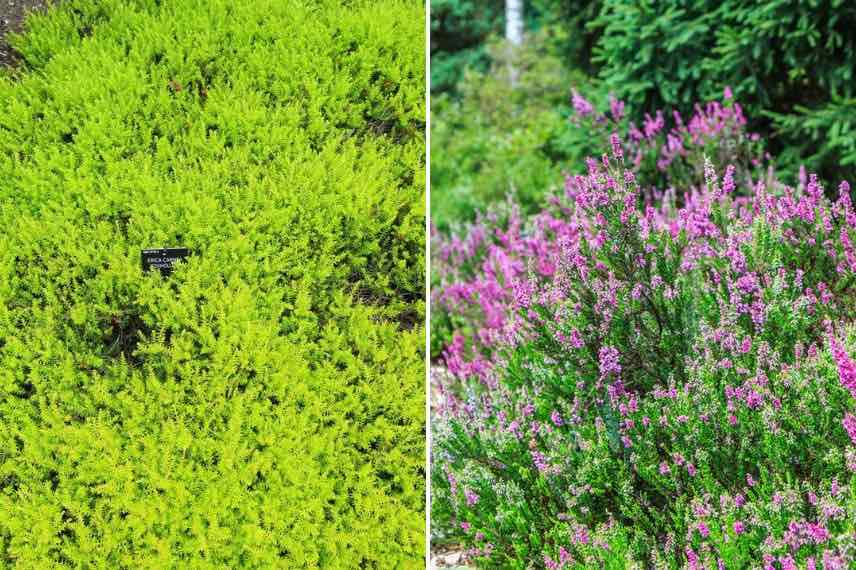
Erica canaliculata, commonly known as Christmas Heather, is distinguished by its winter flowering in fragrant pink clusters, brightening gardens in winter. It has been awarded an Award of Garden Merit by the Royal Horticultural Society. Native to South Africa, it prefers mild, humid climates, making it ideal for coastal gardens.

The Erica canaliculata is suited to acidic, well-drained, poor, sandy soils, but not in overly dry regions. With hardiness limited to -7/-8°C, it is best reserved for mild climates. Its evergreen foliage, with channelled leaves, provides a bushy and flexible appearance. Large in size, it reaches 1.5 m in all directions at maturity and flowers from November to February. It offers a long lifespan for a heather, lasting at least 15 years. Its small pink urns, clustered together, create a vibrant pink cloud. The dark green foliage persists throughout the year.

Ideal for maritime gardens, the Erica canaliculata pairs well with plants such as Hebe, Pittosporum, or Viburnum. When planted en masse, in groups of 3 to 5, it creates a romantic winter display.
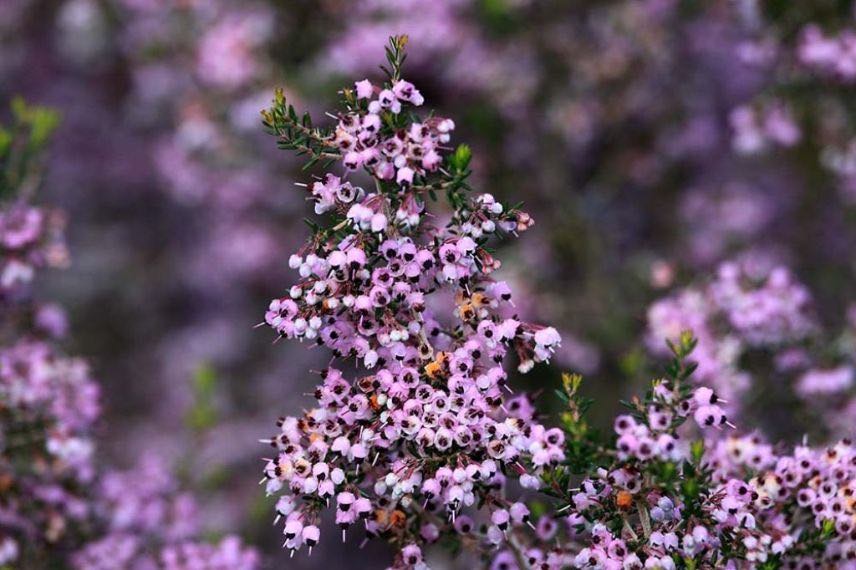
Christmas heather

Erica x darleyensis 'White Perfection'
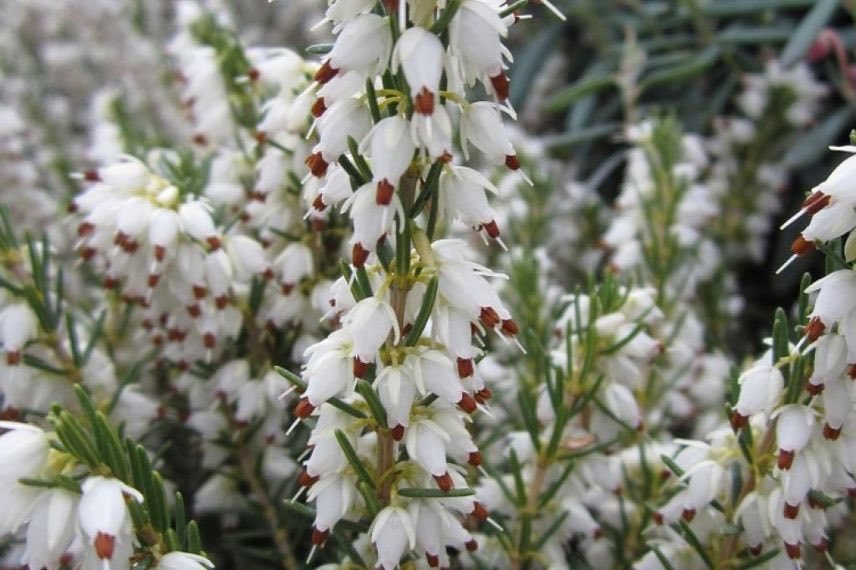
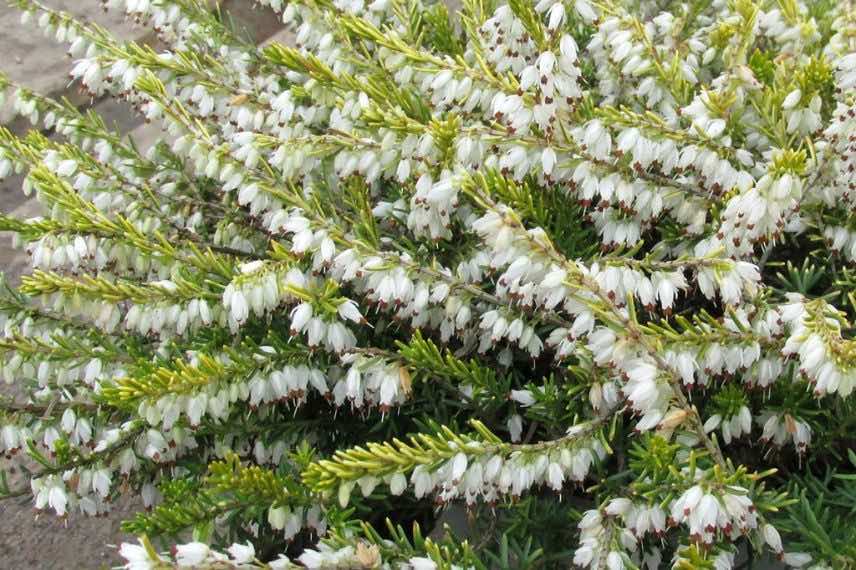
Erica x darleyensis ‘White Perfection’ offers vibrant green foliage and abundant white bell-shaped flowers from December to April. Vigorous and spreading, it is perfect as groundcover in gardens. Hardy, it adapts to all well-drained, sunny, and lime-free soils.

This evergreen, low-growing, spreading bush reaches 45 cm in height and 70 cm in width. Its lifespan varies between 10 and 15 years. Its pure white flowers, in clusters, bloom along the branches, surrounded by linear leaves of bright green. The young foliage is vibrant green and turns to a rich green at ripeness. It combines vigorous growth, colourful foliage, and prolonged flowering.

Pair it with low grasses such as Carex or blue Fescue for a play of textures, shapes, and foliage colours. Also combine it in a heather soil mass with rhododendrons, Pieris, or Camellias, or with Skimmia japonica.

Erica darleyensis

Erica carnea 'Rosalie'

The Erica carnea ‘Rosalie’, a Winter Heath, is distinguished by its upright habit, bright pink flowers, and green foliage that takes on bronze hues in winter. It blooms profusely from winter to spring and adapts well to calcareous soils. With its flattened cushion habit, it is ideal for rockeries or as groundcover in well-drained soil.

‘Rosalie’ descends from the Erica carnea native to the calcareous Alps. It forms a rounded and flattened undershrub, measuring 30-40 cm in height and 40 cm in width. From January to May, it displays urn-shaped pink flowers that are melliferous, attracting pollinators. Its evergreen foliage in winter, bright green, turns bronze in the cold.

‘Rosalie’ is suitable as groundcover under shrubs, in rockeries with montane plants. It can be planted alone or in a heather garden for a stunning shimmering effect. In borders, perennials such as Hellebores or Winter Cyclamens provide complementary winter flowering, in shades of pink or by choosing different colours.

Erica carnea

Erica carnea 'Foxhollow'

The Erica carnea ‘Foxhollow’ forms a compact and evergreen tuft with beautiful foliage that changes colour. Its young leaves transition from bronze to golden green, turning orange and red in winter. From January to May, it is adorned with pink to mauve-violet flowers. It prefers sunny exposures.

This variety reaches a height of 15 cm and a width of 30 to 45 cm. Its urn-shaped pink flowers, which are melliferous, attract bees in early spring. ‘Foxhollow’ is ideal as groundcover, in borders, or in rock gardens, and adapts well to urban, rural, or coastal environments. It enhances heather gardens with its colourful and varied cushions. For a vibrant effect, pair it with berry-producing bushes like Skimmia japonica or Gaultheria procumbens.

Erica carnea

Erica carnea 'Snow Queen'

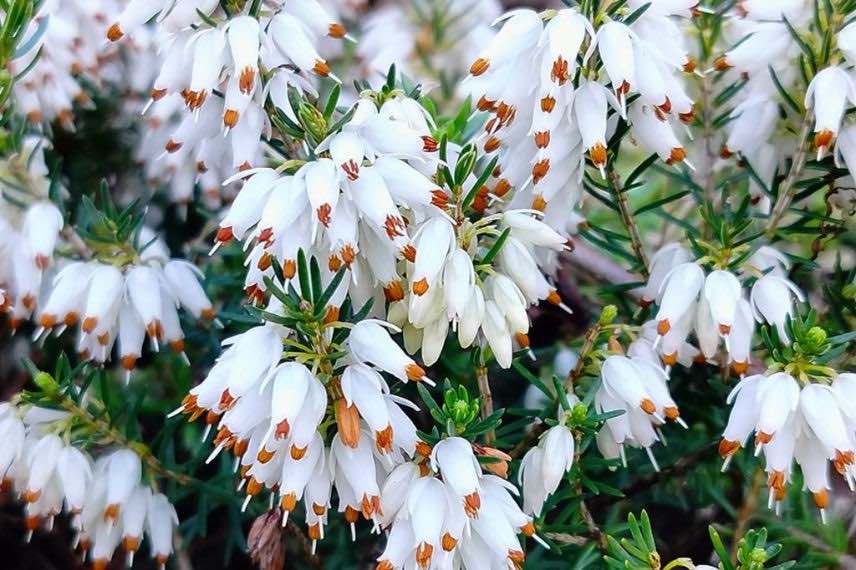
The Erica carnea ‘Snow Queen’ offers a winter and spring white flowering display. Low-growing, it forms a dense cushion 20 cm high and spreads up to 50 cm wide, effectively covering the soil. Hardy and robust, it withstands cold, pollution, and sea spray, adapting well to poor and slightly calcareous soils.

This heather forms a small evergreen and spreading bush, with foliage that changes from soft green to bronze. From November to April, it blooms in clusters of white bells that brighten the garden. Perfect as groundcover, in borders, on slopes, or in rockeries, ‘Snow Queen’ thrives in full sun and partial shade.

Resistant down to -25°C, it adapts to various soils, preferring cool, well-drained conditions. Groundcover plants such as Pachysandra or the small periwinkle or Vinca minor complement the heathers.

Erica carnea


Erica x darleyensis ‘Golden Perfect’

Winter heather ‘Golden Perfect’ stands out with its golden yellow evergreen foliage, perfect for brightening a rockery or border all year round. From winter to spring, it showcases clusters of white melliferous flowers, adding even more light.

Erica x darleyensis is a hybrid of Erica carnea, a ground-covering and floriferous species, and Erica erigena, which is taller and more cold-resistant. ‘Golden Perfect’ has a dense ground-hugging habit, reaching about 40 cm in height and 70 cm in width. Its fine leaves, golden yellow in season, turn yellow-green in winter. From November to March, it is adorned with urn-shaped white flowers.

Ideal for rockeries and borders, ‘Golden Perfect’ pairs well with spring bulbs, such as Crocuses, Daffodils, or Tulips, which bring an extra touch of cheer at the start of spring and also enjoy well-drained soils and sunny exposures.

Erica darleyensis

For further reading

  • Discover our article on how to pair winter heathers
  • There are enough species of heathers to bloom in a dedicated space from January to December without interruption. This is where the heather garden truly comes into its own.
  • Discover all the new heather varieties for autumn 2023.

Comments

Winter Belles Lucie