





























7 Exotic summer-flowering shrubs
Beautiful, characterful shrubs to grow in the garden or in pots
Contents
Some plants have the ability to transport us without even leaving home.
These lush, colourful plants transport us to paradisiacal lands, which smell of holidays.
They’re not restricted to just mild-climate regions: some will be hardy, while others can easily be grown in pots to be sheltered during the cold season.
Discover our selection of seven shrubs to easily bring an exotic touch to your home.

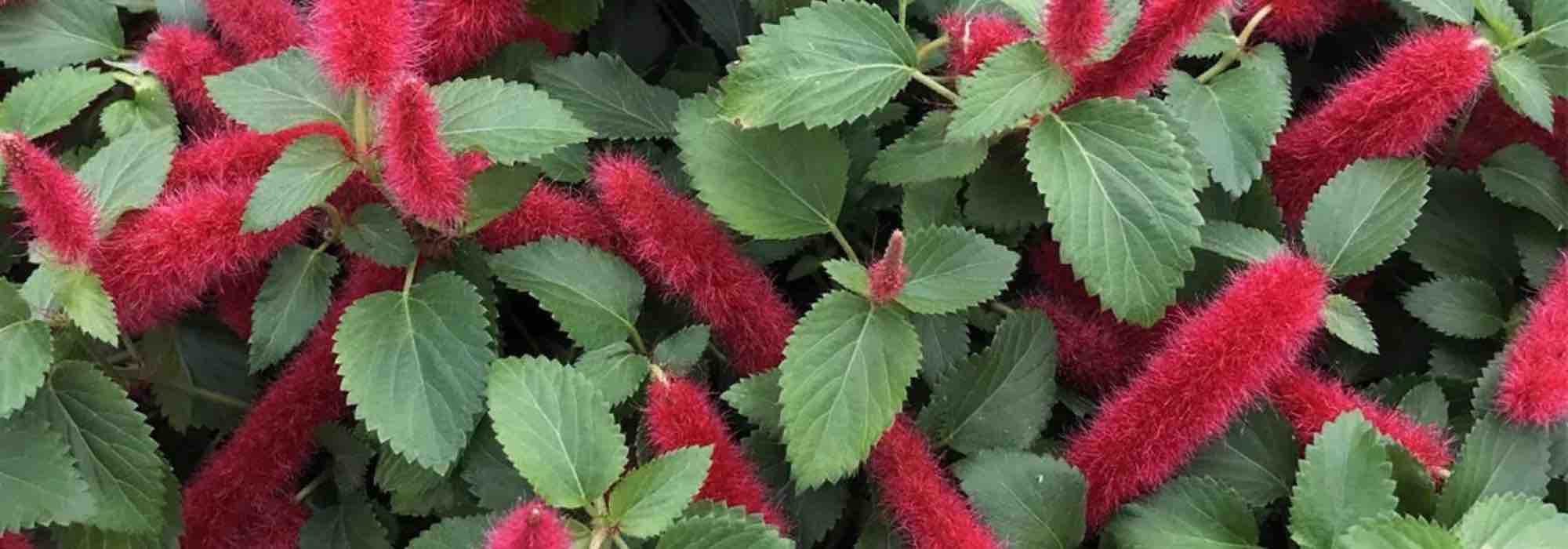
Acalypha pendula 'Foxie'
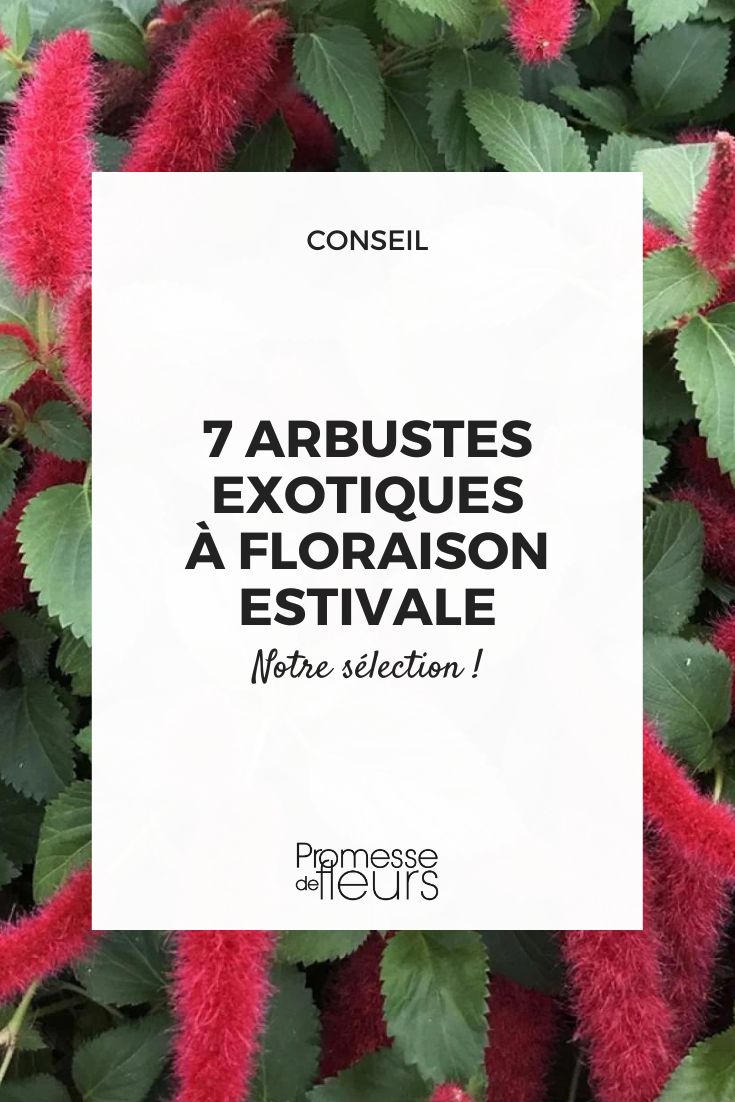
This plant rewards us with an astonishing flowering, which has certainly inspired its various names ‘Cat’s tail’ or ‘Caterpillar plant’.
This small exotic-looking shrub produces cylindrical aments with a downy appearance, very dense and plump, about 6 cm long.
They boast a vivid carmine red, full of vitality.
This flowering is accompanied by pretty evergreen foliage, textured and dentate, triangular in shape.
Its colour is a bright, vivid green.
From its tropical origins (the Caribbean and Florida), this bush is quite frost-tender.
Not tolerating freezing temperatures and preferring environments above 10°C, it is best grown indoors, in a greenhouse or conservatory.
It can also be grown as an annual, owing to its rapid growth.
Its compact habit reaches 35 cm in height and 50 cm in spread.
The Acalypha pendula will thus fit perfectly in a pot, to be moved outdoors during fine weather and stored indoors in winter. Its trailing habit will, for example, be wonderful in a window box or hanging basket.
For its cultivation, provide it with a sunny or partial shade position, in rich, light soil that never dries out completely (remaining moist).
A small plant with a decidedly original and vividly coloured appearance!
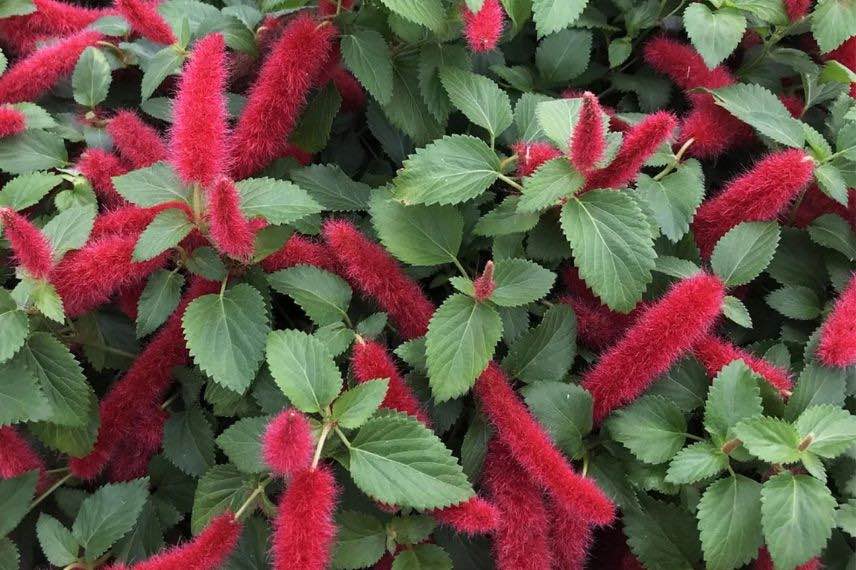
Hibiscus syriacus ‘Starburst Chiffon’
Hibiscus ‘Starburst Chiffon’, like all Hibiscus, it can transport you with its exotic-looking flowering. In this variety from the Chiffon series, the generous summer flowering comprises large flowers nearly 10 cm in diameter. They are semi-double, with a crumpled petaloid centre, surrounded by large corollas. In terms of colour, the flowers display a pale pink delicately purplish, enhanced by carmine pink veins. Although each flower is short-lived, they continue to bloom on the shrub until the end of summer.
The deciduous foliage bears a dark, glossy green, providing a backdrop to the flowering.
At maturity, expect 2 metres in height and 1.5 metres in spread for this slow-growing shrub, with a well-bushy, balanced habit.
This Hibiscus is hardy to -20°C, allowing it to be grown in many regions. Provide it with a sunny position, in ordinary soil as long as it is well-drained and a little cool to promote flowering. In a flowering hedge, it will look wonderful alongside Buddleja davidii, and Abelia grandiflora.
For more on Hibiscus cultivation, read our guide ‘Hibiscus, Althaea: plant, grow and maintain’.
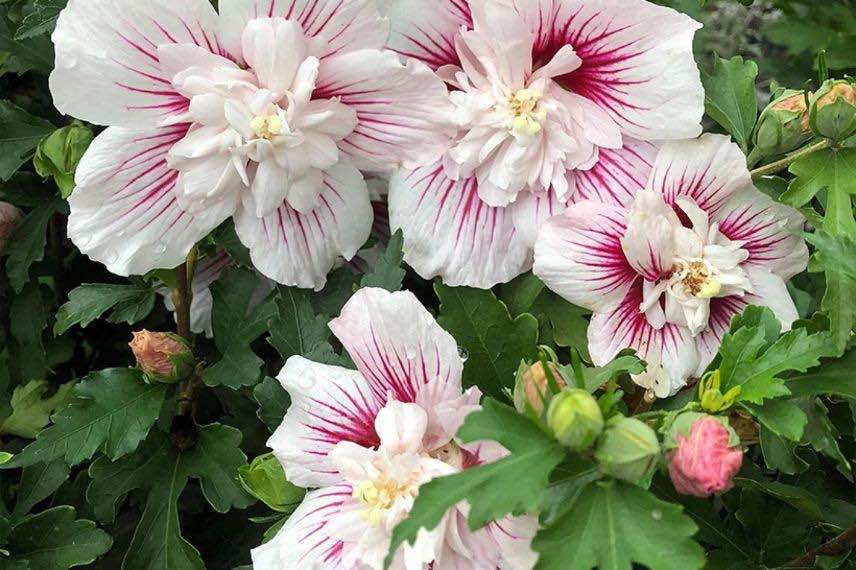
Fuchsia x hybrida ‘Bernadette’
‘Bernadette’ is a beautiful hybrid shrub fuchsia variety with double, bi-colour flowers and an exotic look. It produces throughout the summer corollas with undulating petals in vibrant colours, a handsome violet crowned by a cherry-red calyx. The whole is completed by long coloured stamens, emphasising the exotic feel.
The dark green lanceolate foliage is deciduous, unless the plant is grown indoors.
Fairly frost-tender, this fuchsia will not tolerate frosts below about -4 to -6°C on average, but can, of course, be grown happily in a pot. Its gracefully trailing habit will reach 1 metre in height with a 70 cm spread.
Grow it in a part shade position (sheltered from the hottest sunbeams), in well-drained soil rich in organic matter that stays cool. To enhance the exotic look, consider luxuriant decorative foliage from Hostas or Brunneras.
To learn more about growing Fuchsias, read our guide ‘Fuchsia: planting, pruning, cultivation and maintenance’.
Read also
5 exotic bushes with winter floweringHibiscus coccineus - Scarlet hibiscus or Texas Star
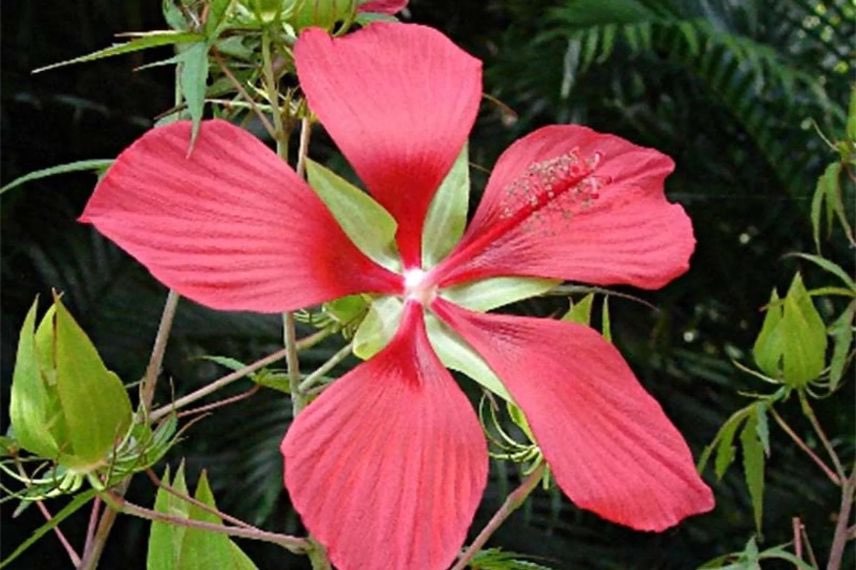
Another Hibiscus, with a very different flowering, but one that won’t go unnoticed. The Hibiscus coccineus already gives us a few clues with its other vernacular names (scarlet hibiscus and Texas Star): it is indeed a bush with fiery-coloured star-shaped flowers!
From July to September, it produces large, graphic flowers about 15 cm in diameter, revealing five spatulate petals well formed and clearly distinct. They surround a heart from which a red column emerges. Each flower is ephemeral, but renewed daily. It graces us with a brilliant red, which is impossible to miss.
The deciduous foliage is initially green, before turning yellow in autumn and dying back. It consists of large, broad leaves divided into narrow lobes, measuring 10 to 15 cm.
In terms of size, expect 1.5 to 2 metres in all directions for this bush forming a loose clump.
Originating from marshes in the southern United States, this Hibiscus has kept a preference for cool, moist soils, even waterlogged. Hardy to -12°C, it will settle in many gardens, bringing an exotic touch to the edges of a water feature. A Colocasia with luxuriant heart-shaped foliage will pair wonderfully beside it.
Rostrinucula dependens ‘Happy Cascade’ – Tree mint
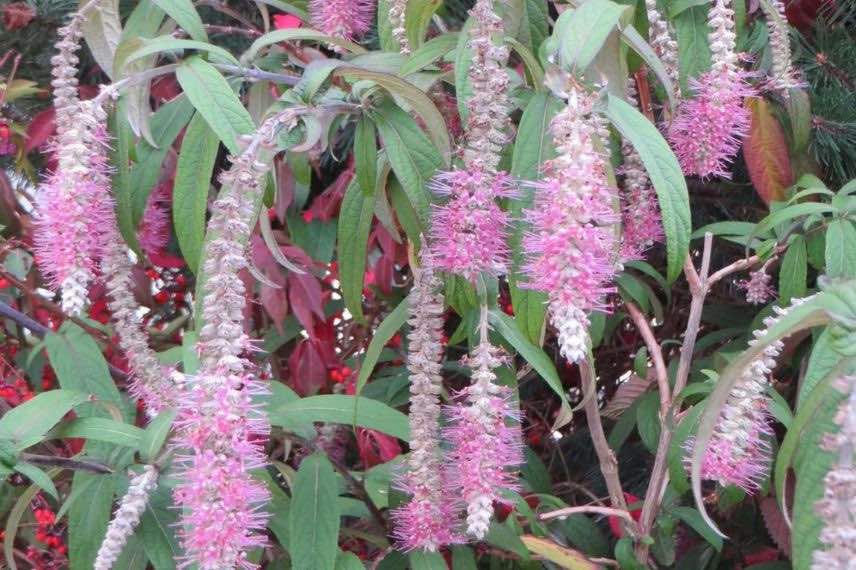
Rostrinucula dependens Rostrinucula dependens ‘Happy Cascade’ is a small, striking shrub. From August to October, it displays late, long trailing spikes up to 35 cm long, with a velvety texture. Each consists of a multitude of small pink-purple flowers revealing prominent stamens. This flowering may recall the brush-like blooms of Callistemon or Bottlebrush (notably the variety ‘Perth Pink’), another more widely grown shrub with an exotic-looking summer display.
The foliage is also ornamental. It consists of long elliptical green leaves with a bluish tint.
This Rostrinucula dependens lives up to its name, turning into a true cascade of foliage and flowers thanks to its bushy and arching habit. Dense and well-balanced, this small shrub, 1.5 metres across, will be easy to fit into the garden or in a pot.
This exotic-looking shrub would undoubtedly deserve to be better known. Easy to live with, it requires only soil rich in organic matter, but well-drained and cool, in sun or partial shade. Quite hardy, it will tolerate frosts down to -12°C and will be able to resprout from its stump quickly (the aerial parts die back from -5°C). Beside it, enjoy the colourful, exotic-looking foliage of Phormiums.
Clianthus puniceus ‘Kaka King’ – Lobster's Claw
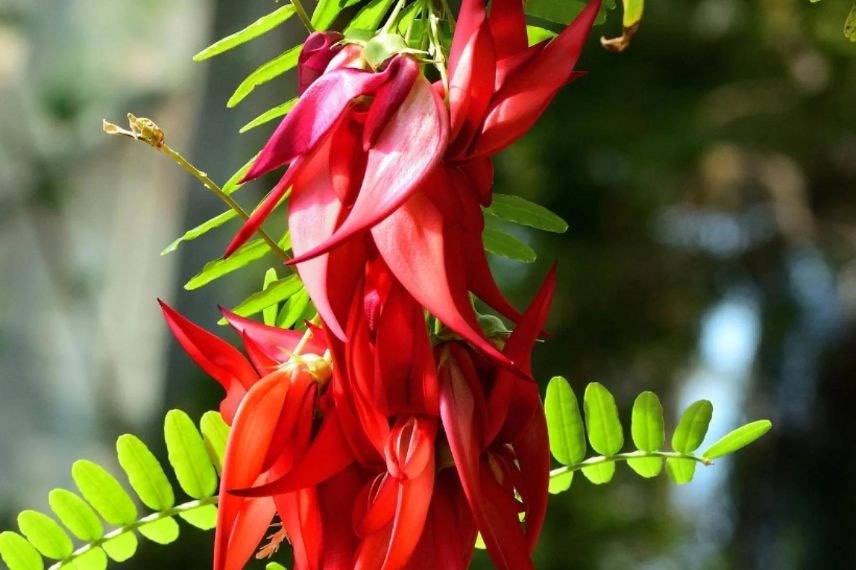
This amazing bush flowers from mid-spring to mid-summer, or even into September depending on how mild the climate is. Here again, the Clianthus puniceus ‘Kaka King’ has an evocative vernacular name. Its flowering indeed resembles lobster claws or a parrot’s beak, as the name ‘Kaka’ (referring to a New Zealand parrot) suggests. It consists of 15 cm-long panicles of pendant flowers in a bright coral red, recalling this distinctive horn-shaped form. This flowering gives way to decorative fruiting in the form of pods.
Its evergreen foliage also offers an ornamental asset: it remains decorative all year round. The finely divided leaves resemble those of plants in the Fabaceae family (notably sweet peas). They display a vivid green that contrasts wonderfully with the flowering.
Its unmistakably exotic appearance will not go unnoticed in the garden. A bit frost-tender, it will be restricted to milder regions for outdoor cultivation, where frosts do not exceed about -6 to -7°C. Its silhouette reaches a spread of 2 metres in all directions at maturity. It can therefore be grown in a pot in other regions to protect it from cold during winter. This shrub will instantly conjure a holiday atmosphere on a terrace or balcony. The Clianthus puniceus can form a creeping shrub or be trained to climb, with its woody climbing stems. To complete this flamboyant display, add Crocosmias or even Cannas.
Plant it in full sun, in fertile, well-drained soil that stays cool in summer. It tolerates calcareous soils.
To learn more about growing this exotic shrub, read our feature “Clianthus puniceus, Lobster Claw: Planting and Growing”.
Grevillea juniperina 'New Blood'
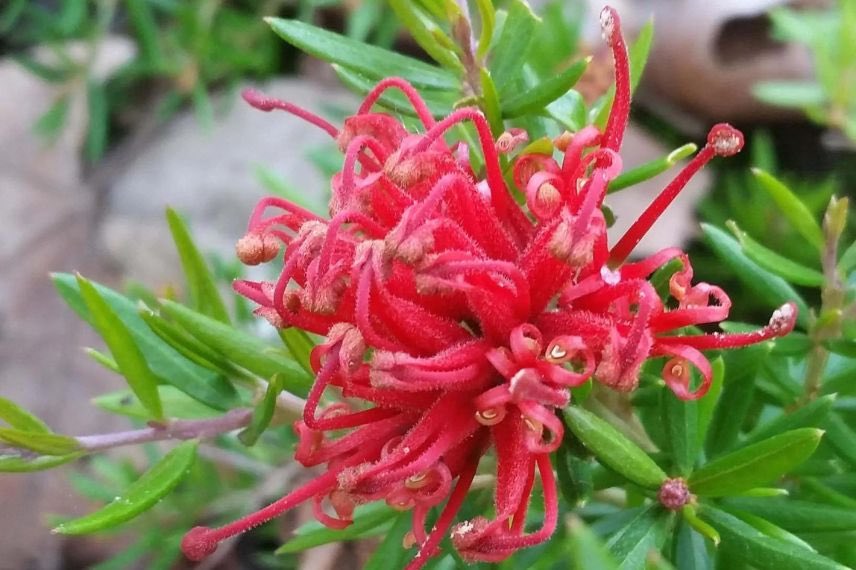
This Grevillea ‘New Blood’ differs from other varieties by its spreading habit, wider than tall, perfect as a groundcover. It will spread to over 1 metre across and reach only 35 cm tall. But, of course, its exotically attractive flowering is what charms us. It will flower throughout the summer in cooler regions (from autumn to spring in the warmer regions). This shrub then rewards us with 5 cm flowers of unusual shape and a tousled look. They have no petals, but petaloid styles rolled on themselves, accompanied by long curved stamens. This flowering reveals a bright pink colour leaning towards red.
The evergreen foliage consists of pretty needles in a bright green. Easy to grow, this grevillea is drought-tolerant once established and resistant to disease. It will tolerate frosts down to about -10°C and will enjoy a sunny position in well-drained soil, even if poor and sandy. It can also brighten up terraces and balconies when grown in a large tub. For more on Grevillea cultivation, read our feature ‘Grevillea: planting, pruning and care’.
Find out more
→ Also check out our article: Exotic shrubs with lush foliage: for a garden that transports you!
- Subscribe!
- Contents
Comments