


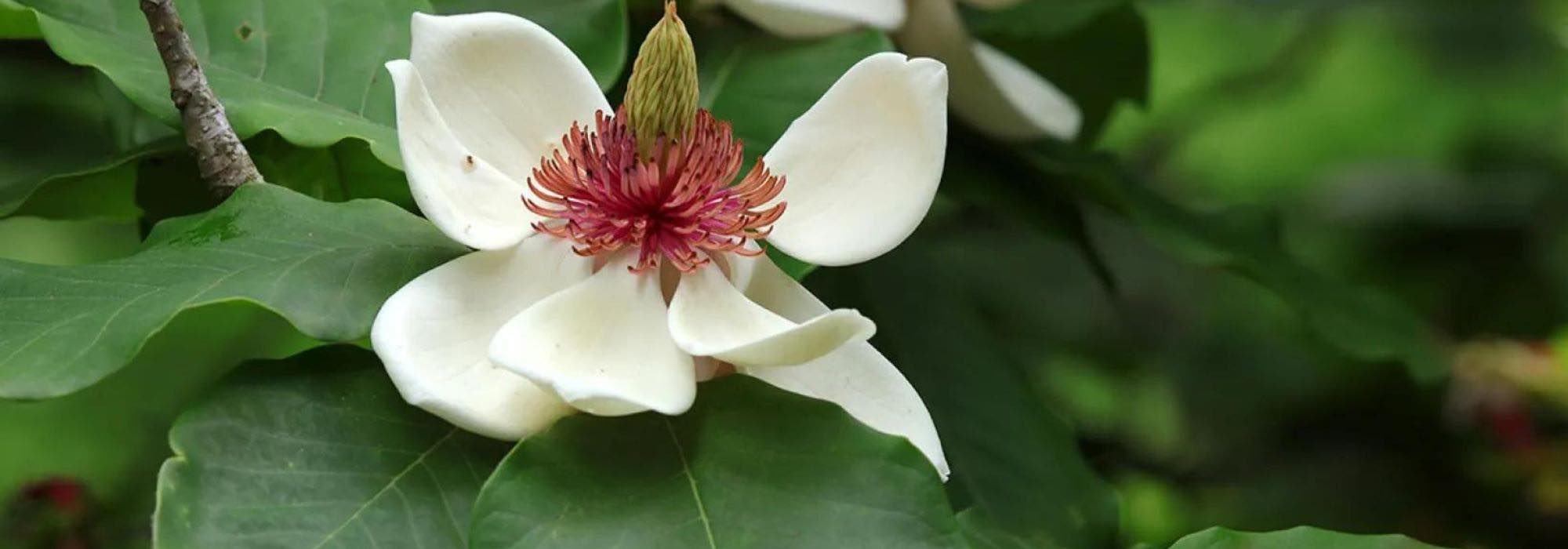
7 majestic magnolias for large gardens
Imposing varieties to adorn the grandest gardens
Contents
Whether spring- or summer-flowering, deciduous or evergreen, pink- or white-flowered Magnolias are among those plants that are always majestic. In terms of size, some modest and compact varieties are well suited to growing in pots and small gardens, while others are so imposing that they will require a large outdoor space.
These botanical giants, capable of reaching over 20 metres in height, will attract attention and become focal points of the garden. Discover here our selection of tall Magnolias, best suited to large gardens.
And to learn everything about Magnolias, read our guide Magnolias: planting, pruning and care

The Magnolia grandiflora
This is a safe bet when it comes to magnolias. Magnolia grandiflora, large-flowered Magnolia or tulip-tree laurel, is among the most impressive, standing 15 to 20 metres tall at maturity.
It is an evergreen tree, remaining decorative in all seasons. Its leathery, glossy leaves will add lushness and an exotic touch to the garden. It also provides a perfect backdrop to the summer flowering. During this period, our Magnolia unveils large, solitary tulip-shaped white flowers. They are also well scented, emitting pleasant lemony notes.
This species has given rise to many interesting varieties, reaching heights of over 10 metres, such as:
- ‘Double Nantais’, which produces double, fleshy flowers;
- ‘Purpan’, which benefits from flowering fairly quickly (where the typical species would require several years of patience);
- ‘Galissonière’, with its large white fragrant flowers;
- ‘D.d. blanchard’, whose leaves take on a pretty coppery reverse.
This Magnolia is best suited for large parks or expansive spaces, although its slow growth will see it behaving like a shrub in the early years of cultivation.
Hardy to around -15°C, the Magnolia grandiflora is rather adaptable. It will thrive in sun that is not scorching or in partial shade, in soil that stays cool, rich in organic matter, but light enough to prevent water from stagnating excessively.
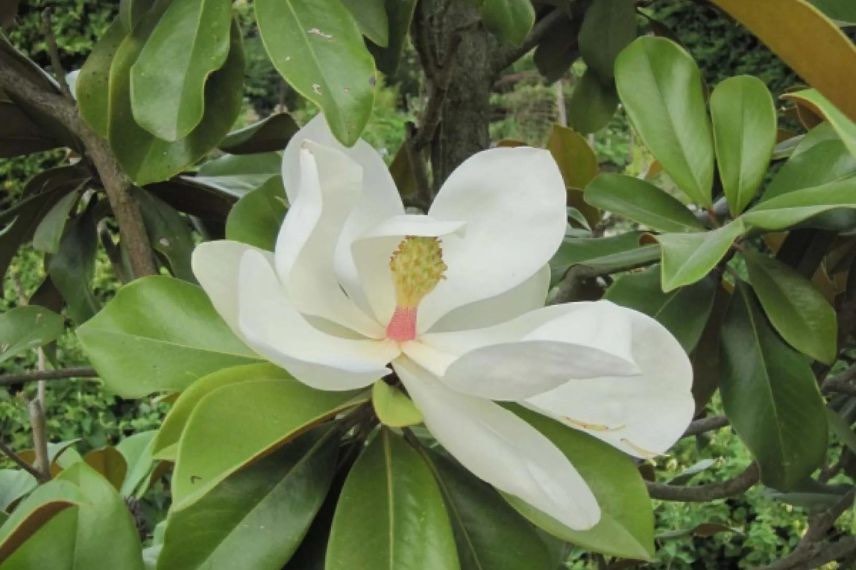
Magnolia grandiflora ‘Galissonière’
Kobe magnolia
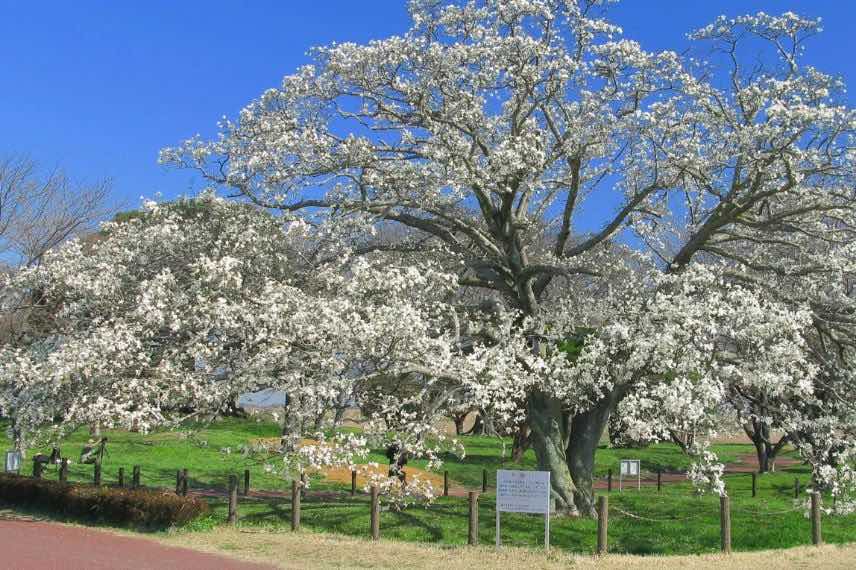
The Kobe magnolia (Magnolia kobus) is a handsome tree reaching nearly 10 metres in height and with a comparable spread. It originates from Japan. It flowers in spring, from March, unveiling a profusion of white corollas, each about 10 cm across. They may take on slightly pinkish hues and reveal a golden centre of stamens. These flowers emerge on bare shoots, heightening their decorative effect and the plant’s natural brightness. It is a deciduous species, whose foliage falls in autumn.
Its well-branched, pyramidal silhouette will look marvellous in large gardens, for example as a specimen plant on a lawn.
This magnolia is notable for being one of the few species able to tolerate a light lime content in the soil, without distress. It is vigorous and hardy (tolerant of temperatures well below -20°C) and will appreciate cool, moist soils rich in organic matter. Plant it in a sunny position, or slightly shadier in the hottest regions, always sheltered from prevailing winds. In summer, during hot weather and in the absence of rain, regular watering is necessary, especially during the first years of growth. Do not hesitate to apply mulching at its base to keep it cooler for longer. Note that you will have to wait around ten years before you can enjoy the spectacle of its flowering.
Chinese magnolia
Magnolia delavayi or Chinese magnolia is not one of the trees you’ll often encounter in gardens.
It is a relatively rare Magnolia in cultivation, ranking among the largest, at 12 metres tall with an 8‑metre spread.
It flowers throughout the summer, rewarding us with pretty, large flowers that can reach nearly 20 cm.
They are cup-shaped and have waxy petals.
They display a very delicate creamy-white, sometimes leaning toward pale yellow and pink at the end of flowering.
They are also well scented.
The flowering gives way to cone-shaped decorative fruits, which persist on the tree for a long time.
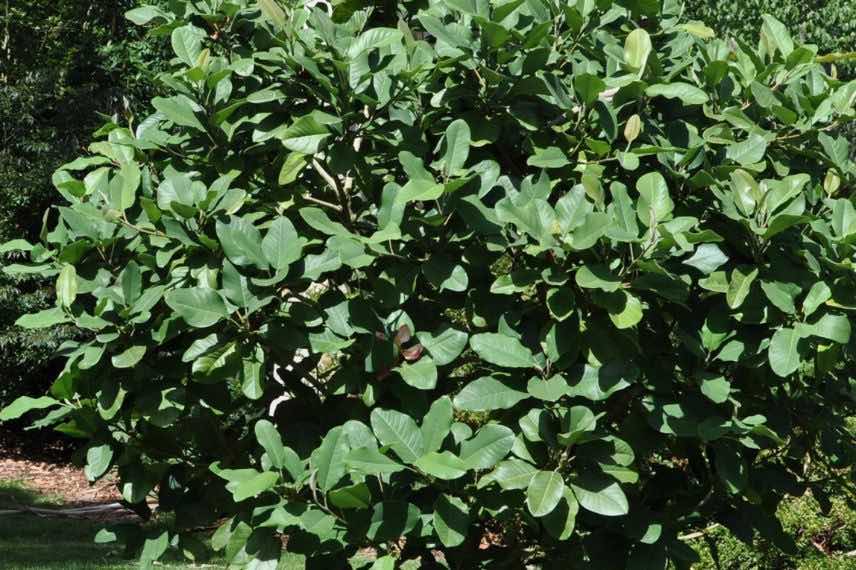
The foliage, glossy and leathery, is also one of this magnolia’s decorative assets. Evergreen, the grey-green leaves stay visible year-round, even in winter.
This magnolia prefers sheltered positions from strong winds, in sun or partial shade.
Like its congeners, it requires fairly fertile but light soil that should stay cool, or even damp.
Its hardiness is around -12°C.
Read also
Magnolias: 7 companion planting ideasMagnolia officinal
The Magnolia officinal (Magnolia officinalis) flowers in late spring. It is these large 20 cm-diameter flowers that provide the spectacle, delicate as they are: they have a waxy appearance, a cup-shaped form and a very soft cream colouring. In terms of fragrance, they emit powerful, velvety and fruity notes that will perfume the garden. Nevertheless, you’ll need to be patient to admire this spectacle: flowering occurs after 8 to 10 years of cultivation. It will then give way to cone-shaped fruits, red or pink, highly ornamental.
But it is also for its foliage that this variety is appreciated: with an exotic look, it consists of impressive leaves two-lobed, measuring up to 50 cm in length. They are initially satin green, before turning dark red in autumn.
‘Biloba’ is, for example, a variety of Magnolia officinalis reaching 10 metres in height and 6 metres in spread, which places it among trees. It has a spreading silhouette, providing welcome shade in summer in parks and large gardens.
This cold-hardy Magnolia will be ideal for acidic, fairly cool and well-drained soils, in full sun.
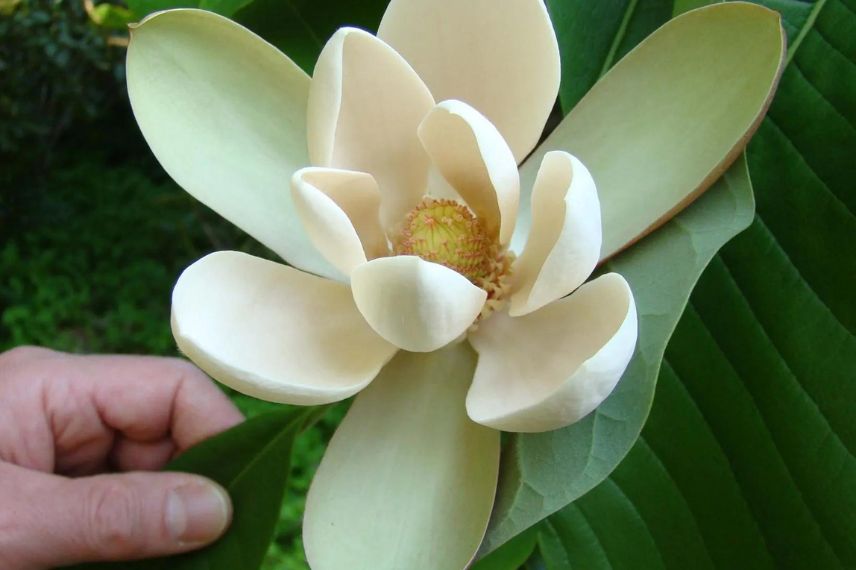
Magnolia obovata
Large-leaved Magnolia is also among those trees that combine a number of fine qualities. It first produces luxuriant foliage, composed of immense pale-green leaves with a blue-silver sheen on the undersides. From mid-spring to early summer, this foliage accompanies the flowering with large waxy flowers, in a cream shade with a slight pink tinge and enhanced by a crimson heart of stamens. They reach up to 20 cm in diameter. They are well scented, they emit a fragrance reminiscent of melon. These are then red-coloured cylindrical fruits, adding a decorative touch. It takes 10 to 15 years of cultivation to witness this spectacular flowering.
This little-known species would be well suited to our large gardens, where its imposing silhouette will flourish. At maturity, expect 10 metres in height with an 8-metre spread.
Hardy to temperatures below -20°C, it will thrive in deep, cool soil with no excess lime.
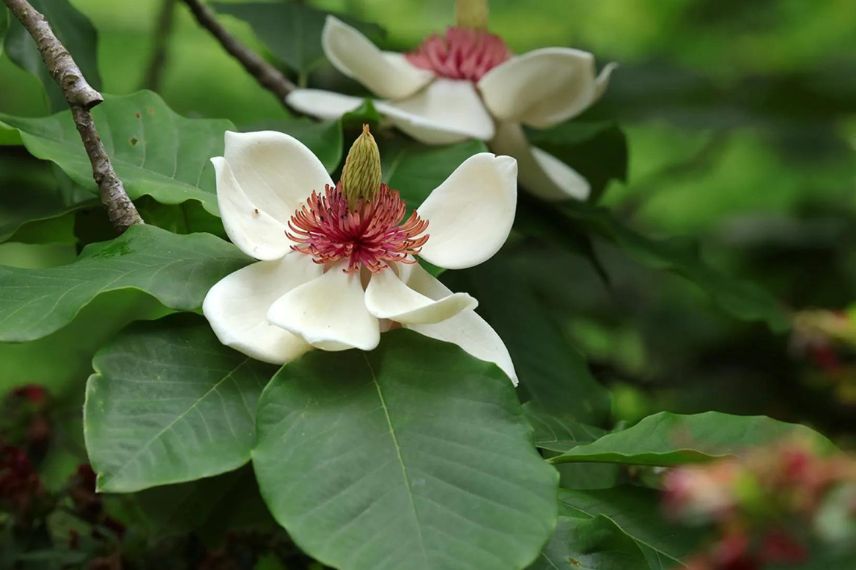
Magnolia sieboldii 'Colossus'
Magnolia sieboldii ‘Colossus’ is a tree that is wider than it is tall, with a somewhat spreading habit, reaching 10 m across with a height of 8 m.
It flowers from a young age, rewarding gardeners with large semi-double to double flowers, about 13 cm in diameter. They are bell-shaped, flaring and naturally oriented downward. Colour-wise, they display a pretty white, highlighted by a clearly visible centre of dark pink stamens. These flowers emit a delicate citrus fragrance. In autumn, decorative pink fruits appear.
Its deciduous foliage adds an exotic touch, with leaves measuring up to 30 cm in length. They are green, turning to yellow in autumn.
Plant ‘Colossus’ in cool, moist, deep soil rich in humus. It will only mind overly shaded positions and dry soils in summer. This species is well suited to cold, hardy to -20°C.
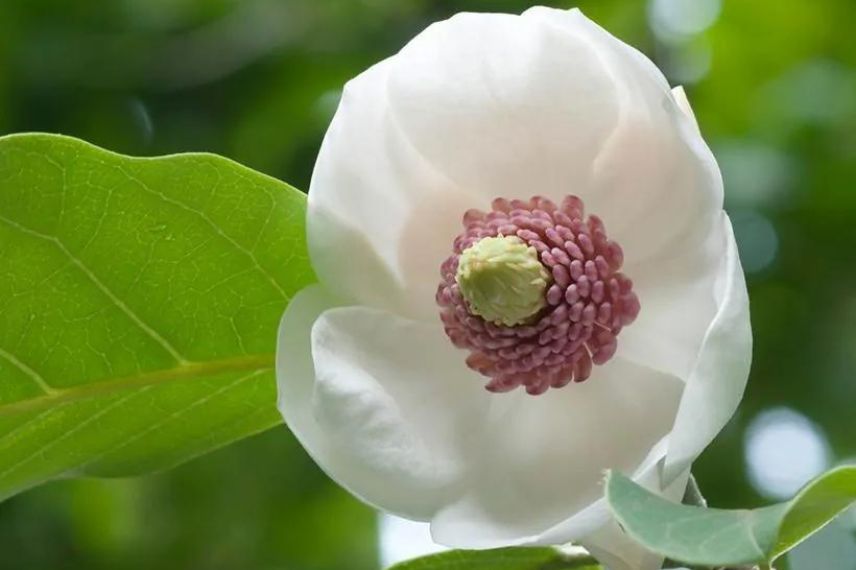
Magnolia brooklynensis 'Yellow Bird'
‘Yellow Bird’ stands out for the colour of its flowers:
In mid-spring, it indeed bears beautiful waxy, cup-shaped flowers that resemble tulips. They bear an astonishing yellow colour, a colour uncommon for magnolias, which normally bloom pink or white. They measure about 8 cm in diameter and, as they unfold, reveal a heart of clearly visible stamens. Flowers appear at the same time as the foliage. The flowering may sometimes be repeat flowering in summer, depending on growing conditions.
Leaves, a beautiful dark satin-green, have a paler, slightly hairy underside. Expect a height of about 8 metres and a spread of 4–5 metres for this Magnolia forming a small pyramidal tree. It will be perfect as a specimen in a medium-sized garden, but also in a large park where its sun-loving flowering will draw the eye.
This species benefits from being hardy (down to around -20°C) and not overly demanding. Plant it in full sun or partial shade, in a sheltered position, in a cool, neutral to acidic substrate.
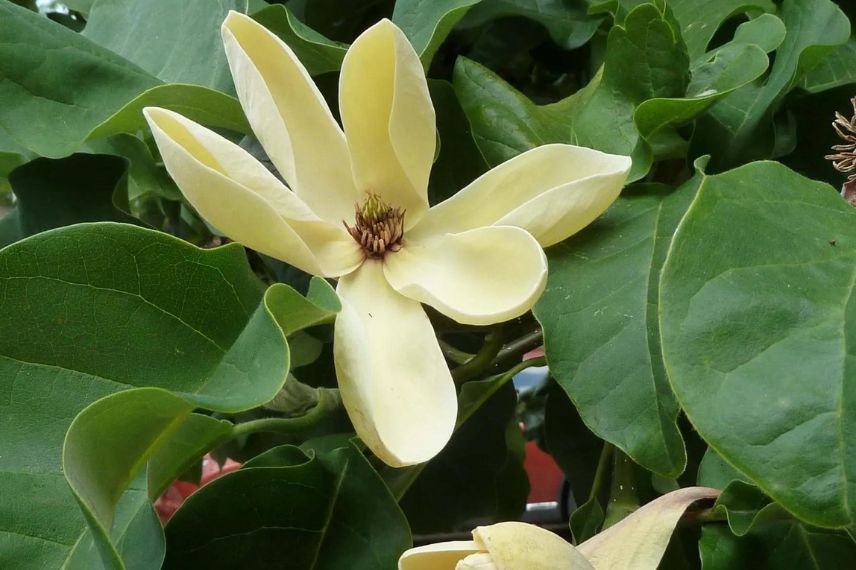
- Subscribe!
- Contents
Comments