





























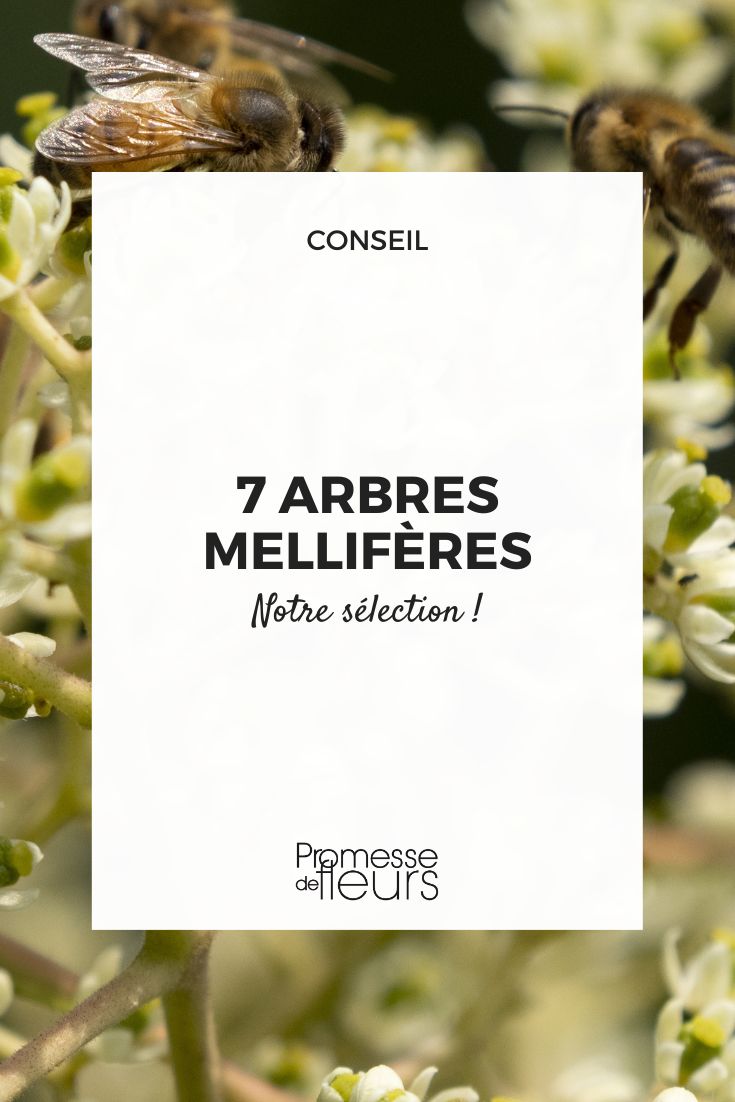
7 melliferous trees
Our selection of the most useful trees for bees and garden pollinators
Contents
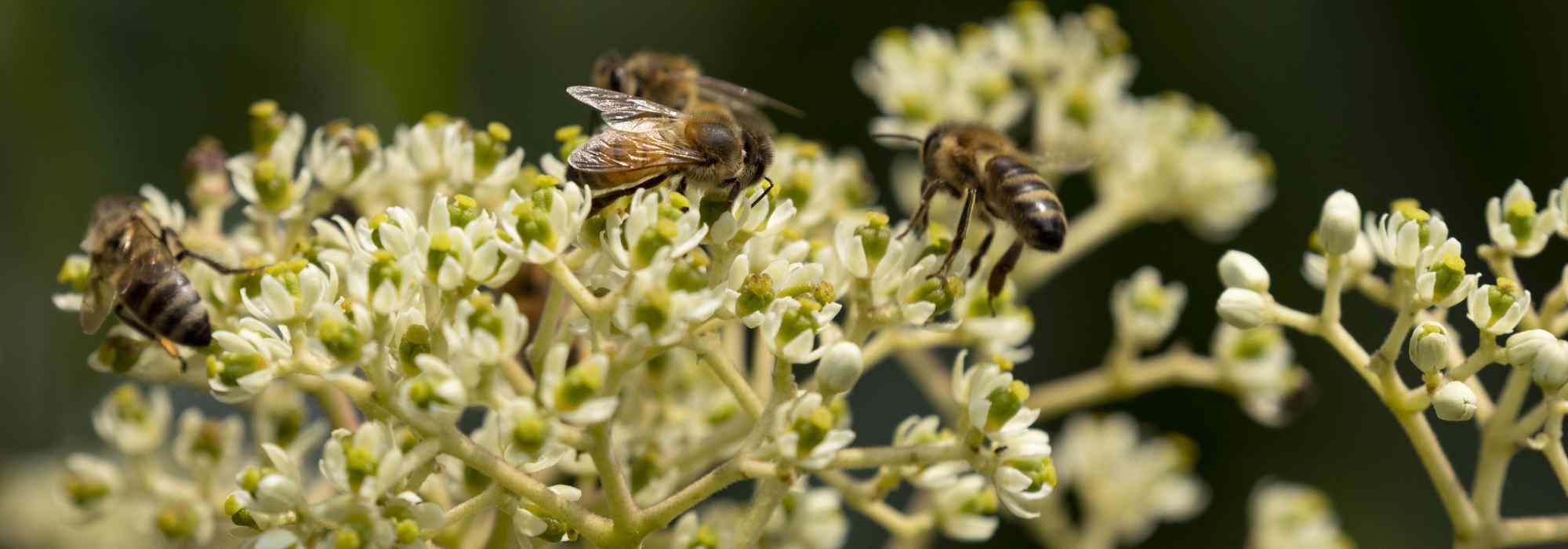
People are talking more and more about melliferous plants, those vegetation rich in nectar that form a major food source for bees, butterflies and other foraging insects in the garden. They are essential to our overall understanding of a responsible garden that cares for biodiversity. Many trees are melliferous and, given the sheer volume of their flowering, provide a providential abundance of food for insects. Some tree flowering displays are richer in sugar-rich pollen, others in nectar, that honeyed juice which attracts pollinators.
It is useful to have melliferous trees in your garden that flower at different times of the year to ensure an almost continuous source of nectar for bees, and to support their population. Thus, we feed the bees, who in turn pollinate — a virtuous cycle!
Here are 7 melliferous trees and a few others, for small or large gardens…

The Honey Tree - Tetradium daniellii
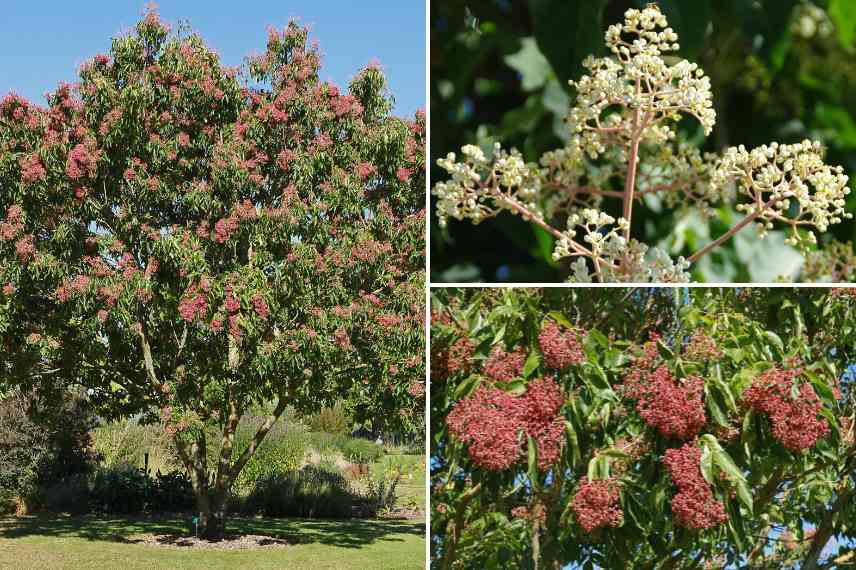
If there’s one that truly lives up to its name, it’s the Honey Tree! Also called the tree of a hundred thousand flowers, the Tetradium daniellii is indeed a tree known for producing a large amount of nectar when its scented flowering appears, in creamy-white corymbs, in June or July depending on the region. This handsome, very hardy tree (native to China and Korea) grows between 7 and 20 m tall with a smaller spread of 4 to 5 m. Its deciduous, compound foliage is dark green and turns yellow in autumn, and the tiny flowers turn into small raspberry-red fruits that give it a stately appearance!
Although this tree is not native to our regions, it nevertheless remains one of the best for its melliferous value.
It does not much like moisture, so plant it in well-drained soil. In full sun or partial shade, the honey tree tolerates periods of drought well once established.
Read also
Flowers for bees!Sweet chestnut - Castanea sativa
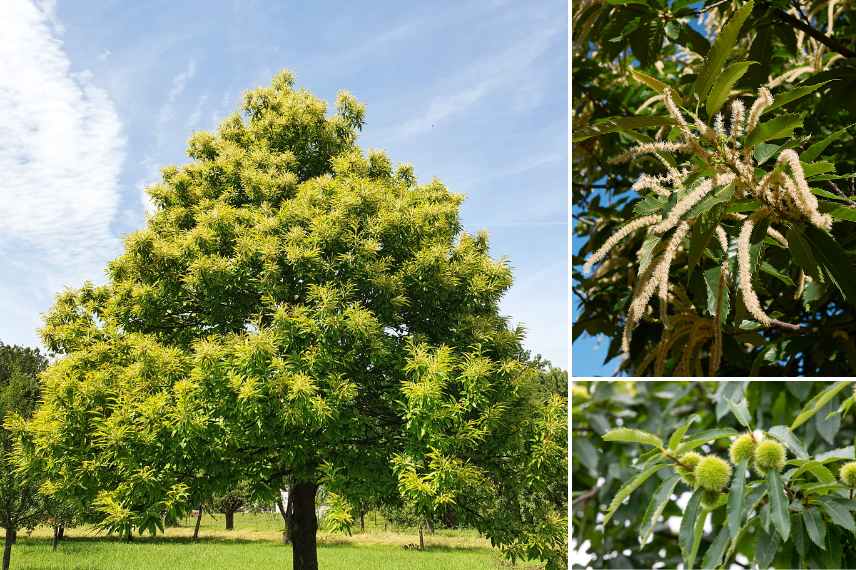
Acacia honey, linden… or chestnut honey? These three trees are indeed species that bees adore, and from which these fantastic honeys are produced. Here you have three top nectar-producing trees! The chestnut (Castanea sativa), a large, long-lived tree, is certainly one to rediscover and reintroduce into gardens, so radiant when in full flowering! It flowers in late spring, in very fragrant greenish‑white spikes about twenty centimetres long. Its typical foliage is also appreciated: elongated and coarsely toothed, dark glossy green, turning yellow in autumn. Reaching 15 to 30 m, sometimes more, it is a tree for large spaces.
It is notable for having a short trunk and a root system that allows it to resist storms as well as periods of drought. Growing slowly during the first years, it then grows by about 30 cm per year thereafter. The chestnut should be planted in full sun or partial shade, avoiding calcareous, waterlogged or overly dry soils.
Black locust - Robinia pseudoacacia
The black locust is native to North America. Its flowering in late May–early June is particularly fragrant and nectariferous. It appears after around ten years in the form of pendulous, white, very dense clusters, 10 to 25 cm in length, whose scent resembles that of the orange flower. It is undoubtedly one of the trees producing the most nectar and sugars for insects. Its foliage is compound, light green, leafing out late, and also turning yellow late in autumn. Growing rapidly, it needs full sun and loose, fertile, slightly moist soil. Robinia pseudoacacia grows between 12 and 20 m tall with a smaller spread. Given its hardiness, it can be planted in almost all regions, but it does not like strong winds or early frosts.
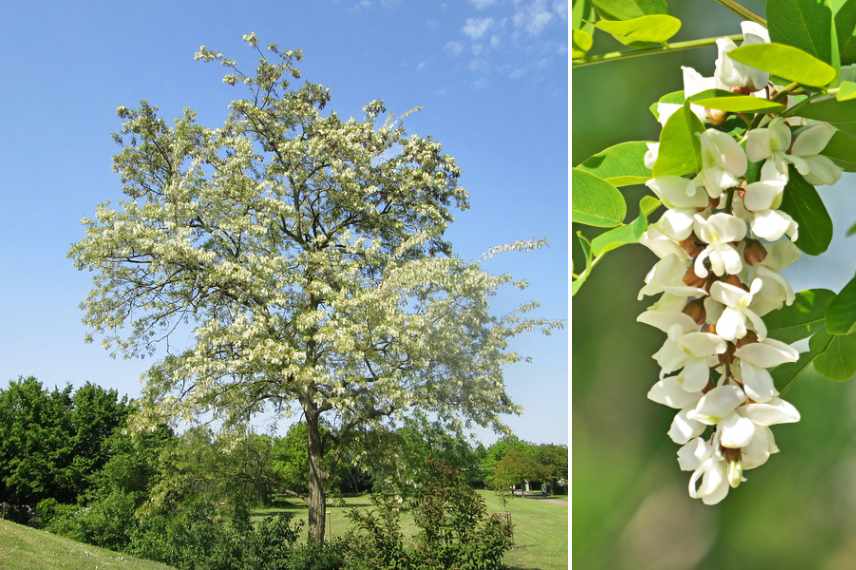
Robinia pseudoacacia: habit (© Andreas Rockstein), and flower
Read also
Best melliferous plants by seasonCommon laburnum - Laburnum anagyroides
Laburnums are magnificent trees with exquisite spring flowering, entirely yellow. Just like the Robinia pseudoacacia, they are part of the large family of Fabaceae (legumes), known for their often melliferous flowers. Le Laburnum anagyroides or common laburnum is a small tree (5 to 7 m), with a spreading silhouette, which flowers in May or June. Once it has finished flowering, it looks rather ordinary, but its trifoliate, deciduous foliage, dark green with a grey-green, villous underside, is appreciated. Beware, the fruits (pods) are toxic, as is almost the entire plant, which contains an alkaloid!
The laburnum is an undemanding tree; it grows well in any soil and in full sun or partial shade. The Laburnum anagyroides can be trained as a small tree in modest gardens, or chosen for the quality of its loose branches that spread divinely to form enchanting tunnels of golden cascades.
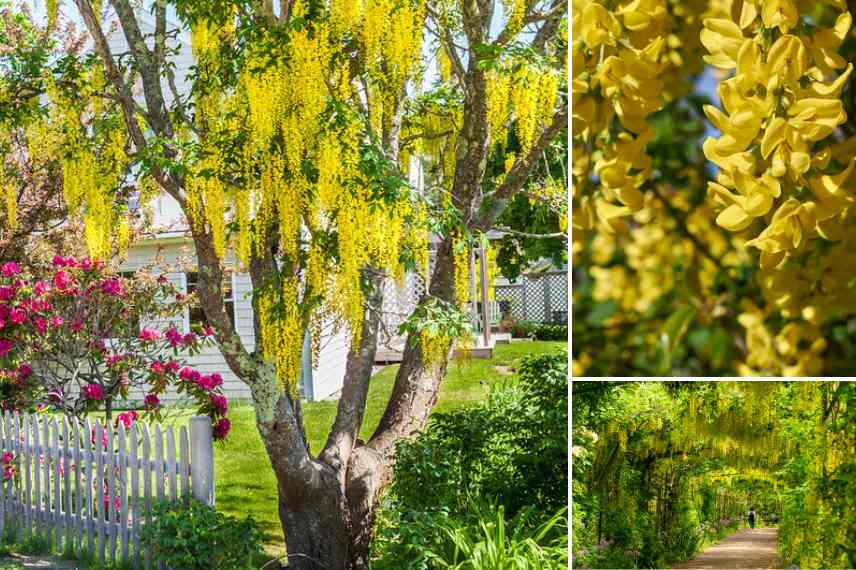
Common laburnum: habit and flowering (© Paul VanDerWerf), flowers and trained into a tunnel
Sycamore maple - Acer pseudoplatanus
Maples, regardless of their species, are well known to beekeepers as melliferous trees. Acer pseudoplatanus or sycamore maple provides an excellent supply of pollen in spring thanks to its very inconspicuous yellow-green flowering that occurs in May. Reaching easily up to 25 m in height, it is a tree best suited to large gardens. Its rounded, very dense habit is appreciated, as is its typical maple foliage, palmate with several lobes and dentate. The dark green leaves will turn a golden yellow or orange-yellow in autumn. It can be planted in full sun or partial shade, even in light shade. You should plant it in all types of soil, provided it is well drained and deep enough to accommodate its powerful root system, and remaining cool. Very hardy, this forest species establishes itself throughout the territory.
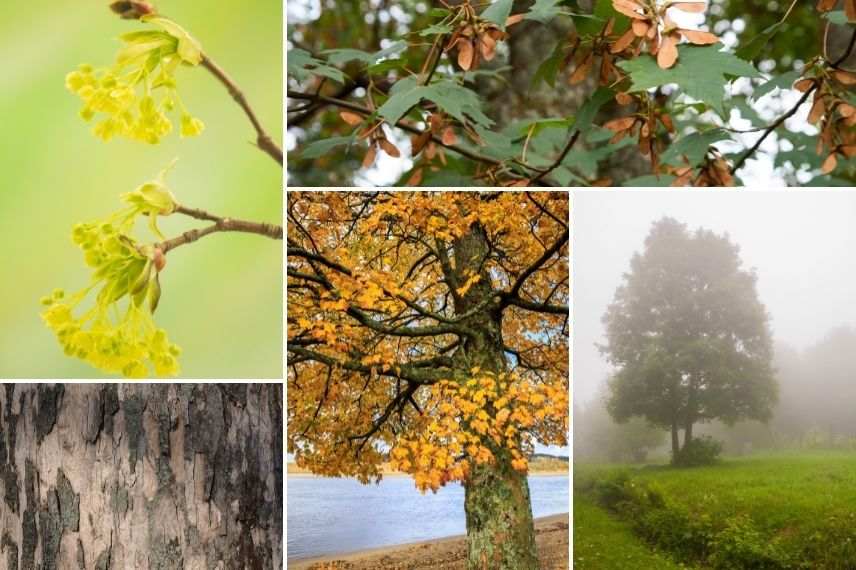
Acer pseudoplatanus
Honey locust - Gleditsia triacanthos
The honey locust or Gleditsia triacanthos by its Latin name is a large tree (10 to 25 m), fabulous for the brilliance it brings to the garden at the onset of autumn with its golden-yellow colouring! It is also known for its nectariferous flowers, much visited by bees in mid-summer (it even has the nickname honey locust). They will turn in autumn into long, recognisable brownish pods, slightly twisted. With fairly rapid growth, it is very ornamental for its light habit, made up of compound leaves composed of leaflets (so-called pinnate). It is also recognisable by the presence of sharp thorns on its branches and on its trunk. Very hardy, it is undemanding regarding soil type, and adapts to poor, calcareous soil provided it remains fairly moist. Be careful not to plant it too close to a house, given its deep, running root system, which produces suckers.
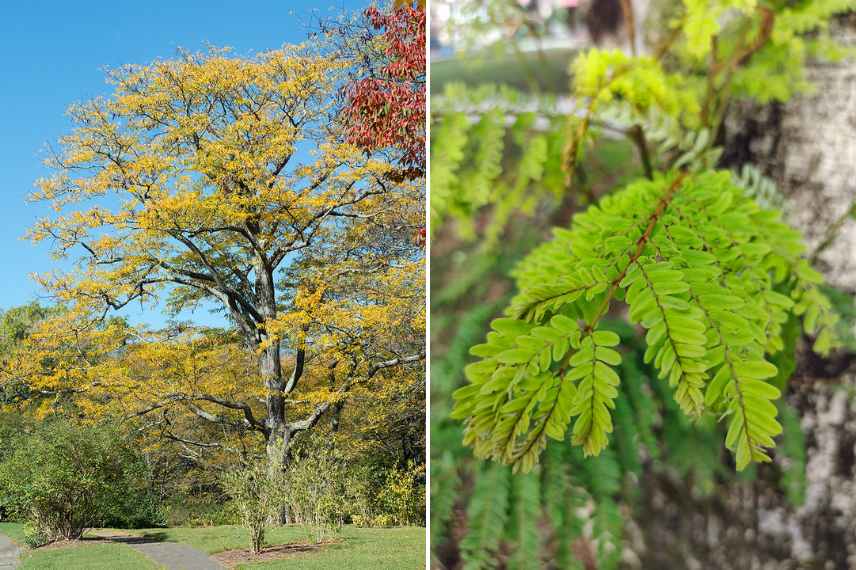
Gleditsia triacanthos : autumn colours (© Plant Image Library), and close-up of the foliage
Sophora japonica
Also encountered under the name honey tree (not to be confused with the honey tree mentioned right at the start), Sophora japonica is, likewise, a tree in the legume family. No wonder it delights us with its papilionaceous, cream-white, fragrant flowers that are very rich in nectar. This handsome tree, native to Asia, is extremely hardy, truly majestic, with its habit of a broad, rounded crown, and its odd-pinnate foliage (25 cm). It will not begin to flower until its tenth year, and will reach between 6 and 20 m at maturity. The flowering is rather late in the summer, sometimes as late as September. Plant it in full sun, in fertile, non-calcareous soil (but it also tolerates dry, even poor soils).
N.B.: it is often found under the synonym Styphonolobium japonicum.
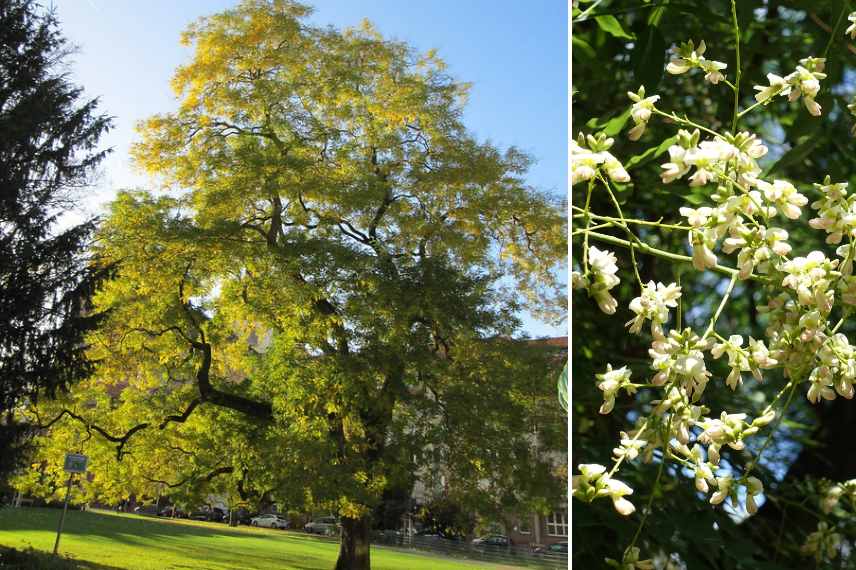
Sophora japonicum: habit (© Andreas Rockstein), and flowering
Other options
There are many other melliferous trees of interest! Why not choose from the apple and plum trees (Malus domestica or Malus sylvestris, and Prunus domestica, Prunus sargentii or Prunus cerasus), the lindens (Tillia platyphyllos, T. cordata or T. henryana), the Turkish hazel, and among smaller trees: the willows including the goat willow (Salix caprea) which is very interesting for its nectar production in late winter, the Heptacodion, the Cercis siliquastrum (Judas tree), l‘strawberry tree, the Styrax officinalis or the Acer campestre ?
- Subscribe!
- Contents
Comments