





























7 ornamental grasses to plant by the bank of water features
Our selection for damp and marshy soils
Contents
Grasses are essential garden plants, offering great versatility and pairing effortlessly with all kinds of plants. They are ideal for adding structure, but also lightness, thanks to foliage that is often very graphic.
If some species are champions of drought resistance, others grasses enjoy wet, even marshy soils. They therefore make perfect candidates for dressing the banks of water features. Plant them on the banks of your pond, your water feature, or even a small basin on the terrace.
Here is our selection of 7 ornamental grasses to grow easily by the water.

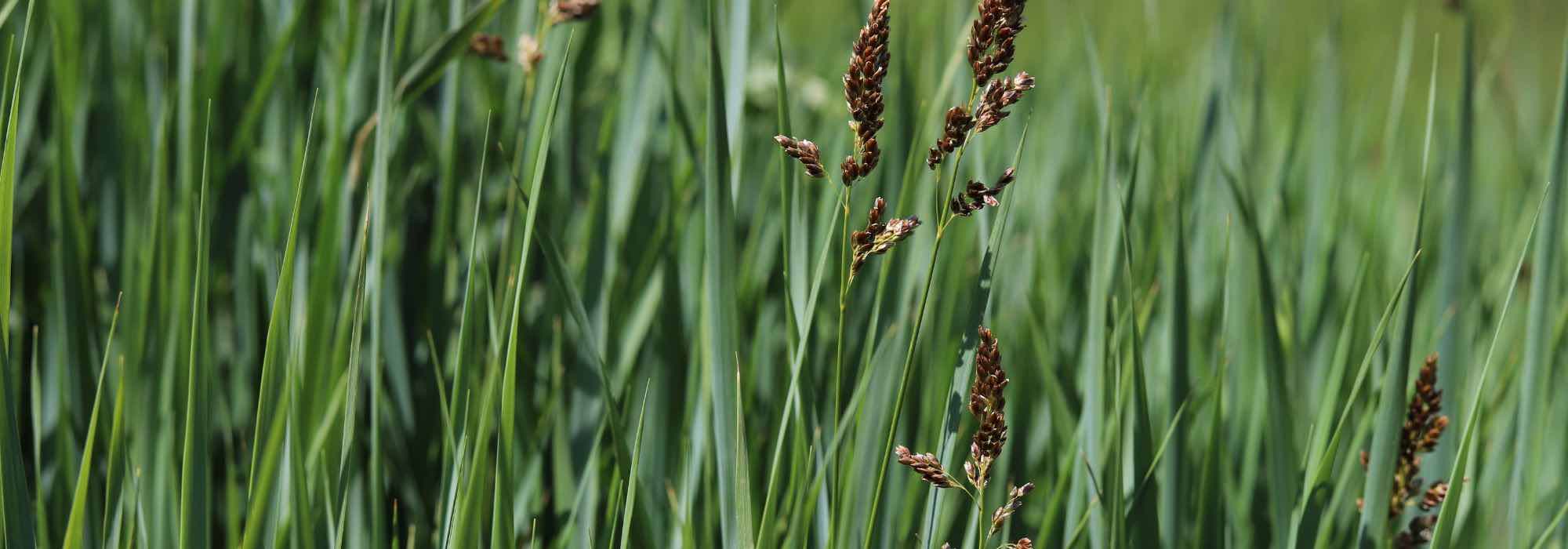
Molinia caerulea ‘Edith Dudszus’
The Blue Moor Grass ‘Edith Dudszus’ is a hardy perennial grass, which tolerates wind-exposed locations as well as severe frosts (below -25°C), dry soils or even completely waterlogged soils. But if we value it, it is not only for its natural resilience: it also has attractive aesthetic qualities. This handsome grass will thus bring graphic form, volume and countryside charm near a water feature.
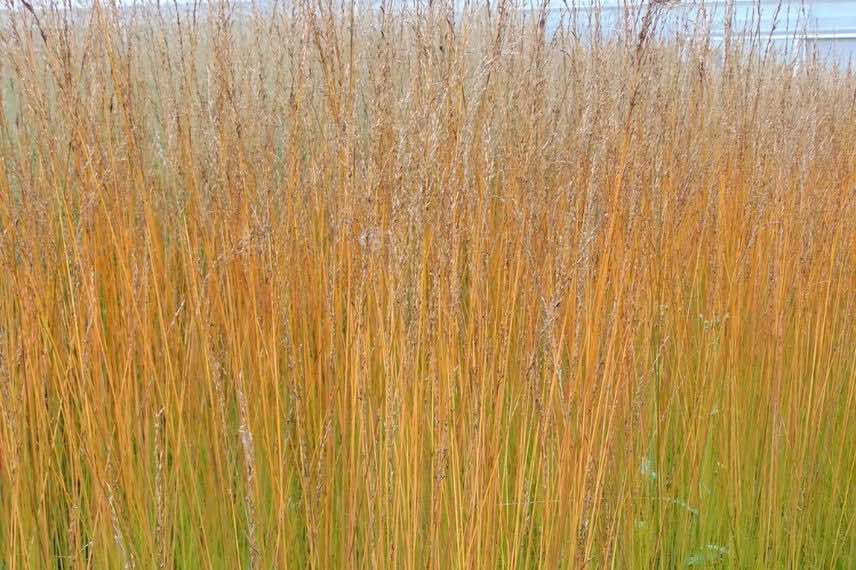
It forms a handsome dense clump of about 50 cm in height (90 cm during late-summer flowering) with a 30 cm spread. It consists of slender, graceful foliage, which will sway at the slightest breeze. Its colour is evolving: initially green with bluish tints, which give this grass its name, the foliage becomes blond in autumn. It has the advantage of persisting all winter.
The flowering in the form of airy spikelets stands out for its dark colour and its black stems.
Originating from acidic heathland, the Molinia caerulea will thrive in any well-drained soil, in sun or partial shade. Grow it alongside ericaceous plants that enjoy moisture, to brighten riverbanks. Plant it, for example, next to a Cornus sericea ‘Kelseyi’ groundcover, or a small Andromeda polifolia ‘Nikko’.
For more information: Molinia, Molinia caerulea: planting, division, pruning and maintenance
Read also
7 grasses for wet soilCyperus prolifer
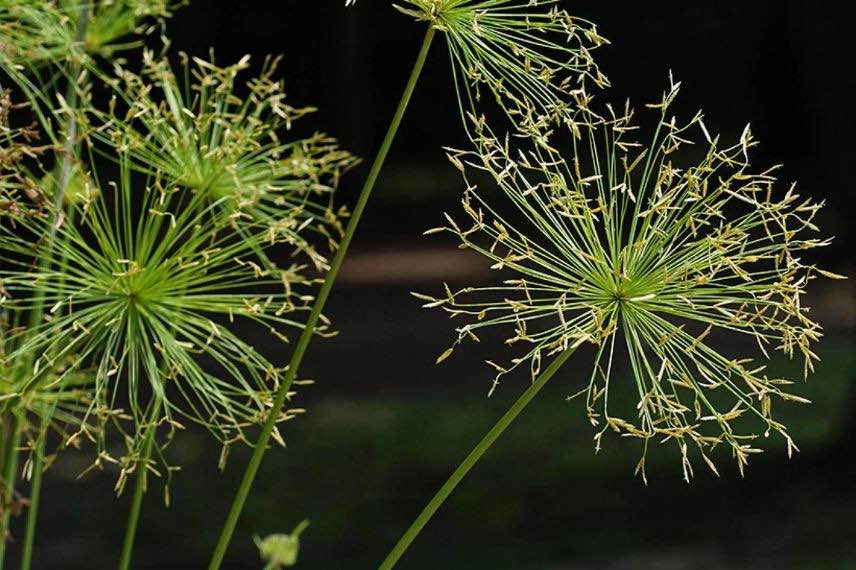
The Cyperus prolifer is a dwarf papyrus native to the marshy areas of Madagascar, which will not exceed 50 cm in height with a 30 cm spread. It retains the same ornamental qualities as its Nile cousin. It does, in fact, have evergreen foliage, consisting of long, stiff stems in a bright green. In spring, this plant reveals umbels of small green-yellow flowers, turning brown in summer.
This papyrus is a perfect candidate for damp soils in a mild climate, since its hardiness is limited to -4°C. It will thrive on a bank or slightly submerged in a pond (up to 20 cm). But as it tolerates indoor dryness well, it can be grown in a pot, in a substrate that remains moist. This will allow you to bring it indoors, out of frost in winter in less temperate regions.
Plant this papyrus in the sun, alongside small persicarias, which will take over flowering in summer.
For more information: Papyrus, Cyperus: planting and care
The Carex laxiculmis ‘Bunny Blue’
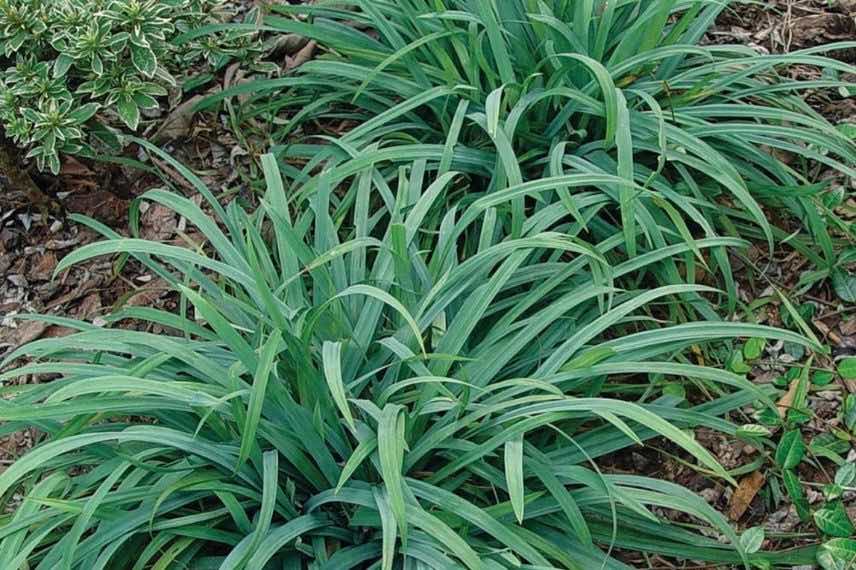
This creeping sedge of the variety ‘Bunny Blue’ is an adorable little grass with a compact habit, reaching only 30 cm in all directions. It forms a small, prostrate-looking tuft, consisting of broad strap-like leaves that stay put all year round. This foliage features lovely nuances of a silvery blue, intensified by ambient heat.
Early-summer flowering is discreet: it consists of small bronze spikelets.
Plant this Carex in a partly shaded or sunny exposure, in moist soil. It will be a marvel at the edges of a small pond if the soil is not constantly waterlogged. Hardy to -15°C and tolerant of all soil types, it is an easy-care grass that will thrive in most of our regions. To create a true groundcover, pair it with the handsome ornamental foliage of small Hostas.
For more information: Carex: plant, divide and maintain
Agrostis stolonifera ‘Green Twist’
Agrostis stolonifera ‘Green Twist’ is a perennial grass that will form a perfect groundcover around a garden pond.
This moisture-loving plant indeed rewards us with a spreading, creeping silhouette via its stolons.
It reaches nearly 1 metre across and about 30 cm high.
L’Agrostis stolonifera can also be grown in a pot and placed on a raised position at the edge of a pond.
It will then create a genuine cascade of vegetation as it spills from its container.
It also helps to improve water quality.
The culms (stems) bear linear, long and flexible leaves. This dense green foliage forms a striking hair-like mass that adds volume to the garden.
Evergreen, it stays in place all year round.
The summer flowering comprises soft spikelets carried on branched panicles.
Provide it with a sunny or partly shaded exposure, in soil that is consistently moist and never dries out.
Hardy and tolerant of soil types, ‘Green Twist’ is easy to grow.
This grass will bring an exotic touch, alongside compact Fargesia (Fargesia murieliae ‘Elias’ or ‘Bimbo’ in particular), these bamboos which have the advantage of being non-spreading.
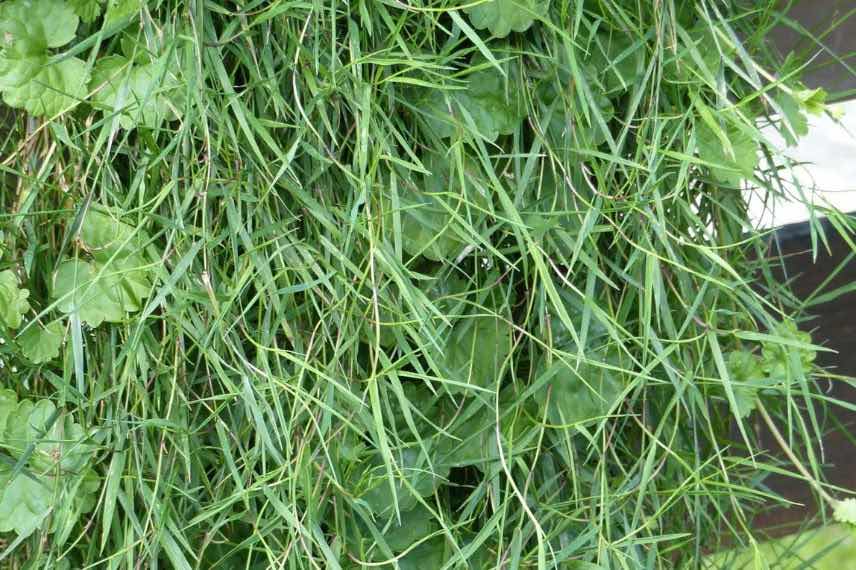
Rhynchospora colorata
The Rhynchospora colorata is known by the poetic nickname ‘star dancer’. It is its flowering, composed of white star-shaped flowers, that indeed all its charm. They appear in summer and renew until the first autumn frosts.
This graminoid perennial, still little known, deserves to adorn the banks of our garden ponds and to be more widely spread.
Originating from the southeastern United States, it grows there in wet and marshy areas.
Its dense, tufted habit is not inclined to spread. It will reach 60 cm in height and 40 cm in spread.
It comprises fine, linear foliage in a vivid green, giving it a Carex-like appearance.
Its moderate hardiness (to -6°C) will suit gardens in mild climates, but it can also be grown in pots, provided it has sufficient water, which will help protect it from severe frosts. Place it in sun or partial shade, near a Gunnera magellanica, whose foliage will persist in mild climates.
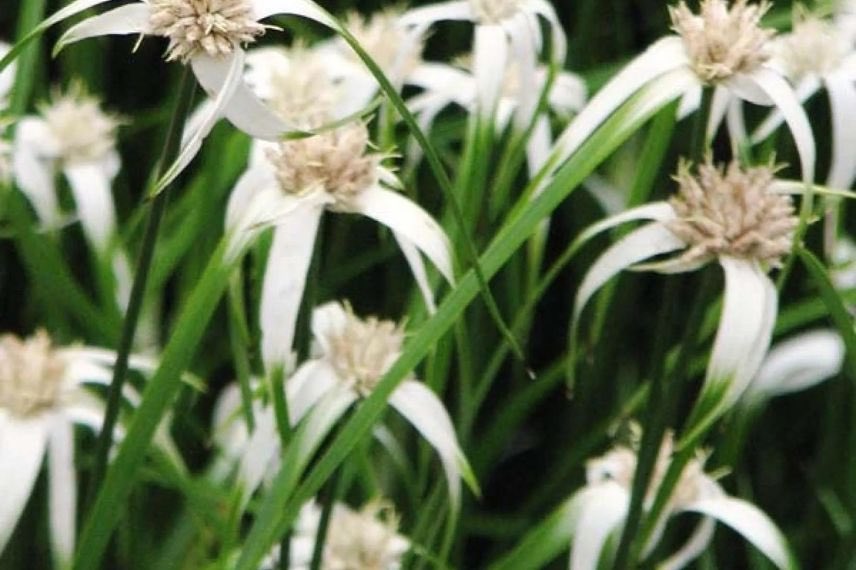
Setaria palmifolia
Setaria palmifolia, also known as ‘palm grass’, is a grass with particularly ornamental foliage. It originates from Southeast Asia. Still relatively little known, it will surely add originality and an exotic touch around your water features.
This young plant produces elongated foliage with broad laminae reminiscent of a small palm or a dwarf coconut. It has a pretty apple-green colour, borne by red petioles, and can reach up to 60 cm in length. The stems, initially upright, soften over time to offer a bushier, more curved silhouette. The foliage is semi-evergreen, meaning it will stay in place if winter does not experience too severe and regular frosts.
Summer flowering in pale-yellow spikes is unobtrusive.
Fast-growing, this grass will reach 1.2 metres in height and 1 metre in spread, making it ideal for dressing the edges of garden ponds or other banks.
Setaria palmifolia will appreciate soil that is consistently moist, well-drained, and fairly rich in organic matter. Note that under favourable growing conditions, it can be considered somewhat invasive. Its hardiness ranges from -8°C to -10°C if planted in a sheltered position. However, container cultivation, allowing it to be stored away in winter, is entirely feasible.
Place this grass in full sun or partial shade. To create an exotic, lush display, it pairs beautifully with an impressive Tetrapanax papyrifera ‘Rex’.
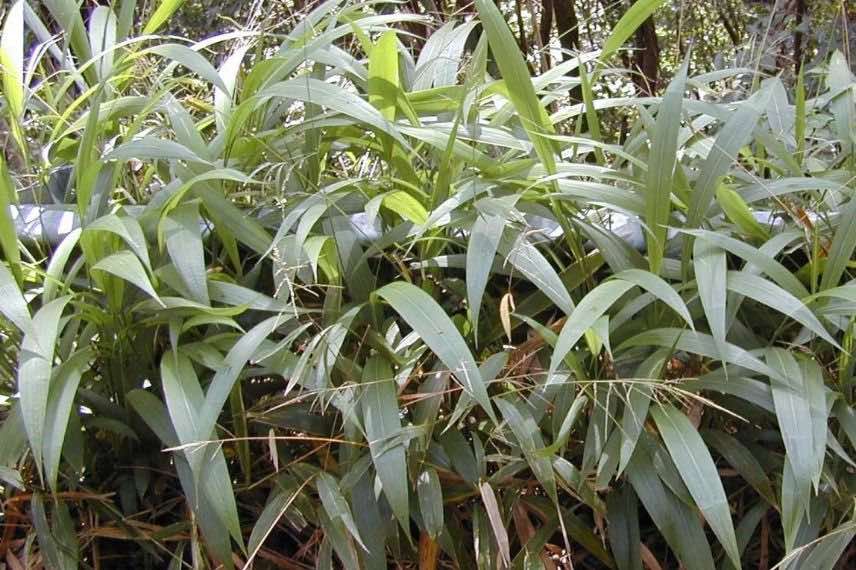
Hierochloe odorata
Hierochloe odorata is a perennial grass native to the northern hemisphere.
This ‘sweet-scented oat’ or ‘scented hay’ lives up to its nicknames: it stands out indeed for its vanilla fragrance, a gourmand scent it releases in warm weather or when crushed, even when dried. It is also used for these qualities to scent spirits, linen, or even in aromatherapy.
Over time it will form a tuft of vegetation with bright green linear foliage. The plant will spread via its slightly running rootstocks, to form a pretty groundcover around water features.
It will reach at least 60 cm in height with a 40 cm spread, more so under favourable growing conditions. The foliage is deciduous, i.e., it dies back in winter.
Flowering occurs in summer. The grass then displays panicles, initially brown-tinged, before taking on pale straw-yellow hues as it dries.
If it’s also known as ‘bison grass’, it’s because it still grows wild in certain Eastern European meadows, where these animals live.
Hierochloe odorata will enjoy sun or partial shade. Plant it in preferably acidic soil, even if heavy (peaty or clay), but always moist. It can also be grown in a pot to limit its spreading. Note its great hardiness (down to -40°C) will allow it to be cultivated throughout our territory, even in our harshest regions.
Along pond banks, it will accompany the flowering of a common loosestrife or of a Filipendula rubra ‘Venusta’.
- Subscribe!
- Contents
Comments