


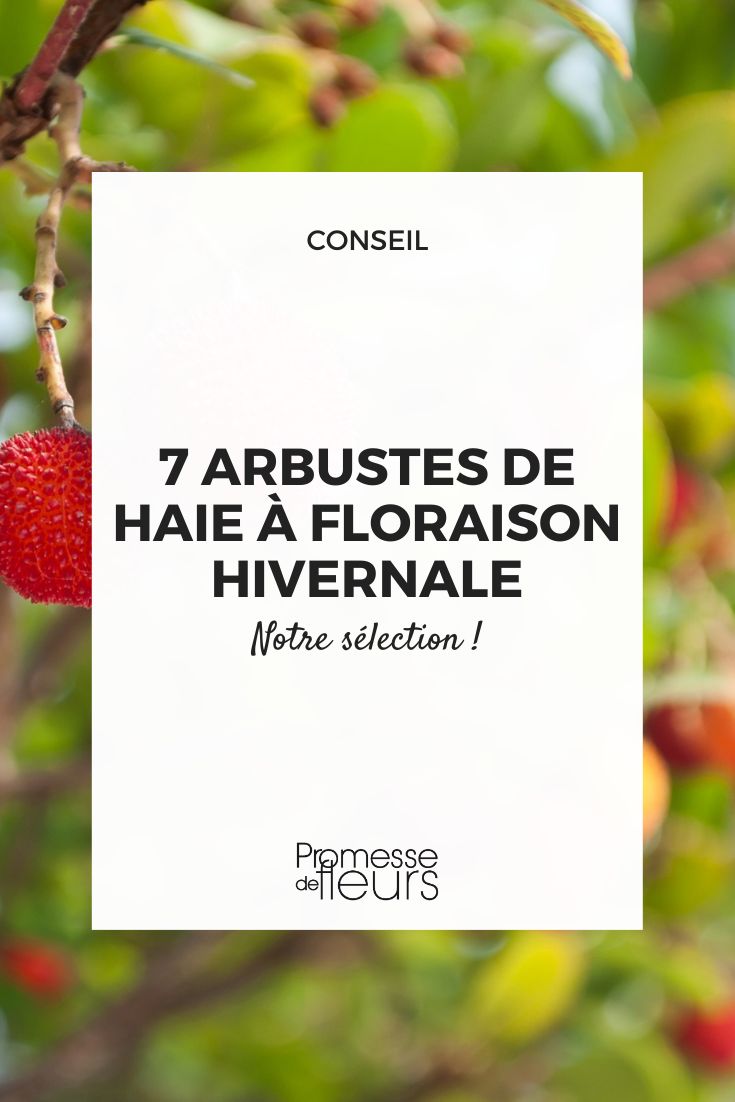
7 winter-flowering shrubs for hedges
Plants to brighten up the cold season
Contents
Winter is often portrayed as the saddest and most monotonous season in the garden. However, during this cold period, many plants can reward us with flowers and fragrances.
A hedge that blooms in winter is multifunctional: it defines space, but can also protect from wind or prying eyes, while helping local wildlife during a less favourable time for them. Above all, this hedge of plants will be perfect for adding a touch of colour and cheerfulness.
Discover our selection of 7 shrubs for hedges that bloom in winter.

The strawberry tree: decorative flowering and fruiting in early winter
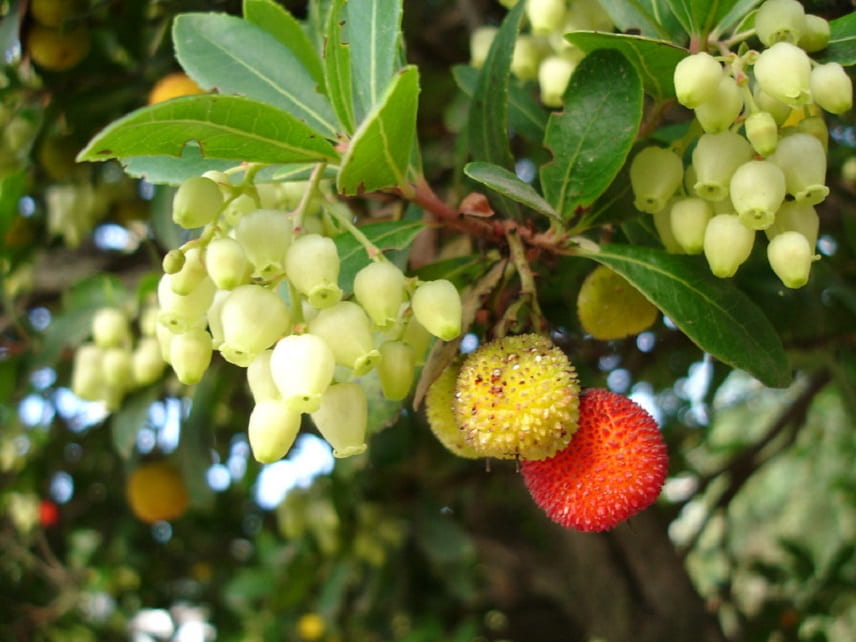
strawberry tree (Arbutus unedo) has a unique feature that gives it much charm: for several weeks, flowers and fruits coexist on the shrub.
The flowering occurs from autumn to early winter, in the form of adorable little bells, reminiscent of lily of the valley. They can be white or pink, measure about 1 cm, and form clusters with a soft habit. These flowers delight pollinating insects, which have less food available at this time of year.
Meanwhile, the fruits from the previous year reach ripeness: they form berries that are initially yellow, then red. Their grainy texture resembles strawberries (hence the nickname “strawberry tree” given to the strawberry tree). They are edible, but are more appreciated when cooked, for example in jams and chutneys.
Native to the Mediterranean, this shrub is quite hardy, tolerating temperatures down to -12°C to -15°C. It prefers sunny to partially shaded locations, even if they are dry. Provide it with well-drained soil, where water does not stagnate.
At maturity, this shrub reaches 5 metres in height and 3 metres in spread, but there are smaller varieties like ‘Compacta’, which you can grow in pots to brighten up terraces and balconies in winter.
Thanks to its evergreen foliage, the strawberry tree is a perfect candidate for creating a privacy hedge. Its resistance to sea spray allows it to integrate seamlessly into a coastal hedge, for example alongside sea buckthorn, which also produces colourful, edible fruits that persist in winter. You might also add an Eleagnus and a myrtle alongside them.
To learn more: Strawberry tree, Arbutus: planting, pruning, and maintenance tips
Winter honeysuckle: a fragrant flowering during the cold season
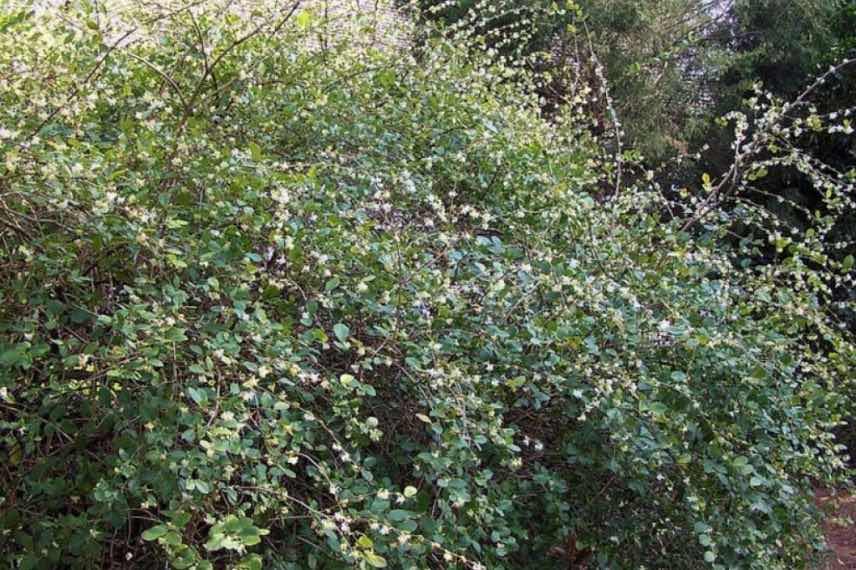
The winter honeysuckle (Lonicera fragrantissima) stands out from other honeysuckles due to its bushy rather than climbing silhouette, forming a rounded shrub.
But it is primarily a shrub that flowers throughout the winter, from December to March. It produces white to cream flowers, beautifully highlighted in the middle of winter when the shrub’s branches are bare of leaves. To add even more interest to this honeysuckle, the flowering is highly fragrant, blending notes of lemon and jasmine. The flowers are also nectariferous, much appreciated by foraging insects.
Vigorous, low-maintenance, and hardy, it is an easy-going winter-flowering shrub in many regions of our territory. Provide it with well-drained soil, essential in winter, so it does not become waterlogged.
At maturity, our honeysuckle will reach about 2.5 metres in height and the same in spread.
Plant it in a sunny free-standing hedge in winter. Position it alongside other staggered-flowering hedge shrubs, to enjoy flowers almost all year round: Weigela, Mock Orange, or Deutzia.
To learn more: Shrubby honeysuckles, Lonicera: planting, pruning, and maintaining
Camellia japonica ‘Nobilissima’: a long winter flowering
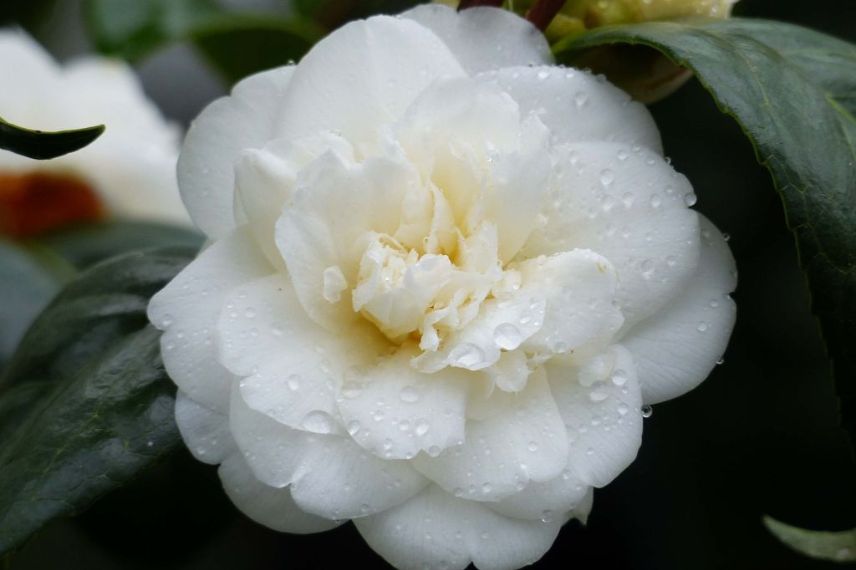
Camellias are a classic in the garden, with many species flowering from late autumn to early spring. ‘Nobilissima’ is a Japanese camellia that rewards us with a long winter flowering period, from November to March.
This old variety produces well-double flowers with numerous petals, immaculate white simply accented by a discreet yellow centre. They measure about 8 cm in diameter. The flowering is enhanced by dark green glossy foliage, which remains in place all year round.
At maturity, this modest-sized shrub reaches 1.5 metres in height and 1 metre in spread, forming a lovely rounded shape.
It thrives in full sun or partial shade, in soil that remains cool (never completely drying out). It can withstand frosts down to -12°C, provided it is sheltered from wind and snow. It is an ideal plant for coastal regions with mild climates.
Camellias will pair perfectly in a hedge with ericaceous plants, such as rhododendrons and azaleas.
To learn more: Camellias: planting, pruning, and care
Mahonia media ‘Winter Sun’: a shrub that brightens winter
‘Winter Sun’ perfectly lives up to its name: it brings light and colour in winter, warming up the garden. Between December and February, it rewards us with long panicles of lovely soft yellow flowers, which can reach up to 30 cm in length. This flowering is also fragrant, releasing scents reminiscent of lily of the valley. It is followed by small decorative blue fruits, which are a delight for birds.
Its evergreen foliage is glossy, tough, and divided into spiny leaflets. It adds a graphic and exotic touch to the garden all year round. In cold weather, the green leaves may turn purplish, providing an additional splash of colour to brighten up winter.
Its silhouette will reach 3 metres in all directions over time.
Place this Mahonia in a semi-shaded or shaded position, in well-drained, consistently moist soil. It is an ideal candidate for creating a defensive hedge, alongside other spiny shrub ssuch as Berberis or Pyracantha.
To learn more: Mahonia: planting, pruning, and maintenance
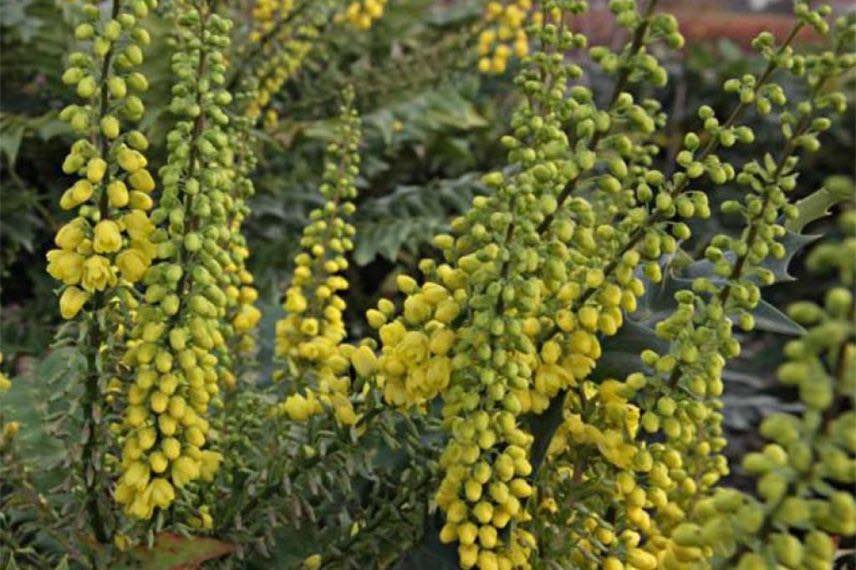
Winter viburnum ‘Dawn’: a delicate pink and fragrant flowering
The winter viburnum (Viburnum bodnantense ‘Dawn’) is a beautiful winter-flowering bush. At the first thaw, outside of frosts, it delights us with its waxy tubular flowers, exuding a vanilla fragrance. They appear on bare branches, in a refined palette of white and pink.
To top it off, this viburnum has another ornamental asset: its evolving foliage. Initially bronze in spring, it turns green in summer, before finishing the show with vibrant colours in autumn.
This shrub will reach a height of 2.5 metres and a spread of 2 metres.
Very hardy and easy to grow, it thrives in full sun or partial shade, in ordinary soil that remains moist. As companions, offer it evergreen shrubs like Sarcococca, which will discreetly accompany its winter flowering. Also consider the must-have Mexican orange blossom and Photinias.
To learn more: Viburnum, Viorne: how to plant, prune, and cultivate
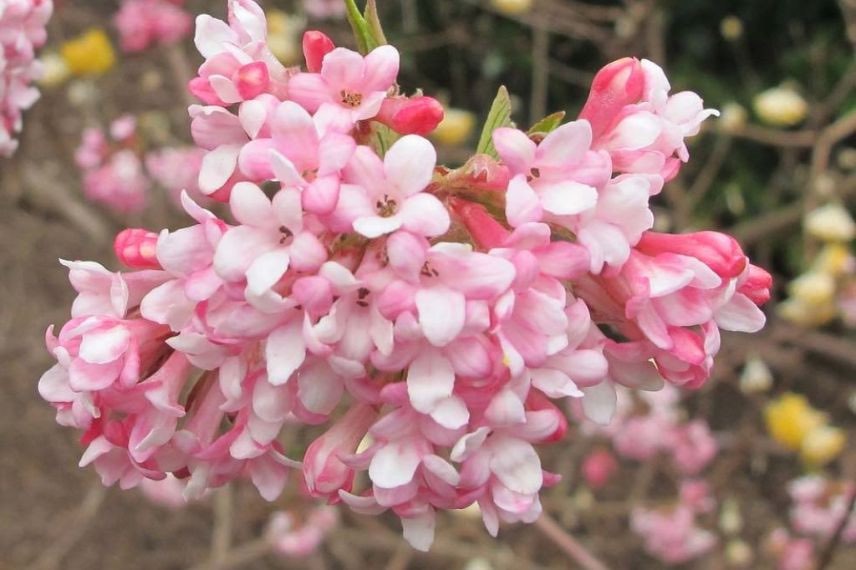
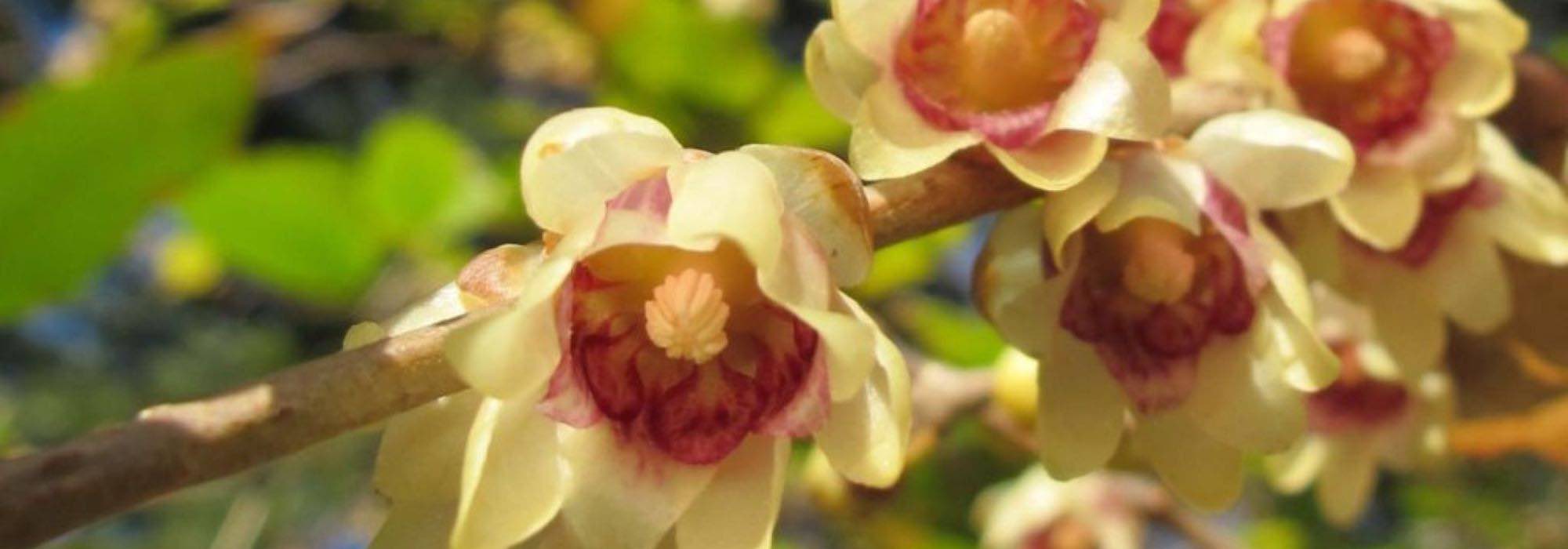
Chimonanthus praecox: a shrub that deserves to be better known
The Chimonanthus praecox is not one of the most popular shrubs. However, it has many qualities.
During winter, it produces small bell-shaped flowers of about 2 cm, with a waxy appearance. They reveal a sulphur yellow, enhanced by a heart of purple stamen. This flowering adorns the still naked branches of the shrub, while exuding notes of hyacinth and honey, detectable for nearly a month.
The foliage is deciduous. It takes on yellow hues before falling in autumn.
It is a shrub that is easy to grow in all our regions, quite hardy (down to -15°C). It is content with ordinary, consistently moist soil, and will thrive in sunny or partially shaded locations. Once established, it will benefit from not needing watering. It will slowly reach a height of 2.50 metres and a spread of 2 metres.
Pair it with an Edgeworthia chrysantha, which flowers in late winter revealing astonishing white and yellow pom-poms, as well as a winter jasmine in the same sunny hues.
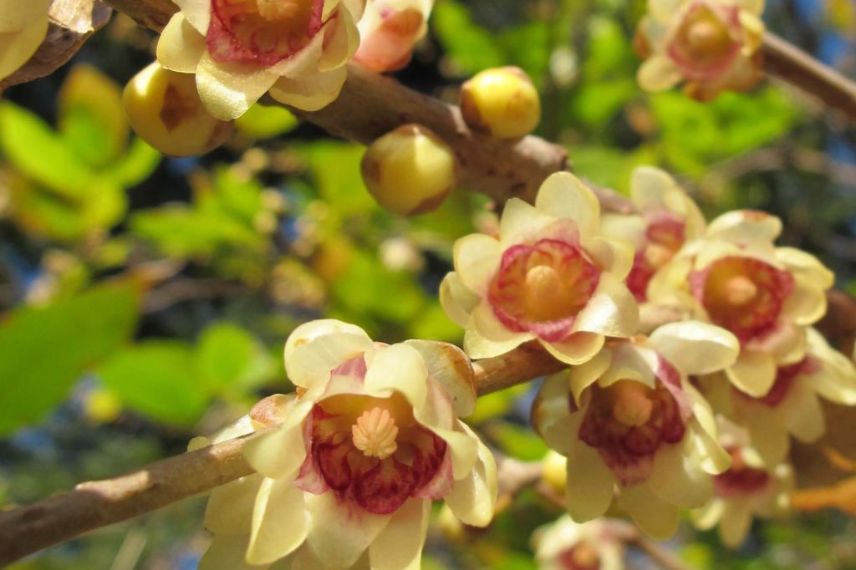
Hamamelis intermedia 'Diane': a flowering that warms winter
We appreciate Hamamelis, or witch hazels, for their stunning winter flowering. This Hamamelis intermedia is no exception, with its spider-like inflorescences. While witch hazels are primarily known for their bright yellow, sunlit flowers, there are varieties that prefer orange to red tones. This is the case with ‘Diane’, which produces, from December onwards, inflorescences made up of ruby-coloured filaments, grouped in a tousled bouquet on the bare branches.
The spectacle truly begins in autumn, as the deciduous foliage turns yellow and red, igniting the garden and heralding the imminent arrival of the cold season.
For all its ornamental qualities, Hamamelis intermedia ‘Diane’ has been awarded an Award of Garden Merit by the Royal Horticultural Society.
For this shrub , expect a height of 3 to 4 metres with an equal spread at maturity. Plant it in full sun or partial shade, in cool, slightly acidic soil. Easy to care for, it withstands both frost and diseases and requires minimal maintenance.
Pair this witch hazel with other hedge shrubs that will take over the flowering at the end of winter and in spring, such as Forsythia and Japanese quince.
To learn more: Hamamelis: planting, cultivation, maintenance, and association
- Subscribe!
- Contents
Comments