





























9 drought-resistant melliferous perennials
useful, floriferous, and low-maintenance plants!
Contents
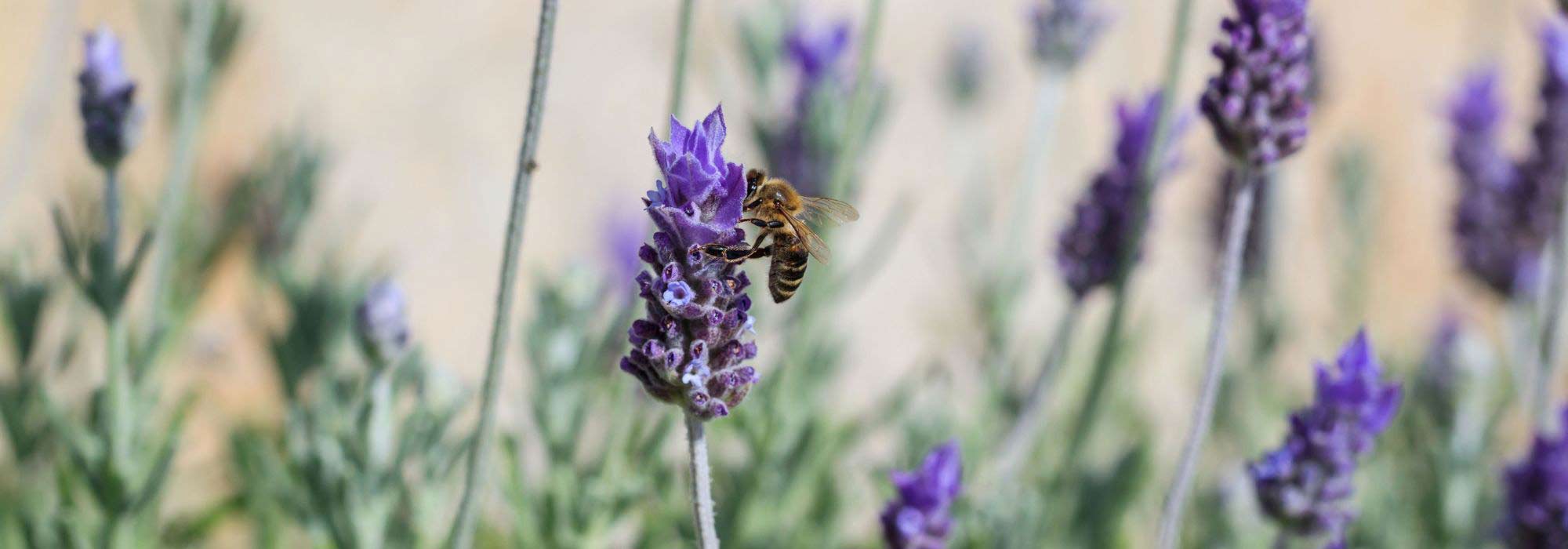
Bees, bumblebees, butterflies, or hoverflies, pollinating insects are essential to biodiversity and important allies in the garden. They require a wide variety of melliferous flowers to meet their dietary needs, which highlights the importance of increasing the number of plants that provide them with valuable food.
To combine the welcoming of beneficial insects with plants that can withstand drought and heat, discover a selection of 9 melliferous perennial plants suited to dry soils: beautiful, useful, and low-maintenance, they have everything to please!

Crithmum maritimum or Rock Samphire
Indigenous to our coastlines and the Mediterranean region, Crithmum maritimum, or Sea Fennel, is well-suited to rocky and sandy environments, thriving in dry, salty soils. It forms small, spreading bushy clumps that reach 40 cm in height and 50 cm in width. Its stems bear a slightly succulent, evergreen foliage. The light green leaves are long and slender, with an aniseed and briny flavour. From June and throughout the summer, it blooms with beautiful white to yellowish umbels, frequently visited by pollinating insects.
Plant Sea Fennel in poor, shallow, and well-drained soil, or in a pot with a poor, free-draining substrate. Its cold resistance is somewhat limited (-10 °C).
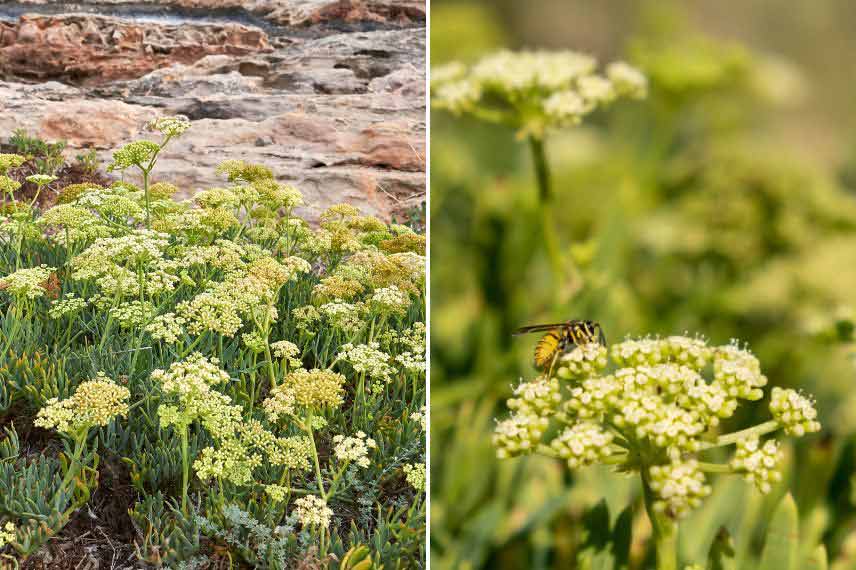
Crithmum maritimum
Read also
Flowers for bees!Echium fastuosum or Madeira Viper's Bugloss
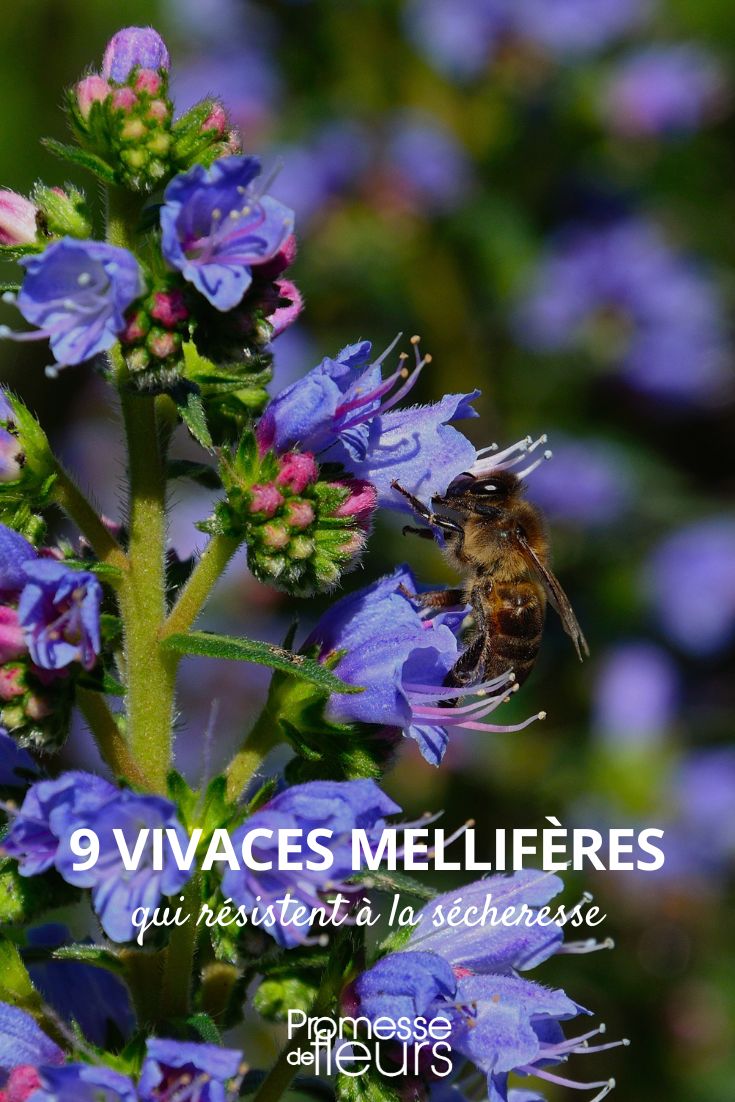
Large perennial with rapid growth and an exotic appearance, Echium fastuosum (candicans), or Madeira viper’s bugloss, will attract all eyes in the garden. It forms a large, very dense bush, reaching 1.5 m in height and 2.5 to 3 m in spread, and generally flowers from the second year. It has beautiful semi-evergreen green-grey foliage covered in stiff hairs, and when it flowers, it produces magnificent blue spikes measuring 20 to 50 cm long, standing tall above the mass of foliage: a marvel! It is remarkably melliferous and continuously produces nectar, much to the delight of bees, which make a sought-after honey with a sweet, floral fragrance.
The Madeira viper’s bugloss is a robust plant in mild climates that can easily tolerate sea spray, as well as poor, calcareous soils and especially drought. It simply requires well-drained soil and full sun to adorn the gardens where it is planted with its stunning azure flowering.
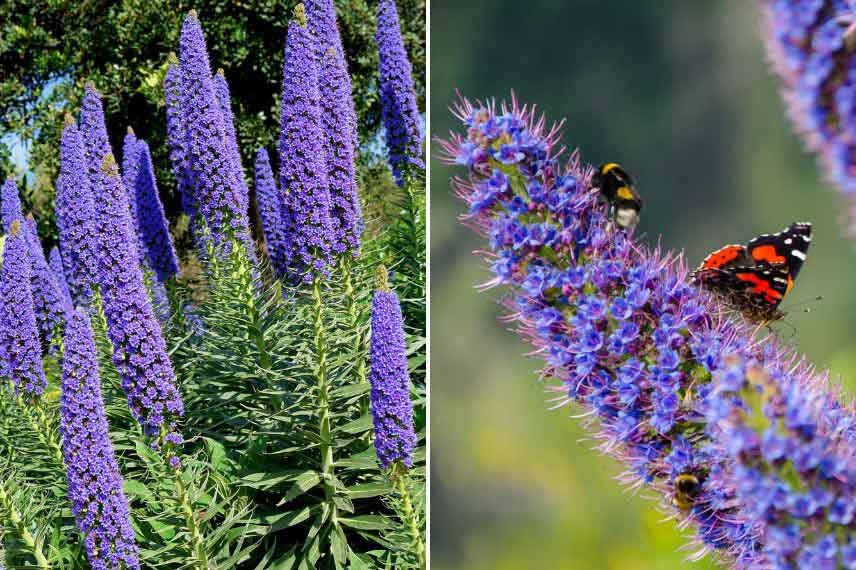
Echium fastuosum
Discover other Melliferous perennials
View all →
Available in 1 sizes
Available in 1 sizes
Available in 2 sizes
Available in 1 sizes
Available in 1 sizes
Available in 2 sizes
Available in 1 sizes
Available in 1 sizes
Available in 1 sizes
Available in 1 sizes
Gaura
True stars of relaxed, low-maintenance gardens, Gauras are also wonderful sources of food for pollinating insects. Whether it’s the must-have variety ‘Siskiyou Pink’ with its corollas ranging from dark pink to lighter shades, ‘Summer Breeze’ that forms an airy clump 1.5 m tall, or ‘Snowbird’ which offers a multitude of absolutely pure white flowers as light as butterflies, all Gauras have an incredible floribundity from June to October, providing this precious food source for foraging insects.
Not at all fussy about soil type, as long as it is well-drained, even poor and dry, you can tuck Gauras in all over the garden: their lightness allows them to blend into most flower beds! Quite hardy, they withstand temperatures down to -15 °C and form generous clumps from the year of planting. If you’re short on space, consider compact varieties like Gaura lindheimeri ‘Baby Butterfly Dark Pink’, which is also an excellent choice for pots!
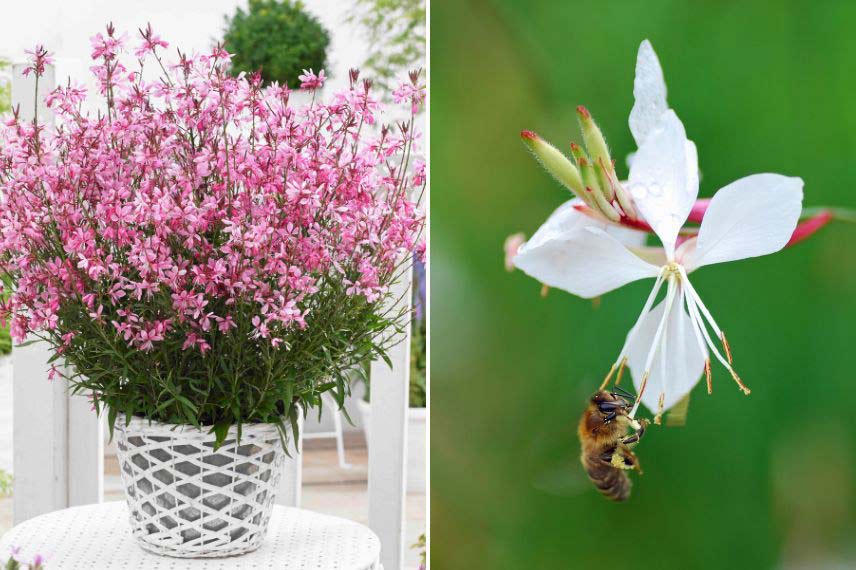
Gaura lindheimeri ‘Baby Butterfly Dark Pink’ and a bee foraging on a Gaura lindheimeri flower
Read also
Flowers that attract beesLavender
True blessings for sun-drenched gardens, especially if the soil is dry and stony to the point of despair, lavenders need no introduction. Melliferous plants highly sought after by bees, lavenders produce abundant nectar, allowing foragers to create particularly fragrant and cherished honey.
The varieties are numerous, and the choices are plentiful: Lavandin ‘Grosso’ and Lavandula angustifolia ‘Hidcote’, classic and generous, Lavandula angustifolia ‘Rosea’ with soft pink flowers, ‘Alba’ white or Lavandula allardii with exceptional variegated cream-white foliage… Lavenders thrive in dry, calcareous soils, but you can still adopt butterfly lavenders (Lavandula stoechas) if your soil is more acidic.
→ My advice: to provide insects with a source of food “out of season”, plant Lavandula dentata or Fringed Lavender; this large lavender forms a beautiful rounded mass and its flowering lasts practically all year round, especially in mild climates… melliferous lavender flowers at Christmas, what more could you ask for?
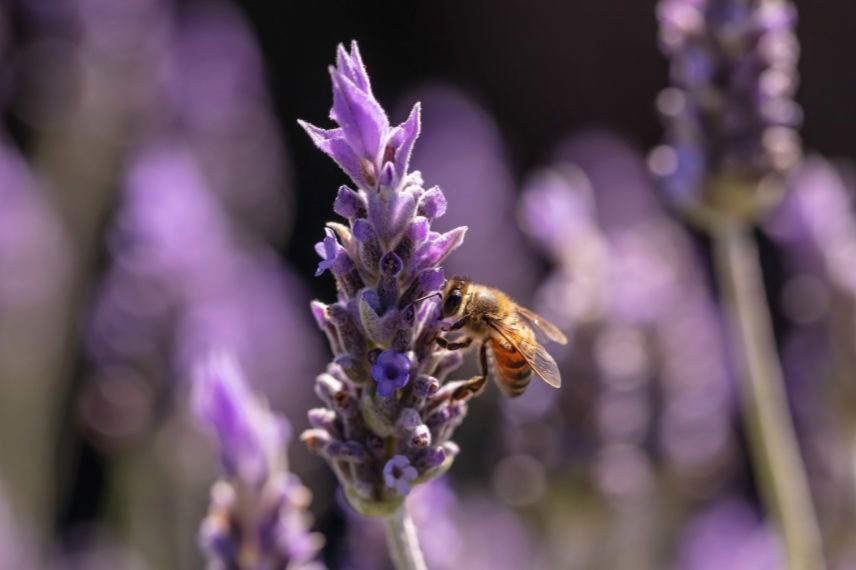
Lavender
Oenothera speciosa or Pink Evening Primrose
Boon for pollinating insects, but also for gardeners who enjoy lounging, Oenothera speciosa hides behind its fragile appearance a remarkable resilience! The flowering duration of this pink Evening Primrose is impressive even if you forget to water and the soil is stony. This beautiful plant, perfectly hardy and hailing from the borders of Mexico and Texas, forms a compact tuft 40 to 50 cm high and keeps opening its large, soft pink corollas from late spring to summer. It then attracts numerous insects that delight in its nectar.
This beauty can easily spread to become somewhat invasive, so care should be taken to prevent it from dispersing excessively; however, this ability to expand makes it valuable for greening and flowering difficult and dry areas.
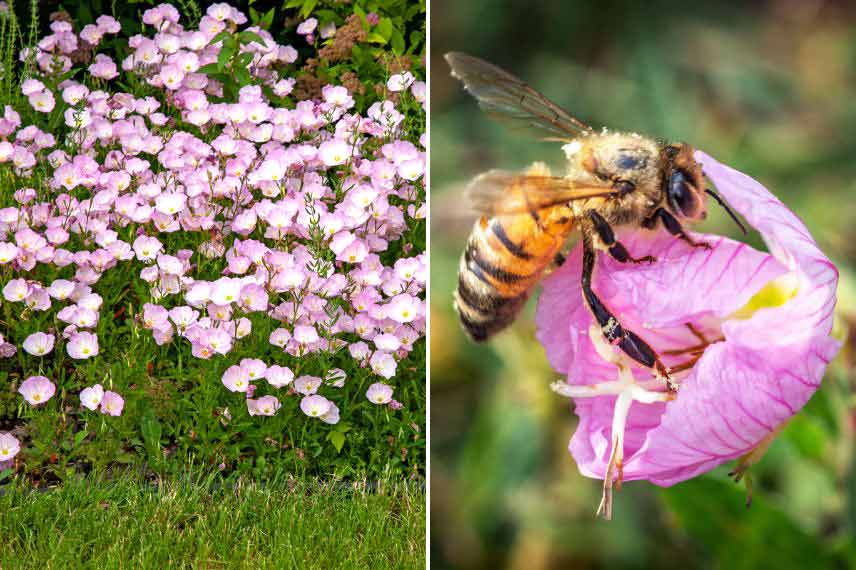
Oenothera speciosa
Sedum kamtschaticum or Kamchatka Stonecrop
From July to September, Sedum kamtschaticum, or Kamtchatka Stonecrop, is a bright medley of golden stars, pink buds, and fleshy leaves. Spreading hardy carpets 10 cm high and 25 cm wide in the driest spots of the garden, it provides a prolific larder for pollinating insects during its full flowering.
Indifferent to soil type, this semi-evergreen sedum—evergreen in the mildest climates—thrives everywhere: at the edge, in rockeries, on slopes, or in sunny pots. Very low-maintenance and robust, this perennial plant requires no care and promises to enliven the garden with visits from butterflies!
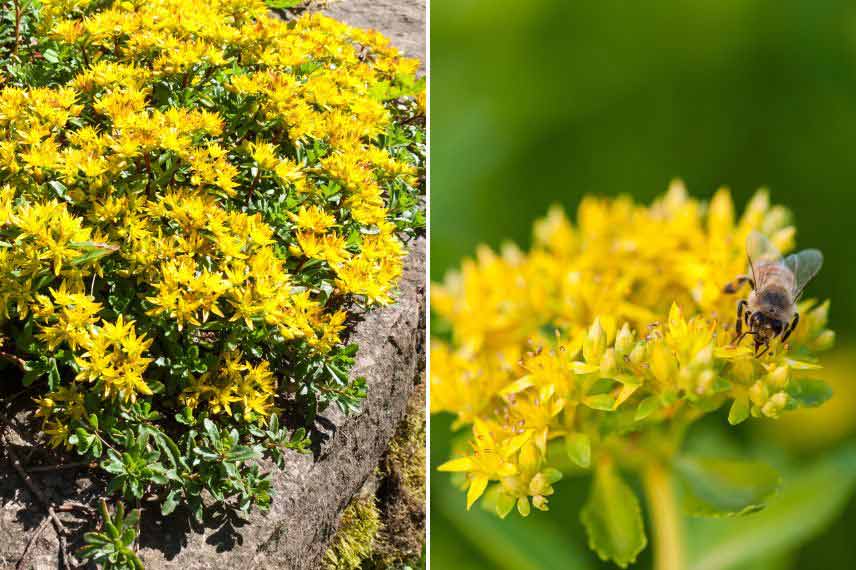
Sedum kamtschaticum
Phyla nodiflora or Lippia nodiflora
Interesting as an alternative to lawn, Phyla or Lippia nodiflora is a robust groundcover plant, suited to dry and challenging soils. Spreading over more than 1 m² by suckering, it forms a deciduous carpet (but evergreen in mild climates) 1 to 10 cm high depending on moisture and shade conditions, as it enjoys full sun but can also be planted in partial shade, for example, to fill the base of trees. In spring, countless small bouquets of pale pink flowers with a mauve centre appear, which bees adore.
While its hardiness can sometimes be a concern in colder regions, as it begins to suffer at temperatures below -10 °C, its drought tolerance is exceptional, as it can endure the hottest summers without a drop of watering.
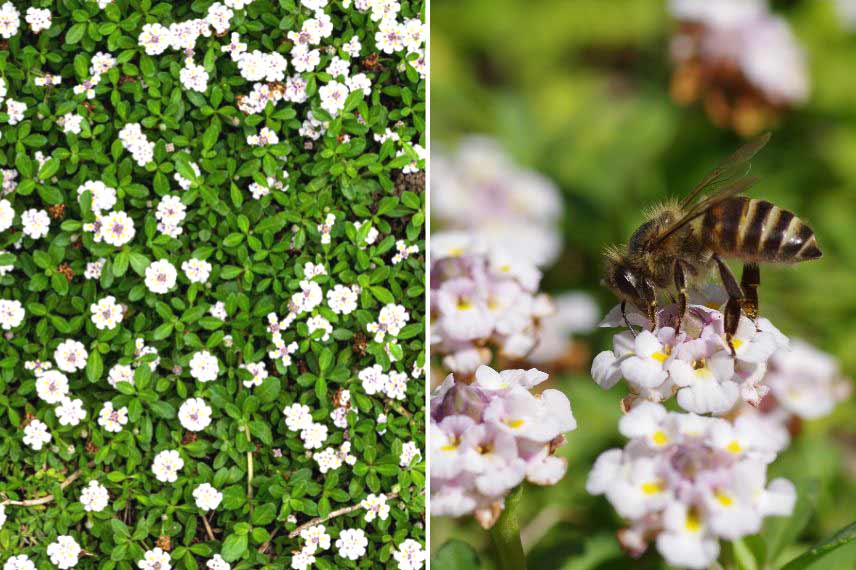
Phyla or Lippia nodiflora
Salvia pratensis or Meadow Sage
Extremely floriferous, this charming fragrant perennial delights with its clusters of blue-violet flowers borne on airy spikes 75 cm high, which succeed one another from June to August. Robust and water-efficient, the Salvia pratensis or Meadow Sage is adored by bees, who buzz around its flowers all day long.
It tolerates full sun and drying calcareous soils very well, thanks to its deep roots that allow it to draw moisture even during heatwaves. Additionally, it has great cold resistance: it will find its place in any garden, making a lovely space for nature!
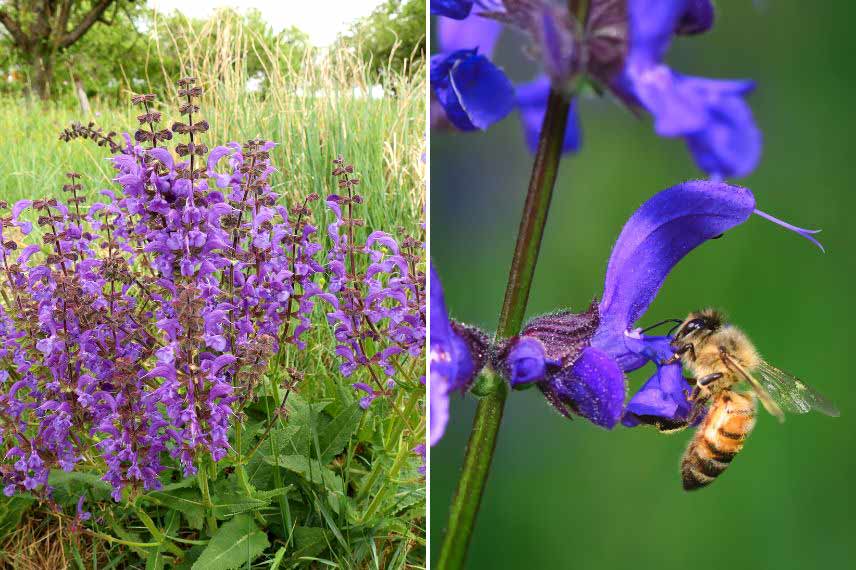
Salvia pratensis
Santolina virens or Rosemary-leaved Santolina
Also known as Green Santolina or Rosemary-leaved Santolina, Santolina virens is a shrub native to rocky Mediterranean areas, making it perfectly adapted to poor soils and drought. It is a woody perennial that forms a lovely rounded clump 50 to 60 cm high and wide, with bright green, evergreen, and fragrant foliage. From June to August, small round golden-yellow flowers in heads brighten the spots where it is planted: rockeries, gravel gardens, drought-resistant borders, along pathways, and stony slopes…
It is hardy down to -15 °C in poor, well-drained soil: if your soil is too clayey, incorporate gravel into the planting and place it in full sun: it loves it!
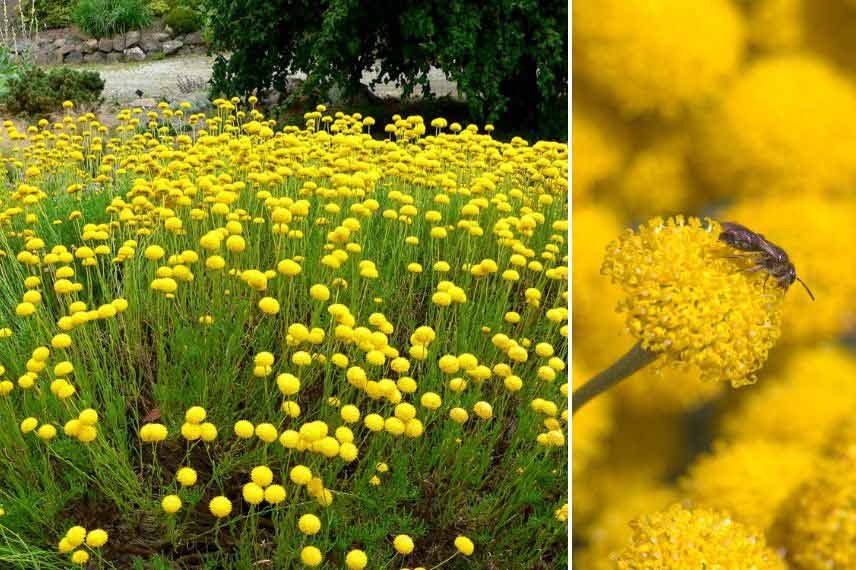
Santolina virens

- Subscribe!
- Contents
Comments