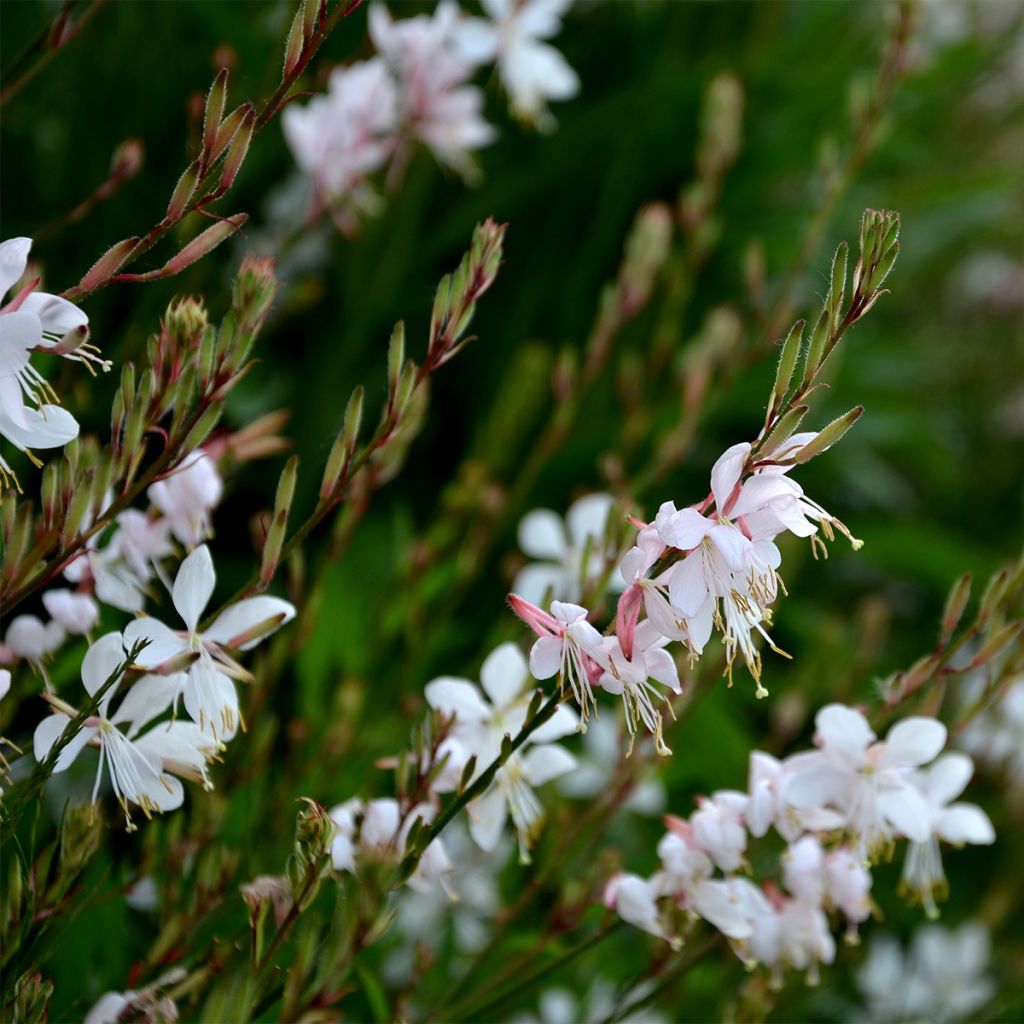
Gaura lindheimeri Summer Breeze
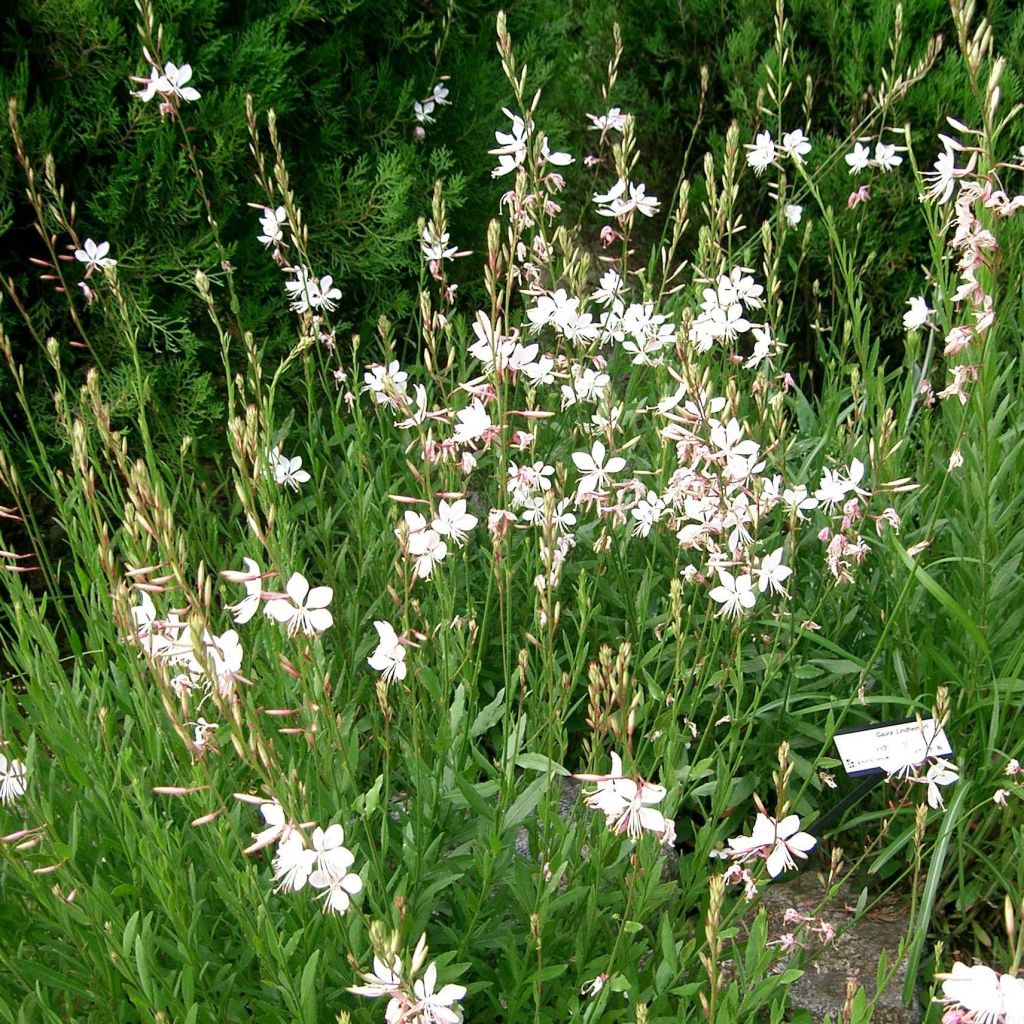
Gaura lindheimeri Summer Breeze
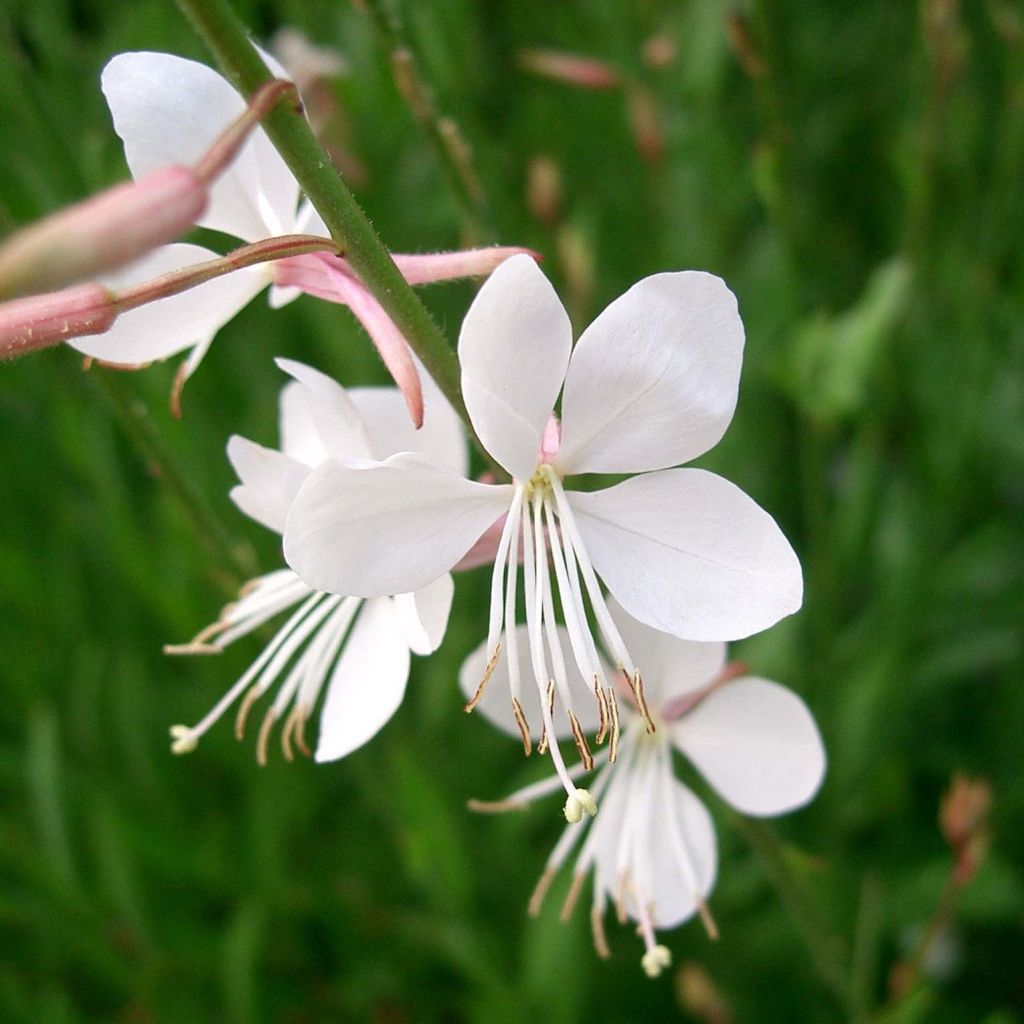
Gaura lindheimeri Summer Breeze
Gaura lindheimeri Summer Breeze
Gaura lindheimeri Summer Breeze
Beeblossom
The results have exceeded my expectations because I paired them with other Gaura already planted and it creates a lovely decoration.
david, 06/10/2025
Back-to-school special offer!
Get €10 off for every €50 you spend! And get up to €40 off on a single order.
How does it work?
1. Shop your favourites
Add your favourite plants to your basket. For every €50 you spend (excluding delivery charges, store credit and the plastic-free option), you’ll receive a €10 voucher.
€50 spent = €10 voucher
€100 spent = €20 voucher
€150 spent = €30 voucher
€200 spent = €40 voucher
2. Place your order
Once your basket reaches one of the spending thresholds, place your order. You can even choose your delivery date!
3. Receive your voucher
As soon as your order has been shipped, you’ll receive an email containing your personal voucher code and its value.
4. Use it on your next order
Your voucher is valid for 90 days from the date you receive it. It can be used once only, on a new order worth at least the value of the voucher, excluding delivery charges.
Please note: Vouchers can be combined with other offers, but cannot be split or refunded.
Home or relay delivery (depending on size and destination)
Important: You may be charged customs duties by your country’s customs authorities upon delivery.
Schedule delivery date,
and select date in basket
This plant carries a 12 months recovery warranty
More information
We guarantee the quality of our plants for a full growing cycle, and will replace at our expense any plant that fails to recover under normal climatic and planting conditions.

Would this plant suit my garden?
Set up your Plantfit profile →
Description
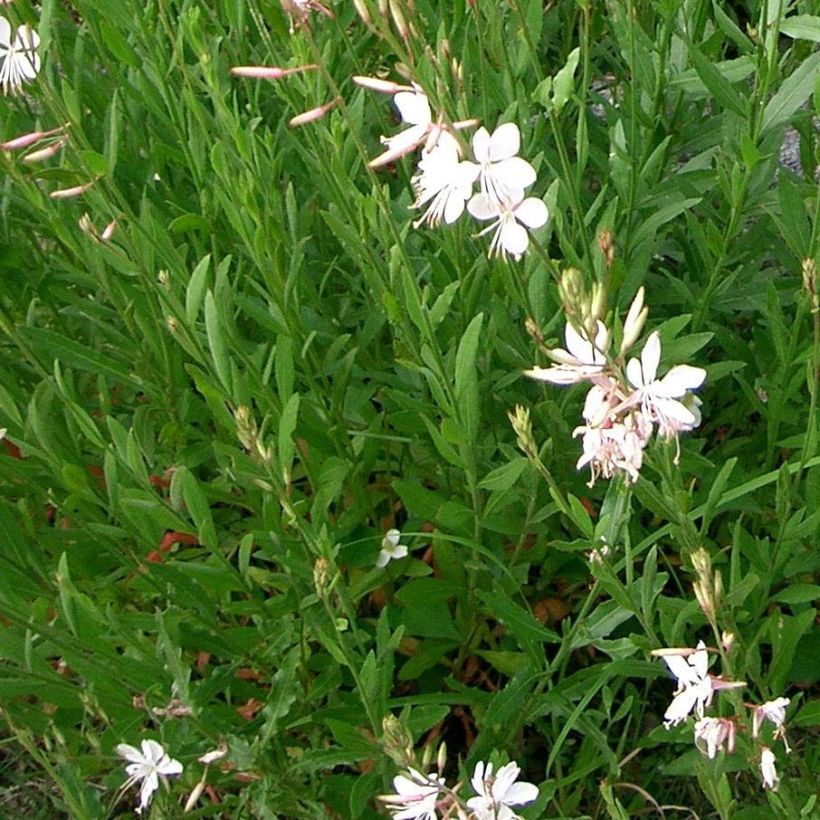
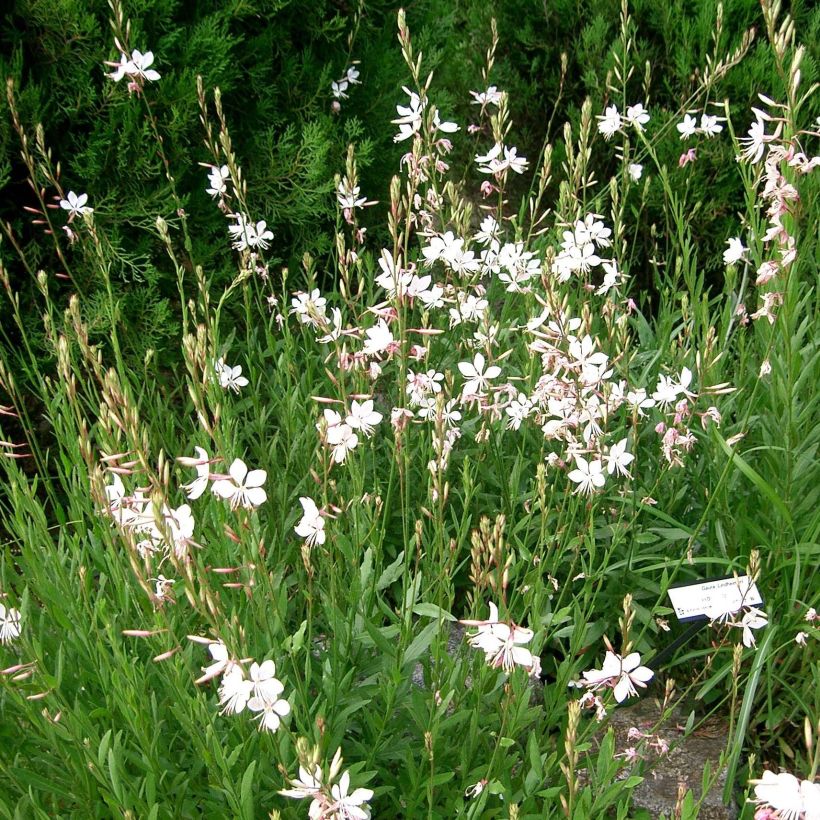
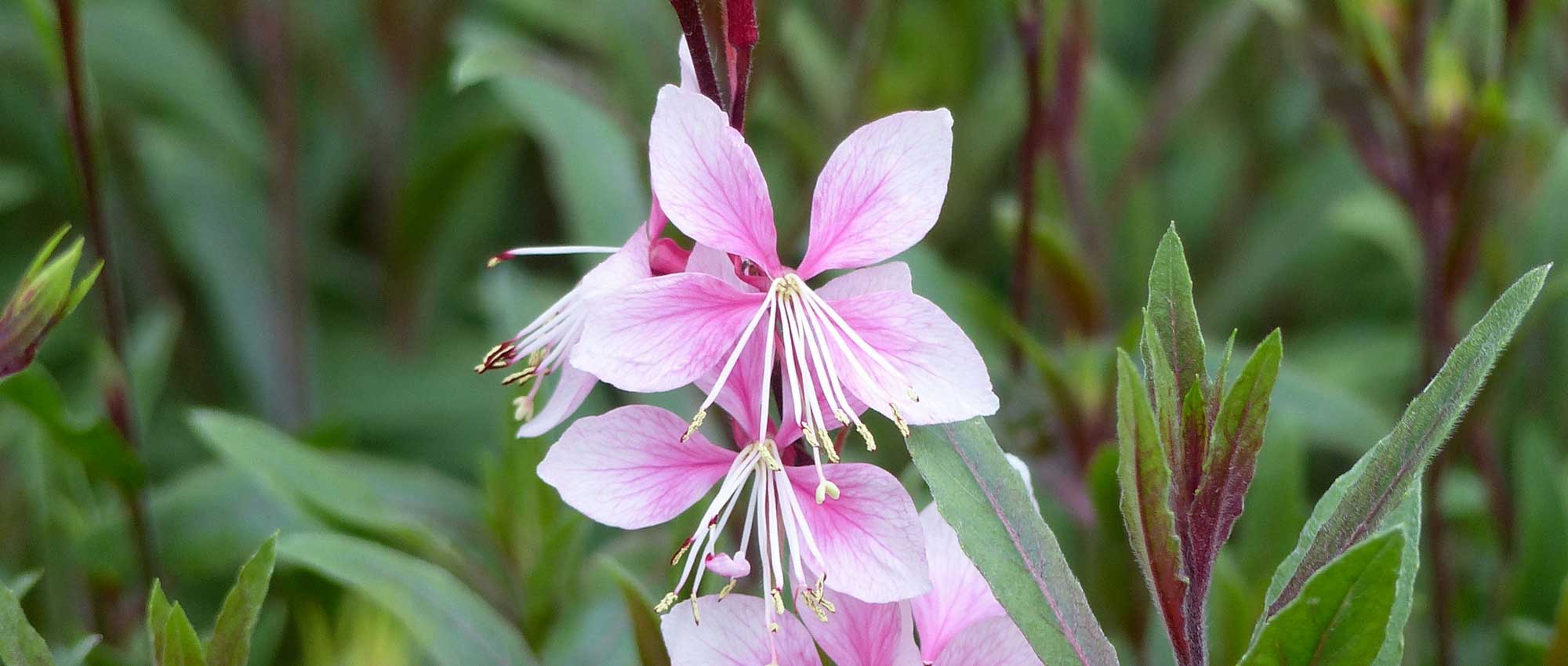
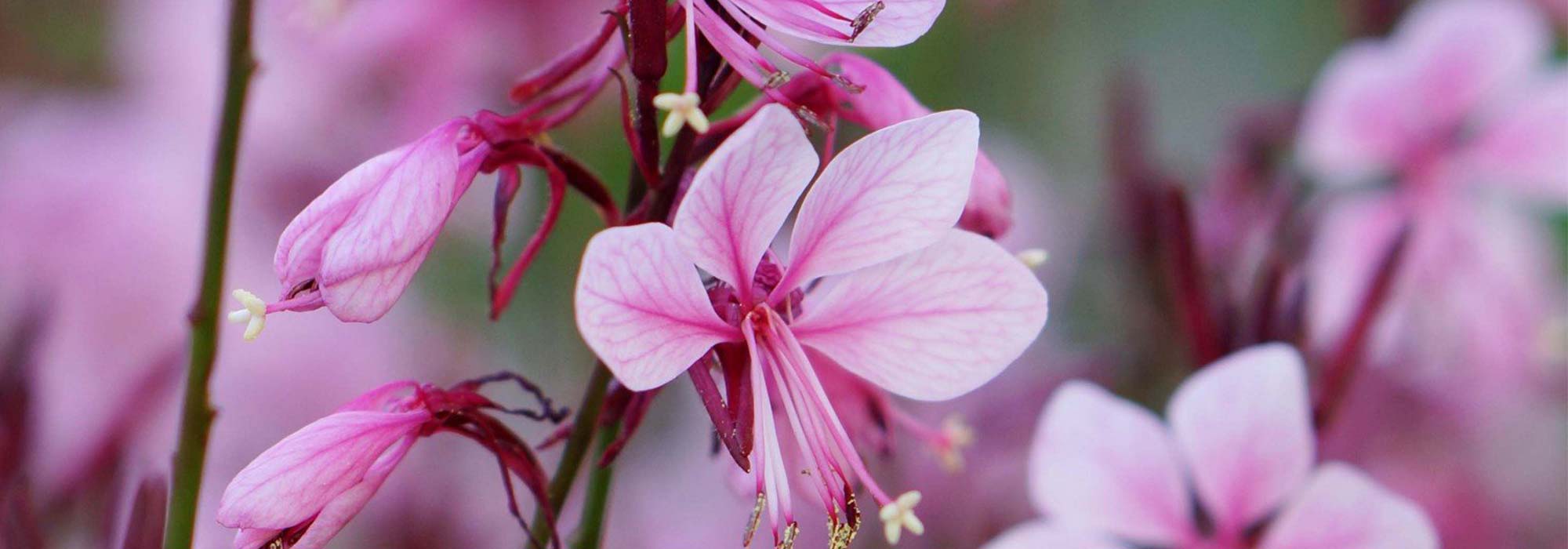
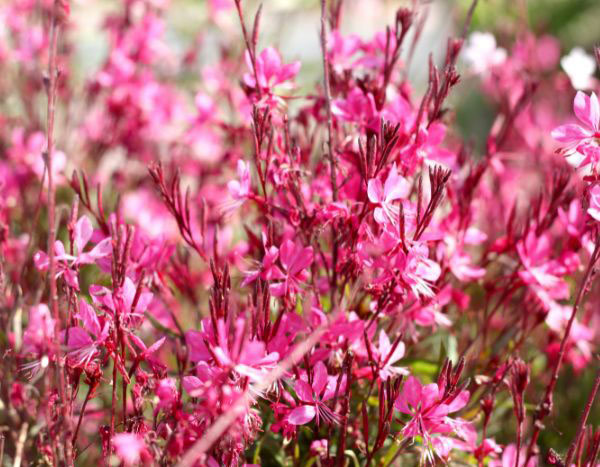
Gaura lindheimerii 'Summer Breeze' is a recent variety particularly interesting for its vigour, its ability to survive cold winters, and its endless pastel flowering. Its tall and graceful silhouette enhances the delicacy of its blooms, made up of a multitude of small white flowers barely tinged with pink, as light as butterflies. This perennial plant, although short-lived, shows rapid growth and will quickly make an impact in sunny flower beds. It also has its place in a dry or unirrigated garden.
Gaura lindheimeri, recently renamed Oenothera lindheimeri by botanists, belongs to the Onagraceae family and is a cousin of evening primroses and fuchsias. The original range of this wild species is located on the border of Mexico and the United States (prairies and warm pine forests of Louisiana and Texas, Houston). It is one of the most floriferous plants.
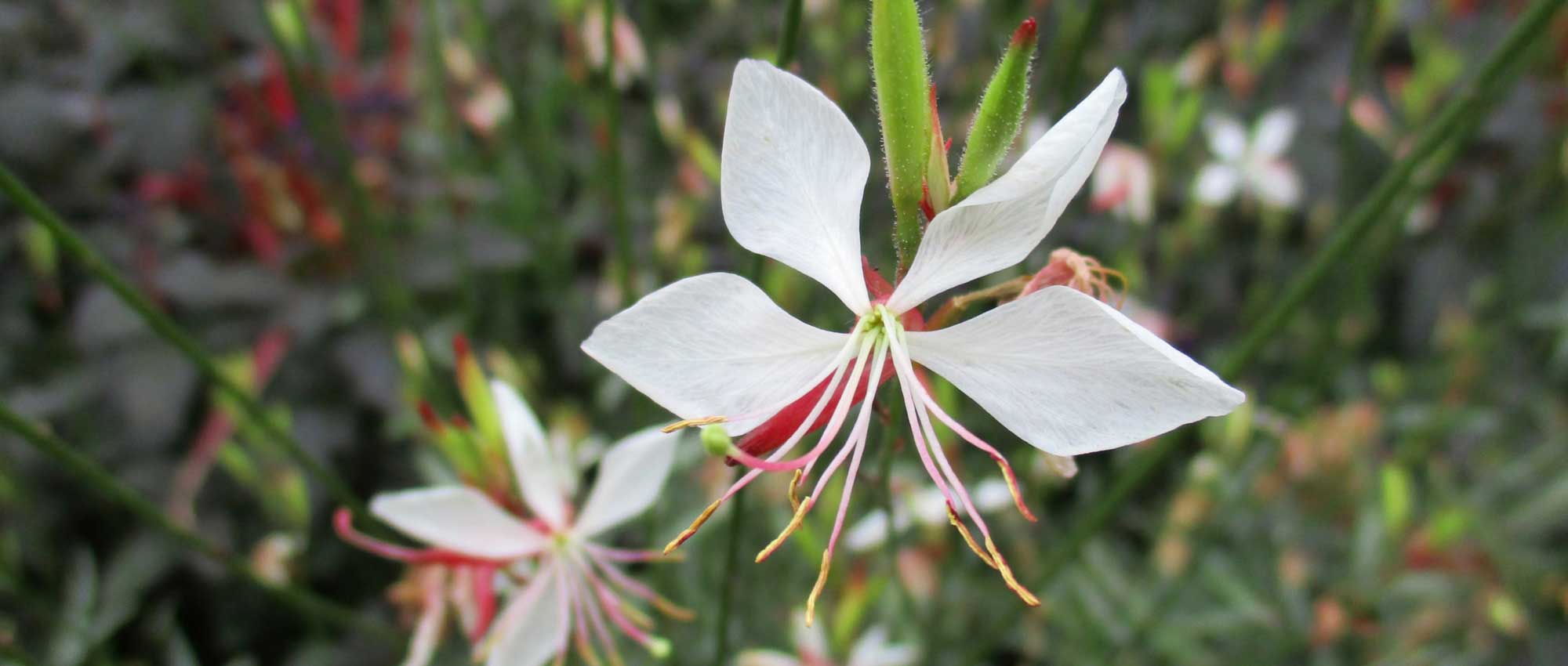
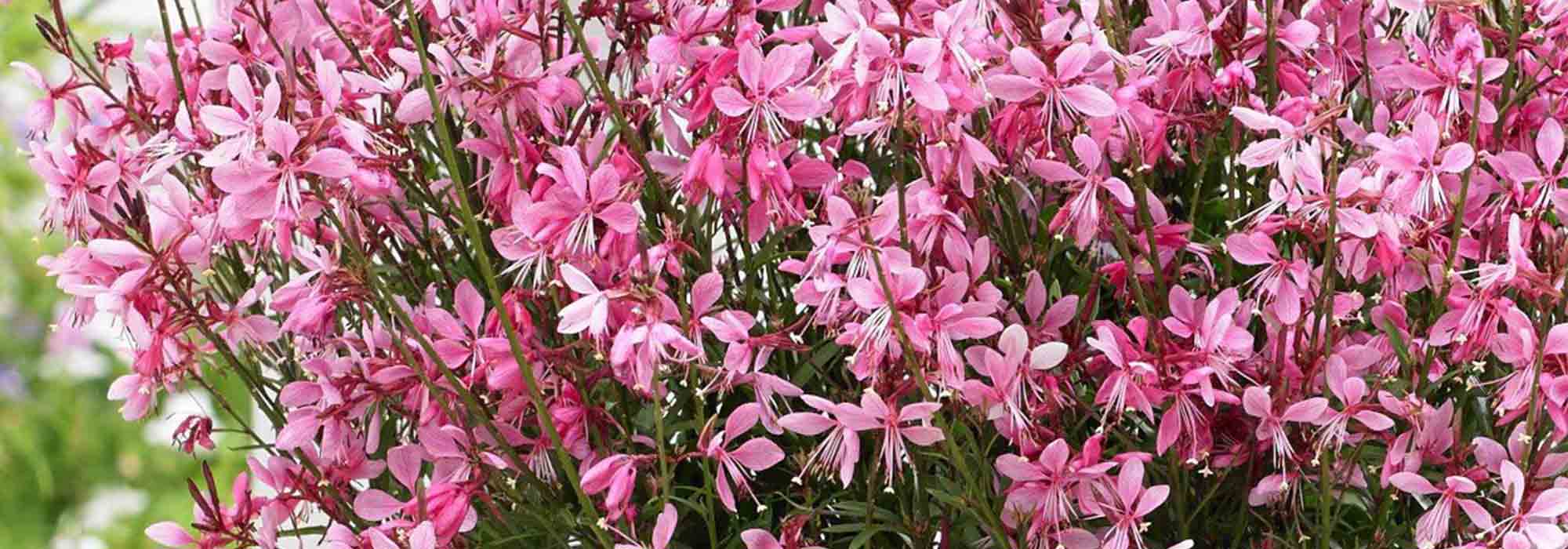
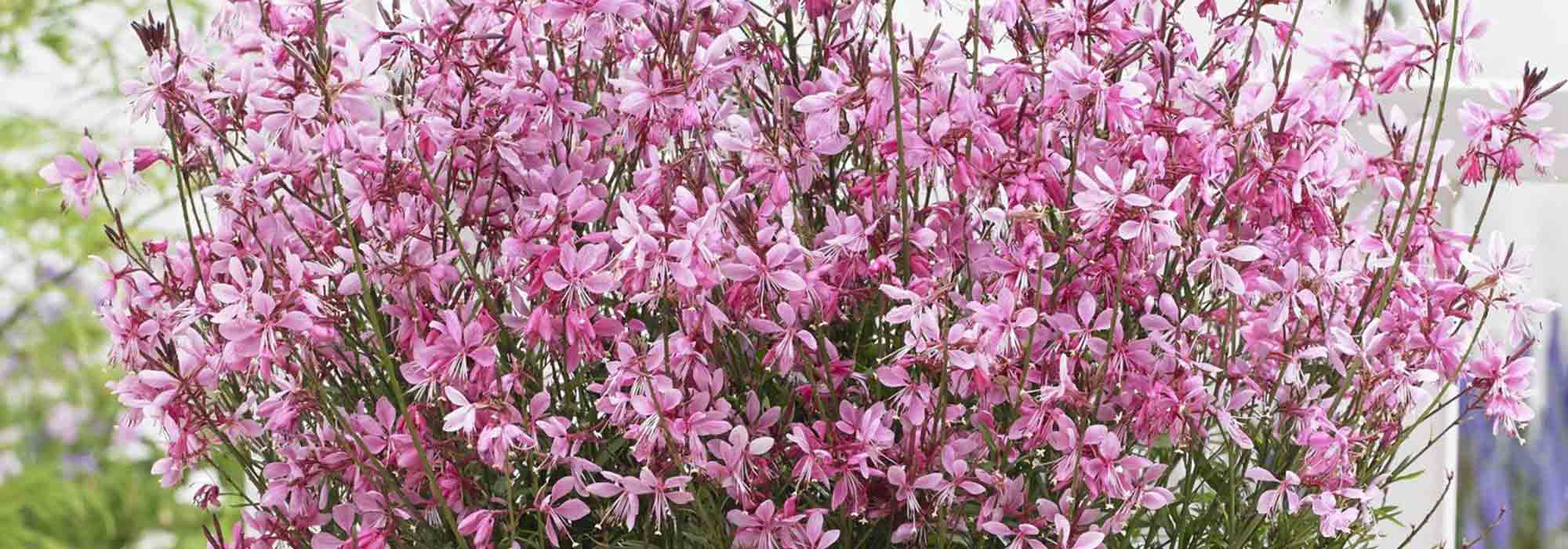
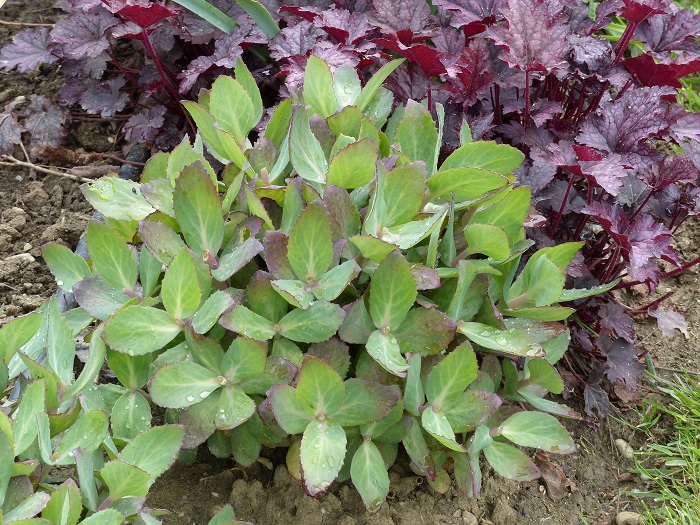
'Summer Breeze' is an Austrian selection dating back to 2008, particularly hardy, robust and vigorous. Producing densely clustered branched stems that emerge from a very resilient underground rhizome, this variety develops a slightly spreading clump of vegetation that can reach a height of 1.50 m (5ft) and a width of 80 cm (32in) in 3 years. Like all white-flowered varieties, it is very hardy and can withstand temperatures to around -15°C (5°F). It is the branched, numerous and slender floral stems that give the plant its bushy appearance. The flowering takes place in successive waves, from May-June until autumn. The 2-3 cm (1in) diameter flowers, with 4 spread petals centred on a bouquet of long flexible stamens, resemble white butterflies. They succeed the pink buds and are grouped in panicles of 50 to 80 cm (20 to 32in) in length. The foliage, fine and delicate, is deciduous: it disappears in winter. In spring, the branches bear red shoots. These unfold into elongated leaves like those of willows, 5-6 cm (2in) long and 1 cm (0in) wide, with a grey-green to glaucous hue. These small leaves are hairy on both sides. The root system is a taproot that allows the plant to anchor itself in poor or rocky soils.
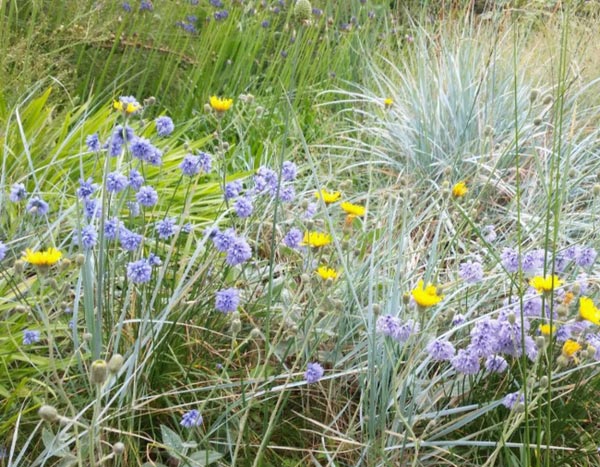
Gauras have quickly become the stars of urban flower beds and gardens. This success can be explained by their incredible floriferousness and the speed at which they develop, even in mediocre and dry soils in summer. These plants, which seem unaffected by the wind, quickly become indispensable for those who have tried them for a season. Wherever they are planted they bring lightness, volume, and a lot of grace. Gaura lindheimeri 'Summer Breeze' has its place in the background of herbaceous borders or flower beds. It goes well with roses, grows between shrubs like abelias and deutzias, accompanies frugal perennials like catmints, rose campions (Lychnis coronaria), and lavenders. It blends well with perovskia, Mexican orange blossoms, red shrubby salvias, and caryopteris. Its alliance with roses and ornamental grasses is also very successful. Gauras also do very well in large pots.

Gaura lindheimeri Summer Breeze in pictures
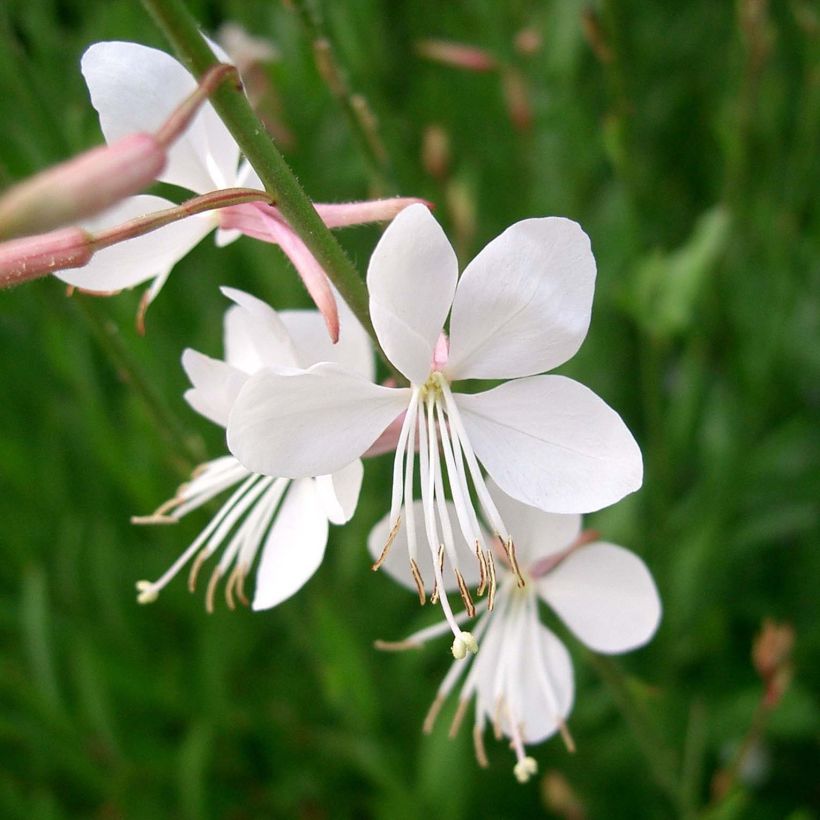
Flowering
Foliage
Plant habit
Botanical data
Gaura
lindheimeri
Summer Breeze
Onagraceae
Beeblossom
Cultivar or hybrid
Planting and care
Gaura lindheimeri Summer Breeze should be planted in a sunny position. It is not picky about the nature of the soil, as long as it is well-drained; it can even be poor and dry. If your soil is really poor and infertile, improve it with leaf compost. The only enemy of this plant is stagnant moisture, even more so than the cold. Incorporate draining materials such as gravel and river sand into the garden soil. These conditions will allow it to live for several years. Regular pruning is essential after each wave of flowers to promote the emergence of new shoots that will bloom in turn. With this method, you can achieve multiple flowerings from June until the start of November without interruption (do not prune all the clumps in the garden at the same time). Pruning at the start of the growing season (March-April) will give the plant a harmonious shape.
Planting period
Intended location
Care
Planting & care advice
-
-
-
-
-
-
-
-
-
, onOrder confirmed
Reply from on Promesse de fleurs
Recently viewed products
Haven't found what you were looking for?
Hardiness is the lowest winter temperature a plant can endure without suffering serious damage or even dying. However, hardiness is affected by location (a sheltered area, such as a patio), protection (winter cover) and soil type (hardiness is improved by well-drained soil).

The flowering period indicated on our website applies to countries and regions located in USDA zone 8 (France, the United Kingdom, Ireland, the Netherlands, etc.)
It will vary according to where you live:- In zones 9 to 10 (Italy, Spain, Greece, etc.), flowering will occur about 2 to 4 weeks earlier.
- In zones 6 to 7 (Germany, Poland, Slovenia, and lower mountainous regions), flowering will be delayed by 2 to 3 weeks.
- In zone 5 (Central Europe, Scandinavia), blooming will be delayed by 3 to 5 weeks.
In temperate climates, pruning of spring-flowering shrubs (forsythia, spireas, etc.) should be done just after flowering.
Pruning of summer-flowering shrubs (Indian Lilac, Perovskia, etc.) can be done in winter or spring.
In cold regions as well as with frost-sensitive plants, avoid pruning too early when severe frosts may still occur.
The planting period indicated on our website applies to countries and regions located in USDA zone 8 (France, United Kingdom, Ireland, Netherlands).
It will vary according to where you live:
- In Mediterranean zones (Marseille, Madrid, Milan, etc.), autumn and winter are the best planting periods.
- In continental zones (Strasbourg, Munich, Vienna, etc.), delay planting by 2 to 3 weeks in spring and bring it forward by 2 to 4 weeks in autumn.
- In mountainous regions (the Alps, Pyrenees, Carpathians, etc.), it is best to plant in late spring (May-June) or late summer (August-September).
The harvesting period indicated on our website applies to countries and regions in USDA zone 8 (France, England, Ireland, the Netherlands).
In colder areas (Scandinavia, Poland, Austria...) fruit and vegetable harvests are likely to be delayed by 3-4 weeks.
In warmer areas (Italy, Spain, Greece, etc.), harvesting will probably take place earlier, depending on weather conditions.
The sowing periods indicated on our website apply to countries and regions within USDA Zone 8 (France, UK, Ireland, Netherlands).
In colder areas (Scandinavia, Poland, Austria...), delay any outdoor sowing by 3-4 weeks, or sow under glass.
In warmer climes (Italy, Spain, Greece, etc.), bring outdoor sowing forward by a few weeks.
Shipping country and language
Your country of residence may be:
Your country of residence is:
For a better user experience on our website, you can select:
Your shipping country:
-
 Austria
-
 Belgium
-
 Bosnia & Herzegovina
-
 Bulgaria
-
 Croatia
-
 Cyprus
-
 Czechia
-
 Denmark
-
 Estonia
-
 Finland
-
 France
-
 Germany
-
 Greece
-
 Hungary
-
 Iceland
-
 Ireland
-
 Italy
Italy
-
 Latvia
-
 Liechtenstein
-
 Lithuania
-
 Luxembourg
-
 Malta
Malta
-
 Netherlands
-
 Poland
-
 Portugal
-
 Romania
-
 Serbia
-
 Slovakia
-
 Slovenia
-
 Spain
Spain
-
 Sweden
-
 Switzerland
Language:
-
French
-
 English
-
Spanish
-
Italian
-
German
-
Portuguese
-
Dutch
-
Finnish
My Account
Hello
My wish lists
My cart
Log in / Register
Existing customer?
This form is protected by reCAPTCHA - the Google Privacy Policy and Terms of Service apply.
New customer?
Create an account to track your orders, access our customer service and, if you wish, make the most of our upcoming offers.