





























Akebia and its edible fruits: a treasure to discover
How to savour your delicious fruits?
Contents
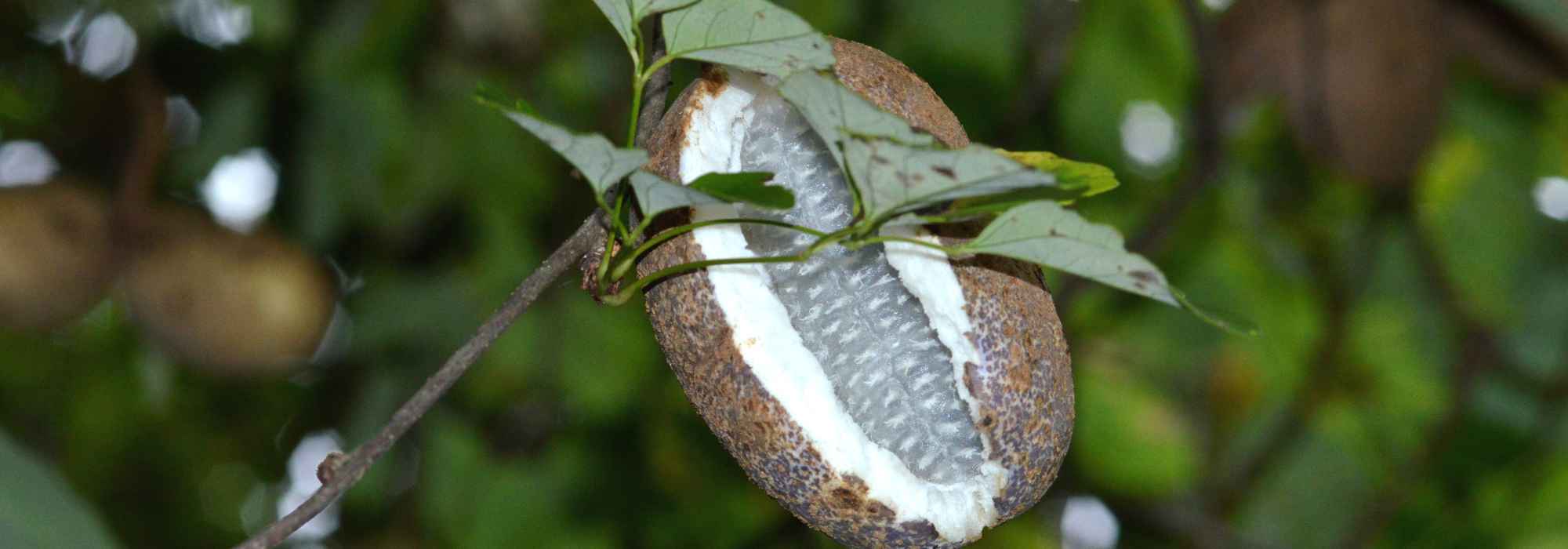
Akebia, native to East Asia, is a vigorous climbing plant that captivates with its fragrant flowering and its astonishing edible fruits. Its flowers, in a delicate violet colour, bloom in spring, leaving room for fleshy oblong fruits, with purple or chocolate skin.
If Akebia remains relatively little known in the West, it has long been appreciated in Asia for its ornamental and culinary qualities. This fact sheet invites you to discover Akebia: botany, cultivation, harvest, conservation and use of its fruits. Let yourself be surprised by the charms of this climbing plant and explore the unique flavours of its fruits!

Akebia – Akébie: What is this plant?
The Akebia, belonging to the Lardizabalaceae family (here’s to your health!), is a climbing plant that captivates with its rapid growth and its ability to beautify trellises, pergolas and other supports. The Akebia displays semi-evergreen, compound and palmately divided leaves, providing dense and decorative foliage year-round. The flowers, often fragrant, stand out for their unusual shape and colours ranging from purple to brown, with a spring flowering. The stems, for their part, are flexible and twining, enabling the plant to cling easily and to reach several metres in height.
Among the best-known species are the Akebia quinata (five-leaf Akebia) and Akebia trifoliata stand out. Their fruits, resembling long gourds, ripen in late summer or early autumn and are edible. The pulp, sweet and gelatinous, as well as the seeds, are consumed in certain cultures, notably in Asia, where they are valued for their flavour and medicinal properties.
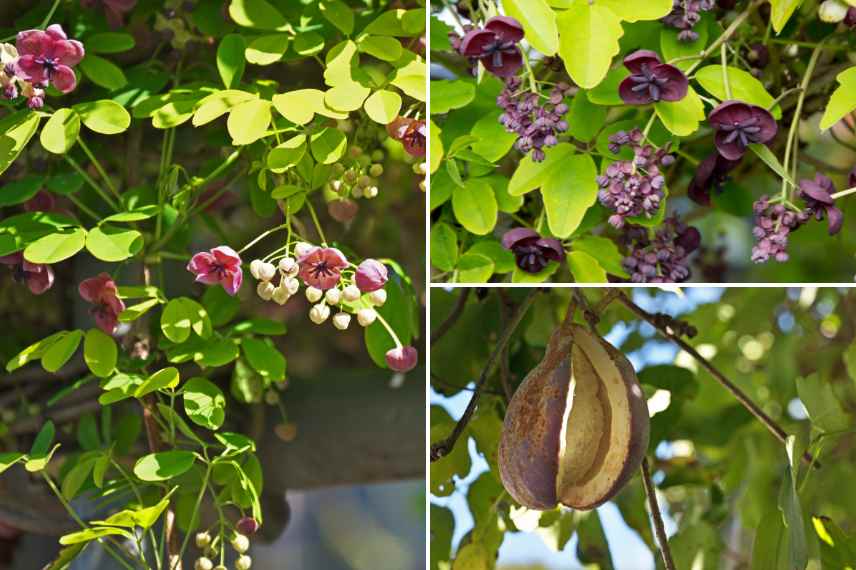
The Akebia: a lovely display of flowers… and astonishing fruits!
Read also
10 climbing plants for mild climatesA quick note on the cultivation of this climbing plant.
The cultivation of Akebia requires rich, well-drained soil and a full sun to partial shade exposure to thrive. For planting, choose spring or autumn, ensuring you space the plants to allow them to spread. Maintenance focuses on regular watering, especially during dry periods, and an annual application of compost to enrich the soil.
Akebia multiplication can be achieved by sowing in spring or by layering and propagation by cuttings in summer. Regarding pruning, it is generally limited to thinning the stems to maintain the plant’s structure and encourage abundant flowering. This pruning is preferably carried out in late winter, before the start of spring.
→ For more on Akebia cultivation, read Akebia: planting, pruning and maintenance.
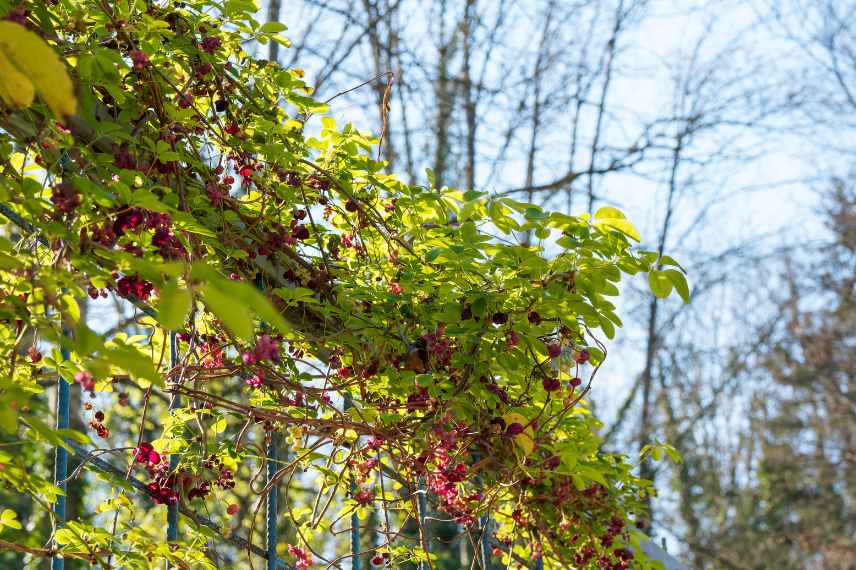
A graceful, voluble plant
Fruit descriptions
The Akebia fruits, nicknamed “chocolate fruit” for the brownish colour of their outer skin, boast an elongated shape reminiscent of large gourds. This visual comparison is striking, particularly when the fruits hang gracefully from the plant’s climbing lianas. The fruit’s skin, though hard and tough, encloses a tender flesh and a gelatinous pulp within, offering a striking contrast between the rugged exterior and the delicate, edible interior. The pulp’s flavour is mild, with a hint of melon or fig, and is enjoyed for its refreshing mouthfeel. In terms of benefits, Akebia fruits are reputed for their vitamin and mineral content, offering antioxidant and hydrating properties. 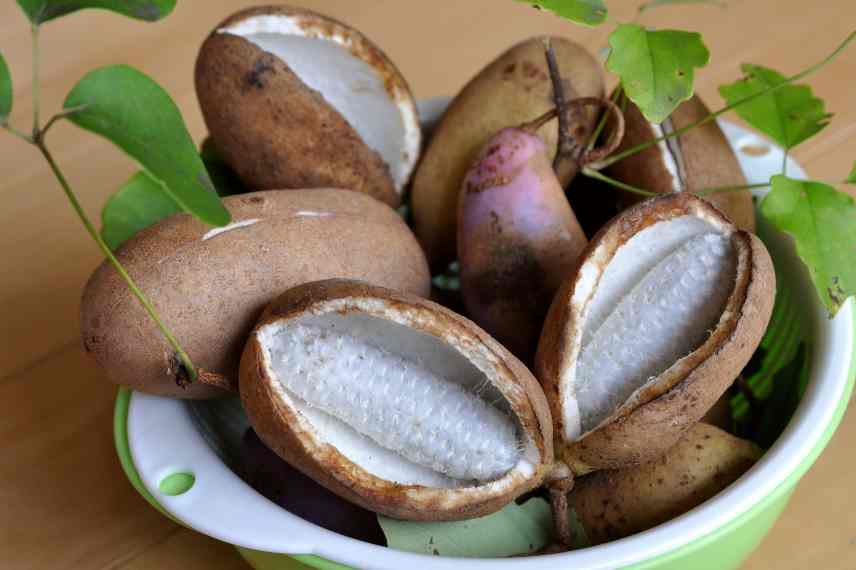
Read also
6 climbing plants that flower all summerFruit harvest
The harvest of Akebia fruits is a key moment to savour their unique flavour. Ripeness of the fruits is generally reached in late summer or early autumn, when their colour deepens to a rich chocolate brown and their size is at its maximum. A distinctive sign of ripeness is also their tendency to open slightly, revealing the jelly-like pulp inside. This step indicates that the fruits are ready to be picked and eaten.
For harvesting, it is advisable to use gentle techniques to avoid damaging the plant. Use gardening scissors or a pruning shear to cut the fruit from the liana, taking care to leave a small portion of the stem to facilitate handling and avoid injuring the mother plant. Given that the Akebia fruits can be quite heavy, it is important to support them carefully during the cut to prevent them from dropping and getting damaged.
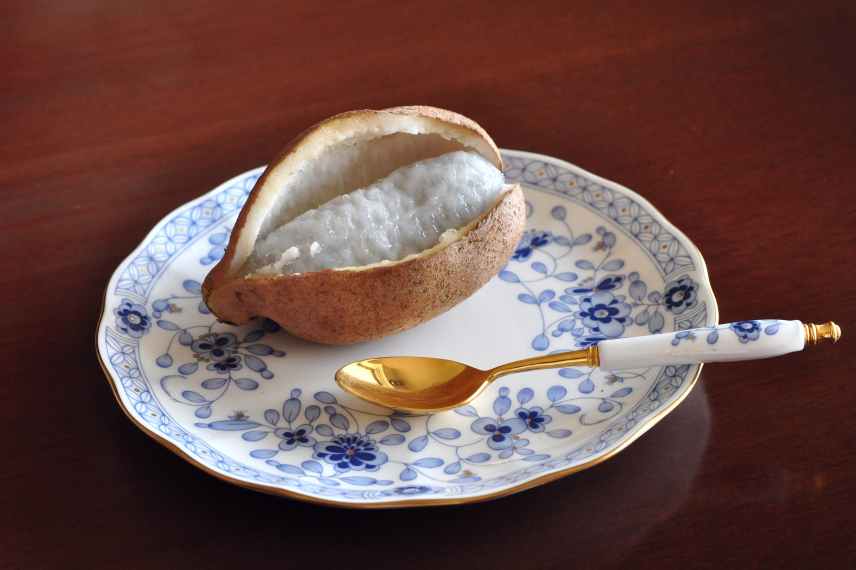
After harvest, the fruits can be consumed fresh, by simply opening the skin to access the sweet pulp or used in a variety of culinary preparations.
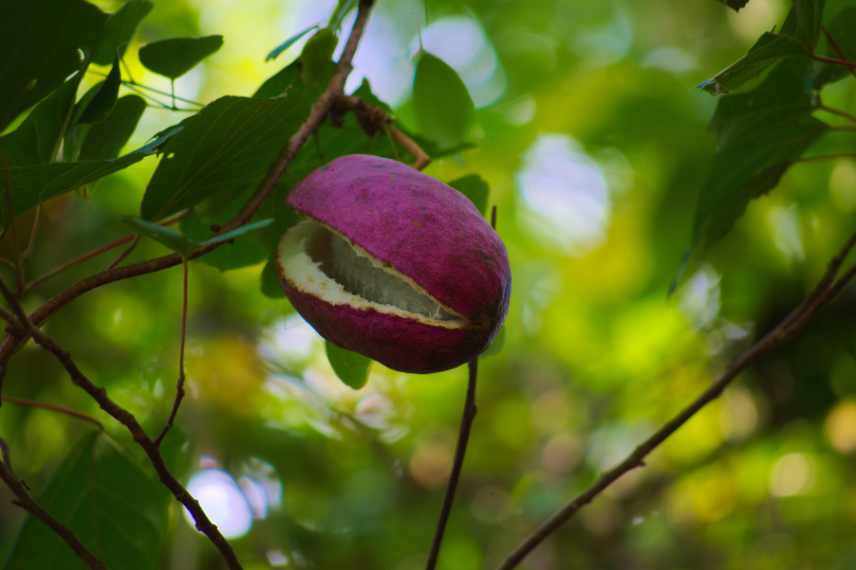
The fruit is opening slightly: it’s time to harvest!
Fruit storage
At room temperature, Akebia fruits keep for 2 to 3 days before they start to lose their freshness. However, when stored in a refrigerated environment, their shelf life can be extended to up to a week, or a little more, provided they are placed in the least cold part of the fridge to avoid the risk of freezing.
To preserve Akebia fruits, several techniques can be employed. Refrigeration is the simplest and most direct method, ideal for short-term use. It is recommended to place the fruits in a perforated plastic bag or in an airy container to maintain relative humidity without causing excessive condensation, which could accelerate their deterioration.
For longer-term storage, freezing the pulp is a viable option. After extracting the pulp from the fruits, it can be frozen in airtight containers or freezer bags. This method is particularly useful for preserving the pulp’s flavour for future use in recipes or beverages.
Additionally, it is possible to transform Akebia fruits into jams, jellies or preserves, which not only greatly extends their shelf life but also offers a creative way to enjoy their unique flavour all year round.
Using Akebia fruits in cooking
Culinary uses
The fruits of Akebia lend themselves wonderfully to making jams, thanks to their natural gelatinous texture which helps to thicken. This characteristic also makes them ideal for creating refreshing sorbets and pastries, where their subtle sweetness can be showcased. When incorporated into tarts or used as a filling for cakes, they bring an exotic touch and an appealing colour.
Beyond pastries and frozen desserts, the fruits of Akebia can be transformed into juice or syrups, offering a delicious alternative to traditional nectars. These juices and syrups can be used as a base for cocktails or non-alcoholic drinks. Winemaking, though less common, is another avenue of exploration, where the aromatic characteristics of the fruits can enrich unique fruity wines.
Nutritional value and benefits
Akebia fruits are not only enjoyed for their flavour but also for their nutritional value. Rich in vitamins, notably vitamin C, and minerals such as potassium, they help bolster the immune system and regulate blood pressure. Their antioxidant content helps to combat free radicals, offering protection against certain diseases and premature ageing. The hydrating and refreshing properties of the pulp also make it a desirable ingredient for digestive health and overall vitality.
Akebia in human culture
Akebia, with its graceful presence and its unique fruits, occupies a prominent place in the symbolism and folklore of many cultures, particularly in Asia, from which it originates. It often symbolises protection and attachment, illustrated by its ability to coil around and climb, which can be interpreted as a sign of support and the intertwining of destinies.
In Asian traditional medicine, the Akebia is valued for its therapeutic virtues. The fruits and leaves are used to treat a variety of ailments, such as pain, inflammation, and to promote the health of the digestive system.
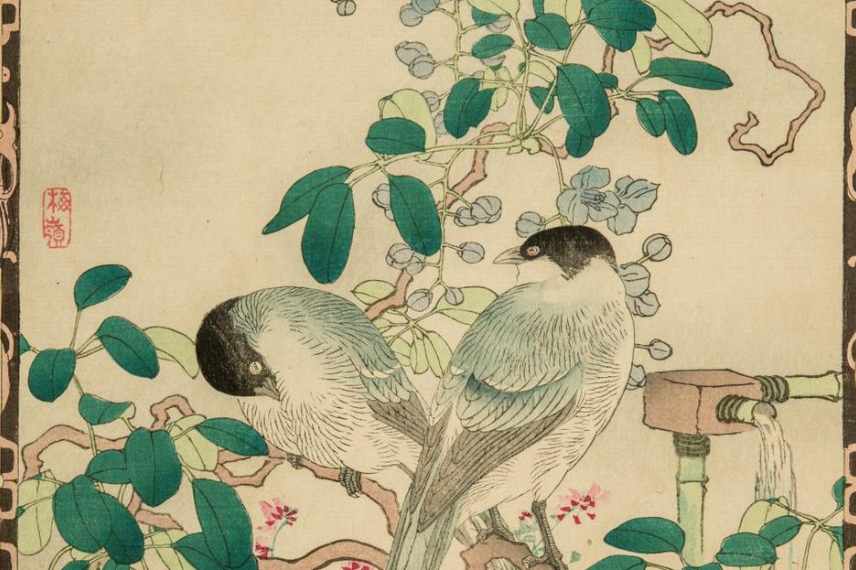
Panel painting from the 19th century: Azure magpies and Akebia. Bairei kachō gafu. Museum of Fine Arts, Boston (© Wikimedia Commons)
- Subscribe!
- Contents
Comments