


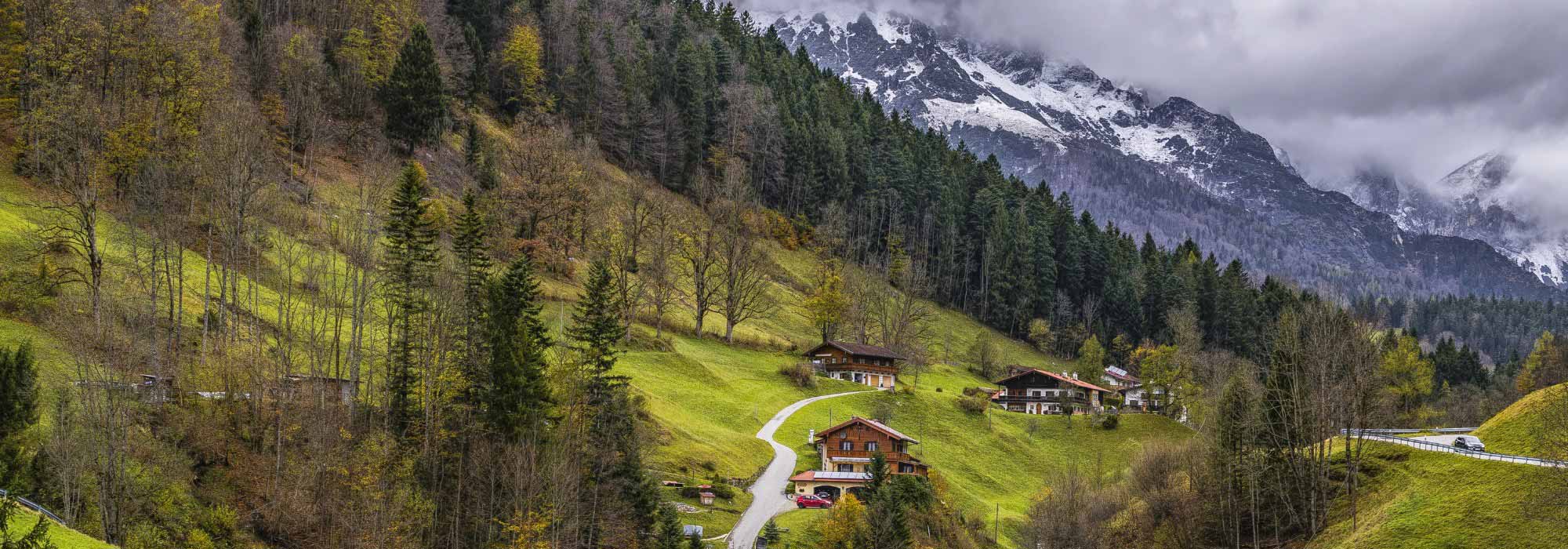
Alpine trees: six species to adopt!
Hardy and resistant trees
Contents
Mountain gardens are subjected to a harsh climate, marked by long, cold winters, with more sun exposure and stronger winds than in the plains, as well as soil that is often rocky and well-drained, fairly nutrient-poor. Therefore, you must choose plants adapted to these climatic and geological conditions! Whether trees, shrubs or perennials, you will not plant the same plants in a mountain garden as in a plain garden. Trees are essential to form the structure of the garden and bring a leafy frame, height, coolness and shade. It is important to choose them carefully. By the way, when thinking of mountain trees, we mainly think of conifers, such as firs, spruces or larches, but beautiful leafy trees also find a place in high-altitude gardens! We present six trees particularly suited to planting in the mountains, with a few ideas on how to pair them!

Beech, Fagus sylvatica
The beech (Fagus sylvatica) is a large deciduous tree that is very hardy and able to withstand cold climates. It is particularly valued for its beautiful smooth grey bark and its dense foliage that changes colour through the seasons, shifting from light green in spring to a coppery yellow in autumn. Its leaves are marcescent: once dead, they remain on the tree, then fall in spring when the new leaves appear. Beech grows slowly, but has great longevity (generally between 150 and 300 years). It thrives in soils that are slightly acidic, light, cool and well-drained. It can grow in mountain areas up to 1,500 metres above sea level. At maturity, beech can become very large (up to 20 m tall), which is why it is best planted as a specimen in a large park or garden. However, it tolerates pruning very well, and can be grown as a hedge. In addition, there are moderately growing varieties, such as Fagus sylvatica ‘Mercedes’, that adapt easily to small gardens! Beech pairs perfectly with the birch to create an interesting contrast of textures and colours, or with the ferruginous rhododendron (Rhododendron ferrugineum) for a flowering understorey. You can also plant it alongside a Cornus alba ‘Ivory Halo’, and plant wood anemones and bluebells at its feet. Finally, if you have a large garden, don’t hesitate to plant it as a standalone tree.
Be sure to consult our full guide: “Beech, Fagus: planting, pruning and care”
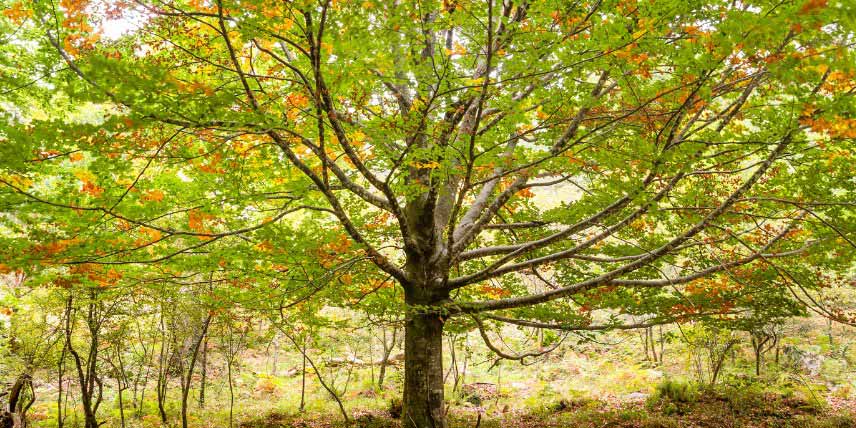
The elegant silhouette of a beech, Fagus sylvatica
European larch, Larix decidua
Larch (Larix decidua) is a striking deciduous conifer : it sheds its needles in autumn ! Its needles, arranged in rosettes on the shoots, are initially pale green in spring, then become bluish-green in summer, and turn golden yellow in autumn before shedding. It can reach a mature height of 30 to 40 m. Very hardy (down to -40°C), it grows naturally in the Alps, at elevations between 1,200 and 2,400 metres. It forms a pyramidal, relatively airy silhouette, and bears horizontal branches, slightly drooping. It enjoys sun and prefers cool, well-drained soils, even calcareous. It develops a deep root system, which helps it anchor firmly in the soil and resist wind. It pairs perfectly with other conifers such as fir (Abies) for a natural-looking garden, or with hardy shrubs such as creeping juniper (Juniperus horizontalis) for a variety of shapes and textures. You can plant beside them mountain pine Pinus mugo ‘Mughus’.
Discover our full guide on the larch and its cultivation.
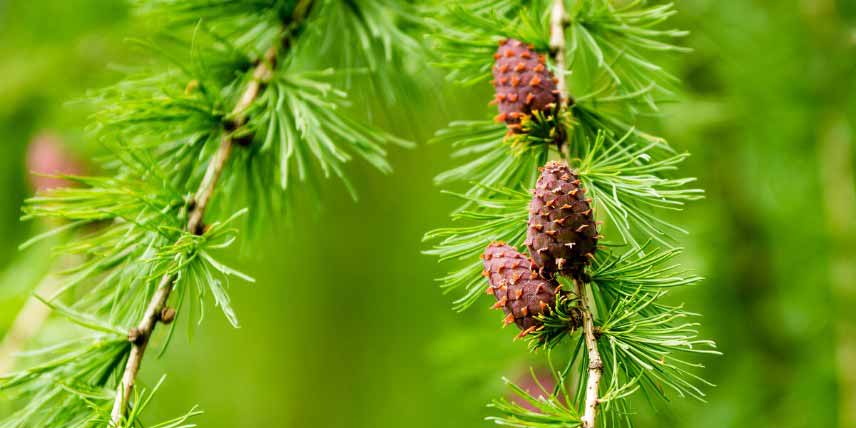
Larch (Larix decidua) bears soft needles, gathered in tufts
Birch
The birch is a handsome hardy tree, suited to cold climates and highly valued for its decorative bark, its slender silhouette and its light foliage. It has the advantage of growing quickly, and forms a tree with a supple, graceful habit, capable of reaching up to 20 m in height. Despite its deciduous foliage, it remains decorative even in winter thanks to its bright bark. The birch thrives in sun or partial shade, and appreciates cool, well-drained soil that isn’t too calcareous. Notably, discover the Himalayan white birch, which is distinguished by its pure white bark. It originates from the Himalayas, where it grows at elevations up to 4,500 metres. It will easily find its place in graphic and modern gardens, and it will form pretty contrasts with plants with dark foliage, such as Fagus sylvatica ‘Atropurpurea’ or Sambucus nigra ‘Black Lace’. Also discover the pubescent birch (Betula pubescens), capable of growing in mountains up to 2,000 metres, or the verrucate birch (Betula verrucosa, also known as Betula pendula). You can plant them alongside hornbeams, hornbeams, rowans (Sorbus aucuparia), cotoneasters and Alpine currants (Ribes alpinum), for a cottage-style and very natural garden.
For more information, see our full birch guide.
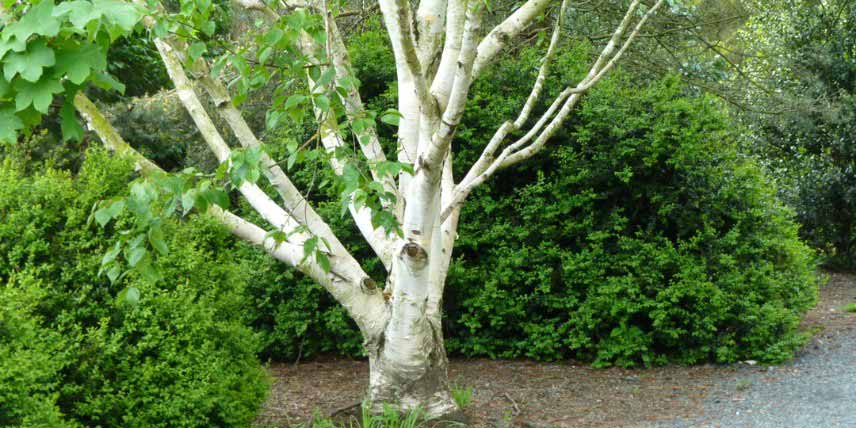
The beautiful white bark of the Himalayan birch, Betula utilis var. jacquemontii (photo : Wendy Cutler)
Read also
Which shrubs for a mountain hedge?White Alder, Alnus incana
White alder (Alnus incana) is a deciduous tree named for its pale grey-white bark. It bears dark green leaves with a grey underside, which turn yellow in autumn before falling. It thrives in full sun, in cool and fairly calcareous soil, though it will also tolerate drier soils. It tolerates poor soils because it can fix atmospheric nitrogen, thanks to nodosities on its roots. White alder grows quickly and tends to resprout from the stump, forming several trunks. Well suited to cold, it grows in the mountains up to 1,800 metres above sea level. It has the advantage of withstanding wind and anchors itself durably, even in unstable soils or on slopes. It can reach up to 20 m in height. In the garden, plant it in association with ash trees, basket willows (Salix viminalis) and elder trees.
Discover our fact sheet: “Alder: planting and growing”
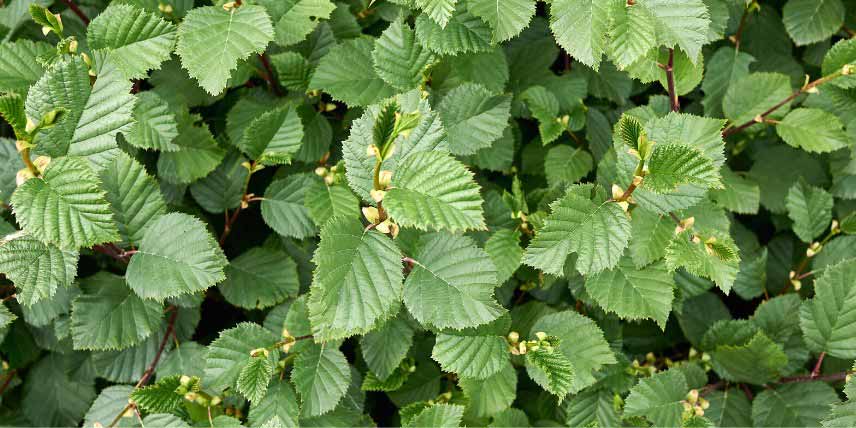
The foliage of the alder, Alnus incana
Rowan, Sorbus aucuparia
The rowan (Sorbus aucuparia) is a tree particularly valued for its elegant habit, its spring flowering and its bright red berries in autumn. It bears beautiful, finely divided leaves, divided into 11 to 17 dentate leaflets, and offers in May–June creamy-white flowers, gathered in corymbs of 12 cm in diameter. From the end of summer, they give way to red berries of 1 cm in diameter, highly decorative and enjoyed by birds. Its foliage also takes on very beautiful yellow-orange colours in autumn. The rowan reaches maturity at a height of 10 to 15 m. It can grow in the mountains up to 1,800 metres above sea level. Not particularly demanding and able to grow in any soil type, it nevertheless appreciates cool, well-drained, humus-bearing and rather acidic soils. In the garden, pair it with decorative-berry shrubs such as Viburnum dentatum ‘Blue Muffin’, Cotoneaster franchetii, holly (Ilex aquifolium) and the symphorine.
Our complete fact sheet: “Rowans, Sorbus: planting, pruning and maintenance”
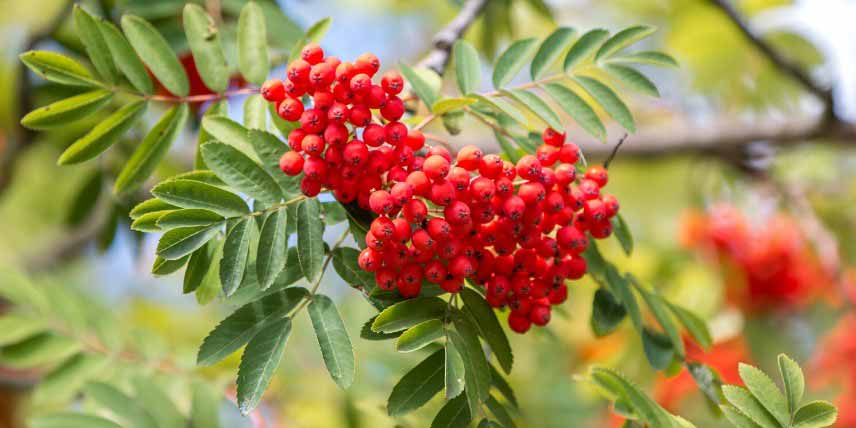
The red berries and the pretty dentate foliage of the rowan
Fir (Abies)
Firs(Abies) are beautiful conifers with a conical silhouette and evergreen foliage. Well adapted to cold, they populate upland forests. Their needles are soft to the touch and arranged in two ranks on either side of the shoot. They can reach up to 60 metres in height. Choose, for example, the pectinate fir, Abies alba (also known as the Vosges fir) or the Nordmann fir, Abies nordmanniana. Firs thrive in ordinary, well-drained, deep and cool soil. You could also opt for a spruce (for example Picea abies), with which firs are often confused. Spruces are particularly recognisable by their pendant cones, in contrast to firs which have erect cones. Firs and spruces pair well with other conifers such as the mugo pine and the larch, but they will also accompany broadleaf trees such as hornbeams and birches.
Our full guide: “Fir, Abies: planting, pruning and care”
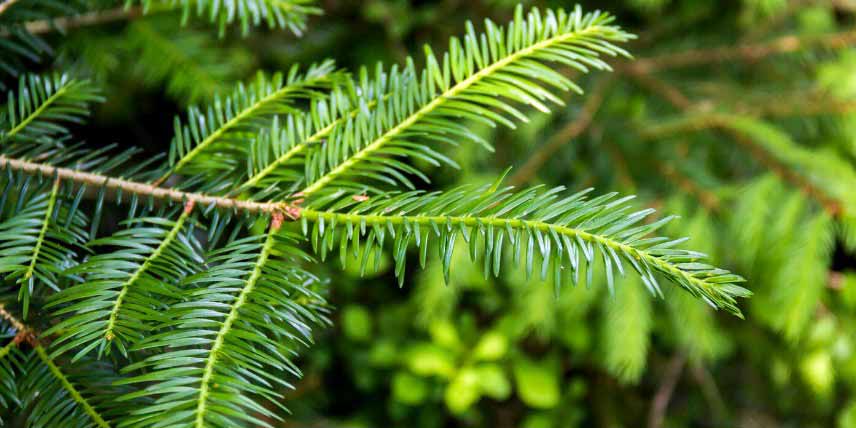
Needles of the pectinate fir, Abies alba
- Subscribe!
- Contents
Comments