





























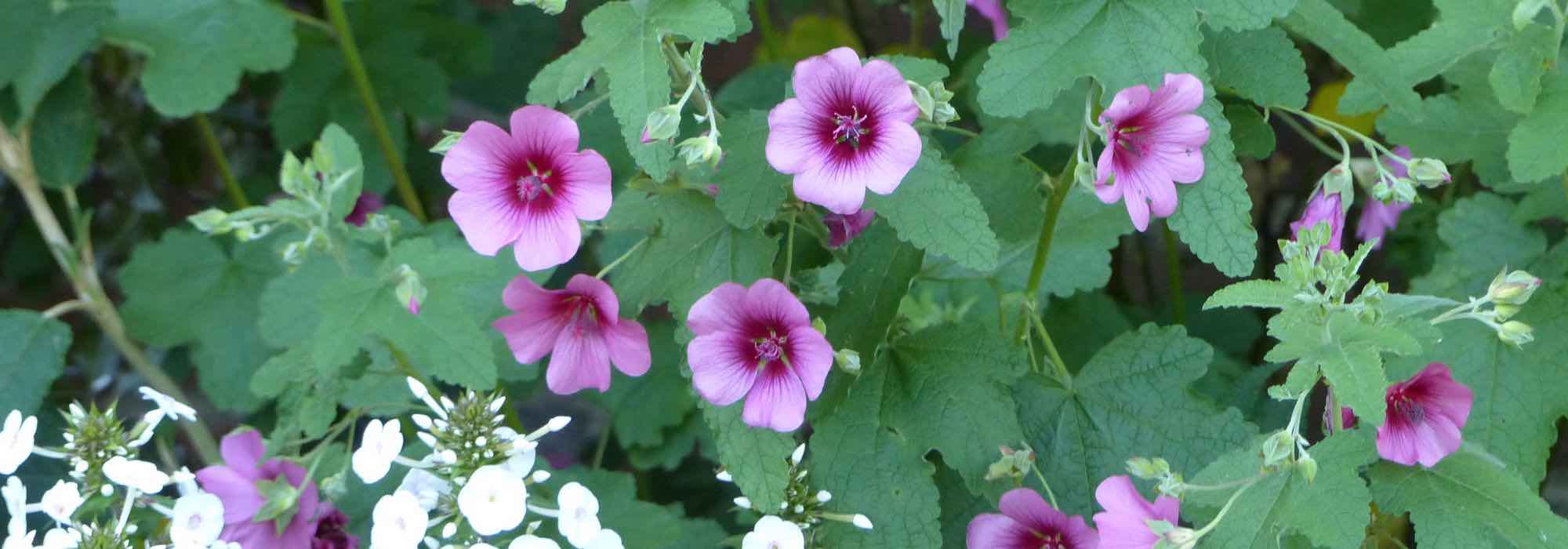
Anisodontea or Cape mallow: pairing ideas for different garden styles
An easy plant to fit into the garden or in a pot
Contents
Anisodontea, or Cape Mallow, is a gem for gardeners seeking a floriferous young plant that is hardy and easy to grow. It does, however, have limited hardiness, but grows very well in pots. With its delicate pink flowers, which rebloom continuously from June to October, it brightens the borders and adapts perfectly to many garden styles, whether naturalistic, exotic or romantic. To showcase this plant’s many qualities, the art of companion planting is essential. Which companions to choose for Anisodontea? In this article, discover ideas to elevate your garden by pairing Anisodontea with plants that share similar growing conditions.

In a naturalistic garden
Anisodontea is a prime plant for dry naturalistic gardens. With its small mauve flowers and its generous flowering from spring to autumn, it combines beauty and resilience. Originating in southern Africa, it thrives in dry, sunny conditions, making it an ideal candidate for water-wise gardens. Anisodontea is distinguished by its light shrub-like habit, its airy stems and delicate leaves. Its bright pink to pale pink flowering attracts bees and butterflies, making it ideal for a garden welcoming biodiversity. To make the most of this slender habit, plant it at the back or centre of a sunny border.
The hardy and well-known Anisodontea capensis ‘El Rayo’ is a good choice for a low-maintenance garden; it is one of the hardiest, tolerating frosts down to -8 to -10°C in well-drained soil. Among its best companions are plants such as Perovskia, light grasses, or hardy, colourful perennials such as yarrow and Echinacea, which enrich the border. Add white clumps of Gaura and a self-seeding annual such as Buenos Aires Verbena. These drought-tolerant plants add colour and texture contrasts while attracting pollinators. Anisodontea, with its airy habit, balances well with more compact silhouettes such as sages or lavenders. These plants visually anchor the border, while grasses such as the blue oat grass add a soft, flowing touch.
To dress the soil and reduce gaps, groundcovers such as creeping thyme or Sedum reflexum are ideal. Their dense foliage and drought tolerance complement the overall effect, while adding a further touch of colour and texture.
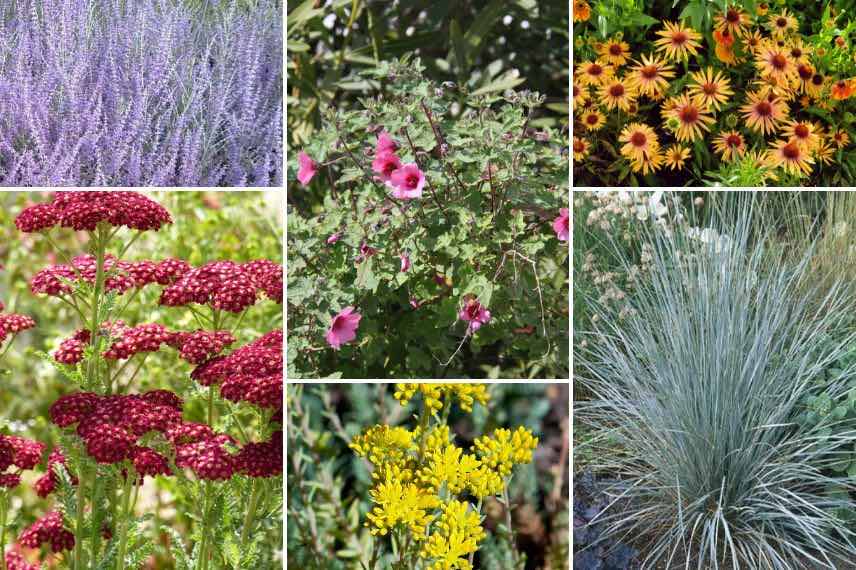
Clockwise: Perovskia, Anisodontea, Echinacea, Blue Oat Grass, Sedum reflexum, Yarrow
In a small informal hedge or a bed of shrubs
A semi-evergreen shrub, a perennial shrub, Anisodontea can nonetheless reach 1 to 1.5 metres in height. For example, place the Anisodontea ‘Crystal Rose’ with pale pink flowers veined with dark pink, in a small mixed hedge, in a mix of deciduous and evergreen bushes, with flowers or foliage. Pair it with other flowering bushes such as buddlejas or the Abelia grandiflora, with small white or pink flowers, or Escallonias that add shades of pink or red while sharing similar soil and exposure requirements.
It is also at home in a border that is structured, yet natural. Choose blue-flowering bushes such as the Ceanothus ‘Concha’ or the Buddleja ‘Lochinch’ which highlight its pastel flowering, and, for example, add shrubby salvias in the foreground. It also pairs very well with the purple foliage of a Cotinus ‘Royal Purple’ or a Pittosporum ‘Tom Thumb’ in deep bronze-purple.
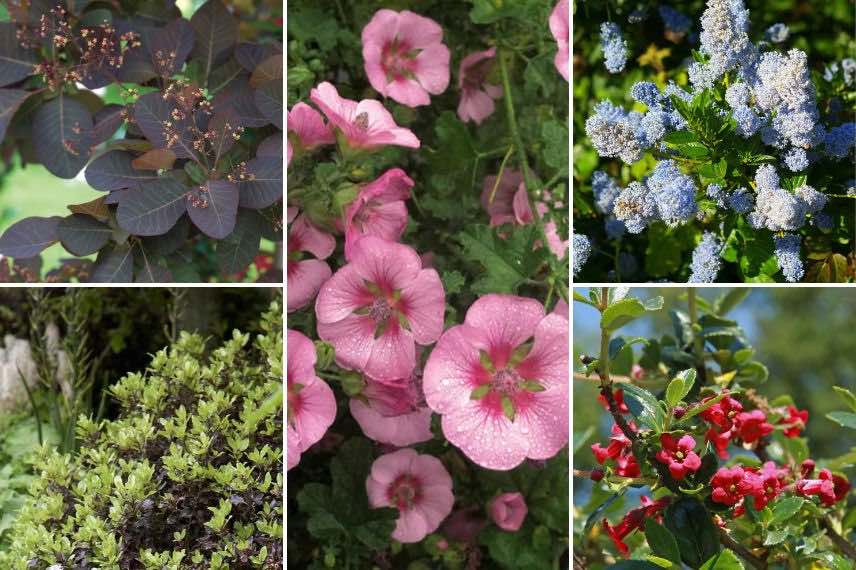
Cotinus ‘Royal Purple’, Anisodontea ‘Crystal Rose’, Ceanothus ‘Concha’, Escallonias, Pittosporum ‘Tom Thumb’
In a romantic border
In a romantic border, Anisodontea brings lightness and softness with its delicate habit and pink flowers with timeless charm. Anisodontea ‘Miss Pinky’, the most romantic, pairs harmoniously with English roses, whose generously fragrant corollas enhance the romantic atmosphere. Foxgloves and the Hollyhocks with their slender silhouettes and soft hues bring verticality and grace. Her cousin, the Common mallow, echoes this. Think also of shrubs such as the tree mallow ‘Blushing Bride’ or the Hibiscus syr iacus ‘Pink Chiffon’ with double blossoms. A perennial such as phlox provides lush panicle blooms in soft tones.
To complete this scene, plants with silvery foliage, such as Artemisia or Santolina, create a subtle contrast while strengthening the border’s elegance. In the border or on the ground, groundcovers such as hardy geraniums in rosy tones or wild thyme form a delicate and fragrant carpet, uniting the whole with softness. This mix of textures, soft colours and graceful silhouettes forms a tableau imbued with poetry, perfect for a garden where romantic harmony reigns.
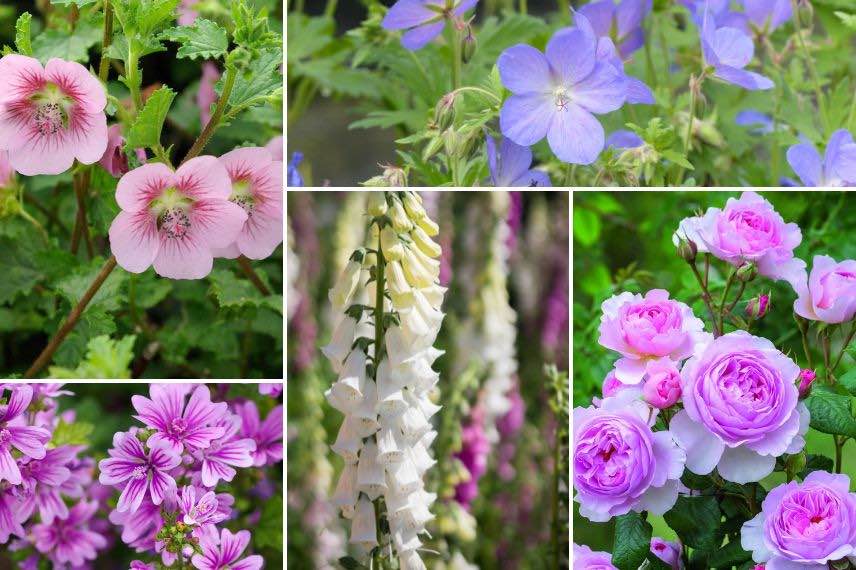
Anisodontea ‘Miss Pinky’, Hardy Geranium ‘Johnson’s Blue’, David Austin rose ‘The Ancient Mariner’, Foxglove, Common mallow
Read also
Growing Anisodontea in potsIn an autumn display
In autumn, Anisodontea prolongs garden’s glow with its long-lasting flowering and provides a touch of freshness in a seasonally styled setting marked by warmer tones and rich textures. Choose, for example, the variety ‘Lady in Pink’ with light-pink flowers, which pairs perfectly with perennials such as asters, whose shades of purple, blue and pink harmonise easily, Japanese anemones or the rudbeckias, which add golden and deep notes to the display.
To structure this autumn scene, grasses such as the Miscanthus or the Panicum offer volume and bright tones, ranging from bronze to gold, while catching the season’s grazing light. Install also shrubs such as Nandina domestica or the very dark Pittosporum tenuifolium ‘Dark Diva’. The autumn sedums, with pink umbels turning to russet, reinforce this warm ambiance while accompanying the lightness of Anisodontea.
On the ground, carpets of heucheras with purple or coppery foliage provide a pretty contrast, while evergreen Ajugas groundcovers guarantee a textured and dense base. This composition plays on contrasts between floral softness and coloured foliage, creating a bright, elegant autumn border display, perfectly suited to the season’s transition.
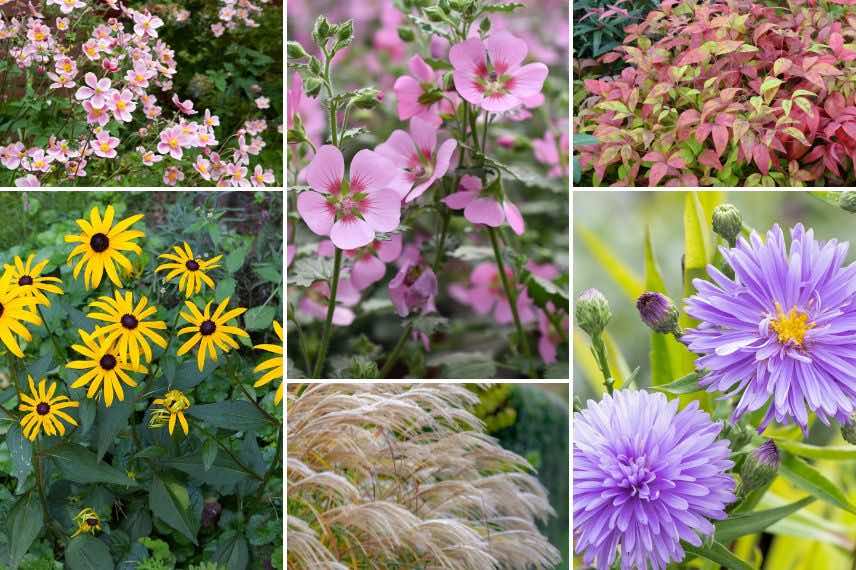
Japanese anemone, Anisodontea ‘Lady in Pink’, Nandina domestica, Aster, Miscanthus, Rudbeckia
In an exotic border
In an exotic border, Anisodontea, itself an exotic plant from warm regions, adds a light, floral touch that contrasts with plants with spectacular foliage and bold silhouettes. The purplish-pink flowers of Anisodontea scabrosa ‘Large Red’ blend harmoniously with tropical species such as the Cannas with broad, colourful leaves, Colocasias or dwarf banana plants, which add an imposing vertical presence.
Around Anisodontea, exotic grasses such as the Pennisetum setaceum ‘Fireworks’ (not hardy), with its purple stems and pale plumes, bring movement and a wild feel. To enrich the planting palette, perennials such as blue agapanthus or orange Heleniums come to enhance the overall effect with warm, intense colours.
At the base, groundcovers such as Tradescantia with luxuriant foliage reinforce the exotic ambience while linking the different plants together. This border evokes a lush, colourful garden, while remaining structured and easy to maintain, thanks to Anisodontea, which balances boldness and delicacy in this exotic setting.
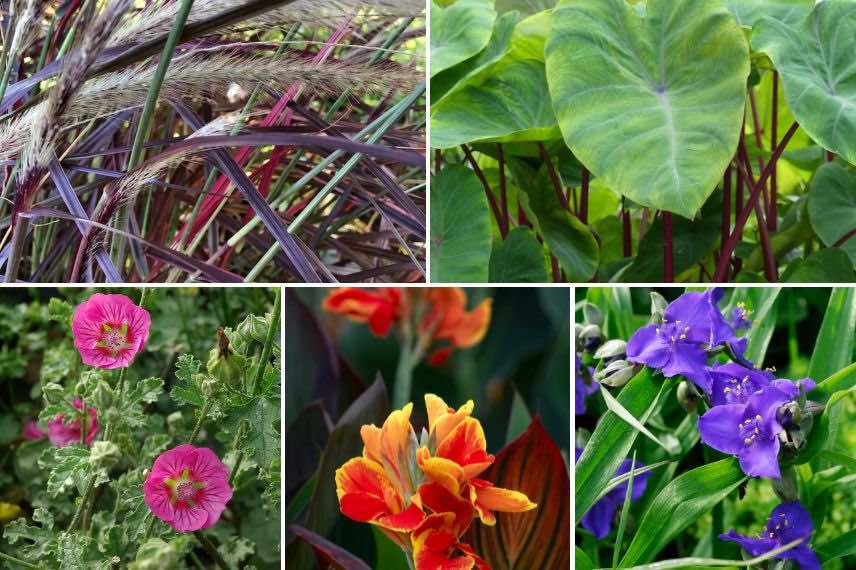
Pennisetum setaceum ‘Fireworks’, Colocasia, Tradescantia, Canna, Anisodontea ‘Large Red’
Container gardening on a terrace or balcony
On a terrace or balcony, Anisodontea thrives perfectly in pots, which allows it to be sheltered in winter to protect it from frost, as it is hardy only to about -6 to -10°C depending on the species. Its abundant, continuous flowering makes it a showpiece. Its light, slender habit pairs with pots of varying sizes to create a dynamic, easy-to-move display.
To accompany Anisodontea, plants such as lavenders or the rosemaries in pots add a Mediterranean touch and evergreen foliage, contrasting with its delicate flowers. Perennial flowering plants such as the Calibrachoas or Diascias, also suited to container cultivation, extend the pink and pastel tones in hanging baskets or low pots.
To play with height and texture, pair it with light grasses such as the Stipa tenuissima or the Pennisetum, which add movement and a natural feel. Pot succulents, such as the Sedums or the Echeverias, complete the display while offering minimal maintenance. This container garden creates a flowering and convivial display, ideal for small spaces seeking colour and life.
In mild climates, exotic species such as climbing Bougainvillea with papery fuchsia flowers, Abutilon with graceful bells, Jasmine or Solanum (a little hardier) are high-value ornamental additions.
- Subscribe!
- Contents
Comments