





























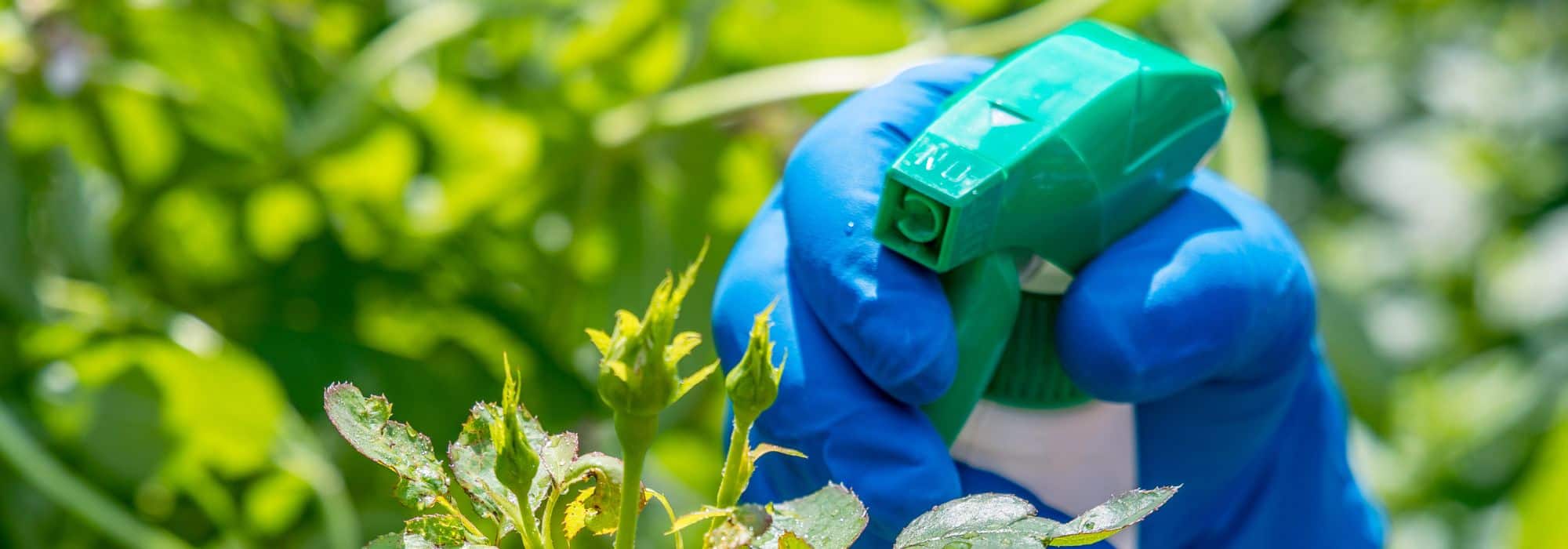
Aphids and scale insects: is black soap really effective?
Discover its effectiveness and how to use it
Contents
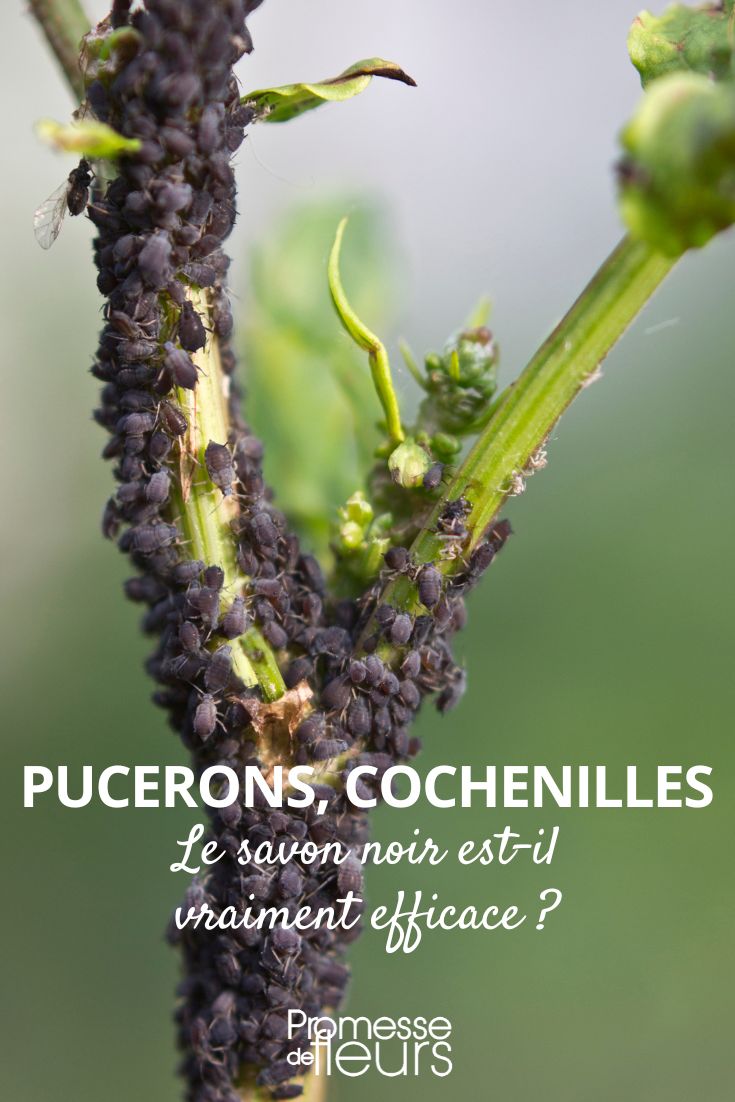
Aphids and mealybugs are among the most common pests in our gardens (and sometimes indoors). They weaken plants by sucking sap and cause leaves to curl. These insects also secrete a sticky substance, called honeydew, which fosters the development of sooty mould, a blackish fungus. To combat them, black soap is often cited as a natural, economical and environmentally friendly solution. But is it really effective? In this article, we will examine in detail how black soap works, its real effectiveness, the best application methods, and its limitations.

Black soap: a natural ally against certain parasitic pests
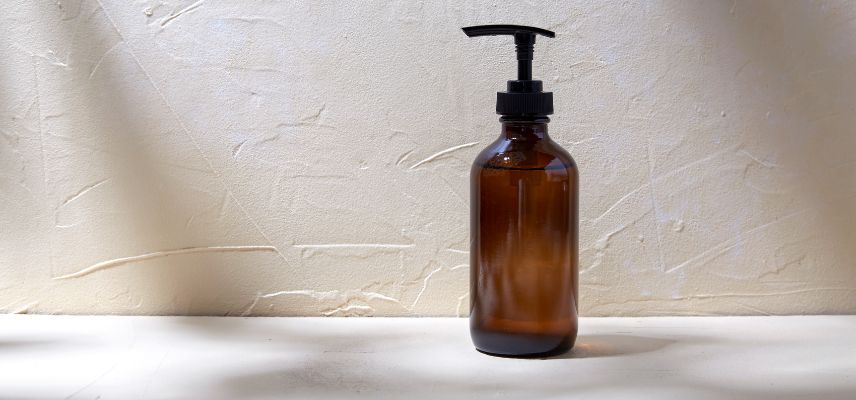
Black soap is a natural product made from vegetable oils (olive oil or linseed oil) and potash. It is fully biodegradable and safe for the environment, for people, animals and young plants when used correctly.
Black soap acts as a contact insecticidal agent by blocking the breathing pores and dissolving the waxy layer (cuticle) that protects soft-bodied insects. This action leads to asphyxiation, dehydration and the death of pests. Additionally, it dissolves the waxy secretions of scale insects and cleans the honeydew left by aphids, thereby reducing the risk of sooty mould (that infamous black mould).
Black soap acts only on the insects it comes into contact with. It has no systemic effect, i.e. it does not penetrate the plant to kill other insects that feed on the plant’s sap.
The advantages of black soap
- Natural and eco-friendly: Unlike chemical insecticides, often harmful to the environment and biodiversity, black soap is a gentle and environmentally friendly alternative.
- Easy to use: Once diluted, it can be applied simply with a sprayer or a cloth.
- Compatible with edible crops: It can be used on vegetables, fruit and herbs without risk to consumption, provided you rinse the harvests well before use.
The limitations of black soap
- Limited efficacy: Black soap acts only by direct contact with pests. If you miss some infested areas, surviving insects can quickly multiply.
- Risk of phytotoxicity: If misused (too high a dosage, application in full sun), black soap can burn the leaves and weaken the plants. It is therefore important to follow the recommended dosages (which we will cover in Chapter 3).
- Non-selective effect: Although natural, black soap should be limited to infested areas to spare beneficial insects such as ladybirds, bees or lacewings. Also choose times when beneficials are less active (early morning or late afternoon).
- Sensitivity to rain: Once applied, black soap can be quickly washed away by rain or watering. It is therefore best used in dry weather to maximise its effectiveness.
Read also
Mealybug: identification and treatmentWhich parasitic pests can be treated with black soap?
Pests sensitive to black soap
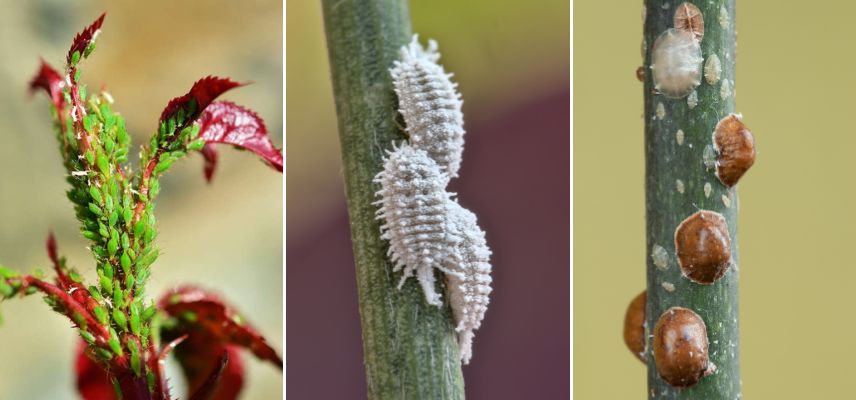
- Aphids: green, black, yellow or woolly, these insects suck sap from new shoots, weakening the plants and promoting the appearance of sooty mould.
- Mealybugs: coated in a white waxy substance, they are vulnerable to black soap, which dissolves their protective wax and eliminates them.
- Young larvae of shield scale insects: larvae still without a shield are sensitive to black soap, unlike adults protected by their rigid shell.
- Whiteflies: tiny flying insects that lay eggs under the leaves and cause damage to vegetable and ornamental plants. Black soap acts on the larvae and adults on contact.
- Thrips: tiny, inconspicuous insects that cause spotting, discolouration and distortion on leaves and flowers.
- Red spider mites and other mites: these tiny pests, active in hot and dry weather, weaken plants by sucking sap.
- Psyllids: these small jumping insects, similar to aphids, cause deformation and yellowing of leaves.
- Certain young caterpillars and soft-bodied larvae: black soap can affect young caterpillars and other soft-bodied larvae by blocking their breathing.
Pests less sensitive or resistant
- Adult shield scale insects: protected by a rigid shell, they are little affected by black soap. Their treatment requires, in addition to black soap, a mechanical action (brushing or manual cleaning) which will be described later in the article.
- Beetles and other hard-shelled insects: their bodies are impervious to the black soap solution.
- Eggs of pests: often coated in protective layers, they escape the action of black soap.
The effectiveness of black soap therefore depends on the type of insects, but also on its developmental stage. Consequently, black soap requires targeted application.
Aphids, mealybugs and shield scale insects
Care with beneficial insects
Although black soap is a natural product, its contact action can affect not only pests, but also certain beneficial insects, such as ladybirds, lacewings or hoverfly larvae. These helpers are nevertheless valuable for maintaining garden balance, especially since they eat aphids and mealybugs!
To limit adverse impacts on these garden allies, it is essential to adopt targeted and thoughtful practices. We invite you to consult the chapter “How to protect beneficial insects in the garden?” which is located further down in this article.
How do you apply black soap?
Choosing the right liquid black soap
For the garden, liquid black soap is generally preferred, as it is easy to dose and mix in a sprayer. Choose a liquid black soap made from natural plant oils (olive oil or linseed oil), without chemical additives or artificial fragrances and ideally certified organic to respect your plants, the garden helpers and the environment. Check the labels to avoid products containing preservatives or harsh detergents.
Preparing the solution
To prepare a solution of liquid black soap, you will need to:
- five tablespoons of liquid black soap (about 50 ml) ;
- one litre of lukewarm water ;
- (Optional) a few drops of neem oil (a natural insecticidal extract from the seeds of the neem tree) to reinforce the repellent effect.
Pour the solution into a clean sprayer and mix well until the soap is completely dissolved.
Application
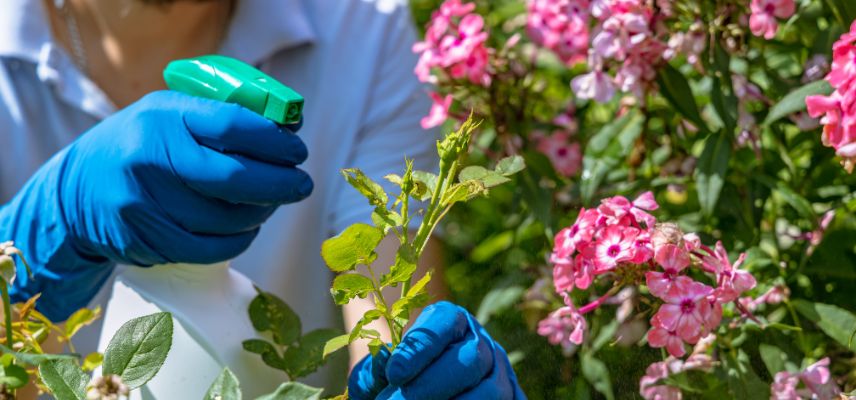
Spray the solution directly onto the pests, focusing on infested areas: under the leaves, on the stems and around the buds. Make sure to carry out this operation early in the morning or late in the day, when the sun is less intense, to prevent leaf burn and to extend the product’s effectiveness.
Repeat the application every three to seven days until the parasites disappear.
Precautions
Although liquid black soap is natural, it can sometimes cause burns on sensitive or young leaves. It is therefore advisable to test the solution on a small portion of the plant before treating the entire plant.
And indoors?
For indoor plants, the method is exactly the same. However, once the pests are eliminated, gently wipe the leaves with a damp cloth to remove any soap residue, which could attract dust or hinder the plant’s respiration in the long term.
What are some effective solutions for armoured scale insects?
As mentioned above, black soap is effective against young shield scale insects. However, adults, being more resistant, require a slightly different approach:
- Locate the scale insects under leaves, on stems or at the base of branches.
- Remove them with a damp cloth, a soft brush or a cotton bud soaked in 70% alcohol.
- Apply a solution of black soap: In a spray bottle, mix 5 tablespoons of black soap in 1 litre of warm water. Add a few drops of neem oil (a natural insecticidal) to boost the effect. Spray onto the infested areas.
- Repeat the cleaning and application of black soap every 5 to 7 days until complete elimination.
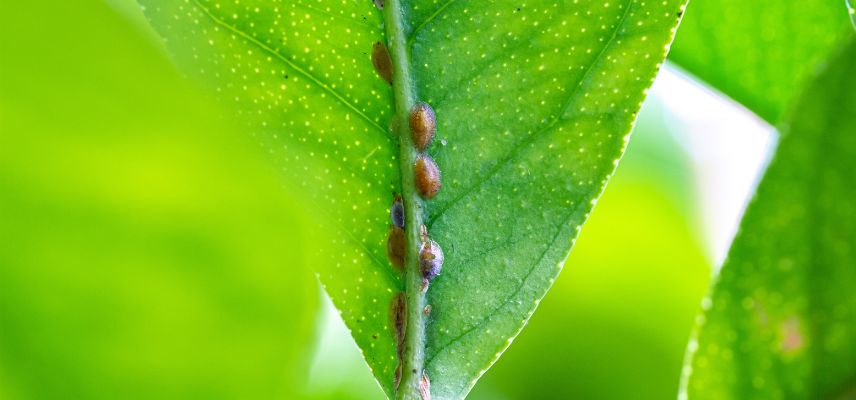
Armoured scale insects
Alternatives and complementary solutions
If black soap alone isn’t enough, here are some additional methods to combat aphids and scale insects:
Introduce some beneficial insects
Ladybirds and lacewing larvae are natural predators of aphids. They can be bought at garden centres (you can find them here on our site) and released into your garden. Encourage their presence by planting melliferous flowers (Phacelia, Borage, etc.) and installing shelters (such as insect hotels) to provide them with refugium.
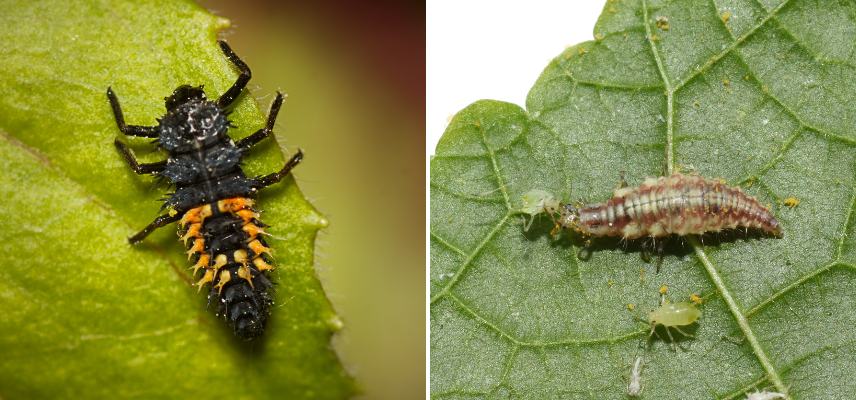
Ladybird larvae and lacewing larvae
Use neem oil
This vegetable oil acts as a natural insecticidal agent by disrupting the life cycle of pests, including their eggs and larvae. It can be simply added as a few drops to the black soap preparation, or this technique can be used:
- Mix 5 ml of neem oil with 1 L of warm water.
- Add 1–2 drops of black soap to aid emulsification.
- Spray the solution onto the leaves (top and bottom), the stems and the infested areas.
- Carry out the treatment early in the morning or in the evening, away from direct sunlight.
- Repeat every 7 to 10 days until pests disappear.
Spray repellent plant decoctions
Garlic, nettle or tansy can be infused to produce effective solutions against pests. For more information, read our articles: “Repellent plants to use in manure and decoctions to protect crops” and “Natural insecticides to use in manure tea and decoctions“.
Prune affected parts:
In cases of severe infestation, prune and remove the most affected branches to limit the spread of the pests.
Attract unwanted insects
You can also divert aphids by attracting them to other plants that are more attractive to them: Camomile, Nasturtium, Calendula, Cosmos, etc.
How can you protect beneficial garden insects?
To enjoy the benefits of black soap while protecting beneficial insects, a few precautions are required:
- Apply black soap only to infested areas: Target visible pests precisely and avoid spraying the entire plant or non-infested parts.
- Treat at times when beneficial insects are less active: Spray early in the morning or late in the evening, when bees and other beneficial insects are not active.
- Avoid flowering plants: Do not spray black soap on plants in full bloom to avoid disturbing pollinators. Admittedly, aphids and scale insects weaken the plant, but they are rarely fatal, and you may wait a few weeks until flowering ends.
- Rinse after treatment: Once the pests have been eliminated, rinse the leaves (unless rain takes care of it) to remove soap residues and allow beneficial insects to return safely.
- Encourage biodiversity: Plant melliferous flowers (phacelia, borage, etc.) and install insect hotels.
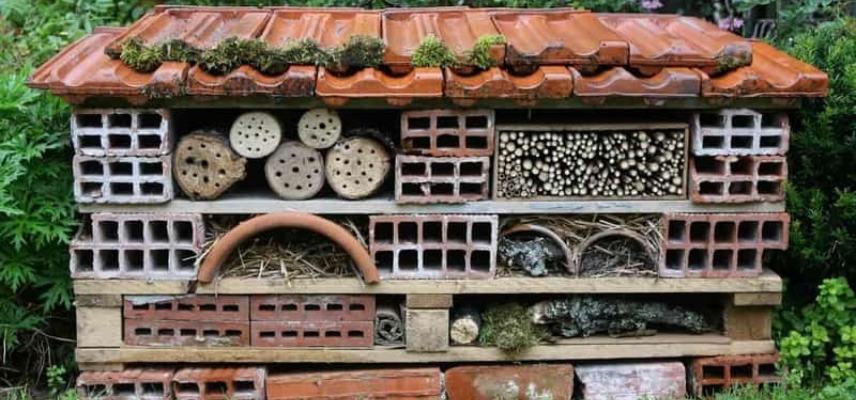
an insect hotel
Verdict: black soap, an effective ally but not infallible.
In conclusion, black soap emerges as a natural and effective solution for combating aphids and certain scale insects, provided it is used correctly. Although it is not infallible against the most resistant pests, its targeted action significantly reduces infestations without resorting to chemical products.
However, its use must be considered carefully: applying black soap excessively or indiscriminately can harm beneficial insects and the balance of the garden. With regular and measured application, it remains a valuable tool to protect your plants while respecting the environment.
Ingrid’s personal opinion:
The effectiveness of black soap is well established. However, I believe it should be used only when necessary and temporarily, the time to plant melliferous plants in the garden to attract beneficial insects (ladybirds and other such allies). These beneficial insects will, over time (it may take several years), play the role of a natural regulator, and you will then no longer have to lift a finger against the aphids.
- Subscribe!
- Contents
Comments