





























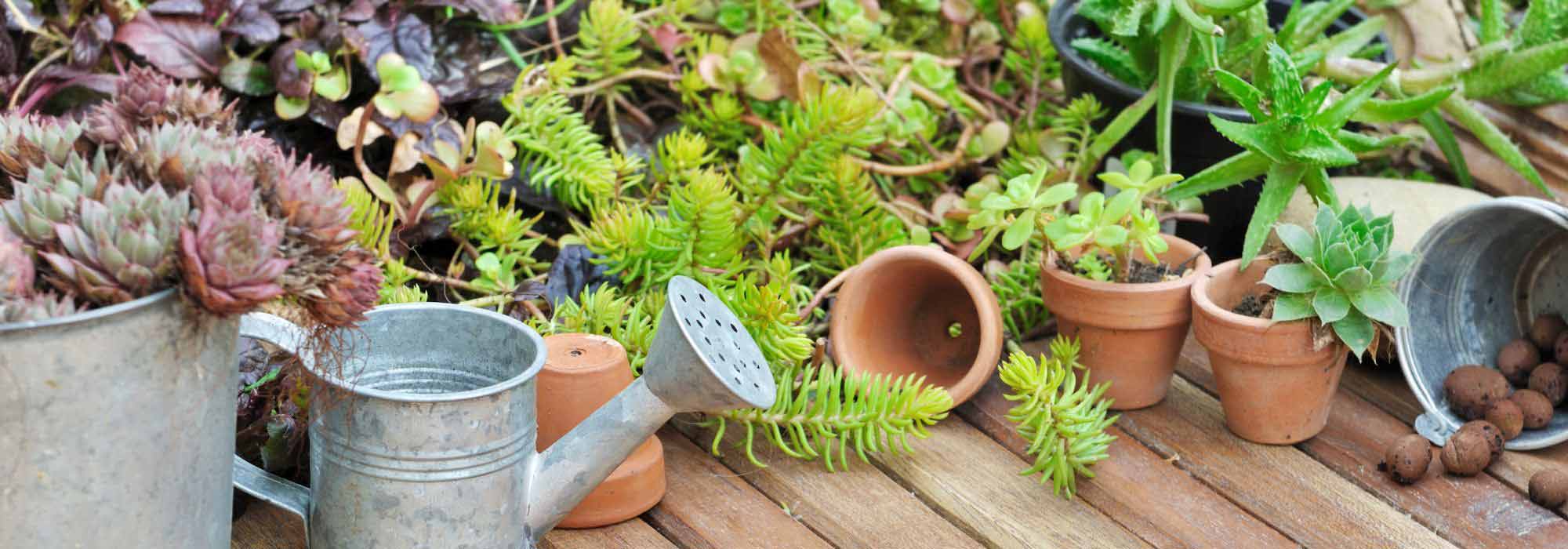
Are there planters and pots that require little watering?
Our selection of drought-resistant plants and our growing tips to save water
Contents
Some summers, with dry and scorching conditions, are a testament to the fact that water is becoming an increasingly precious resource, and our gardens will need to adapt. This is especially true for container gardening (window boxes, pots, or troughs), where water tends to evaporate more quickly, rapidly drying out the substrate.
The good news is that this doesn’t mean we have to give up on greening and flowering our outdoor spaces! It is entirely possible to grow plants and flowers that are low in water requirements and drought-resistant, to brighten up gardens, terraces, or balconies. An added advantage is that these plants are generally low-maintenance, making them suitable even for beginner gardeners, those who are forgetful, or anyone with little time to dedicate to their flowering pots.
Finally, a few simple additional actions will help you further reduce watering and save water.

Plants suitable for low water requirement pots
Logically, for water-efficient pots and planters, we will turn to drought- and heat-resistant plants. Hardy and frugal, these plants are often capable of thriving in basic conditions, in poor and arid soils. There is a great diversity available to suit almost every taste. Many of these plants originate from regions that are naturally sunny and do not experience heavy rainfall.
Another important point: for container gardening, the available substrate is significantly more limited than in open ground. The plants chosen for a pot or planter must therefore be selected based on their dimensions and the size of their root system.
Mediterranean plants
These are plants that enjoy the sun and tolerate drought without flinching: Mediterranean basin plants can, for some, create beautiful pots with minimal watering. Their foliage is often tough, fine, or downy, helping to limit the natural evaporation of water.
The essentials thyme and rosemary grow well in containers, and lavender, santolina or helichrysum will provide lovely blooms from late spring to summer, but they will need to be placed in sufficiently tall pots to allow their root system to develop a bit deeper. Complete with a garden valerian, which thrives in both sun and partial shade, then add Stachys byzantina for their attractive woolly leaves with silver highlights.
However, be careful to provide these garrigue plants with well-draining substrate and allow it to dry sufficiently between waterings, or you risk seeing them quickly decline due to root rot.
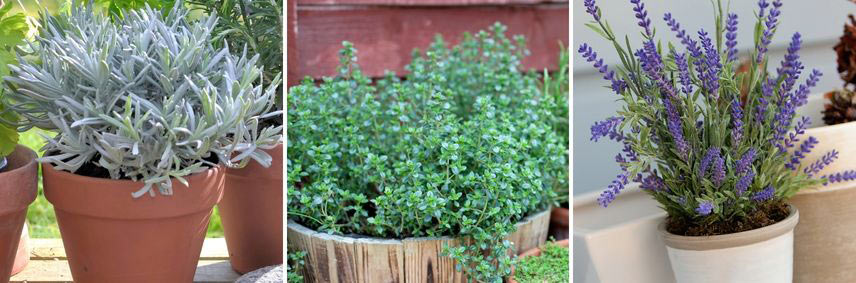 Mediterranean plants can be adapted to pot culture, provided you manage their watering well.
Succulent plants
These plants have often fleshy aerial parts, allowing them to store essential juices to survive long periods of drought and lack of water.
They allow for the creation of modern, low-maintenance pots with a very graphic appearance. The only downside: their hardiness is often quite low. They will need to be brought indoors or well protected during winter in most regions.
Choose from crassulas, echeverias, or even aloes, such as the adorable ‘Safari Sunrise’. It produces clusters of tubular flowers revealing a warm palette of orange, salmon, and coral.
Add small silhouette agaves like mangaves and a small yucca ‘Bright Star’, with its bright yellow-cream variegated foliage. Complete with the lovely round pads of a miniature prickly pear (Opuntia compressa ‘Millevaches’).
Houseleeks will also integrate easily into pots and, due to their montane origins, have the advantage of withstanding severe frosts below -20 °C on average. Also consider sedums, which are very easy to care for and attractive both for their flowers and their sometimes very colourful foliage.
The blooms of this dry pot in full sun will extend over many months, from spring to autumn.
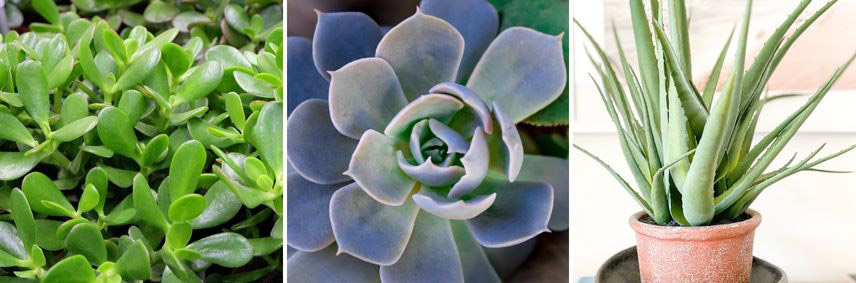 Crassulas, echeverias, and aloe.
Rockery plants
These are other plants accustomed to dry, hot, and difficult conditions. Turn to saxifrages, true little flowering carpets with bright white, yellow, pink, or red blooms.
For a bright pot, add wallflowers in vivid colours, as well as some spurge in yellow hues, some yarrow, some potentilla, or phlox with star-shaped blooms. Also consider the very diverse hardy geraniums for rock gardens or erigerons.
For a planter with softer, pastel colours, opt for the Siberian sage with its blue-mauve spike flowers, in combination with carnations like Dianthus knappii with pale yellow blooms. Also try angelonias, very floriferous annuals from May to October, such as ‘Angelface Wedgewood Blue’. Complete with lychnis, which come in both bright colours (orange, magenta, carmine) and softer shades (white, pale pink).
For a shadier spot, opt for Vinca minor, a small creeping perennial with spring blooms of beautiful periwinkle blue.
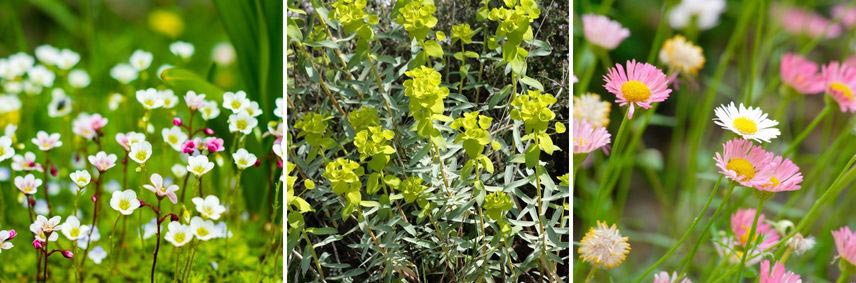 Saxifrage, spurge, and erigerons.
Exotic flowers
For a pot that requires minimal watering but can bloom generously, opt for some exotic flowers. However, note that due to their origins, these plants will be rather tender, best grown as annuals or brought indoors during winter.
Consider the magnificent lantana, which can bloom for many months from spring until the first frosts. Native to tropical and subtropical regions, it withstands drought and heat very well. Its round, colourful umbels are also fragrant and attract pollinators.
Also try the dipladenia, which tolerates drought well. This small flowering shrub is wonderful in pots or planters and will bring a tropical feel to your outdoor spaces. Its fairly tough, glossy foliage also withstands drought well. Add coreopsis, flowers in bright colours with a more rustic appearance, reminiscent of daisies. Also consider the beautiful gazania. To lighten the overall look, add some gauras with their butterfly-shaped flowers.
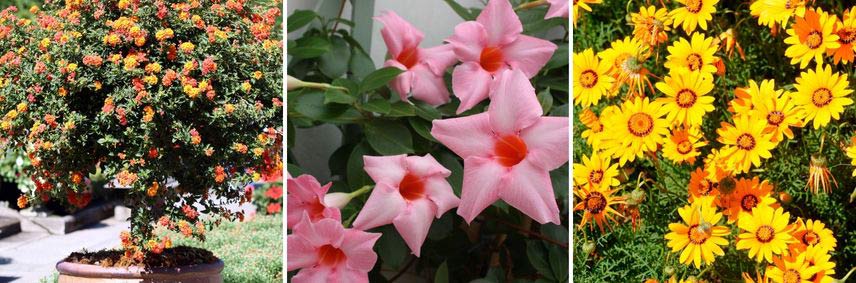 Lantana, dipladenia, and coreopsis.
Bulbous plants
Among bulbous plants, let’s mention the popular Iris germanica, which offers a wide range of colours. Also try the Dichelostemma ida-maia, with its original bell-shaped, bright red tubular flowers that are hard to miss.
For spring bulbous plants, a Mormon tulip will bloom as early as March to brighten a pot or planter and help stagger the display.
Grasses and complementary foliage
Grasses will gracefully complement your pots without watering, adding a light and graphic touch. Many varieties tolerate drought very well, such as stipa, some carex, or the fescue, the quintessential grass for sunny and dry soils. Also consider the miniature versions of pampas grass, like Cortaderia selloana ‘Tiny Pampa’.
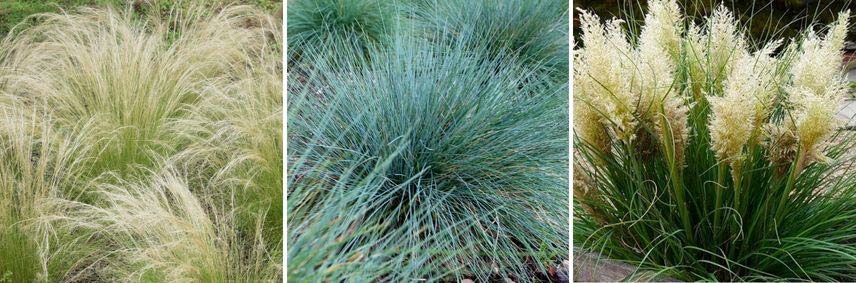 Stipas, fescue, and Cortaderia selloana ‘Tiny Pampa’.
To complete, consider the decorative foliage of Ballota pseudodictamnus, with its downy almond-green leaves with silver highlights.
Also try one of the rare ferns that withstand drought and sun, the Cheilanthes lanosa, with its woolly green-grey fronds.
Optimise growing conditions to reduce watering
Choosing containers
When growing water-efficient pots and planters, the choice of container should not be overlooked.
Choose a pot, planter, or trough that is deep enough to allow roots to develop in the substrate rather than remaining superficial and more quickly susceptible to drying out. A larger volume of soil will also retain rainwater or watering for longer. Therefore, opt for containers that are at least 30 to 40 cm deep.
In terms of material, we usually recommend terracotta for your crops, as it is a porous material that allows for better aeration of the substrate. However, it has the drawback of promoting water evaporation, thus accelerating drying. Terracotta should be reserved for afternoon shade exposures to maintain maximum freshness and humidity. Plastic pots can be a solution for the sunniest exposures, especially when paired with wooden or natural material cache-pots (rattan, wicker), which protect them from the sun’s rays.
To limit overheating, also avoid pots made of metal or dark-coloured containers, which absorb more sunlight and heat.
Choosing the substrate
Most of the plants we have presented prefer light, even poor, soils that are well-drained. However, this does not prevent you from choosing a quality substrate that can effectively absorb water from the rare waterings and optimally release it to the plants. For example, opt for a specific potting mix for planters and pots, with good water retention. This substrate can be mixed with clay balls or pumice.
There are also special water-retaining balls to mix into the substrate, which absorb and hold water for longer.
Installing mulch
Applying a mulch in a thick layer at the base of the plants helps to limit evaporation and thus reduce watering. Choose organic mulches (linseed and hemp mulch, buckwheat and cocoa shells, shredded plant waste, etc.), which also have the advantage of nourishing the soil as they decompose slowly.
Finally, this mulch will also limit the development of adventive plants (“weeds”) that can compete with crops and absorb some of the watering or rainwater.
Discover other Potted patio plants
View all →
Available in 1 sizes
Available in 2 sizes
Available in 2 sizes
Available in 1 sizes
Available in 2 sizes
Available in 2 sizes
Available in 1 sizes
Available in 2 sizes
Available in 2 sizes
Available in 3 sizes
The right way to water
To save water and make the most of it for your plants, prefer a generous watering from time to time, rather than several small regular waterings.
The timing of watering is also important: do it early in the morning or in the evening, to minimise evaporation as much as possible.
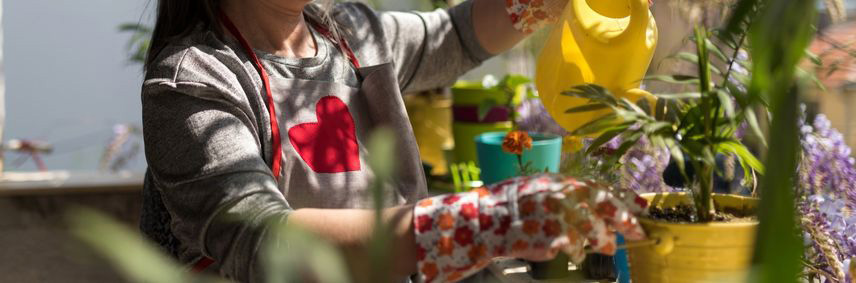
Some tips to limit dryness
Finally, it is possible to reduce natural evaporation and thus the watering needs of your pots and planters with a few simple actions.
- Avoid placing your containers at the mercy of dominant winds, which are drying.
- Utilise accumulation by grouping your crops, which will limit natural evaporation.
- Take advantage of shading from the environment (other plants, furniture, walls, railings, etc.) to shelter your plants from the hottest rays of the sun.
- Install shading sails, awnings, screens, or parasols if necessary to protect the plants from the drying rays of the sun, especially during midday.
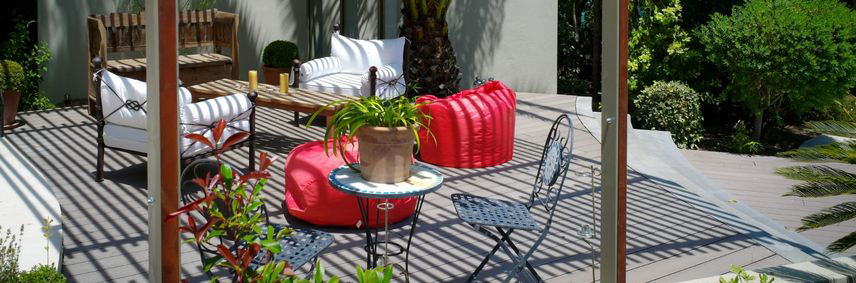
By taking advantage of the shading from the environment, you will allow your pots to get through the hottest periods without difficulty
- Subscribe!
- Contents
Comments