





























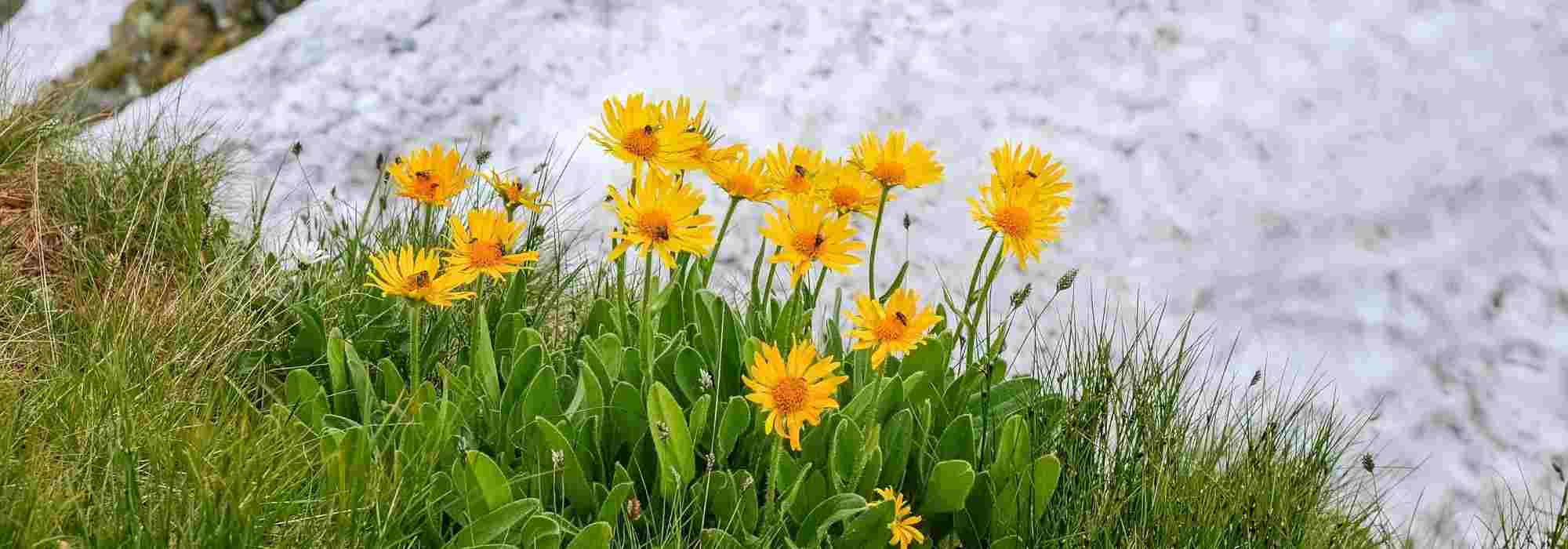
Arnica: harvest, benefits, and uses
Tips for harvesting and preparing it
Contents
Arnica, Arnica montana in Latin, is a perennial plant of European origin that, as its name suggests, grows in mountainous regions. This plant, which belongs to the Asteraceae family, is well-known among those who use plants for healing, particularly due to the numerous homeopathic preparations made from Arnica available in pharmacies.
Arnica will thrive in an ornamental garden, in a border or a rockery, or in a medicinal herb garden. Its lovely yellow flowers are sure to brighten up your little green space. Additionally, it will attract pollinators thanks to its melliferous character. However, its cultivation remains quite delicate.
In this article, we will explore how to use it at home for its healing properties.
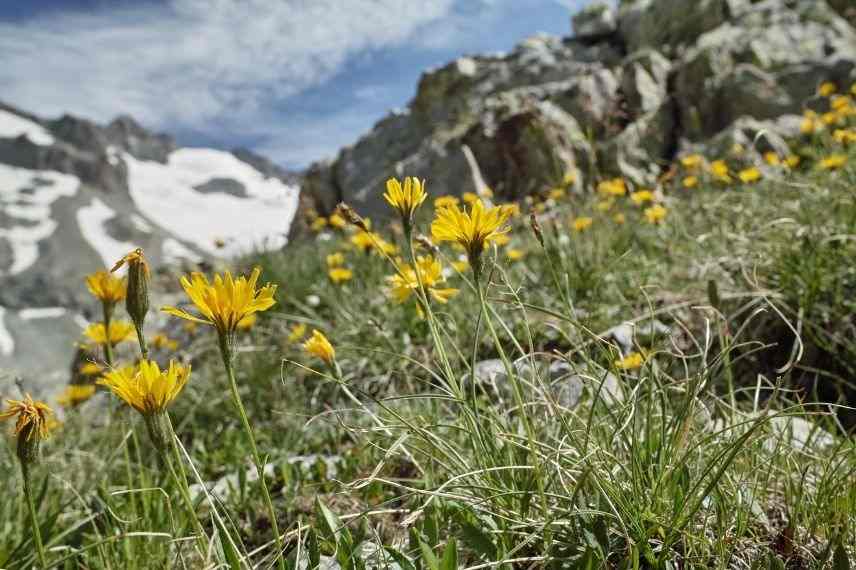
Arnica montana

What is arnica?
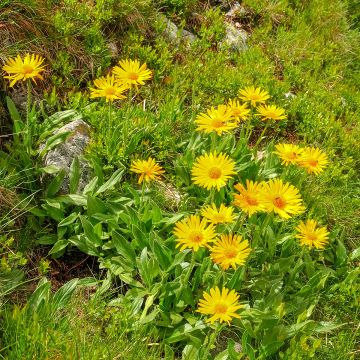
Mountain and heathland plant, Arnica is a lovely flowering perennial, approximately 40 cm tall. The harvesting of this wild plant is regulated in certain regions to preserve it. This rare and protected plant is indeed in decline, partly because it is highly sought after – and therefore harvested – and partly because it suffers from climate change and drought. That said, you can certainly attempt to cultivate it at home, provided you have rather acidic soil. Arnica thrives in fairly poor soils and prefers sunny exposures. Be also cautious of powdery mildew, to which it is quite sensitive. For more advice on this topic, check our file Arnica: Cultivation, sowing, benefits.
Resembling daisy flowers, the flowers of Arnica are grouped in heads composed of ligulate and tubular flowers of a beautiful orange-yellow that may remind you of the more orange flowers of the marigold, Calendula officinalis, or the more yellow ones of the Doronicums.
The leaves, ovate and villous, are mostly grouped in a rosette at the base of the plant, while others are opposite on the stem.
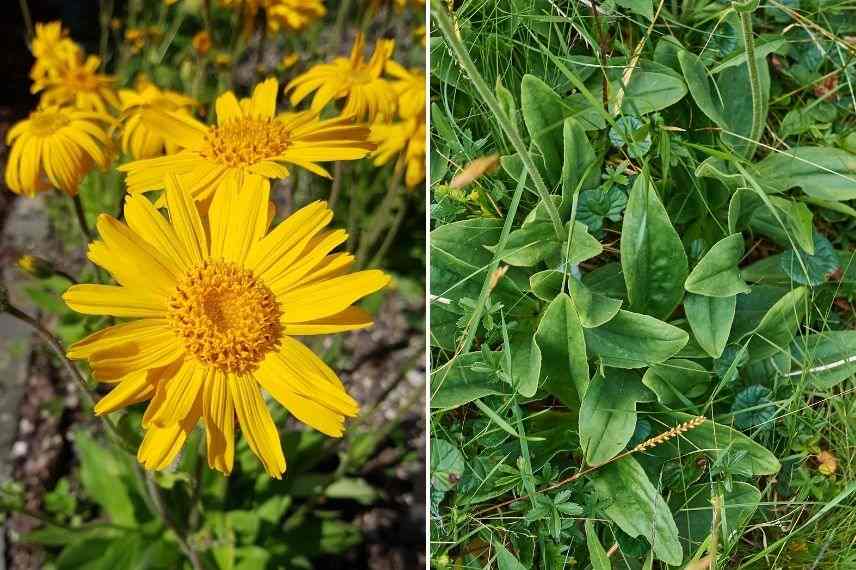
Yellow flowers and leaves of Arnica montana
Read also
Arnica: sowing, growing, benefitsHarvest and dry
In herbal medicine, it is the flower heads that are used. Therefore, they should be harvested during the flowering period, which runs from May to August.
Preferably carry out the harvest in the morning, during dry weather, to achieve the lowest possible moisture content in the plants. You will select the flower heads that have just opened, to maximise the active ingredients. To harvest them, you can simply do it by hand or use a florist’s pruning shear.
For drying, place the flowers on a cloth in a well-ventilated, shaded area, so that the sun’s rays do not damage the plant. During hot, dry summer days, it is possible to speed up the drying process. To do this, spread the flower heads on a tray with a cloth placed on top to protect them from direct sunlight.
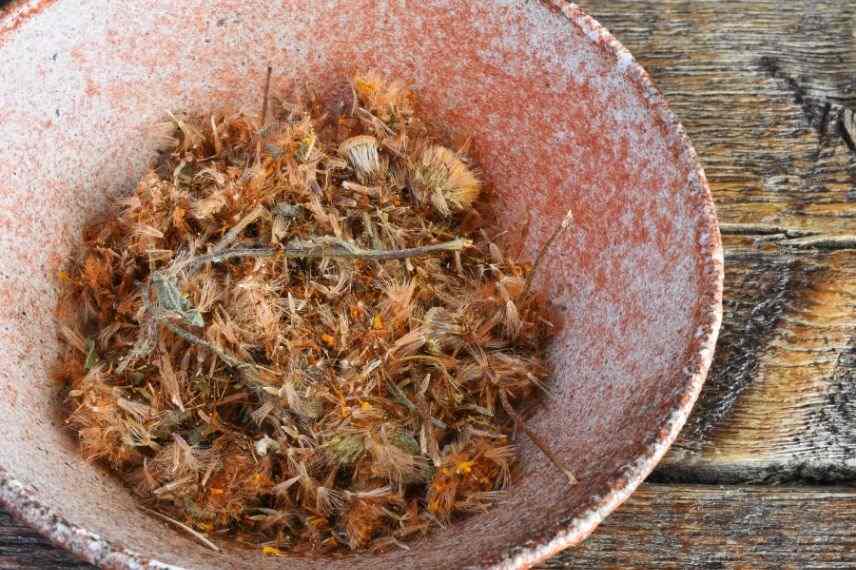
Dried arnica flowers
Discover other Arnica
View all →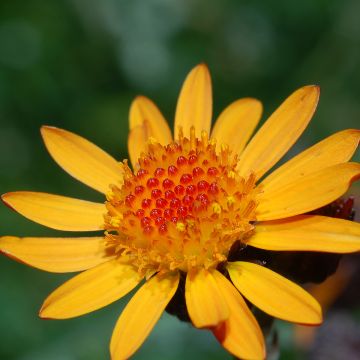
Available in 1 sizes
Available in 1 sizes
Available in 1 sizes
Available in 1 sizes
Available in 1 sizes
Benefits
The benefits of Arnica are well known, and this plant is highly sought after by the pharmaceutical industry, particularly for its reputed action against bruises and haematomas. It is used in this regard in both allopathy and homeopathy, where it is found in various forms: ointment, tincture, gel. For many people, Arnica, before being a plant, is a remedy for bumps, bruises, and other minor contusions resulting from a knock. Arnica is also said to have anti-inflammatory properties, which are useful for relieving muscle and joint pain.
In addition to bruises, Arnica may also prove useful for soothing minor burns, sunburn, and small skin irritations. However, caution is advised: do not apply it to open wounds or scratches that could facilitate the absorption of active ingredients into the bloodstream.
It is important to note that its use should be strictly occasional and local, meaning it must not be taken orally. Indeed, when taken internally, it could quickly become toxic. Furthermore, it may be potentially allergenic, highlighting the importance of using it sparingly.
Uses
It is possible to make many preparations using Arnica yourself. However, some are more accessible than others. The dosages provided here are for guidance only. Always consult a healthcare professional.
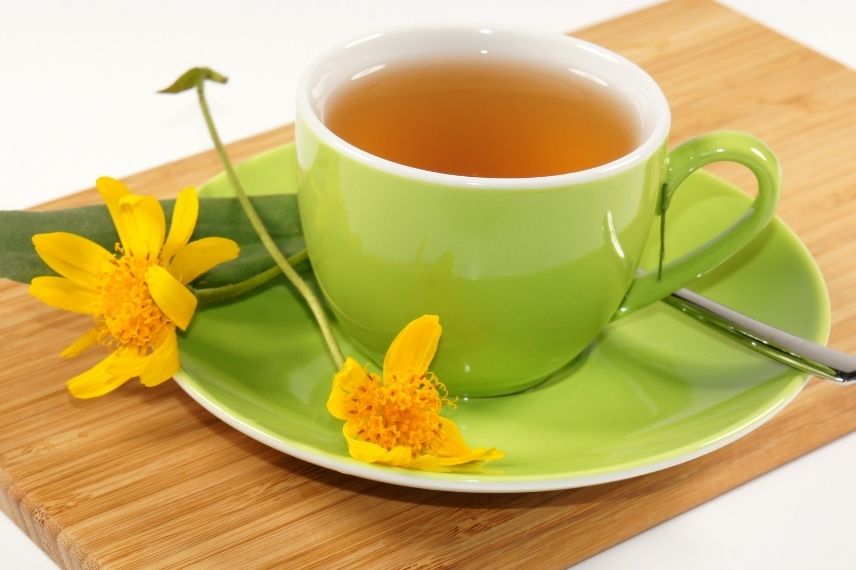
Arnica infusion
Infusion: simple and quick
As mentioned earlier, Arnica should not be ingested. Therefore, when we talk about infusion, it is not a herbal tea to drink. Use 10 to 15 g of dried flowers for one litre of boiling water. Let it infuse for 15 minutes before straining. That said, there is no need to prepare such large quantities; you can reduce the volumes, as the infusion cannot be stored. It will be used topically, particularly as compresses on bruises and contusions.
Tincture: long-lasting preservation
Let 100 g of dried flowers macerate in 500 ml of 60° alcohol for about ten days, then strain. The tincture will keep for several months away from light. It must always be used diluted.
Oil macerate: simple, but takes longer to obtain
This involves macerating the plant in oil to extract its active ingredients. Fill a jar with dried flowers, then cover with a vegetable oil. Close the jar and let it sit for at least a month before straining. Store the macerate away from light. The oil obtained can be used on the skin.
Balm: more complex, but very practical
The balm is a combination of Arnica oil macerate and wax. Melt the wax and mix it with the macerate until the balm solidifies.
Precautions for use
Caution is always advised when seeking treatment through plants. Natural does not mean safe. Whatever type of preparation is chosen, be aware that Arnica has toxicity when taken internally, which could lead to irritations and pain in the digestive system, headaches, palpitations, or even respiratory issues.
This explains why no preparations containing Arnica should be ingested (except for homeopathic granules). Furthermore, this plant should not be applied to open wounds.
People allergic to Asteraceae should also exercise caution.
- Subscribe!
- Contents
Comments