





























Pairing ideas with Beschorneria
5 atmospheres to showcase your Mexican Lily
Contents
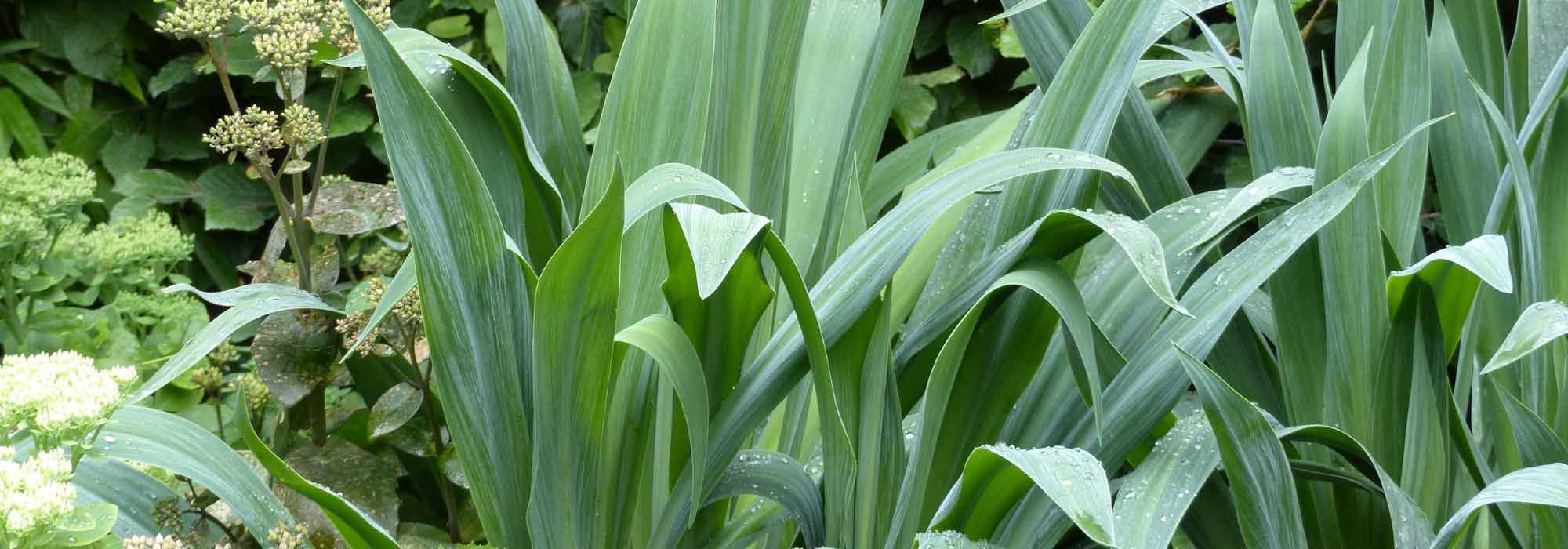
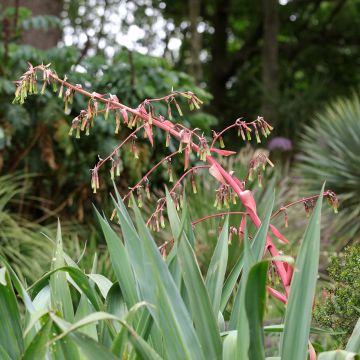
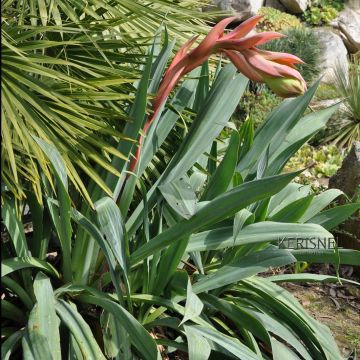
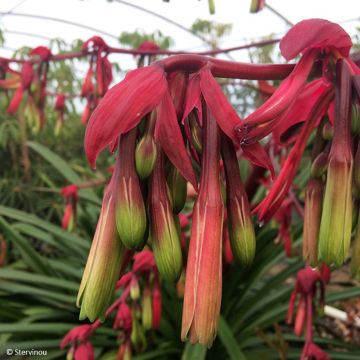
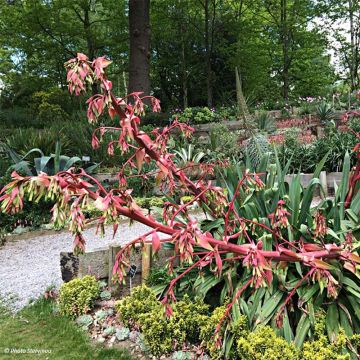
The Beschorneria, also known as Mexican Lily, is a large perennial with a distinctly exotic appearance. Its summer flowering, featuring large spikes in shades of pink to reddish, emerges from evergreen, lanceolate foliage that resembles that of a Yucca. With limited hardiness, this perennial can still withstand temperatures around -15 °C depending on the varieties. In any case, its pot cultivation poses no issues, allowing it to be placed in the garden as well as on a terrace, patio, or balcony, and to be wintered if necessary. Well resistant to drought, thriving in both sun and partial shade, the Beschorneria can even grow among the roots of trees. Its strong presence makes it suitable for southern, tropical, or exotic settings, but it also shines in gravel gardens, at the edge of woodlands, or on a slope. Discover 5 different settings, along with some bushes, perennials, and grasses that you can pair with your Mexican Lily, to create original and long-lasting decorative displays.

An exotic southern border
Creating an Australian border that sparks the imagination is one of the options that the climate now allows, or even demands, from certain gardeners. However, this choice is not always feasible, as winter must not present conditions that the plants cannot withstand.
For a truly exotic ensemble, if you live in a region with dry summers and perfectly drained soil, why not try a combination centred around a Beschorneria septentrionalis? The hardiest of the genus, its vibrant green foliage is topped in summer by long floral spikes of intense pink-red. Pair it with companions that have strong character and bold graphics, such as the Giant Melianthus, whose highly dissected aromatic foliage resembles that of a giant fern, adorned in late spring with floral spikes topped with purple-brown spikes that emit a honey-like fragrance. Alongside it, choose Fascicularia bicolor, whose rosettes of long, dentate leaves partially turn red at the end of the season, while pale blue flowers develop, framed by white bracts. Also original, the Leucadendron ‘Jubilee Crown’ offers an earlier flowering, brightening up spring with cones that gradually turn red against their backdrop of slender bracts, while the downy foliage can also display warmer hues in autumn. Among the Cordylines, ‘Electric Pink’ announces its colour with its lance-shaped leaves in a soft habit, a deep purple highlighted by surprising and bright longitudinal bands of pink. Another advantage is its late spring flowering, with airy cream-white flowers that stand out well above this colourful display. Delicate, yet worth trying for its stunning appearance and long spikes of intense blue flowers, visible from afar, the Viper’s Bugloss, which is the pride of gardeners who succeed in cultivating it. To temper all these divas, plant them on a carpet of Senecio ‘Angel Wings’, whose large, downy leaves display more neutral silver tones, serving as a backdrop for their neighbours. All these plants feature evergreen to semi-evergreen foliage, ensuring a beautiful display throughout the year.
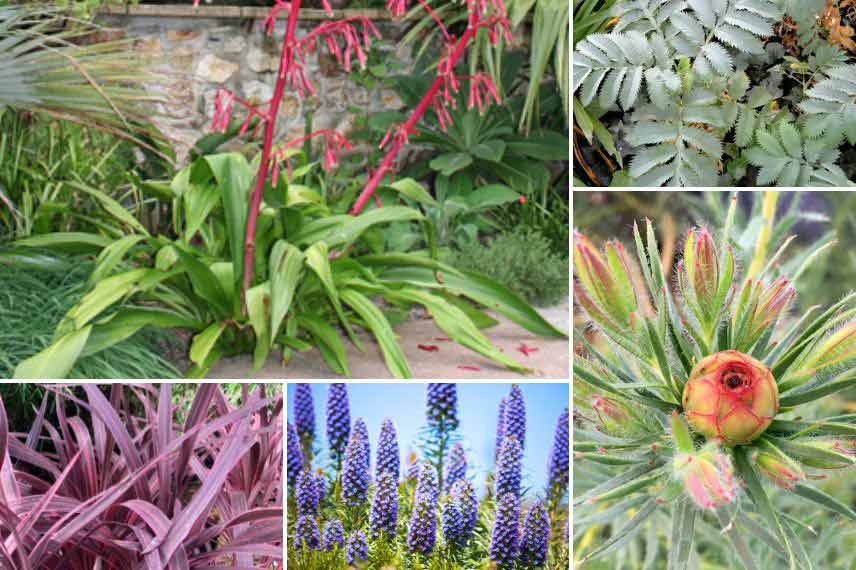
Beschorneria septentrionalis, Melianthus major, Leucadendron ‘Jubilee Crown’, Cordyline ‘Electric Pink’ and Echium fastuosum
Read also
Beschorneria: planting and careA dry bank
Flowering a bank can sometimes seem complicated, but these conditions provide drainage that many plants appreciate, such as Beschorneria. The foliage of Beschorneria ‘Quicksilver’, with its silvery hues, can take centre stage, welcoming Agaves, whose thick leaves are a guarantee of drought resistance. Opt for a large specimen, such as Agave americana ‘Variegata’, whose green foliage edged in yellow makes a statement, or consider Agave filifera, smaller and uniformly green, but with foliage that appears to be woven into a network of long, curly hairs. To play with the shape of the foliage, insert Prickly Pears. Opuntia discata displays an upright silhouette, and its round, heavily spined leaves are adorned with yellow-orange flowers in spring. Later blooming and spineless, Opuntia compressa ‘Millevaches’ is best reserved for the foreground, as it does not exceed 80 cm, yet still dazzles with its intense yellow flowers. Less hardy, the Cape Buchu remains somewhat obscure, but its fine aromatic foliage, which resembles heather, adds variety to the size and shape of the leaves while enjoying a long flowering period from pink to white, from spring to summer. More well-known and also quite hardy, a Cotoneaster dammeri ‘Eichholz’ takes its place in the foreground, forming a low carpet of semi-evergreen foliage, covered in white spring flowers, followed by very decorative bright red berries. Finally, add a shrub sage to the mix. Salvia microphylla ‘Hotlips’ continuously blooms from May to October, with small but numerous corollas that blend white and red, while Salvia ‘California Sunset’ offers warm sunset hues for nearly five months.
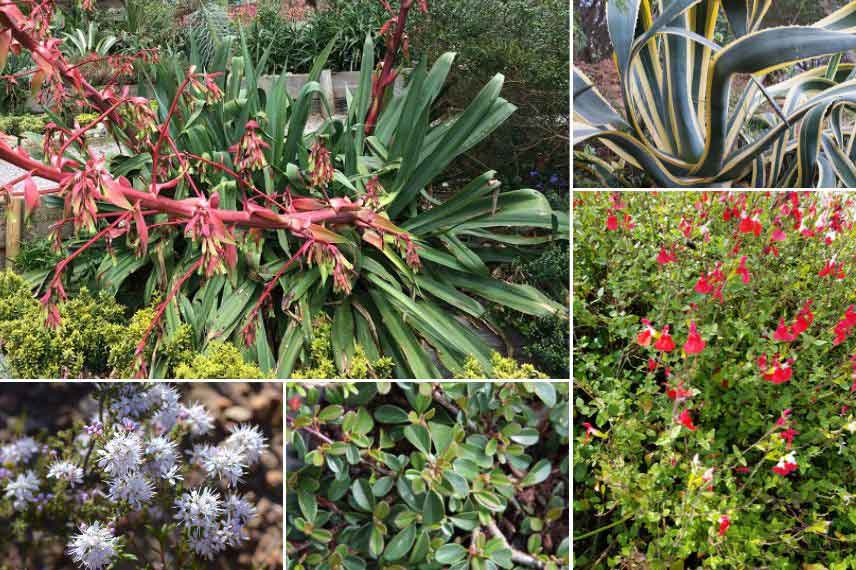
Beschorneria ‘Quicksilver’, Agave americana ‘Variegata’, Agathosma capensis, Cotoneaster dammeri ‘Eichholz’ and Salvia microphylla ‘Hotlips’
Discover other Beschorneria
View all →
Available in 1 sizes
Available in 1 sizes
Available in 1 sizes
Available in 1 sizes
Available in 1 sizes
A mineral bed in partial shade
Rock gardens and gravel gardens can create true tapestries, cheerful, lively, and colourful. Despite their exotic appearance, Beschorneria thrive very well in less sun-drenched environments, where the soil remains dry. Why not try Beschorneria yuccoides in combination with light-foliaged grasses? Stipa tenuifolia is happy not to be constantly bathed in sunlight, and it excels at adding movement and grace to a display. More robust, Carex, related to grasses, enrich the palette of colours. Carex ‘Everillo’, with its very bright golden foliage, Carex buchananii which forms bronze clumps, or Carex ‘Evercream’ that plays with green and cream-white variegation. To create beautiful verticals, Miscanthus are perfect. They adorn themselves with spikes of changing colours in mid to late summer, and some even see their foliage blaze in autumn. Place them behind large Acanthes, which are very architectural, opting for original varieties, some of which display golden foliage, very bright in this exposure (Acanthus ‘Hollards Gold’), or variegated with white and green, with the added bonus of an uncommon white-pink flowering, supported by reddish stems (Acanthus ‘Whitewater’). Grey is a colour that pairs well with everything. When you can also enjoy a beautiful silver-white flowering, why not take advantage? This is exactly what Anaphalis ‘Neuschnee’ offers for long months.
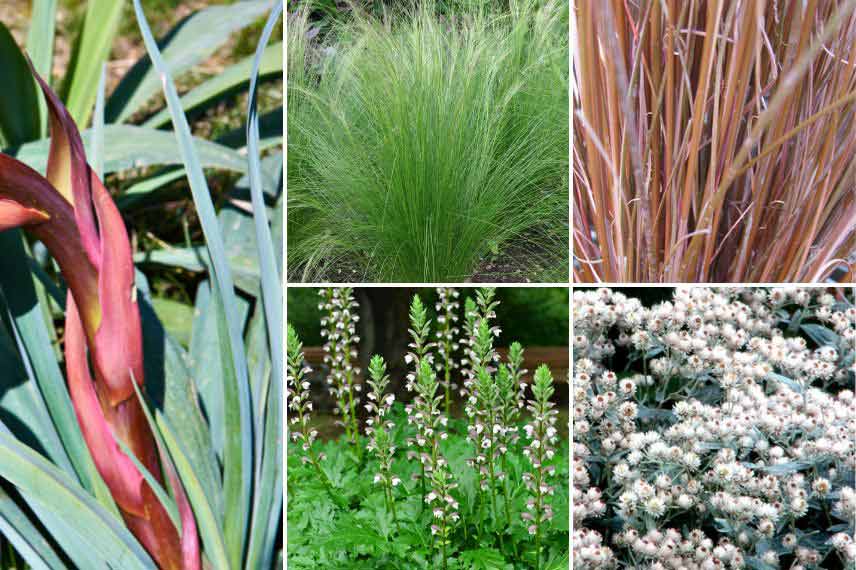
Beschorneria yuccoides, Stipa tenuifolia, Carex buchananii, Acanthus mollis, and Anaphalis margaritacea ‘Neuschnee’
A woodland edge
In warm regions, the atmosphere of a woodland edge, partially shaded for part of the day, does not deter a Beschorneria, such as Beschorneria yuccoides ‘Flamingo Glow’, where its green foliage, prominently marked with longitudinal yellow stripes, stands out beautifully. Another advantage is that it even tolerates growing among tree roots. Take advantage of these qualities to pair it with other plants suited to these conditions. Large-flowered Comfrey forms a persistent and relatively low display (about 30 cm), animated by bell-shaped cream-white flowers for the typical species, or white mixed with blue and pink in Symphytum ‘Sky Blue Pink’, from spring to summer. Equally at ease and assertive, Periwinkles also bloom generously during this period. At the base of your variegated Beschorneria, prefer a variety with solid foliage like the classic Vinca minor with blue flowers or white depending on the variety, to avoid muddling the message. From a distance, however, you can play with colour coordination by choosing a variety with yellow variegated foliage, such as Vinca minor ‘Illumination’, which echoes the foliage of its larger neighbour. Some Hosta impose their opulent clumps with beautiful heart-shaped foliage. Cultivars like ‘Halcyon’ or ‘Fragrant Blue’ offer bluish foliage that provides a lovely contrast with the yellow. Their flowering, more or less fragrant, rises gracefully in mid-summer. For a beautiful woodland atmosphere, a few Ferns are essential. Dryopteris erythrosora, evergreen with bright copper-orange young foliage, Athyrium ‘Ghost’, deciduous but with enchanting metallic blue-silver hues, or Coniogramme emeiensis, a fern resembling a dwarf bamboo with variegated foliage, which enhances the exotic effect of your composition. To enliven the whole from the start of the season, plant some early-flowering bulbs, such as Snowdrops, botanical Daffodils, or Wood Anemones.
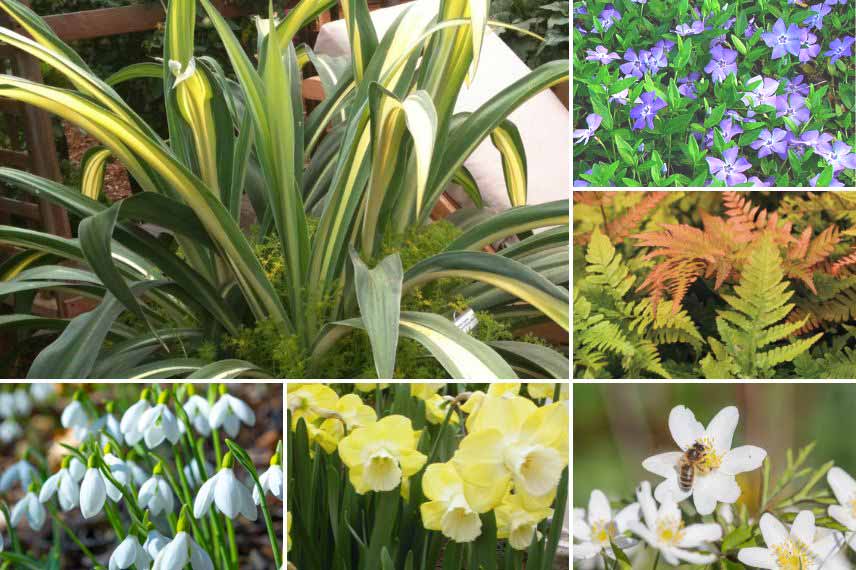
Beschorneria yuccoides ‘Flamingo Glow’, Vinca minor, Dryopteris erythrosora, Snowdrops, daffodils, and Anemone nemorosa
A contemporary balcony
Beschorneria grows very well in a large pot on a terrace or balcony, which also allows for wintering in regions with harsh winters. Pair it with other graphic plants for a minimalist and contemporary atmosphere with modern lines. A few bushes with a naturally rounded habit or maintained by pruning provide a welcome roundness that contrasts with the upright silhouette of your Beschorneria. Pittosporum makes good candidates, which can remain outdoors in a mild climate. The purple-tinged foliage of a Pittosporum ‘Tom Thumb’ can complement the light and variegated foliage of the variety ‘Irène Patterson’. Hardier options include Boxwood and Lonicera, although the latter requires more regular pruning to maintain a tidy appearance, as do many privets, some of which, like Ligustrum ‘Lemon Lime’ or ‘Sunshine’, are true golden balls for much of the year!
Cycas and Phormium can add a welcome exotic touch in a mild climate, unless you prefer to opt for a Fatsia ‘Spider’s Web’ with its large, cut leaves splashed with cream. Among conifers, forget those used in hedges and choose small varieties with original foliage and changing hues. Picea ‘Gauca Globosa’ boasts a stunning metallic blue, while Cryptomeria ‘Globosa Nana’ showcases its spherical silhouette in a soft green that turns bronze in winter. A horsetail, like Equisetum hyemale, only requires a waterproof container, thus demanding less attention for watering, while displaying its green and black stems with a contemporary look all year round. Finally, add a touch of lightness with tall grasses (Miscanthus, Panicum, Calamagrostis…) in the background, and shorter ones to dress the foreground (Carex, Fescues, Pennisetum compact…) . All that’s left is to interspace some early-flowering bulbs, as well as some late-season bulbs, and your balcony will transform into a true little garden that you can enjoy all year round.
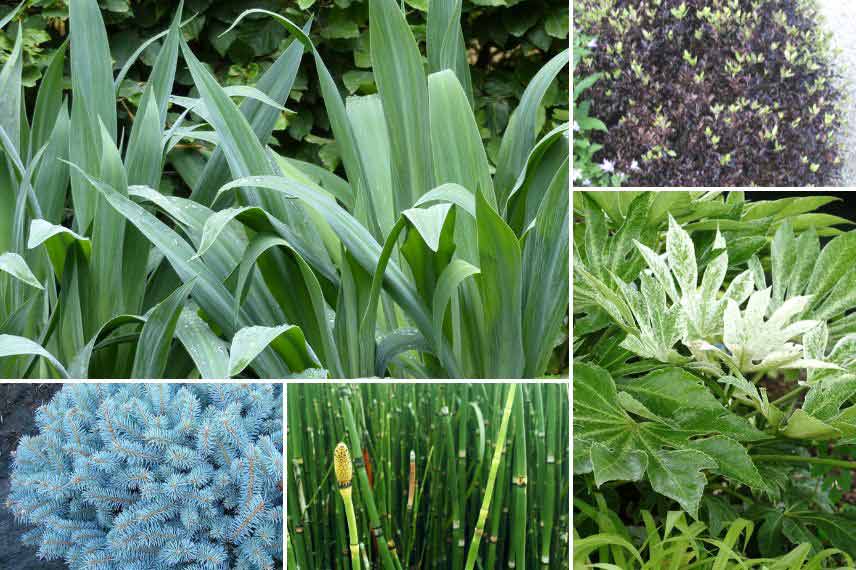
Beschorneria yuccoides, Pittosporum ‘Tom Thumb’, Fatsia ‘Spider’s Web’, Picea ‘Gauca Globosa’ and Equisetum hyemale
For further reading...
- Discover our different varieties of Beschorneria, available online.
Find even more inspiration with our themed files:
- Subscribe!
- Contents
Comments